Monthly Archives: maj 2020

Opinia 1
Na bazie „kilkuletniego” doświadczenia zdążyliśmy się już z Jackiem przyzwyczaić do sytuacji, gdy podczas niemalże „hurtowych” dostaw urządzeń na testy czasem coś pozornie nieistotnego z przekazu słowno-muzycznego kierowanego do nas przez dystrybutora/wytwórcę ulatuje uwadze, bądź z pamięci. Tak też było i tym razem, gdyż czymś całkiem oczywistym w momencie otrzymania przeuroczego combo Dave & Étude Chord Electronics było nasze skupienie na elektronice i towarzyszącemu jej „mebelkowi”, przy nieco pobieżnej weryfikacji dołączonego do ww. seta okablowania. Po prostu na podstawie oględzin i odczuć natury organoleptycznej założyliśmy, że skoro dystrybutor marki – cieszyński Voice, dorzucił je do puli, to najwidoczniej muszą spełniać kryteria tak jakościowe, jak i cenowe. Krótko mówiąc wkroczyliśmy na grunt tzw. „wartości postrzeganej”, a ta w przypadku przedmiotu naszych dzisiejszych dywagacji była adekwatna do klasy ww. elektroniki. Generalnie chodzi o to, że Cardasy Clear Reflection (otrzymaliśmy dwa przewody, stąd liczba mnoga) ewidentnie pasowały nam tak pod względem aparycji, jak i brzmienia (ups, i się wygadałem) do pułapu 10+ kPLN. Jakież było nasze zdziwienie, gdy odkryliśmy, iż przy kasie zapłacimy za nie rzeczywiście powyżej owej magicznej (przynajmniej pod względem psychologicznym) kwoty 10 000 PLN, o ile tylko zdecydujemy się na zakup … 3, słownie trzech, sztuk. Jeśli powyższy, nieco chaotyczny wstęp Państwa w jakiś sposób zaintrygował, to nie pozostaje mi nic innego, jak tylko zaprosić Was na dalszy ciąg moich osobistych wynurzeń.


Zaglądając do katalogu Cardasa niezorientowani w temacie złotousi akolici audio mogą ze zdziwieniem odkryć, iż pomimo swojej wielce nobliwej aparycji, nasz dzisiejszy gość plasuje się dokładnie po środku amerykańskiej oferty przewodów zasilających. Pod nim jest otwierający listę Iridium, a następnie Parces i Cygnus. Natomiast pnąc się w górę firmowej hierarchii napotkamy Clear, Clear Beyond i topowy Beyond XL. Stąd też zapewne jego zaskakująco przystępną cena.
Standardowe, kartonowe pudełka z firmowym logotypem kryją zabezpieczone cienkimi płatami szarej gąbki tytułowe przewody, kartkę z pozdrowieniami od producenta i certyfikat autentyczności. Oczywiście przewód na czas transportu spinany jest rzepem więc szanse na obtłuczenie przypominających ciekłą rtęć, albo inną „terminatoropochodną” substancję, wtyków śmiało możemy określić jako znikome. Ich połyskliwość, oprócz niewątpliwych zalet natury estetycznej niesie jednak ze sobą konieczność stosowania rękawiczek, gdyż wtyki zbierają materiał daktyloskopijny w tzw. okamgnieniu a opalcowane wyglądają mało elegancko. Sam przewód z kolei chroni jedynie taka sama jak w interkonektach i głośnikowcach czarna izolacja wykonana z materiału o nazwie Alcryn.
Jeśli zaś chodzi o wewnętrzną budowę, to Clear Reflection Power zawiera trzy, podobne do tych w Clear Power, przewodniki o średnicy 11,5 awg, z których dwa, poza żyłą uziemiającą, są podwójnie ekranowane a we wnętrzu zastosowano dielektryk PFA z cząsteczkami powietrza. Konfekcję wykonano z użyciem nad wyraz biżuteryjnych, firmowych wtyków 3455R (dostępnych również w wersji 20A) o miedzianych, pokrytych srebrem i rodem złączkach i zaciskach.
W kwestii brzmienia zachodziłem w głowę jak tytułowy przewód zasilający wpisze się nie tylko w firmową, co właściwą swojemu sygnałowo-głośnikowemu rodzeństwu estetykę. Pójdzie drogą dalszego zwiększania wolumenu i spektakularności, czy może wybierze własną i skupi się na temperowaniu tego, co ww. towarzystwo, w wielce przyjemny uchu sposób z iście hollywoodzkim stylu może nie „rozdmuchało”, bo to niezbyt eleganckie określenie, co „uatrakcyjniło”. Przewrotnie powiem, że Cardasowi Clear Reflection Power, którego w dalszej części pozwolę sobie w skrócie nazywać CRP, udało się znaleźć złoty środek pomiędzy owym – nieco „stereotypowym” amerykańskim podejściem do tematu dynamiki i skali generowanego spektaklu, a nieco bardziej wyważonej emocjonalności. Proszę mnie tylko źle nie zrozumieć. CRP to pełnokrwisty Cardas i wręcz śmiem twierdzić, że jeden z najciekawszych w ofercie, jednak jego „sygnatura” nie jest wcale tak prosta do zdefiniowania. Chociaż może źle się wyraziłem, gdyż w dużym uproszczeniu jest, bowiem CRP najłatwiej określić mianem szalenie muzykalnego i zamknąć temat. Dysonans natury poznawczej ujawnia się jednak, gdy próbujemy ową przysłowiową „muzykalność” dopasować do materiału źródłowego w stylu „In Requiem” Paradise Lost, czy „The Living Dead” Grave Digger, przy czym Nick Holmes z ekipą jeszcze potrafi wpleść nieco eterycznych smyczków i nastrojowych, akustycznych akordów. Niemniej jednak to dość ciężki i złożony kawałek muzyki, którą odmieniana przez wszystkie przypadki muzykalność po prostu by uładziła, zafundowała pluszowe papucie i podała ciepłe mleko z miodem. Tymczasem CRP zdolne były w pełni zachować konieczny ładunek agresji i brutalności a jednocześnie na tyle ucywilizować przekaż, że całość sprawiała zdecydowanie bardziej atrakcyjne, aniżeli do tej pory wrażenie. Poza delikatnie podbitym przełomem średnicy i wyższego basu, co dodawało przekazowi drajwu i motoryki, pojawiła się przyjemna soczystość i mięsistość środka pasma. Dzięki temu gitarowe riffy miały większy wygar (neologizm będący synonimem czadu) a ich górne rejestry niby intensywniej wwiercały się w nasze mózgownice, jednak zamiast chłodu ich barwa miała lekko szampańską poświatę. Nieco faworyzowane były też partie wokalne, jednak nie poprzez ich przybliżanie ku słuchaczowi, co kierowanie na nie dodatkowej wiązki światła i skupienie naszą uwagi. Co ciekawe tytułowy Cardas nie wykazywał większych chęci do majstrowania przy wolumenie i masie dźwięku, ponadto nie wybijał się na tle konkurencji większą głośnością, co np. jest jedną z głównych cech mojego dyżurnego Acoustic Zen Gargantua II.
Za to w kategoriach bezwzględnych z pewnością wypadałoby wspomnieć o lekkim przyciemnieniu przekazu, co z jednej strony sprawia, że nawet te nie do końca referencyjne nagrania mają okazję powrócić w nasze łaski, jednak z drugiej strony wybrzmienia kierowane są częściej w głąb sceny aniżeli ku sklepieniom pomieszczeń w jakich dokonano rejestracji. Czy to źle? W żadnym wypadku, po prostu inaczej. Jeśli bowiem weźmiemy na tapet takie perełki, jak „Monteverdi – A Trace of Grace” Michela Godarda i „En el amor” Natašy Mirković okaże się, iż z łatwością jesteśmy w stanie przystać na delikatne obniżenie sklepienia przy jednoczesnym przyroście głębokości kreowanej sceny. W dodatku, jeśli uwzględnimy fakt, iż CRP pracować będzie najczęściej w systemach zapewne operujących na pułapie ok. 10 kPN za komponent, to po pierwsze sama elektronika może, nazwijmy to delikatnie, nie być skora do kreowania hektarów trójwymiarowej przestrzeni, a po drugie bez porównania do znacznie droższej konkurencji (vide Furutech Nanoflux Power NCF) trudno będzie tytułowym przewodom cokolwiek zarzucić. Przewrotnie od siebie dodam, że nawet mając okazję bezpośredniego porównania patrząc na relację jakość/cena amerykańskie druty również świetnie się bronią.
Cardas Clear Reflection Power to przewód szalenie trudny do zaszufladkowania. Z jednej strony jego wartość postrzegana jest iście high-endowa, z drugiej, przynajmniej jak na nasze redakcyjne standardy, śmiało możemy określić go mianem wręcz budżetowego, a z trzeciej i to właśnie na niej powinniśmy się skupić podczas dokonywania naszych wyborów, to jeden z przewodów, których grzech byłoby jeśli nie posiadać na stałe w swoim systemie, to na pewno posłuchać. Jego obecność w torze po prostu sprawia przyjemność słuchaczom, a jak by nie patrzeć na nasze hobby, właśnie o to w nim powinno chodzić.
Marcin Olszewski
System wykorzystany podczas testu
– CD/DAC: Ayon CD-35 (Preamp + Signature)
– Odtwarzacz plików: Lumin U1 Mini
– DAC: Chord DAVE
– Selektor źródeł cyfrowych: Audio Authority 1177
– Gramofon: Kuzma Stabi S + Kuzma Stogi + Dynavector DV-10X5
– Przedwzmacniacz gramofonowy: Tellurium Q Iridium MM/MC Phono Pre Amp
– Wzmacniacz zintegrowany: Accuphase E-800
– Końcówka mocy: Bryston 4B³, Chord Electronics Étude, Abyssound ASX-2000
– Kolumny: Dynaudio Contour 30 + podkładki Acoustic Revive SPU-8 + kwarcowe platformy Base Audio
– IC RCA: Tellurium Q Silver Diamond
– IC XLR: Organic Audio; Vermöuth Audio Reference
– IC cyfrowe: Fadel art DigiLitz; Harmonic Technology Cyberlink Copper; Apogee Wyde Eye; Monster Cable Interlink LightSpeed 200
– Kable USB: Wireworld Starlight; Goldenote Firenze Silver; Fidata HFU2
– Kable głośnikowe: Signal Projects Hydra; Vermöuth Audio Reference Loudspeaker Cable
– Kable zasilające: Furutech FP-3TS762 / FI-28R / FI-E38R; Organic Audio Power + Furutech CF-080 Damping Ring; Acoustic Zen Gargantua II; Furutech Nanoflux Power NCF
– Listwa zasilająca: Furutech e-TP60ER + Furutech FP-3TS762 / Fi-50 NCF(R) /FI-50M NCF(R)
– Gniazdo zasilające ścienne: Furutech FT-SWS(R)
– Platforma antywibracyjna: Franc Audio Accessories Wood Block Slim Platform; Finite Elemente Carbofibre SD & HD
– Stopy antywibracyjne: Finite Elemente Cerabase compact, Cerapuc, Ceraball
– Switch: Silent Angel Bonn N8
– Przewody ethernet: Neyton CAT7+, Wireworld Chroma 8 + Starlight 8, Audiomica Anort Consequence + Artoc Ultra Reference + Arago Excellence, Cardas Audio Clear Network
– Stolik: Rogoz Audio 4SM
Opinia 2
Próbując przeanalizować retorykę piewców żonglowania różnego rodzaju okablowaniem w systemach audio tak na szybko widzę cztery główne przypadki. Pierwszy, naturalnie całkowicie zrozumiały i do tego w pełni akceptowalny przez pogromców zagadnień audio voo-doo, to zapewnienie przepływu prądu niosącego energię z życiodajnej sieci i wszelkiego rodzaju sygnałów zapisanych w impulsach elektrycznych. Drugi, naturalnie stojący już w opozycji do wszelkiej maści „audio-mierniczych” mówi o pozwalającej stroić zestaw audio pod konkretne potrzeby, różnorodności grania takich produktów. Trzeci, w moim mniemaniu mocno przesadzony, forsuje teorię, iż wytrawny audiofil kablem jest w stanie wprowadzić więcej pozytywnych zmian w dźwięku, aniżeli znacznie lepszym konstrukcyjnie komponentem. Zaś czwartym, patrząc na odwieczną wojnę damsko-męską o nie tylko eksponowanie zestawu audio w centralnym miejscu salonu, ale również nieplanowane w budżecie domowym jakiekolwiek w nim zmiany, dlatego tłumaczącym taką popularność zjawiska zabawy w podmianki drutów, jest łatwe ukrycie ich przed okiem żony, a co za tym idzie zapewnienie długiego domowego miru – kable zazwyczaj są za szafką, dlatego nietrudno je schować. Nie wierzycie w byt ostatniego punktu? Zapewniam potencjalnych niedowiarków, taka sytuacja jest bardzo częstym, nie zawahałbym się nawet powiedzieć, jedynym pozwalającym pozostać przy zdrowych zmysłach niejednego audiofila losem. Skąd to wiem? Od co najmniej dwóch znajomych. Po co aż tak się nad tym rozwodzę? Z prostej przyczyny. Otóż w dzisiejszym recenzenckim starciu będziemy mieli przyjemność przyglądać się wręcz idealnym przedstawicielom zabawy z żoną w chowanego w postaci dwóch kabli sieciowych Clear Reflection Power, pochodzącej zza wielkiej wody (USA), będącej jednym z głównych graczy na światowym rynku marki Cardas Audio, której dystrybucja u nas pozostaje w rękach cieszyńskiego Voice’a.


Nie muszę chyba nikogo przekonywać, iż clou budowy tego rodzaju akcesoriów jest pilnie strzeżoną przez każdego producenta tajemnicą, dlatego idąc za informacjami producenta jedyne co na temat tytułowych drutów mogę powiedzieć, to fakt, że mamy do czynienia z jakby rozwojem technologicznym niegdyś topowej serii Golden Reference. Czyli? Po zgłębienie się w temat budowy poprzedników zapraszam do studiowania Internetu, natomiast z tego co udało mi się ustalić, w najnowszej odsłonie wspomniany kabel oparty jest o trzy żyły – dwie sygnałowe podwójnie ekranowane, z prostą, niefiltrowaną żyłą uziemiającą. Zaś temat terminowania każdego przewodu rozwiązują firmowe wtyki Cardasa 3455R z miedzianymi złączami i klipsami, na które nałożono srebro i rod. Tak zbudowane i ubrane w grafitową otulinę kable spakowano w estetyczne pudełka. Koniec kropka. Tak Wiem, trochę skąpo z tymi informacjami. Jednak tak prawdę mówiąc nas interesuje głównie ich oferta brzmieniowa, dlatego też bezzwłocznie zapraszam zainteresowanych do kolejnego akapitu.
Jak wieść gminna niesie, produkty Cardas Audio są ostoją barwy, nasycenia i gładkości. Oczywiście udział każdej z wymienionych składowych zależy od stopnia zaawansowania danej konstrukcji. Niemniej jednak biorąc na tapet poprzedni i dzisiaj testowany model, bez dwóch zdań mamy do czynienia z idealną równowagą powyższych ingrediencji, do których dochodzi niezbędna dla pokazania żywiołowości muzyki nutka witalności przekazu. Jak to wygląda w najnowszej odsłonie? W moim odczuciu, a jak widać, wspomniane kable sprawdzałem nie tylko na źródle, czy przedwzmacniaczu, ale również na bardzo prądożernej końcówce mocy Gryphon Mephisto, dzisiejsi bohaterowie w zderzeniu z modelem Golden Reference zebrali się lekko na basie, przez co poprawili rozdzielczość środka pasma, by zwieńczyć przekaz świetnie wybrzmiewającymi, teraz dźwięczniejszymi niż wcześniej wysokimi tonami. Aplikacja Clear Reflection w mój tor nie skutkowała już siłowym szukaniem gęstości generowanej przez zestaw muzyki, tylko tchnęła weń odrobinę informacji i lotności. Ale spokojnie, to nie było wywrócenie szkoły brzmienia Cardasa do góry nogami, tylko symboliczne podążenie za światowym trendem nadania dźwiękowi odpowiedniego luzu, który powoduje, że muzyka staje się bardziej nieprzewidywalna w domenie błyskotliwości i swobody wybrzmiewania, co natychmiast przekłada się na zwiększenie jej przecież oczekiwanego przez nas pakietu emocjonalności. Co na to konkretna muzyka? Powiem tak. Z uwagi na wspomniany przypływ otwartości dźwięku, praktycznie każdy nurt, nawet szaleńcza w aspekcie przenikliwości międzykolumnowego eteru elektronika z najnowszym dziełem jankesów brzmiała wyraźnie lepiej. Był oddech, gdy trzeba ból spowodowany zaplanowanymi przez muzyków zniekształceniami i co jest domeną tej stajni kablowej, świetne, bo mocne i dobrze kontrolowane uderzenie na dole. Tak prezentował się również rock, free jazz, a nawet muzyka Baroku. I to bez względu na fakt, czy w odtwarzaczu lądowały składy symfoniczne, czy kameralne. Barwa w połączeniu z rozdzielczością i świetnym napowietrzeniem z dziecinną łatwością pozwalały oddać systemowi prawdę o środowisku, w którym realizowano dany projekt muzyczny z jego reakcją na dane wydarzenie, czyli zazwyczaj nieodłącznym echem w kubaturach kościelnych włącznie. Zaskoczeni, że Cardas potrafi zaczarować słuchacza zarezerwowanymi niegdyś jedynie dla rozdmuchujących przekaz produktów konkurencji, artefaktami rozwibrowania i eteryczności dźwięku? Jeśli tak, to nie znacie jeszcze jego nowego dziecka. Ale zaznaczam, to jest efekt aplikacji naszego punktu zainteresowania w rozdzielczy tor audio. Niestety wszystkie inne próby wykorzystania go jako leku na zbyt anorektyczne granie posiadanej zbieraniny mogą skończyć się co najwyżej doraźną pomocą, a nie wyciskaniem z systemu najlepszych aspektów. Owszem, będzie lepiej, ale nie wykorzystacie maksimum jego możliwości. Cardas Audio Clear Reflection Power powinien służyć jedynie jako delikatna przyprawa soniczna, a nie ratunek dla dźwiękowego Frankensteina. Jeśli się do tego zastosujecie, ten kojarzony jako ratunek dla zbyt jasnych zestawień kabel w najnowszej odsłonie pokaże Wam, o co w połączeniu muzykalności i swobody w wybrzmiewaniu systemu chodzi.
Jak sugeruje powyższy tekst, Cardas Audio nadal jest orędownikiem przyjemnego w odbiorze, bo solidnie nasyconego brzmienia naszych układanek. Jednak ten sam materiał udowadnia również, że w stosunku do poprzednika Amerykanie poczynili ciekawy, nieco zwiększający ilość powietrza w muzyce krok do przodu. To z jednej strony nadal jest oferta z fantastyczną barwą w tle, jednak w pakiecie wzbogacona o witalność przekazu. Czy dla wszystkich? Będąc bezwzględnym, powinienem powiedzieć, że posiadacze tak zwanych „audio ulepków” powinni trzymać się od niej z daleka. Jednak idąc za ważną informacją testu przypominam, jeśli ten ulepek nosi symptomy rozdzielczości, nie zaszkodzi spróbować. Jaki jest tego sens? Otóż z autopsji wiem, iż czasem nawet drobna ingerencja w kwestię oddechu dobiegającej do słuchacza muzyki może spowodować pozytywne zmiany w reszcie podzakresów. A przecież bardzo często wielu z Was właśnie o takie drobne zmiany walczy. Dlatego też znając pełne spektrum potrzeb melomanów, potencjalnego klienta widzę w każdym z Was.
Jacek Pazio
System wykorzystywany w teście:
– źródło: transport CEC TL 0 3.0
– przetwornik cyfrowo/analogowy dCS Vivaldi DAC 2.0
– zegar wzorcowy Mutec REF 10
– reclocker Mutec MC-3+USB
– Shunyata Research Sigma CLOCK
– Shunyata Sigma NR
– przedwzmacniacz liniowy: Robert Koda Takumi K-15
– końcówka mocy: Gryphon Audio Mephisto Stereo
Kolumny: Trenner & Friedl “ISIS”, Dynaudio Contour 60
Kable głośnikowe: Tellurium Q Silver Diamond
IC RCA: Hijiri „Million”, Vermouth Audio Reference
XLR: Tellurium Q Silver Diamond
IC cyfrowy: Harmonix HS 102
Kable zasilające: Harmonix X-DC 350M2R Improved Version, Furutech NanoFlux NCF, Furutech DPS-4 + FI-E50 NCF(R)/ FI-50(R), Hijiri Nagomi, Vermouth Audio Reference Power Cord
Stolik: SOLID BASE VI
Akcesoria:
– antywibracyjne: Harmonix TU 505EX MK II, Stillpoints ULTRA SS, Stillpoints ULTRA MINI
– platforma antywibracyjna SOLID TECH
– zasilające: Harmonix AC Enacom Improved for 100-240V
– akustyczne: Harmonix Room Tuning Mini Disk RFA-80i
– listwa sieciowa: POWER BASE HIGH END
– panele akustyczne Artnovion
Tor analogowy:
– gramofon:
napęd: SME 30/2
ramię: SME V
– wkładka: MIYAJIMA MADAKE
– Step-up Thrax Trajan
– przedwzmacniacz gramofonowy: RCM THERIAA
Dystrybucja: Voice
Cena: 3 990 PLN
 artykuł opublikowany / article published in Polish

To się nazywa złota seria, jeszcze nie opublikowaliśmy recenzji topowej integry E-800 a już wylądowały u nas legendarne A-klasowe i oczywiście również topowe końcówki mocy Accuphase A-250.


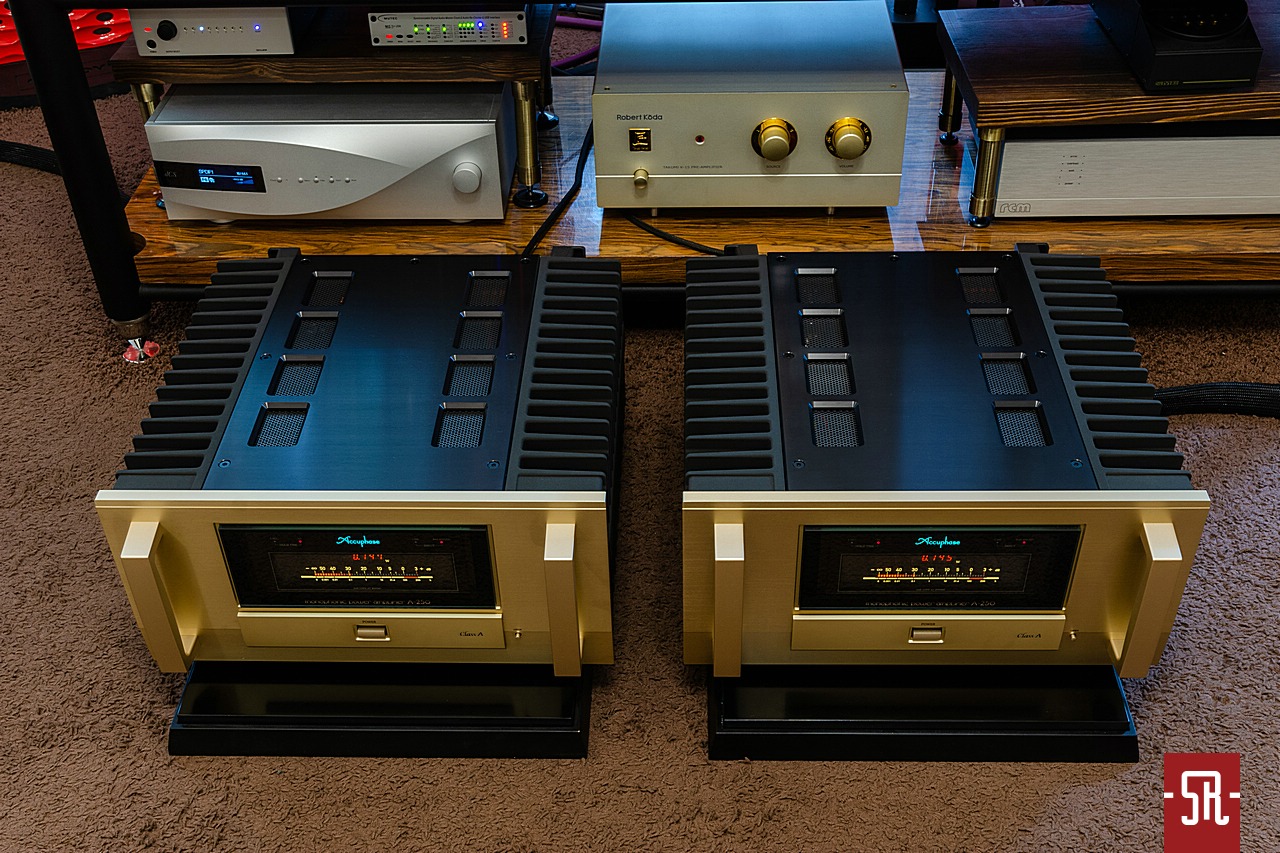

cdn. …

Opinion 1
I am sure, that when I would ask an aspiring music lover a difficult question, from the area of loudspeaker building – “What is the main characteristic of the loudspeakers manufactured by the German company Gauder Akustik?” – the response would surely be the continued usage of ceramic Accuton drivers. Yes, those porcelain based, white, mesh covered (to protect the fragile membranes) are the hallmark of this brand. But this is not the whole truth, as when you take the time to have a closer look at their catalog, in its lower parts, we will find a few products, where the sound is generated by speakers with aluminum diaphragms. I am talking about the Arcona series, which, after many years of market success, gained a new version. This introduction of the new version resulted in the current test of the newest product from Gauder Akustik, the Arcona 100 Mk II, provided by the Katowice based distributor RCM.


Looking at the attached pictures of the Arcona 100 Mk II and confronting them with the previous version, you can immediately spot two differences. First, and most important one, as it very much determines the sonic characteristics of this version, is the replacement of the AMT tweeter with an Accuton one. The second one is only visual, giving the loudspeaker a more coherent look, as all the drivers were painted in the same color as the cabinet – black. Looking at the construction of the cabinets themselves, their sides are still curved, going from the front baffle to the back. They were also painted in glossy black, adding a tad of nobility to the design. Talking about technicalities, we have here a three-way construction, where there are two bass drivers at the bottom, a single midrange driver and a the mentioned ceramic tweeter on top. But that is only the front. The back is mostly rounded, but to place the single wire terminals and the socket for bass amount adjustment – a wire jumper is used for this purpose – there is a flat place designed in the lower part of the cabinet. Finalizing the description of the looks of those speakers I cannot omit the information, that the loudspeakers are standing on four spikes as standard, but you ca use a small upgrade (which is actually quite big in sonic terms, but about that in a moment) by exchanging those spikes for spiked aluminum feet, which also extend the support base of the speakers.
Before I move to the main part of the review, there is important information I need to share. As I mentioned in the previous paragraph, there was a part, that I checked with my own ears. What am I talking about? Well, the test had two versions. The first one, using the spikes supplied with the speakrs, was short and had only the purpose of comparing the sound of the new to the old Arcona. But still it did happen and I will start my description with that. So how do I rate that approach? Good. And this not due to the cosmetic improvements of the produced sound, but by being offered a very even sound, and this time with a less bloated lower part. The bass was not as dominating as with the previous version, but acts as support to the rest of the sound spectrum. Is it a pity? You do not need to worry, the constructors thought about everything, and if you need more lower registers with the Mk II, you can increase their amount using the jumper. But I was very satisfied with the tonal balance proposed by the tested speakers, as it was by far not anorectic, but knew when to support the other parts of the sound spectrum by appropriate oomph. That was the case on the standard spikes. However things got more colorful when time came to bolt-on the feet extending the loudspeaker base. What does this mean? You may not believe that, but music gained a lot of brilliant volatility. This was no more an act of thoughtless reproduction of notes, often forceful, but building of an airier virtual stage, which never assaults the listener. In short, the sound got a shot of vitality, something very pleasant, what directly translated into higher pleasure of listening to music. Of course I do not claim, that the first attempt was a failure comparable only to the middle ages, but I am slightly exaggerating the effect to show you, what was the direction and amount of change. From my end I must confess, that once I heard, what difference was made by this upgrade, when I would be buying them, I cannot imagine listening to music in different configuration. Why? For once because many interesting reproductions of music, which require from the loudspeakers good vitality and close to the real world suspension in the air of the reproduced notes from small baroque ensembles. But not only those, as this kind of reproduction is also expected by many contemporary genres, headed by jazz. So if you listen to that kind of music, I am absolutely convinced, that even a tryout of the better loudspeaker support will result in buying this additional upgrade. But OK. This is my opinion about the changes introduced by this accessory. But how was it with certain music? Here things are easier. From the very beginning the portfolio of Gauder Akustik was associated with coping well with heavier genres, what was again confirmed by Metallica and the concert disc “S&M”. And that not only in case of reproducing a well-constructed wall of sound – I always listen to this disc quite loud – but also due to increasing the openness of the reproduction, what increased the impression of being there, on the live event. It was a little different, but equally good, with electronic music. This one cannot reproduce the reality of a live event, as it was generated in computers, but due the mentioned openness of sound, it is filling the space between speakers completely. The low frequencies were strong, saturation of the midrange was good and it was more expressive on the top end, compared to the older version. Why more expressive? Well, this was clearly shown by my beloved jazz. I am talking about the reproduction of treble as presented in the context of cymbals. With the AMT tweeter I had always the impression, that the cymbals are made from a too thin metal sheet, I would even say, from metal foil, which can be moved by the slightest breeze. Seemingly everything was there, but it was strangely aethereal and thin. Yet in this case we are dealing with a piece of heavy, thick, round metal, what was ideally shown by the Accuton tweeter. How? It was just that with each hit of the cymbal you could hear the resistance it poses to the drumstick, what translated into a bigger amount of the wood making up the drumstick in the sound and its more noble decay. I know, those are nuances, but they are very important to us, and this is the reason I am talking about this so much. Of course you cannot forget about the influence of the better stability of the speakers on the projection of the sound picture in jazz and classical music. Compared to the older version it was like upping the threshold one notch, or translating this into something more comprehensible, it improved the placement of the sounds in the ether, what in jazz, playing with silence, as well as sacral pieces needing cooperation with the churches’ interiors is very important, if not to say, necessary.
I do not know, how deep are the changes to cross-overs done during the overhaul made by Roland Gauder, the owner of the brand and the main designer of the speakers in one – the tweeter you can just see – but the new version of the Arcona 100 Mk II is much better than its predecessor. And this is not just cosmetics, but as you can see from the text above, those are hard things, that allow us to enjoy our music in a more faithful way. Is this an offering for everybody? Frankly speaking, I see no counterindications for anyone. Of course, if someone is focused on paper drivers’ sound from speakers like Tannoy, or tubes like Avantgarde Acoustic, then that person will probably not decide to buy the tested today, sleek and rounded German speakers. However I think that even such person, when listening to the Arcona will appreciate their attempt at showing a world full of energy and swing, and this is what music is about.
Jacek Pazio
Opinion 2
Well, they say never the same river twice, but it cannot be denied, that faith is deceitful and can tangle our paths in such a way, that the past catches up with us, or history is making a full circle turn and we start where we left off. This kind of coincidence, similar in its unexpectedness, happened with the tested loudspeakers, as on one hand it became a reason for my private retrospection, and about that in just a second, on the other, it was a great example of how we can observe evolution within a given brand, something we mentioned in our last publication. But first things first. In terms of retrospection – the readers who follow my writing most probably noticed something that happened in December 2018, when I changed my Gauder Arcona 80 for the Dynaudio Contour 30. The 80 were great, and I have very good memories about them, but the Danish speakers offered “bigger” and livelier sound, what, taking into account my musical taste, was just bulls-eye. But one and a half year have passed and in the meantime Dr. Roland Gauder showed a second generation of his catalog opening Arcona to the world. A generation, which in the times of “cost optimization” is not only surprising, but seems also to be a splendid example of the mentioned brand evolution and at the same time reference to my past speakers. So to not prolong this introduction too much I invite you to meet the loudspeakers placed one notch above the 80, the Gauder Arcona 100 Mk II.


It cannot be denied, that besides a slight change of the name, which could indicate only some kind of face-lifting, the new installment of the Gauder kept only the general shape of the cabinet and placement of the drivers from its brethren, everything else underwent a certain revolution. Let us Focus on the visible things first. The cabinets are the same as before, there is nothing to tell about. They are made from 22mm MDF and the side walls are rounded and flow together at the back. The three 7” drivers in the front, using X-Pulse membranes, went to the dark side of the force, with which I mean, that the diaphragms were changed from milk white to satin black. The two lower drivers reproduce bass, while the third one is responsible for the midrange. On top there is the tweeter, and in fact it is the cherry on top, because instead of the, otherwise very good, AMT, the Arcona Mk II feature a new ceramic driver, designed with Accuton, covered with the characteristic mesh. The change of the tweeter needed a change in the cross-over, but please do not worry. There were no savings there and we still have a fully symmetrical topology with a 50dB/oct. slope, based on Mundorf components.
Another novelty is a jumper, allowing to modify the amount of lower frequencies, which is located above the single WBT Nextgen wire terminals, we know already from the previous version. This solution is known in the higher Gauder models and seems to be a logical step towards the full unification of the company offerings, and might be a foreshadowing of things happening in the Mk 3, where hopefully we will see classy porcelain Accutons instead of the polymer coated aluminum midrange and bass X-Pulse drivers. But enough of those wishful thinking and foretokens, it is time to stand firm on the ground, where there are things happening too. As usual with the Gauder, at least with most models, the bass-reflex port is blowing to the floor, and besides the adjustable spikes, there is an option to use the so called Spike Extension, which increases the stability of the speaker, and, according to the company materials, allow for even better control of the reproduced sound spectrum. Due to the support of the Polish distributor, the Katowice based RCM, we were able to test the manufacturer’s declarations during the test, because we received the standard spikes as well as the optional extensions in the delivered package.
In the Katowice listening room the 100 played for only a dozen or so hours, I added almost a week to this runtime before starting with critical listening. And in addition we immediately mounted the Spike Extension to be able to spot changes compared to standard spikes. Why this way round? The reason is blatantly obvious – every regress is perceived much stronger than progress, and thus it is easier to catch any assets and nuances we are deprived of, when going back.
Now returning to the black tested speakers, from the first sounds of the energetic album “Aequilibrium” from the Italian, progressive power-metal formation Noveria, it was clear, that the new version of the “budget” Gauder is absolutely not afraid of the harder sounds and feels in such murderous, for the human senses that is, climates fares like a fish in the water. Even without the jumper set to increase the amount of lower notes, the bass is going down very low, and at that, it was in great balance between a truly iron-hand control and pleasure provoking roundness. Due to that the ecstatic drum passages of Omar Campitelli supported by Adrea Acangeli violently stroking the strings of the base guitar could enchant with their diversity, and not flow together into a formless pulp. Also the juicy and full of epic bombast guitar riffs of Francesco Mattei did not need to be ashamed of anything, as each and every time the Gauder made every effort to show their richness and Dream Theater like virtuosity. The important part is, that in this merciless wall of sound, there was no trace of chaos. Each, even most broken melodic line, had sense, every accord was in put into context, and the vocals do not exist for themselves, but were part of the whole. Frankly speaking, I was most afraid of the top end, as the AMT used to date in the Arcona seemed not only a good, but an ideal choice. And in some way I was right, as “seemed” was in this case key, and the exchange of the yellow harmonica to the porcelain cone brought the Arcona to another level of resolution and refinement. If someone expected the dulling, attributed to the Accuton, or the “deficit” of airiness of the stage, then I am sorry – not this time. Dr. Gauder knows the Accuton like no-one else, and it is worth noticing, that the drivers applied in his speakers are often especially modified. Of course you should not expect the same kind of freedom and shine like in the much more expensive Vescova Mk II, equipped with diamond tweeters, but the direction of the modifications introduced by the constructor is in that way.
Changing the repertoire to something quieter showed the German floorstanders from a surprisingly lyrical perspective. The still warm, full of moody, mellow sounds bathing in electronic sauce, only about fifteen minutes long EP “Bedroom EP” Selah Sue sounded extremely coherent and dense. The loudspeakers immediately “disappeared” from our listening room; they just plainly dematerialized, like classy monitors, and we remained there with the music. The matte vocal sound of the singer was not the result of the way the speakers presented it, but from the native timbre this red-headed vocalist has. It was similar with the even more rough sounding Barb Jungr, who, on the disc “Hard Rain [The Songs of Bob Dylan & Leonard Cohen]”, can be very harsh on systems reproducing sibilants somewhat too enthusiastic. Yet with the Gauder in the sound path, the mentioned singer was treated with appropriate attention, but without crossing the thin line between palpability and aggressiveness.
The ability to reproduce lower frequencies was tested by our on call disc “Khmer” from Nils Petter Molvær, where the synthetic bass reached levels, where the devil is saying “good night” and even with the blinds open, there is darkness everywhere. Additionally those truly infrasound, ambient movements did not disturb the rest of the sound spectrum, where the acoustic guitar of Roger Ludvigsen and the leader’s trumpet reside.
A small change, placing the speakers upside down and changing the Spike Extension to standard spikes and turning them back to the proper way … and ouch. No, this is not bad sound, as the character of the speakers remained, but telling the truth, everything lost motoric and resolution. I can easily say that the sound “sat down” and the timing, which was ever present to that moment, disappeared somewhere. A repeat of what we just listened to showed, that you can live with the sound, but you should not reach to far back with your memory, to how the 100 played with the optional supports on.
Things improved the following day, when the comparison was not so direct and fresh. People say that time is a healer, and probably here this became true, as the trauma I felt the previous day disappeared. However if you would agree for a listening session with the distributor, I would warmly encourage you to have those Gauder speakers equipped with the Spike Extension. Then you will be able to hear the full potential of the speaker.
The Gauder Arcona 100 Mk II are big, three-way, floorstanding loudspeakers, so no repertoire is able to shake them. And they are absolutely better than their, very good on their own, predecessor. This gives them credit of trust from the start, which they not only did not spend, but even extend with other assets coming from the use of a ceramic tweeter and redesign of the cross-over. So if you have appropriately sized listening room and a high current, or just strong, amplification, then you should have a peek at the tested speakers just from curiosity.
Marcin Olszewski
System used in this test:
– CD transport” CEC TL 0 3.0
– DAC: dCS Vivaldi DAC 2.0
– Reference clock: Mutec REF 10
– Reclocker: Mutec MC-3+USB
– Shunyata Research Sigma CLOCK
– Shunyata Sigma NR
– Preamplifier: Robert Koda Takumi K-15
– Power amplifier: Gryphon Mephisto Stereo
– Loudspeakers: Trenner & Friedl “ISIS”
– Speaker Cables: Tellurium Q Silver Diamond
– IC RCA: Hijri „Million”, Vermouth Audio Reference
– IC XLR: Tellurium Q Silver Diamond
– Digital IC: Harmonix HS 102
– Power cables: Harmonix X-DC 350M2R Improved Version, Furutech NanoFlux NCF Furutech DPS-4 + FI-E50 NCF(R)/ FI-50(R), Hijiri Nagomi; Vermouth Audio Reference Power Cord
– Table: SOLID BASE VI
– Accessories: Harmonix TU 505EX MK II, Stillpoints ULTRA SS, Stillpoints ULTRA MINI, antivibration platform by SOLID TECH, Harmonix AC Enacom Improved for 100-240V, Harmonix Room Tuning Mini Disk RFA-80i
– Power distribution board: POWER BASE HIGH END
– Acoustic treatments by Artnovion
Analog stage:
Drive: SME 30/2
Arm: SME V
Cartridge: MIYAJIMA MADAKE
Phonostage: RCM THERIAA
Step-up: Thrax Trajan
Distributor: RCM
Price: 37 850 PLN
Technical details
Construction: 3-way double woofer bassreflex loudspeaker system
Impedance: 4 [Ohm]
Power Handling: 270 [Watt]
Dimentions (H x W x D): 114 x 21 x 39 [cm]
Weight: 29 [kg]
Finish: piano finish black and white

Opinia 1
Z czym jak z czym, ale nawet stojąc po przeciwległej stronie designerskiej barykady, w jednej kwestii chyba się ze mną zgodzicie. Mianowicie chodzi mi o fenomenalne wykorzystywanie drewna w komponentach audio przez włoskich producentów. Czy to elektronika, czy kolumny głośnikowe, zazwyczaj stolarka jest na najwyższym, żeby nie powiedzieć trudnym do doścignięcia przez wiele firm poziomie. Jak oni to robią, nie mam, najmniejszego pojęcia, jednak fakt jest faktem, że jeśli już wezmą się za pracę z drewnem, nie ma zmiłuj, końcowy efekt onieśmiela nawet znawców tego kawałka gospodarki. Takim też odzewem nie tylko użytkowników, ale również potencjalnych zainteresowanych naturalnie może pochwalić się też dzisiejszy bohater naszego spotkania. Bohater, który jakiś czas temu miał na naszym portalu swoje pięć minut. Co ciekawe nie tylko wizualne, ale również soniczne. Pamiętacie? Jeśli nie, skorzystajcie z wyszukiwarki. Jaki jest cel tych poszukiwań? Prozaiczny, gdyż na tle tamtego sparingu łatwiej będzie Wam skonfrontować poczynione przez minione lata przez producenta kroki odnoście brzmienia jego produktu. Jakiego? Już zdradzam. Otóż w dzisiejszej epopei dzięki warszawsko-krakowskiemu Nautilusowi będziemy przyglądać się kolumnom podłogowym Chario Aviator Aria. Zainteresowani? Mniemam, iż tak, dlatego też nie rozwadniając sztucznie tekstu zapraszam na kilka ciekawych wniosków o przepięknie usłojonych pannach z Półwyspu Apenińskiego.


Analiza załączonych fotografii jasno daje do zrozumienia, iż w przypadku tytułowych kolumn mamy do czynienia z konstrukcją modułową. To oczywiście dla ortodoksyjnych piewców maksymalnie sztywnych obudów może być powodem do kręcenia nosem, jednak zapewniam, nie zaobserwowałem strat w brzmieniu kolumn, a ich podzielność na mniejsze segmenty znacznie ułatwiła mi proces logistyczny. Kogoś to nie przekonuje? Zatem jestem pewien, że jeśli nie moja stanowcza opinia, to z pewnością fakt podzielenia pasma na pięć dróg i skuteczność kolumn na poziomie 95db zastopuje jakiekolwiek próby marudzenia co do pojęcia włoskich inżynierów o meandrach kolumnowych technikaliów. Rozpoczynając opis od dolnej skrzynki, spieszę donieść, iż ta jest ostoją dla dwóch różnie strojonych głośników sub-niskotonowych, podwojonego portu bass refleks i również dwóch zestawów zacisków kolumnowych. Jak to wygląda? Jeden woofer w raz z wentylacją skrzynki skierowanego w podłogę, a drugi z podwojonym zestawem zacisków kolumnowych – dolne przyjmują sygnał audio ze wzmacniacza, natomiast górne przekazują go do górnego modułu – umieszczono na plecach. Jeśli chodzi o górną bryłę Arii, ta oferuje na awersie zestaw trzech odwróconych w stosunku do typowej aplikacji, przetworników – patrząc od dołu mamy wysokotonówkę, średniaka i basowca, a na rewersie jedynie pojedynczy zestaw zacisków. To są sprawy techniczne, jednak jak wiadomo, wielu z klientów słucha muzyki nie tylko uszami, ale również oczami. I tutaj dochodzimy do sedna tematu mistrzostwa włoskich designerów, bowiem kolumny na bocznych ściankach pokryte są mogącymi pochwalić się pięknym słojem pionowymi klepkami z drewna orzechowego, zaś front i plecy w kontraście do naturalnych akcentów na bokach, wykończono przyjemnym w odbiorze wizualnym satynowym matem. Wieńcząc dzieło przybliżania spraw technicznych o bohaterkach tego spotkania ważnym aspektem jest sposób scalania dwóch części ze sobą, w postaci czterech wykonanych z twardej gumy, solidnych w domenie odporności na ścinanie walcowatych kołków. Natomiast definitywnie kończąc ten akapit informuję zainteresowanych, iż tak świetnie prezentujące się, bo zwężające od podstawy ku górze Włoszki posadowiono na specjalnie zaprojektowanych, zapewniających dystans dla skierowanego w podłogę głośnika i otworów wentylujących obudowę, dodatkowo zwiększających rozstaw punktów podparcia kolumn podstawach z regulowanymi kolcami.
Jaki świat dźwięku zaoferowały omawiane dzieła sztuki wzorniczej? Czy nie oddały pola w kwestii brzmienia? Gdybym miał opisać go jednym słowem, bez wahania stwierdziłbym, że było świetnie. Wszystko odbywało się bez siłowego wciągania słuchacza w wir wydarzeń, pozostawiając wybór, czy skupiam się na poszczególnych elementach przekazu, czy pławię się w jego całości. To był spektakl przez duże „S”. Hektary nieskrepowanej rozmiarami pokoju muzyki. Wszystko podane z lubianej przeze mnie perspektywy od linii kolumn w tył, co sprawiało, że praktycznie nie było nurtów muzycznych, które nie czerpałyby z takiej prezentacji samego dobra. Bez zbędnego informowania o planowanych trzęsieniach ziemi lub nadchodzących burzach z latającymi w eterze żyletkami. Czyli tłumacząc z polskiego na nasze, bas i górne rejestry były dozowane w zależności od zapisanej na płycie muzyki, a nie gdzieś w podświadomości podkolorowując dźwięk nerwowo czekały na nagły wybuch. Chario grały zjawiskowo, bo nie dawały po sobie znać najmniejszej nerwowości, tylko spokój i opanowanie. Oczywiście gdy artysta wplótł w swój występ nutkę agresji, na potrzeby takiego materiału Arie bez problemu umiały przerywać swoje opanowanie brutalnymi w odbiorze zawirowaniami. Ale nigdy przypadkiem, za co jestem im wdzięczny, gdyż brzmieniowych nerwusów na rynku jest cała masa, a takich opanowanych w dobrym tego słowa znaczeniu „graczy” trzeba szukać z przysłowiową świecą. Dlatego chyba nikt nie zdziwi się, gdy na pierwszy ogień poszły wszelkiego rodzaju mitingi chóralne z pieśniami do Sybilli lub podobne zapisy nutowe Claudio Monteverdiego w kilku aranżacjach od Jordi Savalla począwszy, na Michelu Godardzie skończywszy. Myślicie, że to nuda pomieszana z monotonią? Bynajmniej, bowiem opiniowane kolumny z Włoch są wręcz stworzone do kreowania pełnych emocji, zrealizowanych z rozmachem, wspomaganych wielkimi kubaturami sakralnymi sesji muzycznych. Ale to nie jest jedyna opcja, gdyż w podobny sposób wypadały wszelkiego rodzaju stadionowe koncerty rockowe – choćby Metallica „S&M” i o dziwo klubowe sesje jazzowe – seria koncertów Kena Vandermarka w krakowskim klubie Alchemia „The Vandermark 5”. Nie wiem, jak konstruktorzy umieli to połączyć, ale mimo nagłego przeskoku ze stadionu piłkarskiego do niegdyś zadymionego małego klubu, przy pełnej swobody prezentacji system wyraźnie informował mnie o zmianie scenerii. Nadal pełnej oddechu, ale już w innej skali i co istotne, bez szkody dla namacalności wydarzenia. To były umiejętności makro. A jak temat mikro? Również świetny. Jak wspominałem, kolumny nie szukały siłowego poklasku, co jeden do jeden przekładało się na oddanie najdrobniejszych niuansów każdej nuty. Gdyby świat muzyki pokazywały z często szukaną przez początkujących melomanów manierą napompowania, nie dałoby się usłyszeć połowy ważnych dla mnie i nie tylko wirtuozerskich smaczków. Sprawa pomijalna? Nic z tych rzeczy. Bez takich umiejętności kolumny nie tylko u mnie, ale również u wielu podobnych do mnie miłośników muzyki nie mają szans na jakiekolwiek znalezienie się kręgu zainteresowań. Czy wyartykułowane aspekty unikania mimowolnego zawładnięcia słuchaczem nie wpływały jednak negatywnie na mocne uderzenie rodem ze studia? Jak dla mnie nie. Jednak jeśli ktoś szuka notorycznego, czytaj lekko uśredniającego przekaz masowania swoich trzewi, w przypadku naszych bohaterek może odczuć lekkie – oczywiście zamierzone – dozowanie tego zjawiska. Ale zaznaczam, nie dlatego, że one nie potrafią kreować brutalnej prawdy, tylko robią to w niezbędnym, czyli zaplanowanym przez muzyków momencie, a nie serwują nam notorycznej łuny, niczym niekontrolowanej masy. To dla konstruktorów z Włoch jest już uśrednianiem przekazu, na co zamierzenie nie poszli i potencjalny zainteresowany musi się określić, czy lubi klarowny, czy na napompowany dźwięk swojego zestawu.
Nie wiem, czy udało mi się przekazać pewnego rodzaju, gdy trzeba pełną agresji, ale w zdecydowanej rozciągłości, kulturalną stronę opiniowanych kolumn. Obcując z Chario Aviator Aria przenosimy się w świat pełen magii i delikatności, który owszem, nie ma problemu nagle zmienić się w zapisany na płycie Armagedon soniczny, ale tylko w odpowiedzi na zadany sygnał. Każdy inny impuls traktowany jest z wielką pieczołowitością, za co nie tylko ja, ale również wielu z Was dałoby się pokroić. Czy to jest oferta dla każdego? Gdybym napisał, że tak, minąłbym się z prawdą. To co, przez cały test naginałem fakty? Nic z tych rzeczy, gdyż jedynymi osobnikami homo sapiens, którym z Chario może być nie po drodze, będą ortodoksyjni niszczyciele swojego słuchu notorycznym hukiem. Każdy szukający piękna w muzyce – również rockowej – po zapoznaniu się z ich brzmieniem na swoim podwórku, jeśli nie zdecyduje się na zakup, to przynajmniej doceni ich kunszt w szukaniu piękna w każdej wygenerowanej przez system nucie.
Jacek Pazio
Opinia 2
Czasy się zmieniają, na audiofilskim Olimpie co i rusz dochodzi do mniej bądź bardziej radykalnych przetasowań a istniejąca od 1975 roku włoska manufaktur Chario uparcie robi to, co najlepiej jej wychodzi, czyli kolumny. W dodatku o ile jeszcze wcale nie tak dawno w naszym, nie da się ukryć, że nadal zaskakująco hermetycznym środowisku, panowało powszechne przekonanie, iż ekipa z Mediolanu dość mocno „inspirowała” się stylistyką utożsamianą z Sonus faberem, to prawda jest zdecydowanie inna. Otóż Carlo Gino Vicenzetto i Mario Marcello Murace już na osiem lat przed Franco Serblinem zainaugurowali niezwykle udane połączenie iście mistrzowskiej stolarki i ponadprzeciętnych walorów sonicznych opartych na twardej inżynierskiej wiedzy oraz badaniach z dziedziny psychoakustyki. Krótko mówiąc jak było na początku, tak też jest i teraz, a nawet śmiem twierdzić, że jest lepiej niż było, gdyż w chwili obecnej portfolio Chario obejmuje cztery, nad wyraz sensownie prowadzone serie. Włoski katalog otwiera zaskakująco przystępna cenowo klasyczna Constellation MKII, tuż nad nią plasuje się seria Aviator, nieco z boku mamy lifestyle’ową a zrazem minimalistyczną, jednomodelową Belong i topową Academy S. Skoro zatem blisko sześć lat temu mieliśmy okazję gościć u siebie Sovrany, to najwyższy czas przypomnieć naszym Czytelnikom o tytułowej, znajdującej się pod opieką krakowsko-stołecznego Nautilusa, marce i wziąć na redakcyjny tapet … nie, jeszcze nie Serendipity, na które mam cichą nadzieję jeszcze przyjdzie czas, o ile w tzw. międzyczasie nie pojawi się nowy flagowiec, lecz wieńczący serię Aviator niezwykle intrygujący model Aria.


Tak od strony wizualnej, jak i technicznej Arie to istna uczta dla zmysłów. Wzrok przyciągają zarówno zjawiskowe boki wykonane z orzechowych klepek o jedwabistym połysku, jak i podwójny cokół sprawiający, że smukłe skrzynie Chario zdają się lewitować nad podłogą. Jedyne do czego mógłbym się przyczepić to ciemny grafit frontów, płaszczyzny górnej i pleców, zamiast którego z chęcią zobaczyłbym jakąś grubo tłoczoną skórę, ale wiadomo … ekologia. Na otarcie łez dostajemy za to jego aksamitną fakturę. Dziwić też może nieco archaiczny montaż maskownic (na kołki), co w przypadku używania kolumn bez nich, przynajmniej w początkowym stadium znajomości może razić wyczulonych na takie niuanse estetów. Dość jednak marudzenia, bo Arie i tak, i tak łapią za oko, jak typowe „Włoszki”. Są przy tym modułowe, co z jednej strony szalenie ułatwia zagadnienia natury logistycznej a z drugiej daje nabywcom drobną możliwość dopieszczenia ich brzmienia, o czym dosłownie za chwilę. Kwestie złożenia i ustawienia tytułowych kolumn udokumentowaliśmy już podczas szczegółowego unboxingu, więc tym razem nie będę się powtarzał tylko skupię się na pozostałych detalach.
„Odwrócony”, tweeter umieszczono poniżej nisko-średniotonowej pary, trójdrożny układ przetworników na przedniej ścianie górnego modułu, dość czytelnie nawiązuje do topowej linii Academy. Ot taka „lightowa” inkarnacja Serendipity, którą z powodzeniem można wstawić do przysłowiowego M3. Górę pasma obsługuje, filtrowana stromymi filtrami czwartego rzędu, umieszczona w niewielkiej tubce 38 mm kopułka T38 Waveguide, pracująca do ok. 1.2 kHz. Właśnie ze względu na bardzo niskie zejście tweetera ma on taką niestandardowo dużą średnicę. Ów ponadnormatywny rozmiar wynika z konieczności wykorzystania dużej cewki drgającej zdolnej odprowadzić powstające podczas pracy ciepło, by zapobiec stanom przeciążenia termicznego. Średnica przypadła w udziale 13 cm, uzbrojonemu w aluminiowy korektor fazy, przetwornikowi Poly-Ring z membraną z tworzywa Rohacell® napędzaną magnesami NdFeB (neodymowymi), natomiast wyższy bas reprodukuje 165 mm „lejkowaty”, również rohacell-owy, drajwer z napędem NdFeB.
Dolna, basowa skrzynia to królestwo dwóch, osobno filtrowanych (stąd pięciodrożność Arii) 200 mm basowców, z których jeden umieszczono na ścianie tylnej – tuż nad terminalami głośnikowymi, a drugi dmucha w dolny, dokręcany cokół.
Na plecach znajdziemy wspomniany przetwornik niskotonowy pod którym wygospodarowano miejsce na elegancki szyld z nazwą modelu i pojedynczymi terminalami przyłączeniowymi. Podobne do ww. dwie pary złącz ulokowano jeszcze tuż przy łączeniu obu modułów i to właśnie tutaj, za pomocą zworek można modelować brzmienie Aviatorów. Same skrzynie, zamiast z popularnego MDF-u wykonano ze zdecydowanie solidniejszych płyt HDF.
Pięć przetworników na trzech płaszczyznach, z czego najbardziej newralgiczne pasmo reprodukowane przez trójdrożny, w dodatku postawiony „na głowie” układ, może onieśmielać. Dlatego też producent zapobiegliwie wszystkie drajwery usunął z pola widzenia, zabezpieczając je bądź to maskownicami, bądź aplikując je tam, gdzie praktycznie wzrok nie sięga, czyli od spodu kolumn. Wystarczy zatem nie wnikać w szczegóły tylko brać się za słuchanie. Nam jednak owe maskowanie zupełnie do szczęścia potrzebne nie były, gdyż akurat patrzeć na głośniki lubimy a i same osłony niezależnie, czego by producent nie obiecywał, i tak i tak degradowałyby doznania soniczne, a tego staramy się unikać jak diabeł święconej wody. Podobnie sprawy się mają z detalami mogącymi zepsuć nam nie tylko humor, co przede wszystkim cały potencjał drzemiący w powodzie naszej kolejnej redakcyjnej nasiadówki, więc widząc niezbyt wysokich lotów firmowe zworki czym prędzej zastąpiliśmy je naszymi dyżurnymi TelluriumQ.
Jeśli zaś chodzi o doznania natury nausznej, to Arie zagrały w sposób całkiem adekwatny do swej wyrafinowanej i rustykalnej aparycji. Jeśli ktoś w tym momencie spodziewał się dominacji najniższych składowych ze względu na obecność dwóch, bądź co bądź pasywnych, ale wyposażonych w dwie dwudziestki (każdy) „subwooferów” to może się srodze zawieść, gdyż ich pracy praktycznie nie słychać. Tzn. one odzywają się dokładnie wtedy, gdy coś z przypisanych im częstotliwości skapnie, jednakże nie jest to jednostajny łomot, bądź przelewająca się przez pokój istna lawina dźwięku, lecz idealnie komponujące się z resztą pasma dopełnienie. Stosunkowo lekki i zwiewny wyższy bas na „Vivaldi: L’incoronazione di Dario” Ottavio Dantone / Accademia Bizantina jedynie muskał nasze zmysły, delikatnie dociążając przekaz i sprawiając, iż dzieło „Rudego Księdza” nie wypadło zbyt eterycznie, czy wręcz chudo. Za to rozdzielczość i napowietrzenie przekazu, w tym wieloplanowość reprodukowanego materiału jasno wskazywały na ponadprzeciętne zdolności Chario w odnajdowaniu się w podobnym, wymagającym taktu i precyzji repertuarze. Od razu pozwolę sobie zwrócić Państw uwagę na partie klawesynu, który choć pełniący rolę tła i swoistego generatora linii melodycznej dla solowych melodeklamacji artystów ani razu nie popadł w przypisywaną mu manierę irytującego pobrzękiwania.
Z kolei ostatnie, mocno już skomercjalizowane (nie jest to niestety komplement) wydawnictwo Youn Sun Nah „Immersion”, na którym urocza Koreanka zalotnie puszcza oko do niekoniecznie jazzowo zorientowanego odbiorcy „uatrakcyjniając” swoje utwory potężną dawką syntetycznych ozdobników już jeńców nie brało. Najniższych składowych było dużo a przy tym ich konsystencję spokojnie można było określić mianem niezdefiniowanej. Jedynie w nielicznych momentach, gdy sample i loopy ustępowały miejsca poczciwemu kontrabasowi wszystko wracało do normy i przywodziło na myśl „starą, dobrą” Youn nagrywającą dla audiofilskiej oficyny ACT a nie giganta w stylu Warnera, gdzie artyzm i indywidualizm muszą ugiąć kark przed wolą księgowych i speców od marketingu. Czemu zatem sięgnąłem po ten krążek? Raz przez słabość do ww. szansonistki, a dwa ze względu na wręcz nieprzyzwoicie wypchnięty na tej realizacji wokal. Jest bowiem w tej bezpośredniości, coś perwersyjnego i uzależniającego. O ile tylko lubimy, gdy ktoś wyśpiewuje nam swoje frazy prosto w twarz i to z odległości kilkunastu centymetrów. Intensywność doznań godna seansu 8K po wprowadzeniu do organizmu potężnej porcji substancji psychoaktywnych. Ciekaw jednak byłem jak z takim wyzwaniem poradzą sobie włoskie, operujące na średnicy twardym przetwornikiem kolumny. I? Moja ciekawość została zaspokojona. W dodatku efekt owego eksperymentu przeszedł moje najśmielsze oczekiwania, gdyż pomimo liniowości i stawiania raczej na neutralność aniżeli dążenie do wysycenia i eufonii za wszelką cenę, Arie sprostały zadaniu dając nam świetny wgląd w możliwości wokalne i wyśmienity warsztat Youn, a jednocześnie nie popadając w zbytnią ofensywność i idącym z nią w parze podkreślaniem sybilantów.
A jak z cięższymi brzmieniami? Na dzień dobry sięgnąłem po klasyczny „Aqualung” Jethro Tull gdzie początkowo siermiężne brzmienie gitar sugestywnie kontrastowało z partiami fortepianu i modyfikowanym wokalem Iana Andersona, by dopiero w dalszej części przejść w iście lampową soczystość, nie tracąc przy tym nic a nic ze swojej zadziorności. Jeśli do tego dodamy szaleńcze, wwiercające się w naszą korę mózgową partie fletu, to jesteśmy o krok od przesady, lecz ów krok nie jest wykonywany, więc zamiast nieprzyjemnego grymasu wynikającego ze swoistego dyskomfortu otrzymujemy prawdę czasów w jakich ww. wesołej, uprawiającej art-rock gromadce przyszło tworzyć i nagrywać. Idźmy jednak dalej w mrok i brutalność, Idźmy tam, gdzie próżno szukać nadziei a łagodność wyginęła wraz z ostatnimi dinozaurami. Niby otwierający album „Obsidian” Paradise Lost utwór „Darker Thoughts” zaczyna się niewinnym akustycznym riffem, któremu wtórują sukcesywnie włączające się do gry smyczki, lecz już przy refrenie mamy goth-metalową ścianę dźwięku i brutalny growl Nicka Holmesa Z kolei początek „Ghosts” przywodzi na myśl synth-popowe dokonania Depeche Mode pulsując zaraźliwym rytmem, lecz już po chwili wszystko wraca do mrocznej normy. Trzymane „krótko przy pysku” przez naszego redakcyjnego Gryphona Mephisto Arie nie dość, że świetnie radziły sobie z okiełznaniem owej pozornej kakofonii, to w dodatku nic a nic nie bały się iście koncertowych poziomów głośności wyciągając z nagrań wszystko co najlepsze i nie tracąc czasu na doszukiwanie się w reprodukowanym materiale ewentualnych niedociągnięć. Kto by pomyślał, takie ładne, niemalże „gabinetowe: kolumny a w mrocznych odmętach piekielnych skowytów czują się jak hollywoodzkie gwiazdy na czerwonym dywanie.
Cóż mogę napisać w ramach małego podsumowania powyższej epistoły? Chyba tylko to, że, przynajmniej moim skromnym zdaniem Chario Aviator Aria nie tylko nie przynoszą wstydu marce, co wręcz pod wieloma względami grają lepiej od swojego starszego rodzeństwa z wyższej serii, czyli recenzowanych przez nas Academy Sovran. Oferują bowiem nie tylko większy wolumen i dynamikę dźwięku, co przede wszystkim zaskakującą homogeniczność przekazu i fenomenalną rozdzielczość przy jednoczesnym niepopadaniu w zbytnią analityczność. Jeśli zatem poszukujecie Państwo odrobiny piękna i słonecznej Italii we własnych czterech kątach a jednocześnie rozglądacie się za możliwie uniwersalnymi kolumnami zdolnymi oddać zarówno barokowe trele, jak i metalową bezpardonowość, to odsłuch tytułowych pięciodrożnych podłogówek wydaje się tyleż wskazany, co oczywisty.
Marcin Olszewski
System wykorzystywany w teście:
– źródło: transport CEC TL 0 3.0
– przetwornik cyfrowo/analogowy dCS Vivaldi DAC 2.0
– zegar wzorcowy Mutec REF 10
– reclocker Mutec MC-3+USB
– Shunyata Research Sigma CLOCK
– Shunyata Sigma NR
– przedwzmacniacz liniowy: Robert Koda Takumi K-15
– końcówka mocy: Gryphon Audio Mephisto Stereo
Kolumny: Trenner & Friedl “ISIS”, Dynaudio Contour 60
Kable głośnikowe: Tellurium Q Silver Diamond
IC RCA: Hijiri „Million”, Vermouth Audio Reference
XLR: Tellurium Q Silver Diamond
IC cyfrowy: Harmonix HS 102
Kable zasilające: Harmonix X-DC 350M2R Improved Version, Furutech NanoFlux NCF, Furutech DPS-4 + FI-E50 NCF(R)/ FI-50(R), Hijiri Nagomi, Vermouth Audio Reference Power Cord
Stolik: SOLID BASE VI
Akcesoria:
– antywibracyjne: Harmonix TU 505EX MK II, Stillpoints ULTRA SS, Stillpoints ULTRA MINI
– platforma antywibracyjna SOLID TECH
– zasilające: Harmonix AC Enacom Improved for 100-240V
– akustyczne: Harmonix Room Tuning Mini Disk RFA-80i
– listwa sieciowa: POWER BASE HIGH END
– panele akustyczne Artnovion
Tor analogowy:
– gramofon:
napęd: SME 30/2
ramię: SME V
– wkładka: MIYAJIMA MADAKE
– Step-up Thrax Trajan
– przedwzmacniacz gramofonowy: RCM THERIAA
Dystrybucja: Nautilus
Cena: 57 900 PLN
Dane techniczne
Konstrukcja: 5-drożna
Wykorzystane przetworniki:
1 × Tweeter 38 mm,
1 × Średniotonowy 130 mm,
1 × Woofer 165 mm,
2 × Subwoofer 200 mm
Moc: 250 W
Impedancja: 4 Ω
Skuteczność: 95 dB
Wymiary (W x S x G): 1470 × 270 × 480 mm
Waga: 60 kg/szt.

Pod koniec maja 2020 do sprzedaży w Polsce wchodzą dwa spokrewnione serwery plików Soundgenic. Model HDL-RA4TB ma dysk HDD 4TB i jego cena wynosi 2.790 złotych. Model HDL-RAS2T ma dysk SSD 2TB a jego cena wynosi 5.990 zł.
Soundgenic to marka japońskiej firmy I-O Data. Produkcja odbywa się w fabryce I-O data w Japonii. Sama firma I-O Data została założona w 1976 roku w japońskim mieście Kanazawa i jest jednym z większych producentów peryferiów komputerowych w tym kraju. Dopowiedzmy, że w okresie Edo, Kanazawa (金沢) było siedzibą feudalnego klanu Maeda, drugiego pod względem wpływów w ówczesnej Japonii, zaraz za klanem Tokugawa. W 2000 roku I-O Data zaprojektowała swój pierwszy odtwarzacz plików MP3, a w 2005 roku pierwszy serwer kompatybilny z DLNA. W 2012 roku ruszył projekt mający na celu wprowadzenie na rynek serwera plików audio. Po dwóch latach powstał prototyp, a po następnych dwóch latach powstał serwer i odtwarzacz plików audio w jednym, Fidata HFAS1-S10U. Soundgenic wykorzystuje opracowania wykonane dla Fidata, ale zmiana marki sygnalizuje też nowe podejście, co oznacza przede wszystkim pozycjonowanie w niższym segmencie cenowym.


Urządzenia Soundgenic można wykorzystać na dwa sposoby. Po pierwsze jako wysokojakościowy dysk sieciowy (NAS – network attached storage) do przechowywania plików, które będą dostępne dla odtwarzacza sieciowego w tej samej sieci lokalnej. W tym przypadku przy pomocy złącza Ethernet trzeba połączyć się z siecią lokalną. Jako NAS urządzenie pracuje w standardzie DLNA (Digital Living Network Alliance) z protokołem UPnP (Universal Plug-and-Play).
Urządzenie ma funkcję serwera multimediów (na bazie Twonky Server 8) dostosowaną do odtwarzania dźwięku, kompatybilną z USB-DAC, funkcję zgrywania płyt CD, zapewnia łatwe przechwytywania muzyki, przeznaczonej do odtwarzania i do archiwizacji. Na wbudowanym dysku można zapisać pliki muzyczne, zarówno przez sieć ethernetową, jak i bezpośrednio z nośnika USB (pendrive, przenośny dysk) podłączonego z tyłu urządzenia do jednego z dwóch portów USB typ A.
W drugim przypadku urządzenie Soundgenic może pracować jako transport plików audio. Do jednego z jego portów USB należy podłączyć przetwornik cyfrowo-analogowy z wejściem USB i otrzymujemy w ten sposób kompletny odtwarzacz plików audio z wbudowaną pamięcią masową. Urządzenie sterowane jest wówczas przez darmową aplikację Fidata Music App, dostępną zarówno w wersji dla systemu operacyjnego Android, jak i dla systemu iOS (Apple). W tym trybie łącze ethernetowe służy głównie do sterowania urządzeniem. Można jednak za jego pomocą odtwarzać pliki audio z zewnętrznych dysków NAS.
Soundgenic ma zewnętrzny zasilacz kompatybilny z napięciami sieciowymi od 100-240V, 50/60Hz.
Dane techniczne:
Wspierane pliki … wav, mp3, wma, m4a, m4b, ogg, flac, aac, mp2, ac3, mpa, aif, aiff, dff, dsf
Wspierane próbkowanie PCM … 44.1 kHz, 48 kHz, 88.2 kHz, 96 kHz, 176.4 kHz, 192 kHz, 352.8 kHz, 384 kHz, 705.6 kHz*, 768 kHz* (* tylko wav, aiff)
Wspierane rozdzielczości PCM … 16 bitów, 24 bity, 32 bity
Wspierane DSD DoP … 2.8, 5.6, 11.2 MHz
Wspierane DSD natywne … 2.8, 5.6, 11.2, 22.5 MHz
Wymiary SWG … 168 * 43 * 134 mm
Masa … HDL-RA4TB ok. 1,3kg | HDL-RAS2T ok. 650g
Dystrybucję prowadzi Audio Atelier.
artykuł opublikowany / article published in Polish

Po przygodzie z wielce intrygującą integrą L-509X najwyższa pora na znacznie cięższy kaliber z portfolio japońskiego Luxmana – topowy zestaw pre/power C-900u & M-900u.


cdn. …

Opinia 1
Po przywodzących swą ażurową aparycją wylinkę jakiegoś groźnego węża topowych modelach LS-2404 & LS-4004 AIR Pure Silver przyszła pora na czerpiący pełnymi garściami ze starszego rodzeństwa, lecz zdecydowanie łaskawszy dla naszych portfeli przewód głośnikowy niemieckiego In-akustika. Mowa o LS-804 Air w przypadku którego, z oczywistych względów, w przeciwieństwie do ww. modeli misterna, powietrzna spirala musiała ulec uproszczeniu, więc zamiast swoistej instalacji przestrzennej otrzymujemy jej wypłaszczoną wersję. Jednak skoro sam producent zapewnia, że obecność LS-804 w jego referencyjnej serii daleka jest od przypadkowości, to gdy tylko nadarzyła się ku temu sposobność, pozyskaliśmy od rodzimego dystrybutora marki – stołecznego Horna, demonstracyjną parkę na redakcyjne odsłuchy.


Zmiana umaszczenia z bieli i satynowej barwy naturalnego srebra na głęboki, przetykany miedzianym złotem brąz i czerń, jasno dają nam do zrozumienia, iż mamy do czynienia ze zmianą medium przewodzącego ze srebra na miedź. Każdy z przewodów składa się z czterech wiązek, które łączą się w pary dopiero w firmowych splitterach, z których wychodzą już dwie żyły, dzięki czemu aplikacja in-akustików nie powinna nastręczać większych trudności nawet przy śladowej ilości miejsca. Warto jednak pamiętać, by tytułowych przewodów zbyt mocno nie zginać a tym bardziej skręcać, gdyż możemy przez taką niefrasobliwość naruszyć wewnętrzny „egzoszkielet” utrzymujący wiązki w zalecanej od siebie odległości.
Jak już zdążyłem wspomnieć we wstępniaku w odróżnieniu od wykorzystujących geometrę Air Helix modeli LS-1204, 2404 i 4004 AIR dzisiejsi goście bazują na nieco mniej skomplikowanym przebiegu Air-Ribbon, czyli popularnej wstążki, w której cztery żyły biegną równolegle obok siebie, a nie spiralnie. Nadal jednak obsesyjnie kontrolowane i wzajemnie do siebie dopasowywane są wpływające na brzmienie parametry elektryczne jak pojemność i indukcyjność, a dzięki odseparowaniu poszczególnych przebiegów udało się zminimalizować efekt naskórkowy. Nie bez znaczenia jest też niemalże całkowita eliminacja absorbującej energię izolacji, której rolę pełni w tym modelu powietrze. Chodzi bowiem o to, iż standardowe dielektryki magazynują i oddają zgromadzoną energię w sposób niekontrolowany przez co zaburzają przesył sygnałów użytecznych, degradując charakterystykę transmisji. Izolator powietrzny takich anomalii nie powoduje, przez co jego zastosowanie uwalnia przewody In-akustika od wad jakimi obarczona jest większość produktów konkurencji. Podobnie do modeli Air Helix, Reference LS-804 AIR składa się z zaplecionych na rdzeniu PE drutów miedzianych o wysokiej czystości pokrytych cienką warstwą lakieru chroniącą nie tylko przed utlenianiem, lecz również prądami wirowymi. Kolejną istotną zaletą dźwiękową jest bifilarna struktura przewodników, która jest również realizowana w technologii taśmy powietrznej, co przyczynia się do częściowej kompensacji powstających wewnątrz pól magnetycznych.
Przystępując do części odsłuchowej dość intensywnie zachodziłem w głowę jak zmiana geometrii i przewodnika wpłynęła na brzmienie tytułowych przewodów w porównaniu do niezwykłej precyzji i szybkości ich srebrnego rodzeństwa. Oczywiście powyższe dywagacje miały charakter czysto teoretyczny i nawet przez myśl mi nie przeszło wydawanie jakichkolwiek osądów li tylko na podstawie wrażeń zdobytych na tzw. „macanta”, czyli poprzez możliwie dokładny, acz bezinwazyjny kontakt organoleptyczny. Szybka aplikacja w systemie, na playliście ląduje „Reise, Reise” Rammstein a do mnie powoli zaczyna docierać, że gdybym nie słuchał wcześniej LS-2404 i LS-4004 AIR Pure Silver, to niniejszych przewodów pewnie bym już dystrybutorowi nie oddał. Bardzo przepraszam wszystkich z Państwa, którzy liczyli na misterną intrygę i stopniowanie napięcia, jednakże możliwość „obcowania” z wyrobami takimi jak właśnie LS-804 Air nie dość, że przywraca wiarę w High End, ale też i w najzwyklejszą ludzką uczciwość. Po prostu jest to nader namacalny przykład jak można zaoferować konsumentom pełnokrwisty, i tu się niestety powtórzę high-endowy przewód za zupełnie normalne pieniądze, a nie np. równowartość kawalerki na stołecznej Starówce, bądź wypasionej bulwarówki. Po pierwsze mamy bowiem do czynienia z tak na ucho/oko 90% szybkości topowych przewodów in-akustika i równie wysokim udziałem rozdzielczości, co już wskazuje na ponadprzeciętne walory soniczne dzisiejszych gości. Co do wolumenu i masy generowanego dźwięku, to LS-804 zdecydowanie depcze po piętach LS-2404 a gdy w ramach firmowego tuningu dopieścimy go Reference Cable Base’ami, to relacja jakość/cena jeszcze się poprawia. Wspomniana kilka wersów wyżej germańska odmiana industrial-metalu nie jest może szczytem marzeń większości audiofilów, jednak jeśli się dobrze poszpera i wygrzebie japońskie wydanie, to nie ma co kręcić nosem. Co prawda szorstko-kanciastemu wokalowi Tilla Lindemanna sporo brakuje słodkiej jedwabistości Michaela Bublé, jednak na potrzeby niniejszego testu był jak znalazł. Chodziło bowiem o nauszną weryfikację, czy aby niemieckie przewody zbytnio nie podkreślają sybilantów i nie popadają przy tym w analityczność, co znacznie ograniczyłoby ich zastosowanie. Całe szczęście nic z powyższych anomalii nie zaobserwowałem a jedyne na co zwróciłbym uwagę przy aplikacji tytułowych in-akustików, to unikanie zbyt szczupłych i zwiewnych systemów, oraz nieco ofensywnych w górnych partiach kolumn. Nie chodzi bynajmniej o to, iż LS-804 ów zakres również podkreślają, lecz raczej o ich neutralność i niechęć do poprawiania czegoś, czego one same nie zepsuły. Jeśli więc sądziliście Państwo, że coś nimi zamaskujecie i przypudrujecie to niestety, ale to zły adres.
Całość pasma potraktowana została bardzo liniowo, dzięki czemu żaden podzakres nie wyrywa się przed szereg. Bas z powodzeniem możemy określić mianem chrupkiego, oczywiście o ile tylko został tak zarejestrowany. Użyłem jednak owej chrupkości z premedytacją, gdyż ostatnim grzechem, jaki moglibyśmy przypisać 804-kom jest zmiękczenie i poluzowanie dołu pasma. O nie, panują tu bowiem wzorowy porządek i zróżnicowanie a jakakolwiek niesubordynacja, czy uśrednianie nie mają po prostu racji bytu. Podobnie jest ze średnicą, gdzie próżno szukać faworyzowania soczystości, czy zbytniej eufonii. Jest akurat, czyli zgodnie z prawdą, czy to się komuś podoba, czy nie. Warto w tym miejscu podkreślić, iż jest to świadoma decyzja producenta, który niejako w swe credo wpisał możliwie największą transparentność i jak najmniejszy wpływ okablowania na transmitowany sygnał, skupiając swoją uwagę na tym, by jak najmniej z owego sygnału utracić. Może to i oczywistość, jednak słuchając co poniektórych konkurencyjnych przewodów odnoszę nieodparte wrażenie, że ich twórcy przypisują im zdecydowanie inną rolę.
Dość jednak teoretycznych dywagacji. Wróćmy do konkretów. Owa neutralność i transparentność wcale jednak nie oznacza odarcia przekazu z piękna, czy zalotności. Wystarczy bowiem sięgnąć po jazzująco-klasyczną mieszankę w stylu „’Round M: Monteverdi Meets Jazz” Roberty Mameli, bądź powstałą na otwarcie karnawału w roku 1719 r. operę „Vivaldi: Teuzzone” w wykonaniu Jordi Savalla i Le Concert des Nations, by zrozumieć, iż właśnie w tym tkwi siła niemieckich przewodów. Docieramy bowiem do sedna, źródeł i dostajemy muzykę zagraną dokładnie tak, jak została ona zapisana. Bez interpretacji, sygnatury okablowania i innych niekoniecznie przewidywalnych i pożądanych artefaktów. Może i naturalne instrumentarium nie kusi bogactwem wybrzmień i soczystością, jednak wystarczy posłuchać skrzypiec „na żywo”, by przyznać in-kustikom rację w ich dążeniu do prawdy. Bez trudu bowiem można zagrać, a raczej odtworzyć taki materiał efektowniej, jednak z pewnością nie wierniej. Dzięki temu różnice pomiędzy siłą emisji i barwą głosu poszczególnych śpiewaków są oczywiste i nie pozostawiają niedomówień co do tego, kto w konkretnej scenie jest postacią dominującą a kto jedynie tłem do pierwszoplanowych rozgrywek. Dochodzimy w tym momencie do precyzji z jaką kreowane są poszczególne plany i ustawieni na nich muzycy/wokaliści. Cały czas mamy bowiem kontrolę nad całością, lecz bez najmniejszego problemu możemy śledzić poszczególne partie tak wokalne jak i instrumentalne.
In-akustik LS-804 Air jest wielce namacalnym dowodem, że przewód z segmentu High-End wcale nie musi kosztować przysłowiowych „oczu z głowy”, swym wyglądem przypominać strażackiego węża, a podatnością na układanie pręta zbrojeniowego. Nasi dzisiejsi bohaterowie są ażurowi, lekcy i wiotcy, oferując ponadprzeciętną rozdzielczość będącą receptą na dotarcie do prawdy.
Marcin Olszewski
System wykorzystany podczas testu
– CD/DAC: Ayon CD-35 (Preamp + Signature)
– Odtwarzacz plików: Lumin U1 Mini
– Selektor źródeł cyfrowych: Audio Authority 1177
– Gramofon: Kuzma Stabi S + Kuzma Stogi + Dynavector DV-10X5
– Przedwzmacniacz gramofonowy: Tellurium Q Iridium MM/MC Phono Pre Amp
– Końcówka mocy: Bryston 4B³
– Kolumny: Dynaudio Contour 30 + podkładki Acoustic Revive SPU-8 + kwarcowe platformy Base Audio
– IC RCA: Tellurium Q Silver Diamond
– IC XLR: Organic Audio; Vermöuth Audio Reference
– IC cyfrowe: Fadel art DigiLitz; Harmonic Technology Cyberlink Copper; Apogee Wyde Eye; Monster Cable Interlink LightSpeed 200
– Kable USB: Wireworld Starlight; Goldenote Firenze Silver; Fidata HFU2
– Kable głośnikowe: Signal Projects Hydra; Vermöuth Audio Reference Loudspeaker Cable
– Kable zasilające: Furutech FP-3TS762 / FI-28R / FI-E38R; Organic Audio Power + Furutech CF-080 Damping Ring; Acoustic Zen Gargantua II; Furutech Nanoflux Power NCF; Cardas Clear Reflection
– Listwa zasilająca: Furutech e-TP60ER + Furutech FP-3TS762 / Fi-50 NCF(R) /FI-50M NCF(R)
– Gniazdo zasilające ścienne: Furutech FT-SWS(R)
– Platforma antywibracyjna: Franc Audio Accessories Wood Block Slim Platform; Finite Elemente Carbofibre SD & HD
– Stopy antywibracyjne: Finite Elemente Cerabase compact, Cerapuc, Ceraball
– Switch: Silent Angel Bonn N8
– Przewody ethernet: Neyton CAT7+, Audiomica Anort Consequence + Artoc Ultra Reference + Arago Excellence
– Stolik: Rogoz Audio 4SM
Opinia 2
Przyznam się szczerze, że mimo testowego przekładania się w naszej zabawie droższych i tańszych komponentów, co powinno uodpornić mnie na problemy związane z doszukaniem się zalet w tych tańszych i zazwyczaj tak faktycznie jest, czasem mam problem. W czym rzecz? Chodzi mi o sytuację, gdy przygodę z danym producentem rozpoczniemy z wysokiego C, które często okazuje się być topową konstrukcją z portfolio marki, a po niedługim czasie dostajemy do zaopiniowania coś pozycjonowanego znacznie niżej. I nie chodzi o brak weny, czy problemy z wychwyceniem zalet lub przypadłości, tylko o sposób przedstawienia mniej wyrafinowanej konstrukcji na tle cały czas tkwiącej w pamięci perełki oferującej maksimum możliwości danego wytwórcy. Naturalnie nie jest to problem natury załamania nerwowego, a jedynie w poczuciu obowiązku napisania ciekawego tekstu szukanie jakiegoś klucza. Taki też, że tak powiem zgryz, miałem w dzisiejszym starciu, gdyż do po znakomicie prezentujących się kablach głośnikowych niemieckiego producenta in-akustik Referentz LS-2404 & LS-4004 AIR PURE SILVER, dzięki warszawskiemu dystrybutorowi Horn tym razem do redakcji na testy dotarł model Referentz LS-804 AIR. Jak sobie poradziłem? Po odpowiedź na to pytanie zapraszam do lektury poniższego tekstu.


Jak wskazuje nazwa omawianego modelu kabla LS-804 AIR, mamy do czynienia z konstrukcją na bazie miedzi, jako izolator każdego z czterech biegnących równolegle przez całą długość drutów wykorzystującą otaczające nas powietrze. Cel? Minimalizacja strat spowodowanych szkodliwym wpływem na dźwięk przez absorbującą energię płynącego sygnału izolację. Przekładając na nasze, kabel pozbawiony ingerencji przechowującej ładunek elektryczny otuliny, z pozytywnym skutkiem dla brzmienia zestawu audio lepiej odzwierciedla zawarte w sygnale szybkie impulsy. Oczywiście w celach zabezpieczenia konstrukcji przez prozaicznym zwarciem sąsiadujących ze sobą biegunów każda z żył została osadzona w owalnej, wykonanej z tworzywa sztucznego skuwce, na którą naciągnięto estetyczną w wyglądzie, czarną siatkę. Ale to nie koniec technikaliów, bowiem jak wiadomo, kiedyś każdy z drutów musi się do siebie zbliżyć celem obsłużenia kolumny w sygnał plusowy i minusowy. Dlatego też równoległy ich przebieg kończy się kilkanaście centymetrów przed ostateczną długością całości przewodu, wspomniane żyły (+ i -) najpierw są krzyżowo połączone, a po spleceniu w izolowany już warkoczyk zaterminowane w firmową konfekcję, którą w przypadku zestawu testowego były banany.
Co ciekawego wprowadziły do dźwięku tytułowe głośnikówki? Gdy przyjrzycie się fotografiom, a w szczególności kolumnom, okaże się, że nasze bohaterki współpracowały z kolumnami Dynaudio, które wielu miłośników bezkompromisowego w domenie ostrości rysunku i szybkości narastania sygnału grania, uważa za nazbyt stonowane. I tak faktycznie jest, gdyż one stawiają na przyjemność obcowania ze spokojnym i przy tym kolorowym światem muzyki, a nie siłową pogonią za zapisaną na płytach rzeczywistością. Tymczasem po wpięciu kabli głośnikowych LS-804 Air zestaw przyjemnie, bo bez przekraczania dobrego smaku zebrał się w sobie. Muzyka lekko przyspieszyła, bas zaczął rysować się nieco bardziej konturowo, środek przyjemnie się otworzył, a góra dostała zastrzyku witalności. To oczywiście już nie było tak lubiane przez znaczą populację osobników homo sapiens milusie granie, ale zapewniam, nadal okraszone nutką barwy z dobrym body. Co ważne, wirtualna scena nie straciła na rozmachu w domenach szerokości i głębokości. Niestety nie jest takie łatwe do utrzymania, gdyż większa bezpośredniość grania zazwyczaj skutkuje przybliżeniem pierwszego planu, a to powoduje zepchnięcie tylnych parceli danej prezentacji do roli tła. Na szczęście niemieccy producenci w tym aspekcie zdali egzamin celująco.
Jak na taką konfigurację odpowiedziała muzyka? Jak wspominałem, przyspieszyła i stała się bardziej energiczna. To zaś było wodą na młyn wszelkich produkcji rockowych, elektronicznych i bez najmniejszych problemów dodałbym jeszcze free jazz-owych. Weźmy na tapet choćby pierwsze krążki grupy Coldplay, która niestety obecnie trochę zalatują pop-em. Świetne gitarowe riffy teraz stały się bardziej wyraziste. Ani trochę nie straciły masy, w zamian oferując nieco więcej palca na strunie. Lekki zastrzyk adrenaliny otrzymała również stopa perkusji. Ale chyba najbardziej spektakularne efekty osiągnęła wokaliza, gdyż nie musiała przebijać się przez gąszcz lekko nachodzących na siebie, bo sztucznie przedłużających się dźwięków, tylko dzięki zebraniu się w sobie przekazu – wyraźne zaznaczenie początku i końca nierozmazanego akordu instrumentów – idealnie wybrzmiewała na ich tle. Dotychczas musiałem mierzyć się ze zrozumieniem tekstu, gdy tymczasem jak za dotknięciem czarodziejskiej różdżki frontman stał się rozdającym karty podmiotem. W tym tonie, czyli czytelnie, zwarcie, ale również z dobrym uderzeniem brylowały produkcje spod znaku Depeche Mode, czy Yello. Ostre przestery na przemian z wokalem pokazywały, że sztuczna muza nie zawsze oznacza niemiłosierne niszczenie naszych ośrodków słuchu, tylko oferując niezły drive, spokojnie radząc sobie z niskimi pomrukami, potrafi również pokazać w dobrym świetle ludzki głos. Zauważyłem podczas testu jakieś potknięcia? Nie, nie potknięcia, tylko książkowe coś za coś. Ale jak powiedziałem, aplikacja tytułowego kabla w tor nie skutkowała wywróceniem brzmienia systemu do góry nogami, tylko wprowadziła drobne korekty, które swoje piętno odcisnęły na muzyce klasycznej, sakralnej i wokalistyce jazzowej. Jednak zapewniam, to była jedynie lekka utrata oferowanej przez duńskie kolumny magii tworzonej przez zjawiskowe nasycenie każdej nuty. Jednak co istotne, to są moje, nie zawsze równoznaczne z Waszymi odczucia, dlatego też zanim się do okablowania in-akustik szkodliwie zrazicie, zalecam dogłębny odsłuch, gdyż nawet ja nie odebrałem tego sznytu grania jako ułomne, tylko wspominam o danych efektach ubocznych z racji zaserwowania czytelnikowi pełnego spektrum wpływu okablowania na zastany system.
Mam nadzieję, że zrozumieliście, co w powyższym tekście chciałem przekazać. Otóż zderzyłem się z kablami, które to co robią, robią w sposób delikatny. Jeśli miałbym określić ich specyfikę grania, powiedziałbym, iż to są idealne druty dla zestawu trącającego otyłością. Jednak nie miałem do czynienia z przysłowiowymi, oferującymi krew z uszu kilerami, gdyż w testowej układance przesunęły jedynie środek ciężkości przekazu i nadały mu szczypty szybkości. Oczywiście z jednej strony wpłynęło to na lepszy drive, ale z drugiej spowodowało lekkie ostudzenie emocji podczas wsłuchiwania się w brzmienie naturalnych instrumentów, Ale zaznaczam, mój system wręcz stroiłem do wyczynowego w grania pełnych romantyzmu produkcji, dlatego tak łatwo było mi wychwycić zmiany. Zmiany, które w najmniejszym stopniu nie były szkodliwe, tylko kierując dźwięk w stronę większej neutralności, przez to powodując odejście brzmienia zestawu od znanego mi wzorca, w żadnym razie nie kaleczyły słuchanej muzyki. Czy to jest oferta dla każdego? Jak wspominałem, raczej dla poszukiwaczy życia w swojej układance. Reszta owszem, może spróbować, jednak uczulam już mogących się pochwalić zestawami nastawionymi na szybkość ponad wszystko, melomanów, że ożenek z in-akustik Referentz LS-804 Air może być niezbyt szczęśliwym połączeniem.
Jacek Pazio
System wykorzystywany w teście:
– źródło: transport CEC TL 0 3.0
– przetwornik cyfrowo/analogowy dCS Vivaldi DAC 2.0
– zegar wzorcowy Mutec REF 10
– reclocker Mutec MC-3+USB
– Shunyata Research Sigma CLOCK
– Shunyata Sigma NR
– przedwzmacniacz liniowy: Robert Koda Takumi K-15
– końcówka mocy: Gryphon Audio Mephisto Stereo
Kolumny: Trenner & Friedl “ISIS”, Dynaudio Contour 60
Kable głośnikowe: Tellurium Q Silver Diamond
IC RCA: Hijiri „Million”, Vermouth Audio Reference
XLR: Tellurium Q Silver Diamond
IC cyfrowy: Harmonix HS 102
Kable zasilające: Harmonix X-DC 350M2R Improved Version, Furutech NanoFlux NCF, Furutech DPS-4 + FI-E50 NCF(R)/ FI-50(R), Hijiri Nagomi, Vermouth Audio Reference Power Cord
Stolik: SOLID BASE VI
Akcesoria:
– antywibracyjne: Harmonix TU 505EX MK II, Stillpoints ULTRA SS, Stillpoints ULTRA MINI
– platforma antywibracyjna SOLID TECH
– zasilające: Harmonix AC Enacom Improved for 100-240V
– akustyczne: Harmonix Room Tuning Mini Disk RFA-80i
– listwa sieciowa: POWER BASE HIGH END
– panele akustyczne Artnovion
Tor analogowy:
– gramofon:
napęd: SME 30/2
ramię: SME V
– wkładka: MIYAJIMA MADAKE
– Step-up Thrax Trajan
– przedwzmacniacz gramofonowy: RCM THERIAA
Dystrybucja: Horn
Cena:
4 799 PLN / 2x3m konfekcja Air Easy Plug
5 999 PLN / 2x3m konfekcja Air Bfa Banana
6 299 PLN / 2x3m konfekcja Air spades
artykuł opublikowany / article published in Polish

Jeśli pamięć nas nie myli to w tzw. międzyczasie, czyli w ciągu ostatnich ponad sześciu lat działalności SoundRebels przez nasze systemy przewinęły się chyba odsłony topowych przewodów zasilających Acrolinka. Skoro zatem Japończycy rozszerzyli swoje portfolio o kolejną inkarnację swojego flagowca czy prędzej pozyskaliśmy go na testy. Panie i Panowie, oto Acrolink MEXCEL 7N-PC 9900.


cdn. …

Opinia 1
Jestem pewien, że gdybym nawet początkującemu miłośnikowi muzyki zadał niełatwe, bo z zakresu budowy kolumn pytanie – „Z czego znane są konstrukcje niemieckiego Gauder Akustik?”, bez zastanowienia odpowiedziałby, iż ze stosowanych od wielu lat ceramicznych przetworników Accutona. Tak tak, oparte o porcelanę, białe, w celach bezpieczeństwa przed uszkodzeniem zabezpieczone siatką membrany od lat są znakiem rozpoznawczym tego brandu. Ale to nie do końca cała prawda o tym podmiocie, gdyż po głębszym prześledzeniu jego oferty, okaże się, że w niższych partiach cennika znajdziemy kilka produktów, które jako generatory dźwięku wykorzystują przetworniki z membranami aluminiowymi. Mowa w tym momencie o serii Aercona, która po wielu latach dobrej passy na rynku, doczekała się nowego wcielenia. To wydarzenie zaś, w porozumieniu ze stacjonującym w Katowicach dystrybutorem RCM poskutkowało dzisiaj realizowanym testem najnowszego dziecka stajni Gauder Akustik w postaci modelu Arcona 100 MK II.
Analizując załączone fotografie Arcona 100MK II w konfrontacji z poprzednią wersją gołym okiem widać dwie różnice. Pierwszą i zarazem najważniejszą, gdyż bardzo mocno determinującą zmiany soniczne tej odsłony kolumn jest zastąpienie głośnika wysokotonowego AMT ceramicznym Accutonem. Zaś drugą jest już jedynie wizualne, nadające spójności barwowej projektowi, pomalowanie wszystkich przetworników na podobny do testowych obudów czarny kolor. Przybliżając nieco budowę samych skrzynek, donoszę, iż ich boki podobnie do poprzedniczek począwszy od płaskiego frontu zbiegają się płynnym łukiem do zwieńczonych mocnym zaokrągleniem umownych pleców. Zaś tak uformowane bryły pomalowano na dodającą projektowi plastycznemu szczypty elegancji, wspomnianą przed momentem połyskującą czerń. Jeśli chodzi o pakiet technikaliów, w kwestii podziału obsługiwanego pasma akustycznego mamy do czynienia z konstrukcją trójdrożną, której zadania realizują usytuowane na dole dwa basowce, nad nimi pojedynczy średniak i na szczycie ceramiczny gwizdek. Tak prezentuje się awers. W przypadku rewersu z racji jego obłości celem zapewnienia miejsca dla pojedynczego zestawu terminali przyłączeniowych wraz z gniazdem umożliwiającym korygowanie niskich rejestrów – stosujemy stosowną zworkę – w dolnej jego części wyprofilowano niezbędną płaszczyznę. Wieńcząc dzieło opisu nie mogę również przemilczeć, iż opisane kolumny w standardzie posadowione są na czterech wkręcanych w podstawę kolcach, które czyniąc lekki, jednak solidny w kwestii poprawy jakości dźwięku upgrade (o tym za moment), możemy zastąpić firmowymi, zwiększającymi rozstaw punktu podparcia, a przez to zmieniającymi miejsce przełamywania rezonansów obudowy, wyposażone w regulowane kolce cztery aluminiowe łapy.
Zanim przejdę do konkretów jedna ważna informacja. Jak można wnioskować, jeśli wspomniałem o czymś w poprzednim akapicie, z pewnością nie omieszkałem tego skonfrontować nausznie. Co mam nam na myśli? Otóż poniższy test miał dwie odsłony. Co prawda pierwsza, wykorzystująca dostarczane w komplecie kolce sesja była krótka i służyła jedynie konfrontacji wartości dźwiękowych nowych Arcon w stosunku do starych, to jednak się odbyła i od jej wyników rozpocznę opis. Jak oceniam to podejście? Dobrze. I to nie przez wzgląd na kosmetyczne poprawki generowanego dźwięku, tylko zaoferowanie mi jego bardzo równej, dodatkowo w nowej odsłonie znacznie mniej napompowanej dolnym zakresem inkarnacji. Bas nie był już tak dominujący, jak u poprzedniczek, tylko uzupełniając, a nie wyskakując przed szereg szedł w sukurs reszcie pasma. Szkoda? Spokojnie, konstruktorzy pomyśleli o wszystkim i jeśli ktoś zapragnie więcej niskich rejestrów w MK II-kach, przy pomocy zworki może je sobie skorygować in plus. Ja jednak napawałem się zaproponowaną w tym modelu równowagą tonalną, która oczywiście nie nosiła znamion anoreksji, tylko wiedziała kiedy i jak mocno wspomóc odpowiednim tupnięciem pozostałe zakresy częstotliwościowe. Tak było na standardowych kolcach. Natomiast sprawy nabrały znacznie większej kolorystyki, gdy przyszedł czas na test po przykręceniu łap rozszerzających punkty podparcia kolumn. To znaczy? Być może nie uwierzycie, ale nagle muzyka nabrała świetnej lotności. To nie było już działanie nastawione na bezmyślne, czasem siłowe odgrywanie nut, tylko budowanie znacznie bardziej napowietrzonej, a przez to uwolnionej od napadania na słuchacza wirtualnej sceny. Jednym słowem przekaz dostał przyjemnego w odbiorze zastrzyku witalności, co wprost przełożyło się na znaczne zwiększenie przyjemności z obcowania ze słuchaną muzą. Oczywiście nie twierdzę, że pierwszy występ był porażką na miarę średniowiecznej ciemnoty, tylko lekko przerysowuję efekt w celu pokazania, w którą stronę podążyły i jak duże okazały się być zmiany. Z mojej strony przyznam szczerze, po usłyszeniu co robi upgrade kolumn, w momencie decyzji zakupowej nie wyobrażam sobie przeżywania muzyki w innej konfiguracji. Dlaczego? Choćby z powodu ciekawych odtworzeń muzyki wręcz wymagającej od zespołów głośnikowych dobrej witalności i bliskiego realnemu zawieszenia w powietrzu odtwarzanych zapisów nutowych spod znaku małych składów barokowych. Ale nie tylko, bowiem takich walorów oczekują również współczesne nurty z jazz-em na czele. Dlatego jeśli takowych słuchacie, jestem przekonany, że nawet informacyjne zastosowanie lepszego usadowienia kolumn na podłodze skończy się zakupem dodatkowej opcji. Ok. To była moja opinia na temat zmian oblicza kolumn po upgrade. A jak to wyglądało w oparciu o konkretną muzę? Tutaj sprawa jest prosta. Od zawsze oferta Gauder Akustik była kojarzona ze swobodnym radzeniem sobie z mocnym graniem, co podczas testu po raz kolejny udowodniła formacja Metallica z koncertowym krążkiem „S&M”. I to nie tylko w kwestii wytworzenia dobrze poukładanej ściany dźwięku – zawsze słucham tego dość głośno, ale również dzięki zwiększeniu otwartości przekazu, co poprawiło poczucie bycia na tym wydarzeniu. Nieco inaczej, ale równie dobrze wypadała muzyka elektroniczna. Ta z naturalnych przyczyn powstawania na konsolach komputerów nie mogła oddać realiów imprezy, ale za sprawą wspomnianego otwarcia przekazu świetnie wypełniała całą międzykolumnową parcelę. Było mocno w dole, dobrze w kwestii nasycenia średnicy i wyraziściej niż w starszej wersji na górze. Dlaczego wyraziściej? Otóż to dobrze pokazał lubiany przeze mnie jazz. Chodzi mi o projekcję górnych rejestrów przez pryzmat blach perkusisty. Na AMT zawsze odczuwałem, że talerze wykonane są ze zbyt cienkiej, rzekłbym podobnej do folii aluminiowej, poruszanej nawet przez lekki wiaterek blaszki. Niby wszystko było, ale jakieś takie eteryczne i dziwnie zwiewne. Tymczasem w tym przypadku mamy do czynienia z kawałkiem ciężkiego, bo dość grubego, okrągłego płata blachy, co teraz głośnik Accutona idealnie pokazał. Jak? Zwyczajnie, w każdym dotknięciu talerza było słychać stawiające pałce opór jego body, co przekładało się na większy udział drewna owej pałki w dźwięku i bardziej dostojne jego wybrzmiewanie. Wiem, to są niuanse, ale przecież dla nas bardzo ważne, dlatego tak nad tym się rozwodzę. Oczywiście nie można zapominać o wpływie lepszej stabilizacji kolumn na projekcję obrazu również jazzowym i klasycznym nurcie. To na tle poprzedniczek było pewnego rodzaju przeniesieniem poprzeczki o oczko wyżej, czyli przekładając z polskiego na nasze, odbiło się wyraźną poprawą zawieszenia dźwięku w eterze, co w grającym ciszą jazz-ie i współpracującymi z kubaturą kościoła wydarzeniami sakralnymi jest bardzo istotne, żeby nie powiedzieć niezbędne.
Nie mam pojęcia, jak głęboko nad zwrotnicami podczas projektowania zmian – wysokotonówkę widać gołym okiem – pochylił się właściciel marki i konstruktor kolumn w jednym Roland Gauder, ale jedno wiem na pewno, nowa odsłona kolumn Arcona 100 MK II jest znacznie lepsza od poprzedniczek. I nie chodzi w tym momencie o działania kosmetyczne, ale jak wynika z tekstu, o konkrety pozwalające wierniej niż dotychczas pokazać ulubioną muzykę. Czy to jest oferta dla każdego? Szczerze powiedziawszy nie widzę najmniejszych przeciwskazań dla nikogo. Owszem, jeśli ktoś jest sfokusowany na brzmienie przetworników papierowych typu Tannoy lub tubowych spod znaku Avantgarde Acoustic, być może nie zdecyduje się na zakup opiniowanych dzisiaj, smukłych i krągłych Niemek. Jednak myślę, że nawet on w momencie choćby próbnego starcia z Arconami doceni ich chęć do pokazania świata pełnego energii i rozmachu, o co przecież w muzyce chodzi.
Jacek Pazio
Opinia 2
Niby nigdy nie wchodzi się dwa razy do tej samej rzeki, jednak nie da się ukryć, iż przewrotny los potrafi tak zagmatwać nasze życiowe ścieżki, że albo przeszłość nas dogania, albo historia zatacza koło a my lądujemy w punkcie wyjścia. Taki też, poniekąd zbliżony w swej niespodziewaności, zbieg okoliczności miał miejsce w przypadku naszych dzisiejszych bohaterek, gdyż z jednej strony stał się okazją do mojej prywatnej retrospekcji, o czym dosłownie za chwilę, a z drugiej świetnie wpisał się w poruszoną w naszej poprzedniej publikacji tematykę możności obserwacji ewolucji zachodzącej w obrębie konkretnych marek. Jednak po kolei. Otóż w kwestii retrospekcji – Czytelnicy śledzący moje beletrystyczne poczynania z pewnością odnotowali, mający miejsce w grudniu 2018 r., fakt zmiany dyżurnych Gauderów Arcona 80 na Dynaudio Contour 30. 80-ki były świetne i bardzo miło je wspominam, jednak duńskie kolumny zaoferowały „większe” i bardziej żywiołowe brzmienie, co biorąc pod uwagę moje upodobania muzyczne okazało się strzałem w przysłowiową 10-kę. Minęło jednak blisko półtora roku i w tzw. międzyczasie dr. Roland Gauder przedstawił światu drugą generację otwierających jego portfolio Arcon. Generację, która w dobie powszechnej „optymalizacji kosztów własnych” budzi nie tylko zdziwienie, co właśnie wydaje się świetnym przykładem wspomnianej ewolucji a zarazem nawiązaniem do moich byłych kolumn. Nie przedłużając zatem wstępniaka pragnę jedynie zaprosić Pastwa na spotkanie z usytuowanymi w niemieckiej hierarchii oczko wyżej od 80-ek kolumnami Gauder Arcona 100mk2.
Nie da się ukryć, że oprócz niewielkiej zmiany samej nomenklatury, mogącej wskazywać li tylko na swoisty lifting, nowa odsłona Gauderów ze swoim rodzeństwem zachowała prawdę powiedziawszy jedynie wspólny kształt obudów i układ przetworników, za to cała reszta została poddana istnej rewolucji. Na początku skupmy się jednak na tym co widać gołym okiem. Otóż skrzynie są dokładnie takie same, jak poprzednio, więc nie ma co się zbytnio nad nimi rozwodzić. Wykonano je z 22mm MDFu, przy czym ściany boczne są gięte i zbiegają się ku tyłowi. Zdobiącym front trzem 7” drajwerom wykorzystującym membrany o nazwie X-Pulse zafundowano przejście na ciemną stronę mocy, czyli zmieniono ich umaszczenie z mlecznej bieli na satynową czerń. Dwa dolne przetwarzają bas, natomiast górna jednostka odpowiedzialna jest za średnicę. Piętro wyżej ulokowano przetwornik wysokotonowy i tak naprawdę to właśnie on jest przysłowiową wisienką na torcie, gdyż zamiast skąd inąd świetnego AMT w Arconach mk2 pojawia się schowany za charakterystyczną siateczką … opracowany wraz z Accutonem nowy ceramik. Zmiana tweetera pociągnęła oczywistą konieczność drobnych modyfikacji zwrotnicy, lecz proszę się nie martwić. Tam również nie oszczędzano i nadal mamy do czynienia z w pełni symetryczną topologią o nachyleniu 50dB/okt. i w głównej mierze opartą na komponentach Mundorfa.
Za kolejne novum można uznać umieszczoną nad pojedynczymi, znanymi już z poprzedniej inkarnacji terminalami WBT Nextgen zworę pozwalającą na modulowanie niskich częstotliwości. Jest to rozwiązanie znane z wyższych serii Gauderów, co wydaje się całkiem logicznym krokiem ku pełnej unifikacji niemieckiej oferty i być może zapowiedzią, że w odsłonie mk3 zamiast powlekanych polimerem aluminiowych średnio- i nisko- tonowych X-Pulse’ów zobaczymy rasowe porcelanowe Accutony. No ale dość tych wróżb i pobożnych życzeń, bo najwyższy czas zejść na ziemię, przy której też się sporo dzieje. Jak to tradycyjnie w Gauderach, a przynajmniej w większości modeli, bywa układ bas refleks dmucha właśnie w podłogę a oprócz regulowanych kolców, jako opcja dostępne są Spike Extension, które poprawiają stabilność kolumn i zgodnie z materiałami firmowymi pozwalają na jeszcze lepszą kontrolę reprodukowanego pasma. Powyższe deklaracje producenta, dzięki uprzejmości dystrybutora marki – katowickiego RCM-u. dane nam było zweryfikować nausznie podczas niniejszego testu, gdyż wraz z tytułowymi kolumnami otrzymaliśmy zarówno standardowe kolce, jak i owe rozczapierzone stopki.
Ponieważ w katowickim salonie 100-ki pograły zaledwie kilkadziesiąt godzin do akomodacyjnego przebiegu dołożyliśmy im jeszcze prawie tydzień i dopiero wtedy zabraliśmy się za krytyczne odsłuchy. W dodatku od razu uzbroiliśmy je w Spike Extension-y, żeby w przypadku ewentualnych różnic do firmowych kolców mieć pełen obraz sytuacji. Czemu nie na odwrót? Powód jest prozaicznie prosty – otóż każdy regres odbieramy zdecydowanie silniej od progresu, a co za tym idzie łatwiej jest nam wychwycić zalety i niuanse, których przy konieczności obniżenia lotów zostajemy pozbawieni.
Wracając jednak do naszych kruczoczarnych bohaterek, już od pierwszych taktów wielce energetycznego albumu „Aequilibrium” włoskiej, parającej się progresywną odmianą power-metalu, formacji Noveria jasnym stało się, że nowa odsłona „budżetowych” Guderów czego, jak czego, ale tzw. „łojenia” nie tylko się nie boi, co wręcz w tak morderczych dla ludzkich zmysłów klimatach czuje się jak ryba w wodzie. Nawet bez zaaplikowanej, zwiększającej ilość najniższych składowych, zwory bas schodził niezwykle nisko a przy tym charakteryzowała go wyśmienita równowaga między iście żelazną kontrolą a przyjemną dla odbiorcy krągłością. Dzięki czemu zarówno ekstatyczne perkusyjne pasaże Omara Campitelli’ego wspierane dziko szarpanymi przez Andreę Arcangeli’ego strunami basu mogły zachwycać swoją różnorodnością a nie zlewać się w bezkształtną, papkę. Również soczyste i pełne epickiego patosu gitarowe riffy Francesco Mattei nie miały się czego wstydzić, gdyż za każdym razem Gaudery dwoiły się i troiły by pokazać ich bogactwo i iście dreamową (od Dream Theater) wirtuozerię. Co jednak ważne, w tej pozornie bezpardonowej nawałnicy dźwięków próżno szukać było chaosu. Każda, nawet najbardziej połamana linia melodyczna miała swój sens, każdy akord wpisywał się kontekst a wokaliza nie istniała tylko dla siebie, lecz stawała się dopełnieniem całości. Prawdę powiedziawszy najbardziej obawiałem się góry, gdyż dotychczas używany w Arconach AMT wydawał się nie tyle na miejscu, co po prostu idealnym wyborem. I poniekąd miałem rację, gdyż „wydawać się” okazało się w tym przypadku kluczowe a zamiana żółtej harmonijki na porcelanowy „kapsel” wprowadziła Arcony na zdecydowanie wyższy pułap tak rozdzielczości, jak i wysublimowania. Jeśli ktoś spodziewał się przypisywanego Accutonom zmatowienia, bądź „deficytu” napowietrzenia sceny to bardzo mi przykro, ale nie ty razem. Dr. Gauder bowiem na Accutonach zna się jak mało kto i warto pamiętać, iż to, co aplikuje do swoich kolumn nierzadko jest pod jego dyktando specjalnie modyfikowane. Oczywiście po tytułowych Arconach nie ma co oczekiwać takiej swobody i blasku, co po wyposażonym w diamentowe „gwizdki” sporo mniejszym i znacznie droższym modelu Vescova Mk II, jednak kierunek wprowadzonych przez konstruktora zmian idzie właśnie w tę stronę.
Zmiana repertuaru na nieco spokojniejszy ukazała niemieckie podłogówki od zaskakująco lirycznej strony. Jeszcze ciepły, pełen nastrojowego plumkania suto podlanego elektronicznym sosem, trwający niespełna kwadrans krążek „Bedroom EP” Selah Sue zabrzmiał niezwykle koherentnie i gęsto. Kolumny natychmiast „zniknęły” z OPOS-a, po prostu zdematerializowały się, czyli zachowały się jak rasowe monitory a my pozostaliśmy sam na sam z muzyką. Matowość głosu wokalistki bynajmniej nie wynikała z maniery kolumn a jedynie natywnej barwy jaką dysponuje rudowłosa pannica. Podobnie sytuacja miała się z twórczością jeszcze bardziej chropawej Barb Jungr, która na „Hard Rain [The Songs of Bob Dylan & Leonard Cohen]” potrafi w systemach zbyt bezpardonowo eksponujących sybilanty zdrowo zaleźć za skórę. Tymczasem z Gauderami w torze ww. szansonistka została potraktowana z niezwykłą atencją, jednak bez przekraczania cienkiej linii odgradzającej namacalność od napastliwości.
Kwestię zdolności reprodukcji najniższych składowych załatwił odsłuch naszego dyżurnego „Khmer” Nilsa Pettera Molværa, który z syntetycznym basem zapuszczał się w rejony, gdzie diabeł mówi dobranoc i nawet z podniesionymi roletami jest ciemno, że oko wykol. W dodatku owe iście infradźwiękowe, ambientowe poczynania nie zakłócały reszty pasma, więc zarówno akustycznej gitary Rogera Ludvigsena, jak i trąbki leadera.
Mała wolta, ustawienie kolumn „na głowie”, zamiana Spike Extension-ów na standardowe kolce, powrót do właściwego ustawienia i … auć. Nie, to nie jest złe granie, gdyż charakter kolumn został zachowany, ale nie owijając w bawełnę całość znacząco straciła na motoryce i rozdzielczości. Śmiało można powiedzieć, że dźwięk „siadał” i nie wiadomo gdzie ulotnił się dotychczasowy, wydawać by się mogło natywny timing. Szybka powtórka z rozrywki, czyli repeta dopiero co opisywanych albumów pokazała, że niby da się z tym dźwiękiem żyć, ale lepiej nie sięgać zbyt daleko pamięcią do tego, jak 100-ki grały uzbrojone w opcjonalne nóżki.
Sytuacja poprawiła się dnia następnego, gdy bezpośredniość porównań nie była tak oczywista i świeża. Mówi się, że czas leczy rany i chyba w tym momencie owa reguła zadziałała, gdyż jak za dotknięciem czarodziejskiej różdżki poprzednia trauma ewidentnie zrobiła sobie wolne. Niemniej jednak, jeśli tylko będziecie Państwo mogli umówić się na dostawę/odsłuch ww. Gauderów, to szczerze sugeruję od razu zainteresować się ich „doposażoną” w Spike Extension-y. Poznacie je wtedy od najlepszej strony i grające niejako na setkę.
Gauder Arcona 100mk2 to duże, trójdrożne, podłogowe kolumny, którym żaden repertuar niestraszny. Są przy tym bezapelacyjnie lepsze od swoich bądź co bądź nader udanych poprzedniczek, co niejako na starcie daje im spory kredyt zaufania, którego nie tylko nie marnują, lecz wręcz rozbudowują o kolejne zalety wynikające z zastosowania ceramicznego tweetera i przeprojektowania zwrotnicy. Jeśli zatem dysponujecie Państwo odpowiednim metrażem, oraz wydajną prądowo i po prostu mocną amplifikacją, to chociażby z czytej ciekawości warto rzucić uchem na nasze dzisiejsze bohaterki.
Marcin Olszewski
System wykorzystywany w teście:
– źródło: transport CEC TL 0 3.0
– przetwornik cyfrowo/analogowy dCS Vivaldi DAC 2.0
– zegar wzorcowy Mutec REF 10
– reclocker Mutec MC-3+USB
– Shunyata Research Sigma CLOCK
– Shunyata Sigma NR
– przedwzmacniacz liniowy: Robert Koda Takumi K-15
– końcówka mocy: Gryphon Audio Mephisto Stereo
Kolumny: Trenner & Friedl “ISIS”
Kable głośnikowe: Tellurium Q Silver Diamond
IC RCA: Hijiri „Million”, Vermouth Audio Reference
XLR: Tellurium Q Silver Diamond
IC cyfrowy: Harmonix HS 102
Kable zasilające: Harmonix X-DC 350M2R Improved Version, Furutech NanoFlux NCF, Furutech DPS-4 + FI-E50 NCF(R)/ FI-50(R), Hijiri Nagomi, Vermouth Audio Reference Power Cord
Stolik: SOLID BASE VI
Akcesoria:
– antywibracyjne: Harmonix TU 505EX MK II, Stillpoints ULTRA SS, Stillpoints ULTRA MINI
– platforma antywibracyjna SOLID TECH
– zasilające: Harmonix AC Enacom Improved for 100-240V
– akustyczne: Harmonix Room Tuning Mini Disk RFA-80i
– listwa sieciowa: POWER BASE HIGH END
– panele akustyczne Artnovion
Tor analogowy:
– gramofon:
napęd: SME 30/2
ramię: SME V
– wkładka: MIYAJIMA MADAKE
– Step-up Thrax Trajan
– przedwzmacniacz gramofonowy: RCM THERIAA
Dystrybucja: RCM
Cena: 37 850 PLN
Dane techniczne:
Konstrukcja: 3-drożna
Impedancja: 4 Ω
Moc muzyczna: 270 W
Wymiary (W x S x G): 114 x 21 x 39 cm
Waga: 29 kg
Dostępne warianty kolorystyczne: czarny/biały wysoki połysk

Opinion 1
I do not know why all types of audio accessories can induce a lot of bad emotions amongst a population, that should be interested in sound. Most intriguing is the fact, that the loudest group never tried anything for themselves, is not listening much, but they have read something or seen something in the Internet and they now know everything. They know for sure, that spending lots of money is plain dumb, because you can always do cheaper and better, because cheaper always means better. Sounds logical, doesn’t it? At least according to them. And I am writing this without even a hint of malice, I just want to show the way such people think, as we run into this kind of thinking after our last test of cable supports in-akustic Reference Cable Base, when we were informed by the more “enlightened” people, that spending about 1.2 to 1.9 thousand zlotys on such gear is, putting it mildly, an irrational spending, as it does not matter what you put under your cables, as the sonic effect will be the same each and every time. And if you do not live in a seismically active area, somewhere where there are mining related tremors or near a train line, then nothing is vibrating and you do not need to isolate. Well, it seems that God (whoever he is or is not) is deceitful enough to follow the idea of Dostoevsky stipulated in “the Idiot”, that “when he wants to punish someone, he takes away his reasoning first”, and then removes hearing, as this time he went very far. Because you cannot call negation of basic physical phenomena regarding isolation and resonance of different materials otherwise.
If you wonder, what is the goal of those pseudo-sociological considerations I put to the screen, you will find the response to that question in the following text, as due to the generosity of the Katowice based RCM we received six pieces of … cable supports (did you expect anything else?) Furutech NCF Booster-Signal, a new version of the NCF Boosters we already tested, this time dedicated to signal and loudspeaker cables, and not to power cord plugs, like the previous version.


As you can see for yourselves, the construction of the Signal Boosters is very similar to their plug dedicated counterparts. We have a wide foot, with a rubber sole glued to it, into which you need to screw the chrome plated pins supporting the moving platform, on which the cables are placed. Against appearances, this platform, or flat cradle, as the Japanese call it, is not just made from a plastic mold, but a much more complicated item. Its carcass is made from ABS resin covered from outside with a layer proprietary NCF resin. Additionally the platform has a dampening mat glued to its bottom and in the middle (the cradle is not solid, but it has some space inside used by its constructors) there is a column removing vibration to the anti-resonance support, which rests on a dedicated air chamber. Quite a lot for a simple cable support, don’t you think?
In the box you will also find a rubber, covered in an elegant braid, which is used to avoid the cable moving on the support. Of course there is an option, by using additional platforms and “shaft bars”, this is how the support struts are called, to expand the original supports to multi-level ones.
The main idea behind how the Signal Boosters operate, is to minimize the amount of contact between the cables and the floor, and at the same time to minimize the amount of electromagnetic noise picked up by them. Additionally when placed close to the sockets, they minimize, if not completely remove any tension (static disturbance). This is by far not all, as true to their name, the Boosters use the proprietary Furutech technology called NCF: Nano Crystal² Formula; a crystalline material which not only generates negative ions (eliminates electrostatic loads), but also converts energy into far infrared radiation. This NCF together with ceramic nanoparticles and carbon dust gains one more, very favorable characteristic – piezoelectric damping. In short – even if the tested supports do not look overly technically advanced, they provide mechanical as well as electrical damping.
Yet all of this is just a theory and technical solutions visible to the naked eye, but what is really interesting, is what the tested supports can do in sonic terms. This is the reason, that after looking at them closely and the mandatory photo session I decided to put them into my system as quickly as possible. Rearranging the creative chaos behind the speakers and the audio rack took a while, but the implementation of the Furutech turned out to be quite easy and their presence gained appreciation in my wife’s eyes, as she realized I would be able to clean the to date inaccessible parts of the floor with the vacuum cleaner. True, true, but let us go back to what I promised to describe, the sound.
First of all the difference with the recently tested Reference Cable Base from in-akustik was clear and undisputed. While the German supports operated in the center of the sound spectrum making the midrange heavier and more saturated, the Furutech influence the whole spectrum. Additionally they did not change the tonal balance of my system while improving its resolution and the cleanness of the reproduced sounds. Secondly, you could find some analogies with the NCF Boosters dedicated to power cabling, which were liberating the dynamics of the system. However compared to their cousins, the tested elements did not go into the spectacular territory too much. Here we could not talk about any additional injection of energy into the recording, but only about having the best possible conditions to look deep into the recording and learn its structure. As I already mentioned, the improvement was in the area of resolution, but not through making the sound spectrum barren and aseptically sterile, but by a certain cleaning of the air breathed by the musicians, polishing their instruments and supplying a more unified lighting to the stage. Seemingly there is nothing extra, as where could it come from, but you can see, or rather hear, more of everything and better.
The observations above were so repeatable, that using the Signal Projects Hydra and Vermöuth Audio Reference Loudspeaker Cable interchangeably I decided to put them to a common denominator. In general, the better the played material, the Furutech intensified their abilities and showed the full potential of the recordings even better. It was enough to take the phenomenal disc “Wolfgang Plagge: Ars Nova (The Medieval Inspiration)” Solveig Kringlebotn / Ole Edvard Antonsen / Wolfgang Plagge, or the pompous, played with truly Hollywood-like swing (at least in terms of space) in Watford Colosseum, album “Remote Galaxy by Flint Juventino Beppe” Vladimir Ashkenazy with the Philharmonia Orchestra, to find out, how many nuances and the so called “audiophile plankton” was recorded there, and which we could only imagine. But this was not artificial, like on sampler discs, where each second or third plane noise or louder breath is amplified to the staggering size of the soloist, it was as if a semi-transparent veil would be removed from them allowing them to shine fully.
Fortunately this cleaning and improvement of clarity did not mean that less sublime and well recorded discs were shown the door. I could still enjoy the growls and garage riffs of the Propaghandhi on the brilliant punk-rock “Failed States”. The speed, attack and sound edges were even more palpable and merciless, and the bass licks harder and better differentiated.
Using a car analogy you can easily think, that exchanging the in-akustik to the Furutech was like moving from the comfortable, easy driving Mercedes E to a GTR, tuned to live the extremes. Of course this metaphor is much overbrightened, but I used it on purpose, as it clearly shows the way you can choose to reach your musical nirvana. If this will be a lazy cruising through the sunny Bavaria with the Cable Base from in-akustik or the ability of catching the quietest noise of the leaves of the cherry trees at the foot of the Fuji mountain using the Booster Signals from Furutech is completely up to you. And please do not listen to people, who try to tell you, that it does not matter what you put under your cables, as the above text clearly shows, at least I hope it does, that it is not the case and each accessory does have its own sound signature.
Marcin Olszewski
System used in this test:
– CD/DAC: Ayon CD-35 (Preamp + Signature)
– Network player: Lumin U1 Mini; Melco N1A/2EX
– DAC: Chord DAVE
– Digital source selector: Audio Authority 1177
– Turntable: Kuzma Stabi S + Kuzma Stogi + Dynavector DV-10X5
– Phonostage: Tellurium Q Iridium MM/MC Phono Pre Amp
– Power amplifier: Bryston 4B³; Chord Étude
– Loudspeakers: Dynaudio Contour 30 + Brass Spike Receptacle Acoustic Revive SPU-8 + Base Audio Quartz platforms
– IC RCA: Tellurium Q Silver Diamond
– IC XLR: Organic Audio; Vermöuth Audio Reference
– Digital IC: Fadel art DigiLitz; Harmonic Technology Cyberlink Copper; Apogee Wyde Eye; Monster Cable Interlink LightSpeed 200
– USB cables: Wireworld Starlight; Goldenote Firenze Silver; Fidata HFU2
– Speaker cables: Signal Projects Hydra; Vermöuth Audio Reference Loudspeaker Cable
– Power cablese: Furutech FP-3TS762 / FI-28R / FI-E38R; Organic Audio Power + Furutech CF-080 Damping Ring; Acoustic Zen Gargantua II; Furutech Nanoflux Power NCF
– Power distribution board: Furutech e-TP60ER + Furutech FP-3TS762 / Fi-50 NCF(R) /FI-50M NCF(R)
– Wall power socket: Furutech FT-SWS(R)
– Anti-vibration platform: Franc Audio Accessories Wood Block Slim Platform
– Ethernet cables: Neyton CAT7+; Melco C1AE10
– Table: Rogoz Audio 4SM3
Opinion 2
The world of advanced, uncompromised quality sound, noticed long time ago, that without different accessories it is not possible to squeeze the last drop of performance from the stereo systems used. What is the reason for that? In fact there are multiple reasons. Starting with performance deteriorating vibration, unfavorable electrical interactions between components, different kinds of cabling and finally static electricity generated by carpets and floors, everything is interfering with our desire for the best possible music reproduction. Do you think I am talking rubbish? If yes, then one thing is sure, this musical encounter is not for you. However if you met any of the things I mentioned while configuring your system, then I have good news for you. This time we will take a look at loudspeaker and interconnect cable supports NCF Booster Signal from Furutech, kindly supplied to us by the Katowice based distributor RCM. Yes, yes, this is an evolution of the already tested plug supports NCF Booster. Do you think, that this will be boring, as with a large dose of probability, the tested device will repeat the characteristics of the predecessor? Nothing like. Even for me this was a kind of surprise, so I invite you to read on.


In terms of design and construction, tested supports are very similar to the power cord accessories. Of course, as you can see on the pictures, I am thinking about the supportive part of the device. The bases are identical to the predecessors, looking like a variant of the letter H, with the connecting rod between the two bars moved to the top. The whole is made from ABS resin, what is quite common in the audio world. Another common point is the placement of two steel support rods for the cable bed in this base. Those rods can be extended to any height using additional elements you can purchase separately. The only visual difference are the rectangular, rounded on the edges, parts, equipped with thumb screws, which fix the cable support platform, made from NCF enhanced resin, at desired height. To be able to stabilize the cables even at high levels, the Furutech Booster Signal set contains also two additional, metallic extensions and a rubber band, which can be extended between the rods to fix the cable in the device. The complete set allows to select almost any height for the support of the cables used in our system.
I do not know if all of you, but probably still a large group, is waiting for the comparison of the current test with the recently reviewed products in-akustik Reference Cable Base. Of course I will do that, but I cannot forgo the comparison to the power accessories from Furutech, which fulfil similar role. So what is the influence of the tested accessories on my system? Frankly speaking a bit unexpected, but still very interesting. Following the tropes of the power Boosters and also the German RCB, I expected similar effects, boosting the energy of the sound, with good attack, mass and openness, what would result in brilliant artefacts. Yet, the Booster Signal, in contrast to its predecessors, and the German competition, chose a different direction. It gave the sound an additional dose of freedom, as when applied to my Tellurium Q Silver Diamond, music gained in vitality. The sound additionally opened, and with that it got tighter, had a tad lighter mass and put slightly more light to the middle registers. No, it did not brighten the sound, but made them carry more information. This immediately caused a very delightful impression of enlarging, the already very good, but now even better setup virtual sound stage. Being a lover of baroque music played in churches I did not miss the opportunity to enjoy this “ailment”, so every day of the test the CD player had to play at least a few discs with contemporary arrangements of Claudio Monteverdi’s, and other similar compositor’s music. What was the effect? What a question! This was an almost real move to the church, where the music was played. Each time this kind of event gave me a prominent place during the recording in that church. Important was also the fact, that due to the brilliant recordings I did not feel any fatigue after multiple hours of listening.
What is the purpose of the phrase “no fatigue” in the previous sentence? Well, fortunately or unfortunately, the Japanese product is quite brutal, and it shows clearly, where there are any problems in our system. If there is any distortion then it will be shown immediately. Well, your teeth will not shatter, but if you listen to lesser recordings, then you will hear the ugly truth from the very beginning. A truth, which not many people will be able to assess objectively, and most probably, the issue will be blamed on the tested accessories. And in fact they will only underline any issues, they are not able to cause them, but usually we are not able, or willing, to admit that. Yes, yes, sometimes the truth is painful, but in my opinion it is better to face it, than to try and upgrade a problematic system. Of course you can also go the path of forceful shaping of the music world to our liking, but in that case such a music lover should be able to satisfy his or her needs with a kitchen radio, and not trying to approach the objective truth. But does this mean, that the Japanese supports are complete no-no for music lovers listening to, usually bad recorded, rock music? Of course not, because in that case we will get a slightly improved wall of not so well sounding music, now perceived as a sonic success, as now it will be more resolving, but we will be also prepared for that. The problem starts, when we are not willing to see the truth. But if for you it does not pose a barrier, most configurations will profit from the Booster Signal than lose with it.
As you can see from the text above, regardless of the used methodology of forcing stereo systems to generate better quality sound, every process has is better or worse repercussions. And I ensure you, it is always like that. It is important that we are able to properly interpret the result of such application. In case of this Japanese product we get an injection of openness and airiness of the sound, what in case of good tonal balance of your system will translate into the expected musical spectacle. And it does not matter if you like dense or quick sound, it is important, that it is without any distortion. I do not know, how it is with you, but based on my testing process I can tell you something. Of course I had a few failings, but only – I will not cheat on anyone – due to low quality of the recording I listened to. But does this mandate to blame the Japanese accessories, that show those aspects? Absolutely not. This is why I just take this as something what a seasoned audiophile is just aware it happens, and I encourage you to make your own impressions by testing the accessories in your own system. It is really worth it.
Jacek Pazio
System used in this test:
– CD transport” CEC TL 0 3.0
– DAC: dCS Vivaldi DAC 2.0
– Reference clock: Mutec REF 10
– Reclocker: Mutec MC-3+USB
– Shunyata Research Sigma CLOCK
– Shunyata Sigma NR
– Preamplifier: Robert Koda Takumi K-15
– Power amplifier: Gryphon Mephisto Stereo
– Loudspeakers: Trenner & Friedl “ISIS”
– Speaker Cables: Tellurium Q Silver Diamond
– IC RCA: Hijri „Million”, Vermouth Audio Reference
– IC XLR: Tellurium Q Silver Diamond
– Digital IC: Harmonix HS 102
– Power cables: Harmonix X-DC 350M2R Improved Version, Furutech NanoFlux NCF Furutech DPS-4 + FI-E50 NCF(R)/ FI-50(R), Hijiri Nagomi; Vermouth Audio Reference Power Cord
– Table: SOLID BASE VI
– Accessories: Harmonix TU 505EX MK II, Stillpoints ULTRA SS, Stillpoints ULTRA MINI, antivibration platform by SOLID TECH, Harmonix AC Enacom Improved for 100-240V, Harmonix Room Tuning Mini Disk RFA-80i
– Power distribution board: POWER BASE HIGH END
– Acoustic treatments by Artnovion
Analog stage:
Drive: SME 30/2
Arm: SME V
Cartridge: MIYAJIMA MADAKE
Phonostage: RCM THERIAA
Step-up: Thrax Trajan
Distributor: RCM
Price: 895 PLN
Specifications:
Height: Base level- 82.5 mm/ Extended level- 142 mm approx.
Overall Base Unit Dimensions: 94.1 x 99.7mm approx.
Net Weight:Base level- 280g / Extended level- 340g approx.


Najnowsze komentarze