Furutech Project V1-T English ver.
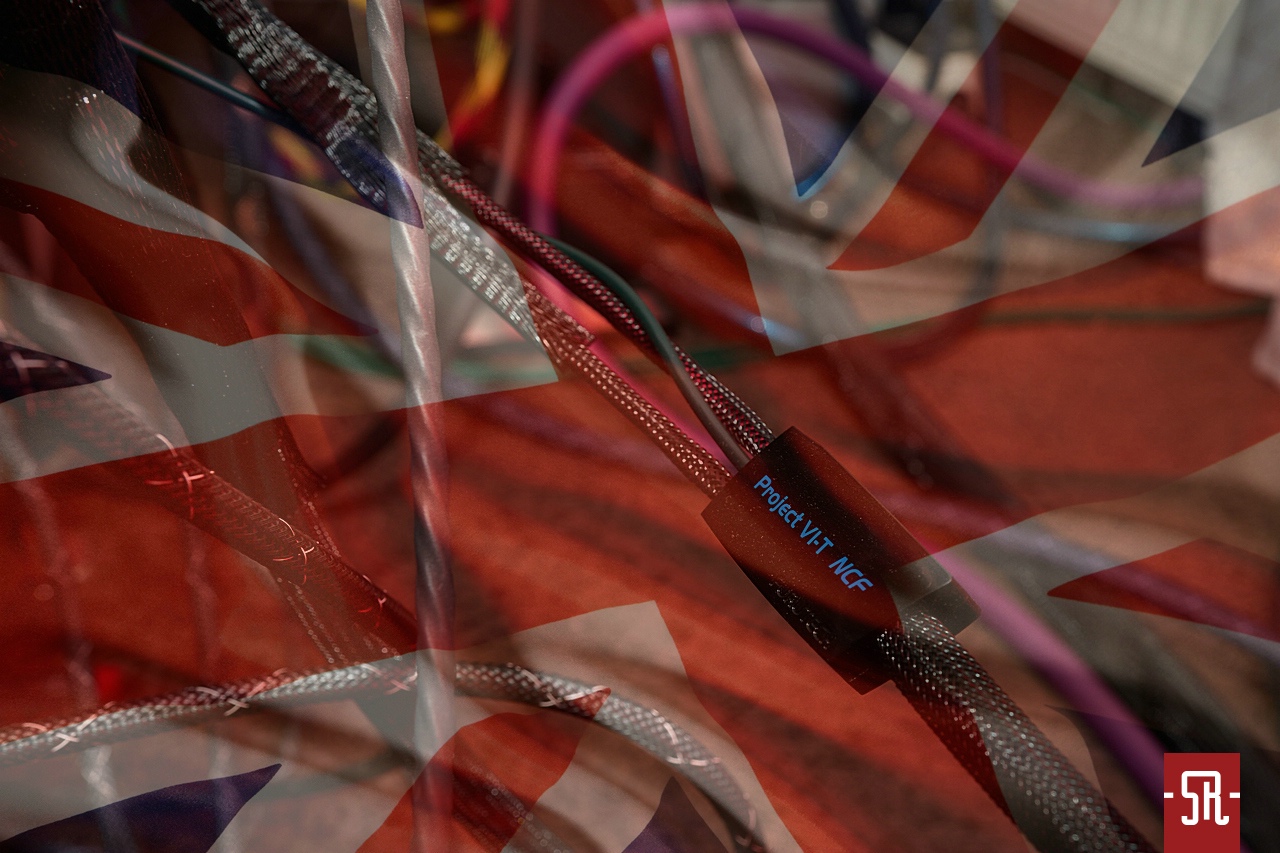
After such a long series of tests, I am not only suspecting, but one hundred percent sure that each one of you knows, that the V-1 series is not only a designation of a Second World War era rocket, but also of the latest product line of the Japanese specialist in cabling and all kinds of audio accessories – Furutech. For the last several months, we have laboriously reviewed design after design under this trademark name, which for me had the positive effect of the power cable used for the phono preamplifier and two XLR interconnects between the sources and the line preamplifier, being the aforementioned phonostage and CD player, becoming part of my stereo system. Those cables stayed with me because they avoid any fireworks, yet they work on the resolution of the reproduced music, especially concentrating on the midrange. At first, they do not evoke any special oohs and aahs, as the competition often does want to win our souls by mischievous trickery, but everything changes when we unhook the V-1s. Suddenly, music seems to die in a large part. For some reason, it loses its near-natural tangibility, which makes the element of joy, that is supposed to enchant us, slip away. And that this effect hurts the most in the most sensitive range for our hearing organ, which is the midrange, when we have an evenly playing stereo, an unobtrusive injection of micro dynamics in this sound band really can do wonders. At least this was the case with the previous sibling of the gramophone cable described today. That is right, in this meeting we will discuss the last representative of the V1 family, the Furutech Project V1-T-R4 phono cable, to be placed between the tonearm and the phonostage, (RCA/RCA version) supplied by RCM in Katowice.


From the manufacturer’s information on the construction of said cabling, we know that we are dealing with a Silver Hybrid OCC conductor, which was finally subjected to the Alpha process. The very delicate signal coming from the phono cartridge is protected against external interference by a three-layer screen design. What is very important, each signal wire harness is shielded separately. And an additional signal protection, in addition to the aforementioned tripling of screens, is the use of one more screen for the entire cable. As for insulation, in this topic, the Japanese used a material marked as SR PVC and foamed polyethylene nitrogen. To conclude the description of the basic data about our hero, I will only add, which is of course perfectly visible in the series of photographs, on both sides the cable delivered for the test was terminated with RCA plugs. Of course, this is not the only option, as the offering also includes a set with DIN/RCA terminals. The latter option, contrary to appearances, is quite popular among turntable users, which is why engineers from the Land of the Rising Sun have added this version to their portfolio without the slightest problem. Of course, following the example of the previously described wires, our hero is finally packed first in an aesthetic blue bag, containing them in a bamboo box lined with soft, also blue material. Exaggeration? Absolutely not, because respect for the customer is standard for the Japanese, and such attention to detail is a mere confirmation of this approach.
Before I get to the specifics, some information about the setup of my system before plugging the tested cable into it. So far, I have relied on the inexpensive Vermöuth Audio Refenence Phono. The reason was to prefer a pleasant, well-embedded sound, but not overloaded, because it shows a nice roughness of the sound. In the meantime, of course, I tested a few other proposals, but the overall consistency of sound in the aesthetics with cool timbre and saturation always appealed to me more than even the often very attractive at first glance, but in the long run tiring, competitive performance of the edges of the sound band during the reproduction of music by a potential competitors. Time passed, the contenders to be in my analogue system instead of the cable from Bali fell off one by one, until the eponymous Japanese V1-T threw down the gauntlet. In theory, I did not need anything special, because the system sounded already great. However, that was only in theory. Why? I will not try to do magic, but I will develop the idea from the introduction. Of course, it is about the lack of intrusive changes to music playback at first contact. After applying the cable, I still got the right weight and saturation of the sound, and thus great musicality. However, from the first notes, as a positive side effect of the exchange, you could hear the work done in the midrange. Its resolution improved radically. Not as a lightening effect, because everything still sounded without any attempts to boost the higher midrange, or slim it down; because it still focused on the right kind of roundness that is pleasant to the ear, yet providing this part of the band with a diametrically larger amount of information. And to be clear, I did not feel any roughness or technicality in the sound of the system configured in this way. On the other hand, I was very positively surprised by the effect of greater vitality, and thus the joy of the events taking place, as well as the creation of phenomenally vibrating virtual sources in sound, like never before – regardless of whether it is a human voice or a natural instrument. It was something like the phenomenon of greater freshness, and thus the tangibility of the music listened to, which was previously unattainable by the competition. Admittedly, other brands bravely fought for a similar result, but as I mentioned, they rather focused on „boosting” the edges of the sound spectrum, while Furutech focused on greater joy in the midrange. Yes, I realize that turning up the emotions in the bass and upper registers may cause more applause in someone else’s case, but then, calling it by its name, we get a dangerously competitive sound. Unfortunately, in the case of the analogue, this is a simple way to distort the sound in the form of too sharp visualization of the music, i.e. we walk the path of the digital sources. In analogue, we are supposed to get the fullness of life, airiness and homogeneity, which the Japanese showed in the best way I have been able to hear so far. Supposedly, on the virtual stage, as compared to the unplugged Vermöuth, there was a surprisingly large amount of action, but without harmful hardening and brightening, which, when you scan through the previous tests, is a feature not only of the eponymous turntable cable, but of the entire V1 family. And with this optimistic accent I will end the description of the sound of our hero. I can go on and on about it, endlessly describing specific album titles, but knowing that even without such practices, the cable will defend itself perfectly, I will deliberately leave you with a hint of understatement. The reason? I want you to see for yourself, like me, that compared to the competition, less – I am talking about avoiding over boosting the effectiveness of the edges of the sound spectrum, in the end means more for the sound quality of the music played. Of course, “more” in this case means “truer”.
Based on the above description, can the last Samurai from the V1 series, the T-R4 model from Furutech, be a potential killer for any competitor in analogue collections? I will say bluntly. If you are not correcting previously made configuration mistakes with this type of wiring, it has a great chance of showing the phenomenal sound of the turntable. Phenomenal not in operating with strong counterpoints in the bass and upper register, but in maintaining the appropriate weight of sound, ensuring breathing and the resolution of the most important part for our hearing organs, the midrange, because in fact, that is where most of the music happens. If we take care of it, we have a simple recipe for analog success. A success, which I luckily benefited from, as just after this test the cable stayed with me.
Jacek Pazio
System used in this test:
Source:
– CD Player/DAC: Gryphon Ethos
– streamer: Lumin U2 Mini + switch Quantum Science Audio (QSA) Red-Silver
– Preamplifier: Gryphon Audio Commander
– Power amplifier: Gryphon Audio Apex Stereo
– Loudspeakers: Gauder Akustik Berlina RC-11 Black Edition
– Speaker cables: Furutech Nanoflux-NCF Speaker Cable
IC RCA: Hijiri Million „Kiwami”, Vermouth Audio Reference
IC XLR: Hijiri Milion „Kiwami”, Furutech DAS-4.1, Furutech Project V1
Digital IC: Furutech Project V1 D XLR
Ethernet cable: NxLT LAN FLAME
USB cable: ZenSati Silenzio
Power cables: Hijiri Takumi Maestro, Furutech Project-V1, Furutech DPS-4.1 + FI-E50 NCF(R)/ FI-50(R), Furutech Evolution II, Hijiri Nagomi, Vermouth Audio Reference Power Cord, Acrolink 8N-PC8100 Performante, ZenSati Angel
– Table: BASE AUDIO 2
Accessories: Quantum Science Audio Red fuse; QSA Silver fuse; Synergistic Research Orange fuse; antivibration platform by SOLID TECH; Harmonix AC Enacom Improved for 100-240V
– Power distribution board: POWER BASE HIGH END, Furutech NCF Power Vault-E
– Acoustic treatments by Artnovion
Analog stage:
– Drive: SME 60
– Cartridge: My Sonic Lab Signature Diamond
– Phonostage: RCM Audio The Big Phono
– Clamp: Omicron Luxury Clamp
– Eccentricity Detection Stabilizer: DS Audio ES-001
– Tape recorder: Studer A80
Polish distributor: RCM
Manufacturer: Furutech
Price: 21 300 PLN

