Zikra Audio MC Transformer English ver.

With a high degree of certainty, most analogue freaks similar to me, have had heated discussions, certainly more than once or twice, about the way the signal from MC phono cartridges is processed. As you know, these are usually low-voltage styluses, which, unlike their less technically advanced MM sisters, can be treated in two ways. So what am I talking about? Let me tell you. Although it is defined differently in different places in our world, in Warsaw, there is a saying, that there are two schools of doing things – the Falenica or the Otwock way (both are areas in the Warsaw agglomeration). The first one votes for the use of electronic circuits, i.e. a typical phonostage, while the second one advises the use of a theoretically simpler design, because it is based on a transformer that raises the level of the signal. One might ask, what is the problem if each of the mentioned options fulfills its tasks? You take what you have at hand and the topic is closed. Well, as it usually happens, the devil is in the details, which are the pros and cons of each one of them. What and in which case? I will not go too much into the detail, because it is a vast topic, but in short, based on my experience, it looks like this: in typical MC phono preamplifiers, it is about fighting a heavy, not always successful, battle with an increase in distortion during the amplification of the signal, while the SUT (Step Up Transformer) being a substitute for the phonostage often causes some kind of averaging of the sound. And let me remind you that these problems and their effects only get worse with the increase in the quality of those devices. As you can see, playing with a turntable – at least at the highest level of quality – is not easy. Unfortunately, if you want to get into it, you have to get a grip on the topic somehow, so today’s test has a chance to support you with some kind of help. How? Well, it will be a sonic evaluation of an alternative to the typical phono preamplifier I use, i.e. a Step Up Transformer. However, not just any SUT, it is a product of Zikra Audio, a specialist in analogue circuits, with tubes in the background – I am alluding to an excellent line preamplifier, which we described some time ago on our pages. Now the Olsztyn distributor Prestige Audio delivered to our editorial office the flagship product of the Danish brand Zikra Audio – the MC Transformer.
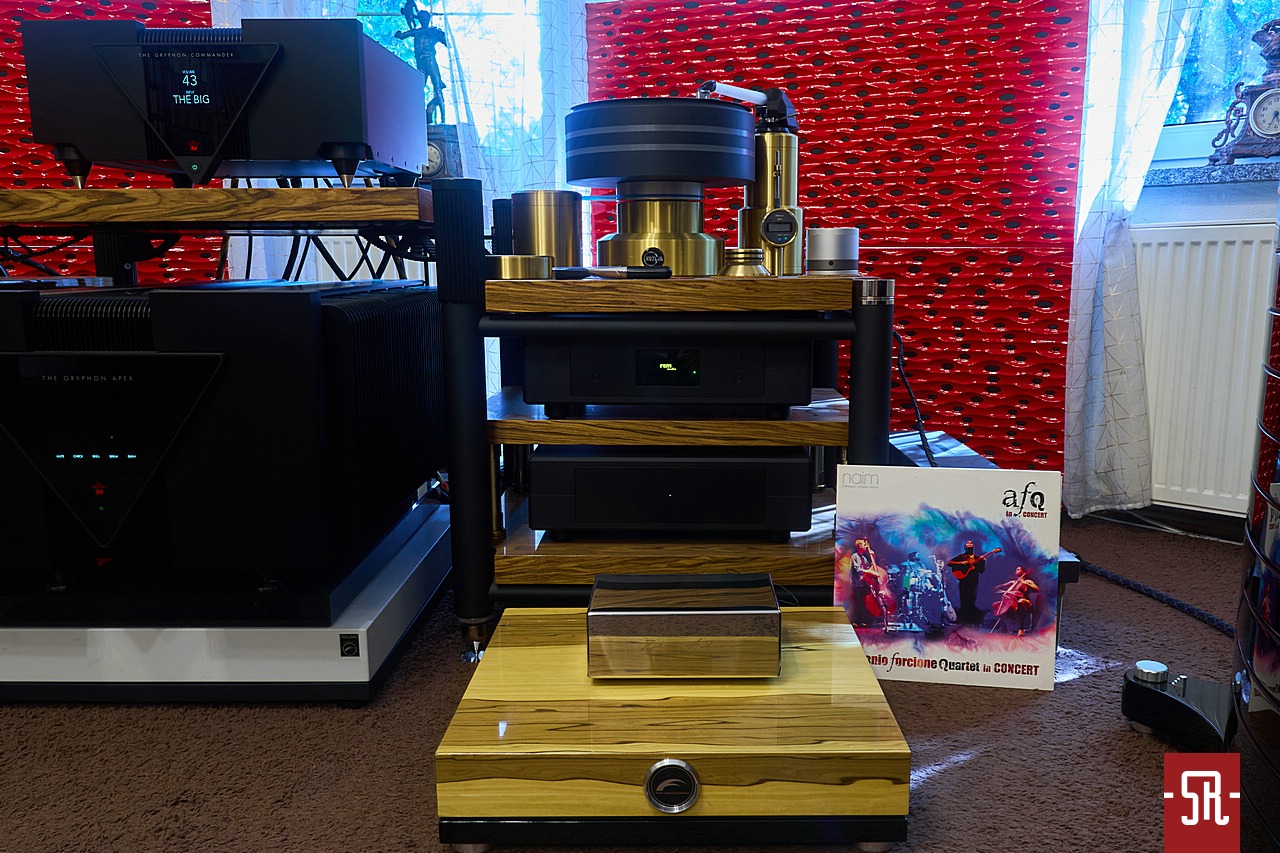
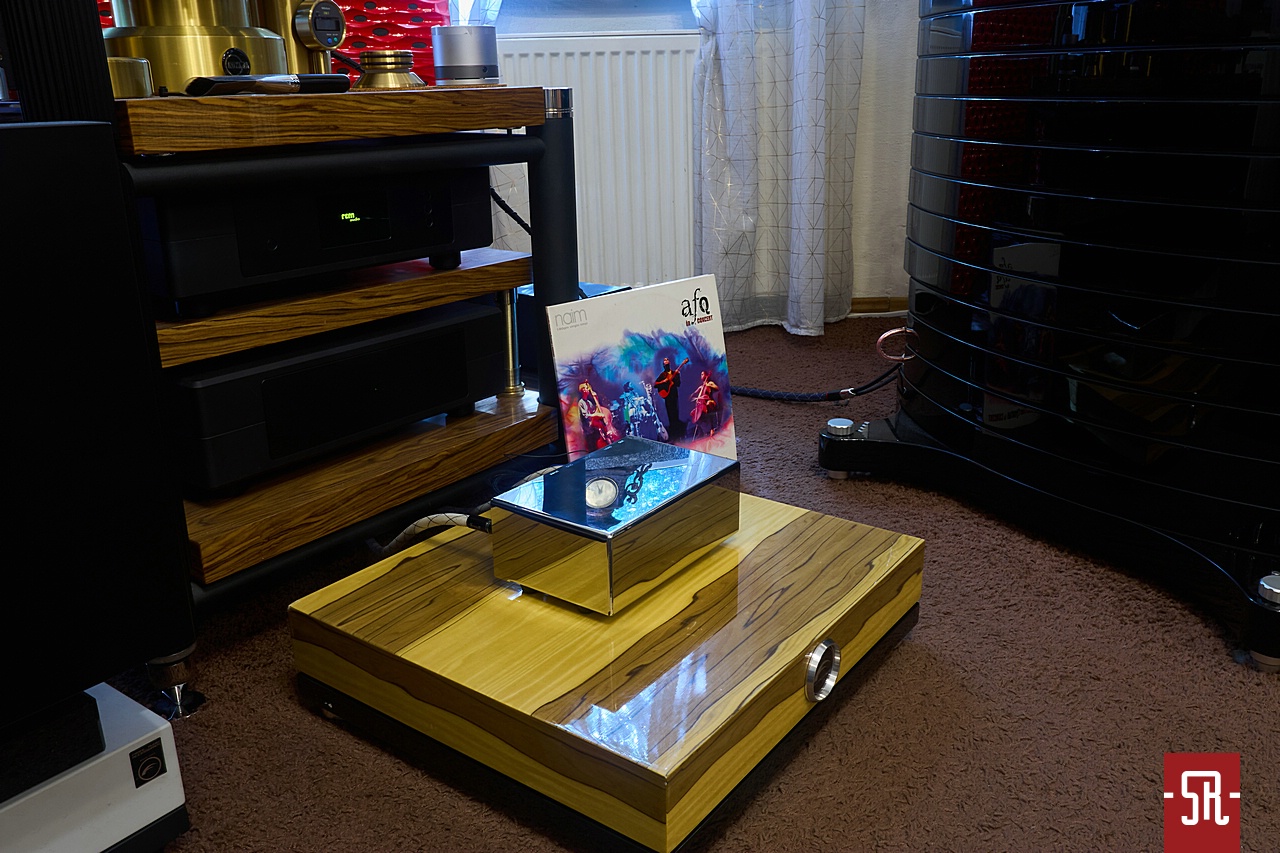
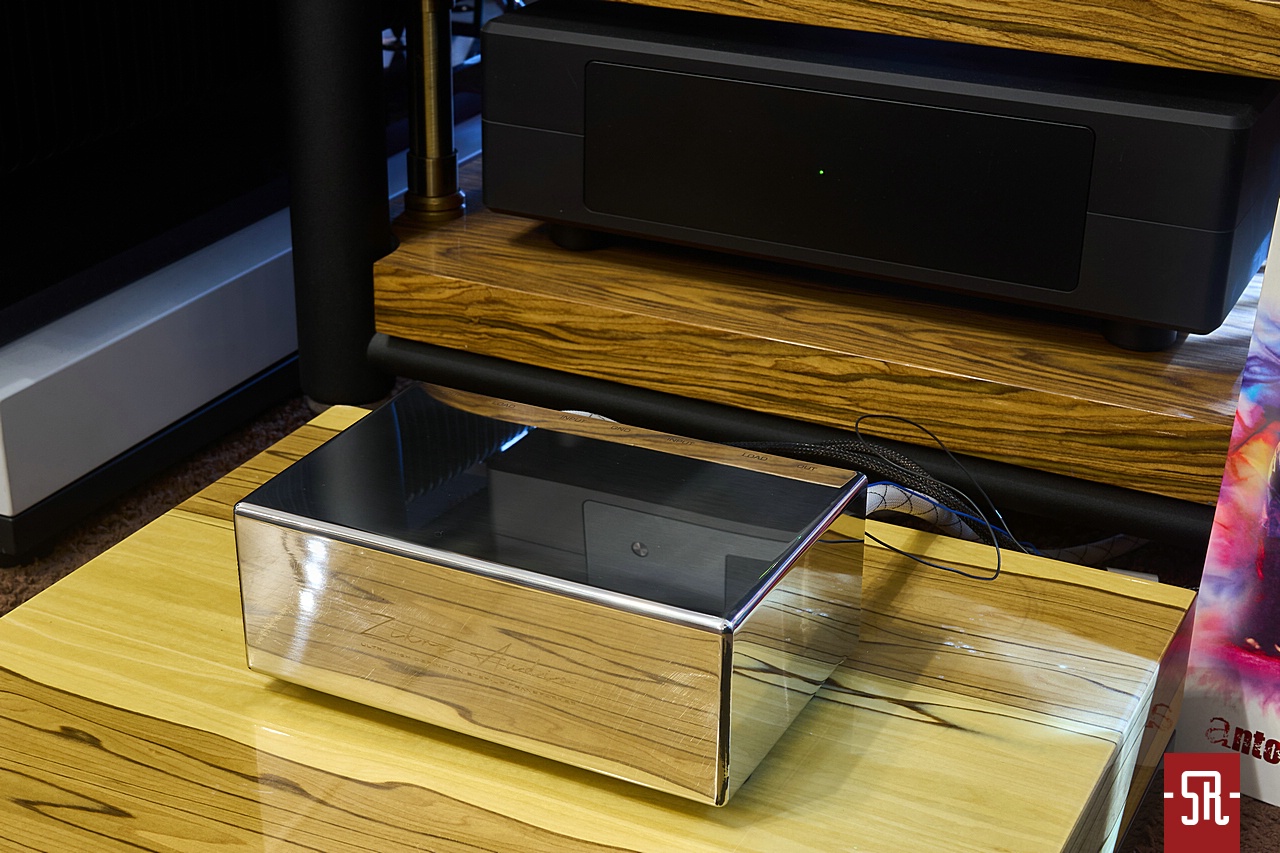
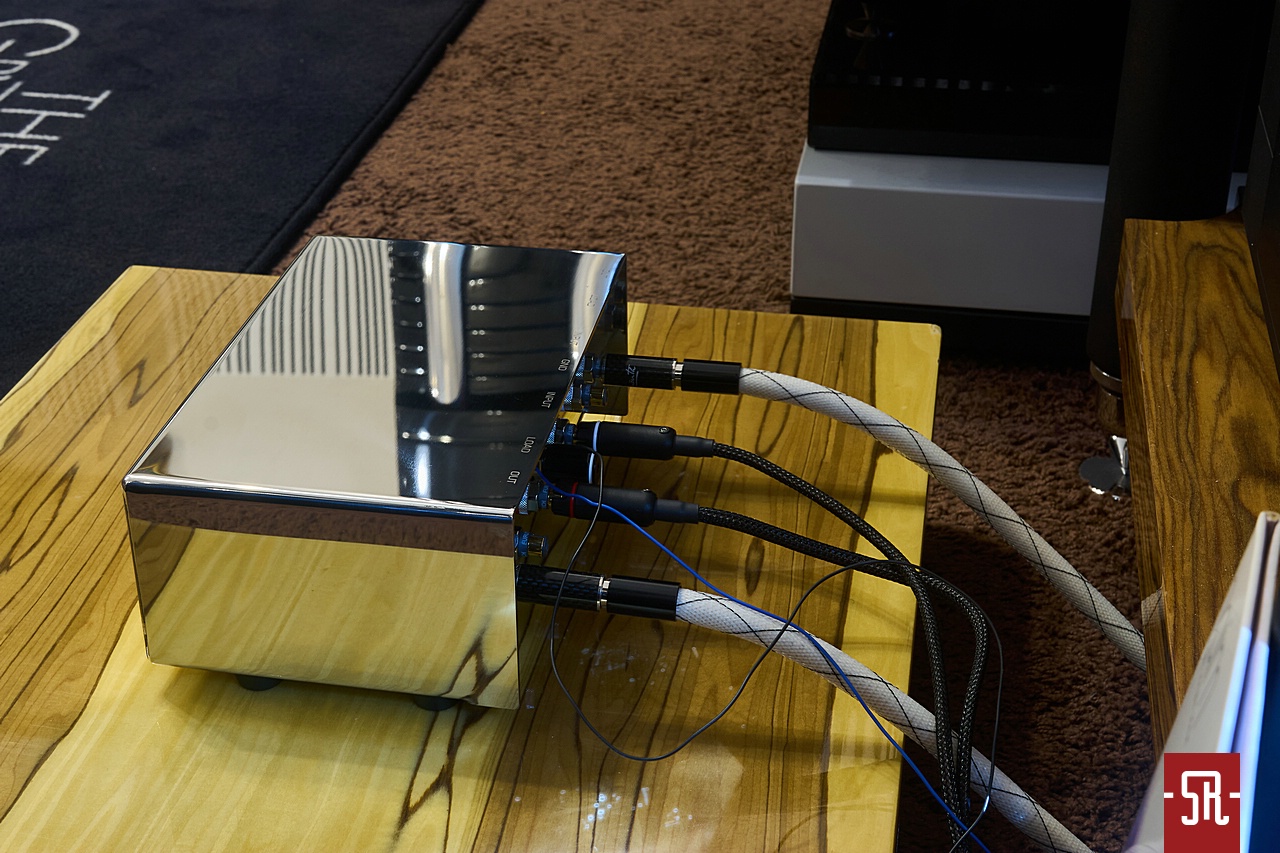
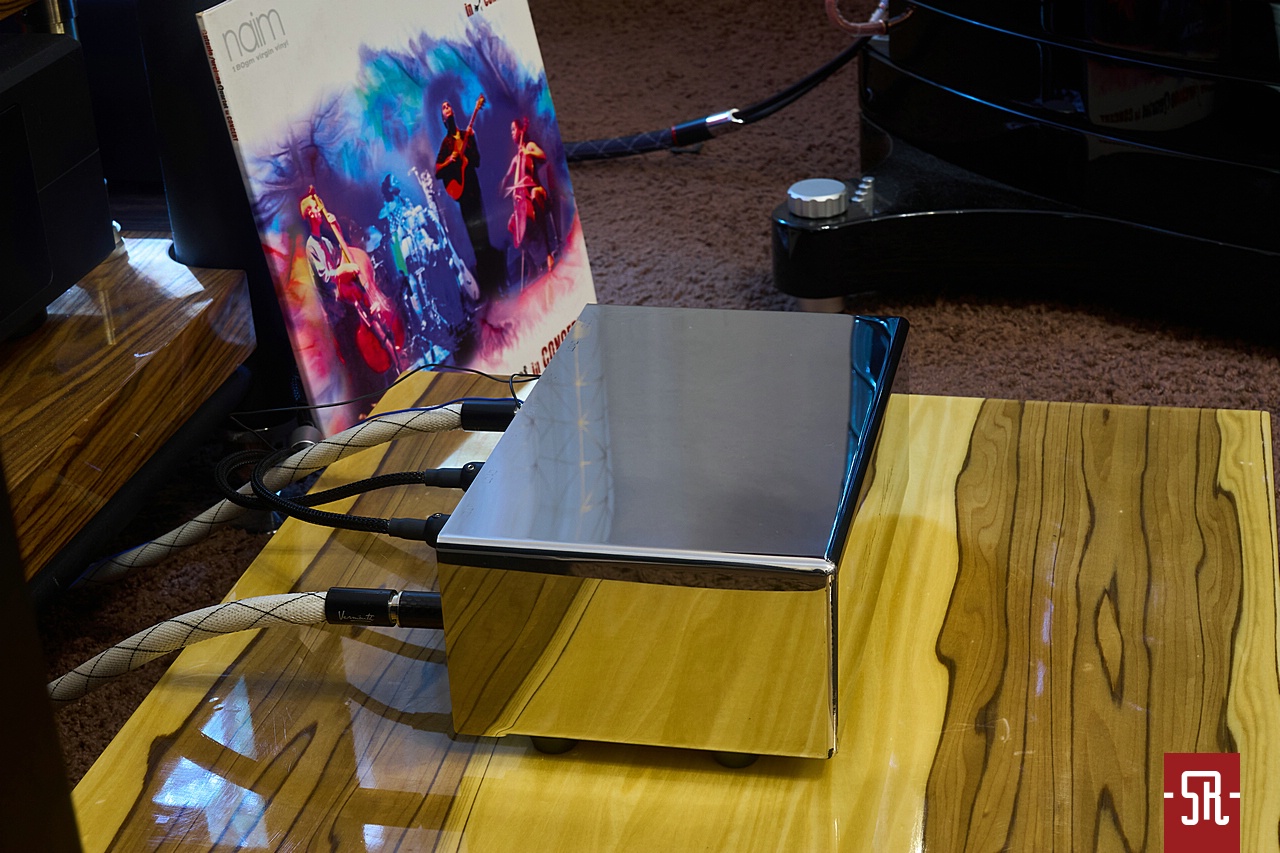
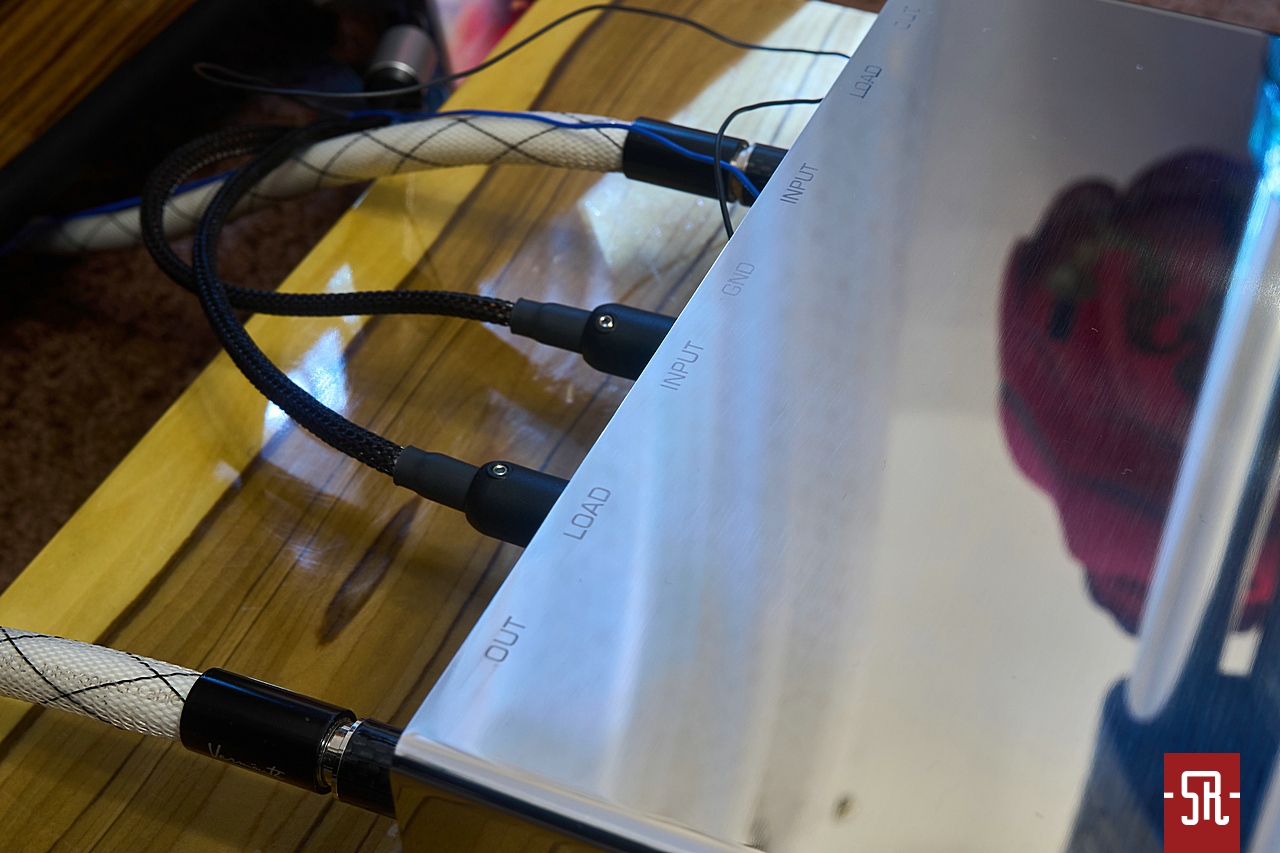
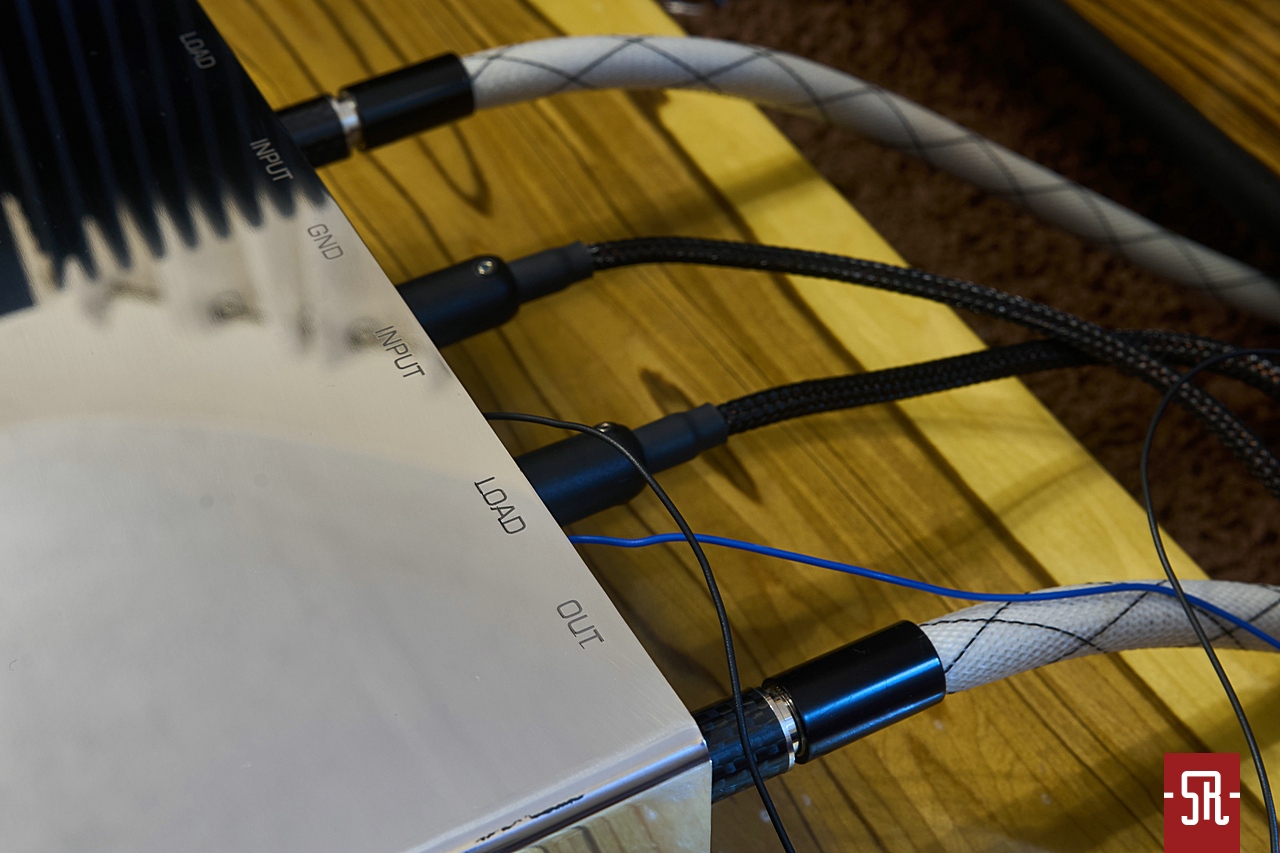
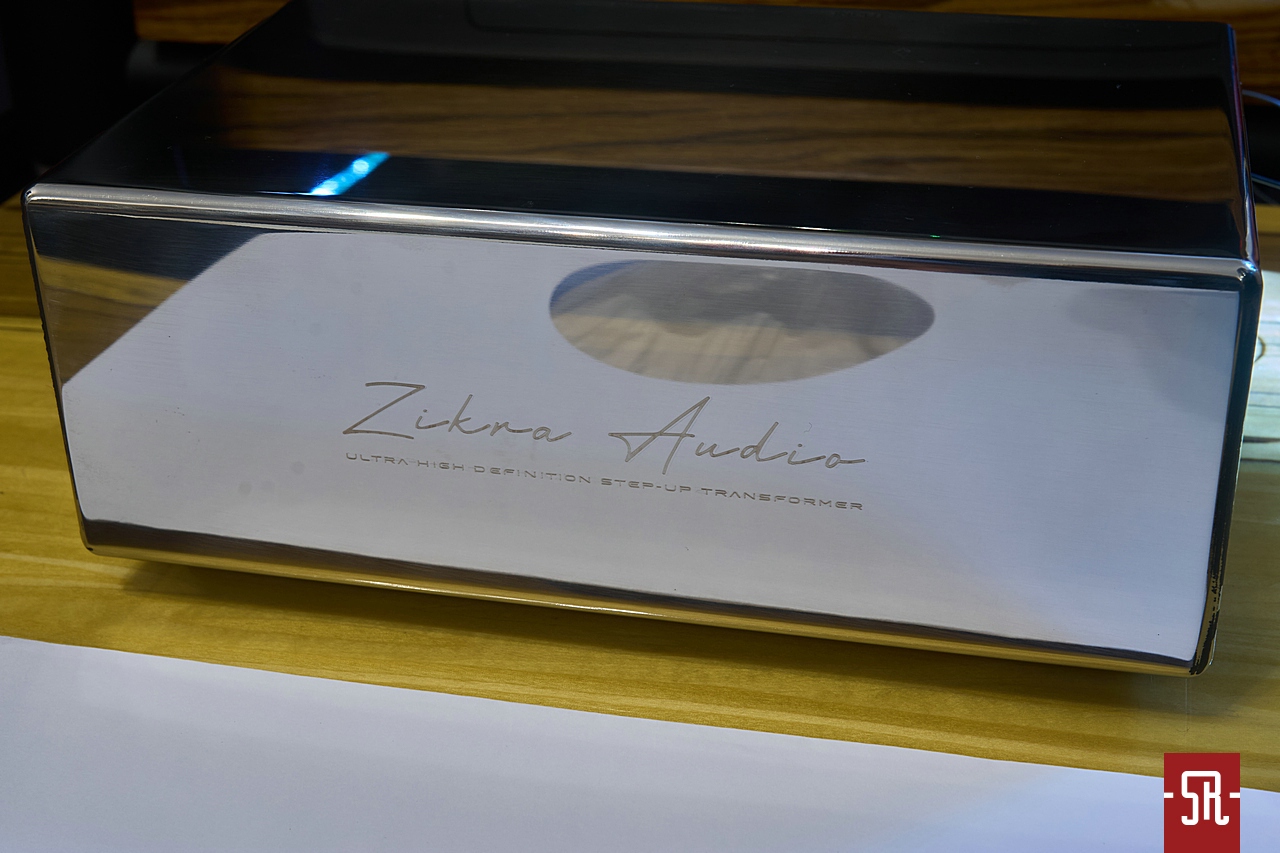
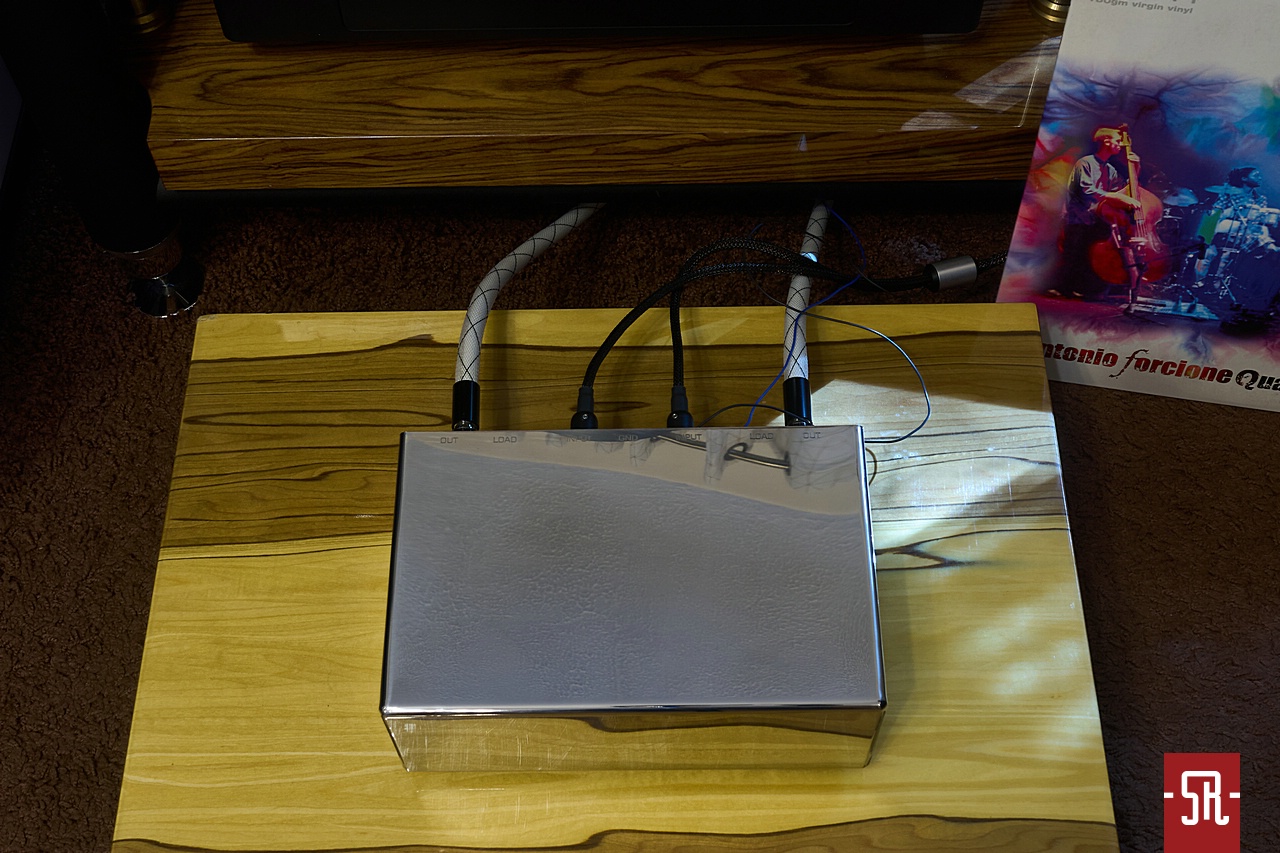
When you look at a series of photographs, and use your imagination to collide it with my phonostage, even a layman will notice that if someone has chosen the transformer solution that is the subject of today’s review, in addition to the satisfactory quality, they get something for free. Of course, I am talking about the dimensions of both designs. A SUT is always more compact, while phono preamplifiers full of complicated electronics in my style can often use two large boxes of a trifling 20 kg each. You will admit that there is a lot to fight for. So how does the Danish Step-Up look like? As you can see, it is a small box made of polished steel. However, do not let this fact fool anyone, because the solidity of the components used inside makes this small cuboid weigh more than 5 kg. For my part, I will add that it is undoubtedly a very aesthetically pleasing cuboid, because all the information text on the device, including the brand and device name on the fascia, as well as descriptions of all the sockets on the back of the cover, are etched or engraved in barely visible italics. The effect is, that at first glance nothing can be seen on the shiny surface, and all the cards of Zikra MC Transformer are revealed only after looking from the right angle. Believe me, although it seems like something unnecessary, in the end it is great thing for everyday use. Once we have the general looks of the device described, there is nothing left to do, but go to the back of the case and look at its compatibility with the analogue system. And there you will find 6 RCA inputs and a centrally oriented ground terminal. Why as many as 6? I am already explaining. Six, because we first have to bring the signal from the tonearm, which is done by the sockets right next to the ground screw. Then output the signal after it has been properly digested by the internal transformer through the sockets on the outer flanks. And if a given cartridge needs load correction – above 100 Ohm the topic is negligible – you can contact the manufacturer and order something like RCA „bits” with the necessary load value, which are implemented on the sockets between the input and output marked as “Load”. You will admit that the operation is very simple and the only minor problem to solve is to determine the value of the plugs that adjust the factory values of the cartridge to the Step-Up. So much from me about the general appearance and the process of adapting the device to work in a given environment. And if so, we have come to the moment of mentioning its bowels. I will present them in a very rarely used way – I will just paste the mailing I received from the distributor, very digestively describing the internal structure of the device, and does not brag and glorifying the manufacturer’s achievements too much.
„Transformer step up.
In general, Zikra keeps it a secret who makes the transformers, but we can reveal that the goal from the very beginning was to create a step up that will sonically beat its reference in the form of the flagship Kondo or Allnic Audio. The transformer delivered for testing is a silver-wound version – a copper-based version is also available. Both versions are characterized by a special type of winding, which makes them Bifilar transformers. In our opinion, this is the best solution in step-up transformers for turntables with an MC cartridge. The use of bifilar winding is of particular importance, as it allows for the maximum possible clean and faithful transmission of a very low-voltage signal. Bifilar cable routing provides excellent magnetic coupling and minimizes inductance, resulting in a wider frequency response, both in terms of deep bass and subtle highs. This design reduces intrinsic noise and electromagnetic interference, so that the signal remains extremely clear and natural. In addition, high symmetry of windings is achieved, resulting in a better channel balance and a more stable stereo stage. As a result, a bifilar winding transformer not only improves the dynamics and clarity of the sound, but also maintains the phase consistency of the sound, which is crucial for a truly audiophile listening experience. An important piece of information is also the fact that the oversized core of custom-made transformers is pure Permalloy. The transformers themselves are put inside a triple shielding, where the first two screens are nu-metallic elements, and at the end there is a copper capsule.”
Little or much information? In my opinion, the most important features of the design are revealed, so the topic is treated solidly and we can move on to the clou of the meeting, i.e. the description of the sound of the Scandinavian MC Transformer.
Before I move on to a detailed description of signal processing by the Zikra SUT, a few sentences about my experience with this type of designs. It is an undeniable fact that connecting them gave the impression of achieving greater consistency in the sound of the system. A cranked amount of energy, and fewer unnecessary artifacts, as a result of the consolidation of the sound, give a sense of increased tangibility of the events taking place on the virtual stage. Without going into too much detail, the focus is on the emotions carried by the music. It has always been like this, and I always perceived it positively, which made me spend time with music based on a black record myself for several years. Unfortunately, only until a certain time. But why? There came a moment, where my audiophile soul, which was largely devalued by music lovers, disappointed by failures of creating a stereo ideal in all aspects of sound, finally started to speak to me. It was that soul, which pointed her finger at places, where there was no spark. Yes, it was fun, but when you want to go all in the recording, having two different alter egos, fun is not enough. This is why I currently use a typical phonostage. To meet my high-quality requirements for very high-quality sound – the power supply itself uses a transformer with a power of 200W per channel, but as they say: „the result justifies the means”. But I would like to point out that in order to surpass, maybe not the best, but a decent Step-Up, you need to find a very good phono, which, as you can see in my system as an example, is not an easy task, despite I have achieved a success. And when, after years of searching, I finally managed to reach the finish line, so that any tested device to perform really well and at the same time wants to fulfill my requirements, it must climb the Olympus Mountain. So how did the Danish Step-Up fare against the mythical mountain? Did it sound well, covering only a bit of the distance to the top, and giving a lot of fun from listening to music? Or did it defeat it completely?
Well, I do not know if it is my weakness for this manufacturer, that I have having experienced excellent designs based on electron tubes, which I currently avoid for simple management reasons, but once again the Zikra Audio brand positively surprised me. It is actually a small manufacture, like many others I hosted at home, but each time its offering escapes the results I predicted, leaving many excellent manufacturers behind, and this also happened this time. Admittedly, it gently rearranged the aesthetics of music reception, in relation to my everyday setup, but it did this in such an interesting and non-invasive way, that after the first day of playing with this inconspicuous box, I called a friend who was also crazy about turntables. What was the effect? The first and most important observation was to leave the music at its current level of full swing and full momentum. This is very important, because another nuance captured, was a minimal, but clearly noticeable, pulling of the sound together, resulting in an increase in fully controlled energy. Fortunately, such a move did not affect the speed of the system’s reaction to the changing situation on stage in any way. Usually, such an action has its repercussions in the form of shortening the reverberations and thus squeezing, and gently rounding off the edges of the sound, limiting its vibration and the size of the virtual world in the dimensions of width, depth and, of course, and in my opinion, above all, its height. Not without significance is also the loss of the effect of the ethereality created in the space between the speakers, which is necessary to draw the listener into the whirlpool of events. Of course, Zikra Audio, due to its knowledge of how to build good audio devices, coped with it excellently and the problems in question had no raison d’être. And it did it so successfully that as a result I got an excellent drive, which did not hurt the music at all, providing it with not only a package of information about the joy that lies dormant in it, but also about the complexity of the artists’ work and about the rendering of the sound of their attributes. Yes, yes, it is not without reason that I divide the complexity of projection into two areas, because being a declared audiophile I cannot do otherwise, which unfortunately is a big problem for many who are often hosted at my home. Of course, it is about focusing on the musicality of the sound, but often at the expense of not being able to convey the diversity of energy generated by a solo instrument, not to mention showing several instruments at once with the appropriate expression of each one of them.
A nice example is the actually whole catalog of this artist, but for the purposes of the test I used Ken Vandermark’s album released after a series of concerts in Krakow’s Alchemia club „The Vandermark 5”. And I do not mean to convey the frantic tempo and sound impact that is a special feature of free-jazz, because every good MC Transformer can do that, and I am looking for an outstanding one. Firstly, it is about the differentiation of the energy produced and the timbre, of sometimes playing in succession and sometimes together, instruments. I mean a variety of impulses, sometimes with their hardness, other times softness, and the length and speed of rising and decaying. And secondly, their specific timbre allows them to be distinguished from each other, even when emitting a tonally identical sound at the same time. I assure you, dealing with these aspects at a level close to the truth is the highest art of signal processing from a phono cartridge. I am convinced that most of our hero’s relatives will play such material nicely, colorfully and with energy. However, the whole problem is that when we take a closer look at such a projection, it suddenly turns out that this niceness, in the longer run, is nothing else, than what I mentioned in the very beginning, very pleasant to the ear, but still averaging of the sound. And a well-configured turntable should not offer any restrictions to the listener. Yes, many treat it this way, i.e. as a giver of pleasant sounds, but it has nothing to do with what not only can, but should presented by a top system, to which the titular Scandinavian aspires. Fortunately, the principal of the Zikra brand understands this perfectly and, in my opinion, with the support of many years of playing with this technology, he offered us an MC Transformer that fully reflects the sound assumptions written out a moment ago. It can easily cope with the speed of signal build-up, maintaining the appropriate timbre of the sound, but also, and for me above all, the variation of the impulse of each instrument participating in a given musical moment. So how did it look like? Imagine two saxophones playing at the same time in a different key, add a furiously loud trumpet that is musically arguing with them, and let everything in the lower parts be attacked by a strong kickdrum. You will admit that in order to convey this madness well, there is a lot of solid work to be done, with the resolution of the whole thing at the forefront. And that is not all, because often, in various album projects, the whole jumble, without rhythm and leading melody, is interjected by a springy double bass, solidly supported by the thickest strings. It also hits us with energy, but different from drums, and a good system should show that the double bass appeared at all – that is one thing, and that despite operating with a strong beat, it does it in a different frequency range and with a different specificity of attack and duration than the drummer with his drums – that is two. Any suggestions? Do not worry, I will tell you what usually happens. Naturally, we collide with a wall of chaotic and completely illegible sound, which every manufacturer who gets whipped with that, usually blames on poorly realized recording. Meanwhile, very often this is not the case, but a given device, looking at its work in great detail, allows you to show this madness as nice, if not weak from the projection point of view. Zikra naturally emerged from many such attempts to throw logs under his feet without the slightest problems. So convincing that if I did not have the current phonostage, the test would certainly end with a conversation about leaving the eponymous SUT permanently in my system. What is the reason for canceling those talks? Does this mean that you can do better? Paraphrasing a classic, it is probably clear that there will always be a bigger fish. However, I can reassure you, the differences between what I have now and what the Dane proposes are very discreet and only end in a different view of the microdynamics of sound at its edges. Compared to my phono preamplifier in this aspect, Zikra shows less freedom, which I sometimes perceived as a slight tension in the sound. But as I wrote, these are nuances and I am convinced, that even if you caught it during listening test, taking into account the four times the difference in price of both devices in favor of Scandinavian one, you would not even think for a moment what to choose.
As you can see from the amount of text, I came up with a long monologue reserved for phenomenal constructions that really move my feelings. A monologue, which I hope, clearly shows how the uncompromising Step-Up should do and what the tested Zikra Audio MC Transformer presented in one hundred percent. Is it an offer for everyone? In my opinion, without the slightest stretching of the facts, yes. Naturally, if you bear the price resulting from avoiding compromises in the process of bringing it to life. I admit that it is not cheap. However, on the other hand, in order for a typical, i.e. electronic-based phono to sound as unrestrained and as faithful as possible to the realism of every aspect of music, not only does it take a long time to find, but also certainly you will have to pay a lot more than for our hero, not even mentioning the sizes of both amplifiers of the signal from the phono cartridge. Have I convinced you? If not, there is only one thing left for me, which is to invite those interested to a personal clash with Zikra. However, I loyally warn you, if you are mentally prepared for the changes, there will probably be no return to the analog system configuration from before the test.
Jacek Pazio
System used in this test:
Source:
– CD Player/DAC: Gryphon Ethos
– streamer: Lumin U2 Mini + switch Quantum Science Audio (QSA) Red-Silver
– Preamplifier: Gryphon Audio Commander
– Power amplifier: Gryphon Audio Apex Stereo
– Loudspeakers: Gauder Akustik Berlina RC-11 Black Edition
– Speaker cables: Furutech Nanoflux-NCF Speaker Cable
IC RCA: Hijiri Million „Kiwami”, Vermouth Audio Reference
IC XLR: Hijiri Milion „Kiwami”, Furutech DAS-4.1, Furutech Project V1
Digital IC: Furutech Project V1 D XLR
Ethernet cable: NxLT LAN FLAME
USB cable: ZenSati Silenzio
Power cables: Hijiri Takumi Maestro, Furutech Project-V1, Furutech NanoFlux NCF, Furutech DPS-4.1 + FI-E50 NCF(R)/ FI-50(R), Hijiri Nagomi, Vermouth Audio Reference Power Cord, Acrolink 8N-PC8100 Performante, Synergistic Research Galileo SX AC, ZenSati Angel
– Table: BASE AUDIO 2
Accessories: Quantum Science Audio Red fuse; QSA Silver fuse; Synergistic Research Orange fuse; antivibration platform by SOLID TECH; Harmonix AC Enacom Improved for 100-240V
– Power distribution board: POWER BASE HIGH END, Furutech NCF Power Vault-E
– Acoustic treatments by Artnovion
Analog stage:
– Drive: Kuzma XL DC
– Cartridge: My Sonic Lab Eminent EX
– Phonostage: RCM Audio The Big Phono
– Eccentricity Detection Stabilizer: DS Audio ES-001
– Tape recorder: Studer A80
Polish distributor: Prestige Audio
Manufacturer: Zikra Audio
Price: 10 750 €
Specifications
Recommended Cartridge Impedance: < 10Ω
Gain at 1kHz: 20dB
Frequency band: 10Hz-100kHz (-2.5dB, +0.5dB)
Weight: 5.1 kg

