Fezz Audio Mira Ceti Mk2 English ver.
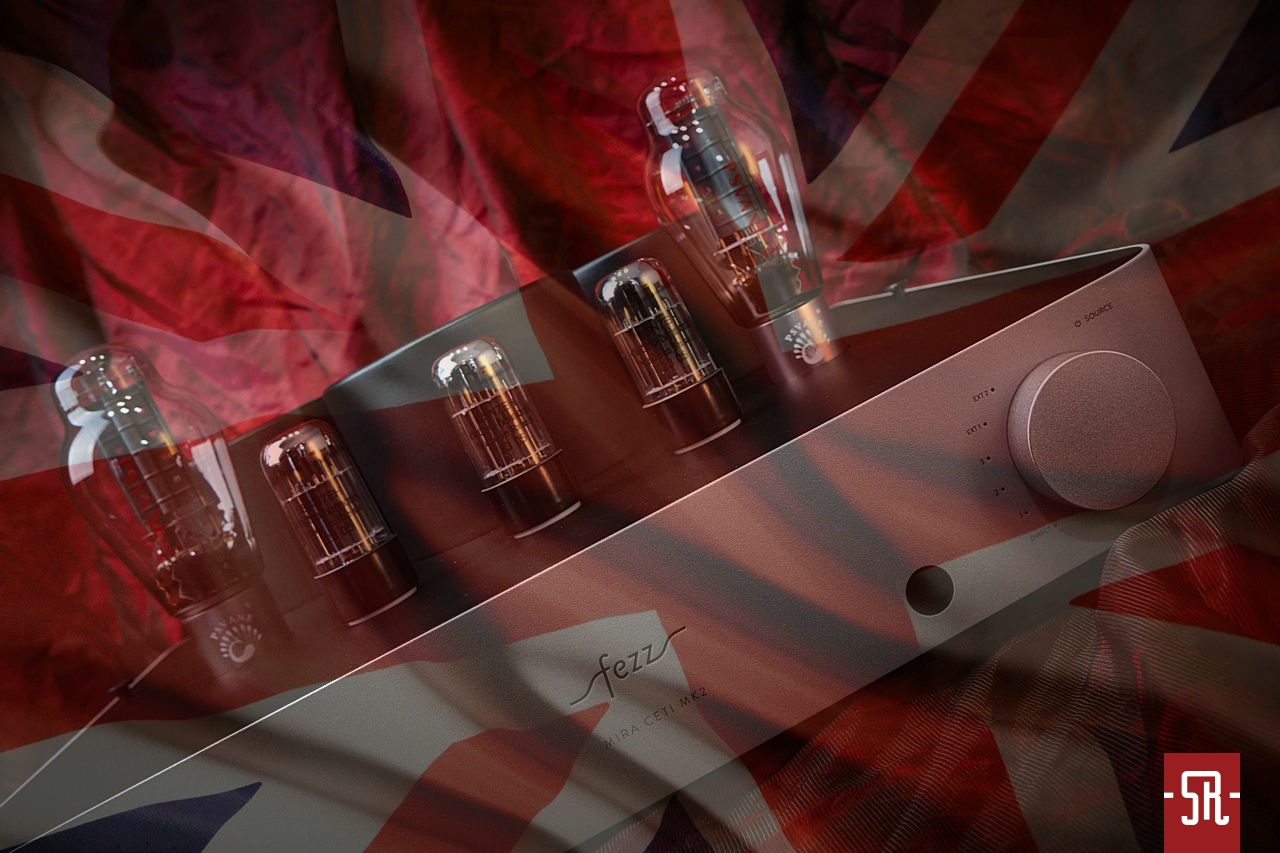
Opinion 1
Perhaps for many of you I will be too generous in my assessment of the Polish brand we are meeting today, but in my opinion, Fezz Audio can be safely classified as a vacuum tube mainstream. Why such a theory? I assure you, this is not the result of collusion between me and the aforementioned business entity, but a claim based on brand recognition among domestic audiofreaks. Of course, I also include us, who from time to time test very sonically interesting devices from this manufacturer. Of course, you can check which devices we have tested in the portal search engine, but to anticipate the facts, I will only mention that each model of the amplifier hosted by us showed very interesting aspects of sound, when compared to other devices in its price class and design. Although we did not have all the models on our test bench, but I can really vouch for the ones we did. Will I also do that for the one tested today? This, of course, will be revealed at the end of this text. Bu what are we testing today? Well, I will have the undisguised pleasure of putting a few paragraphs to paper about the latest incarnation of the Single Ended amplifier, which we have tested quite a long time ago, but now returned, after years of gathering experience, in its latest version – the Fezz Audio Mira Ceti Mk 2.
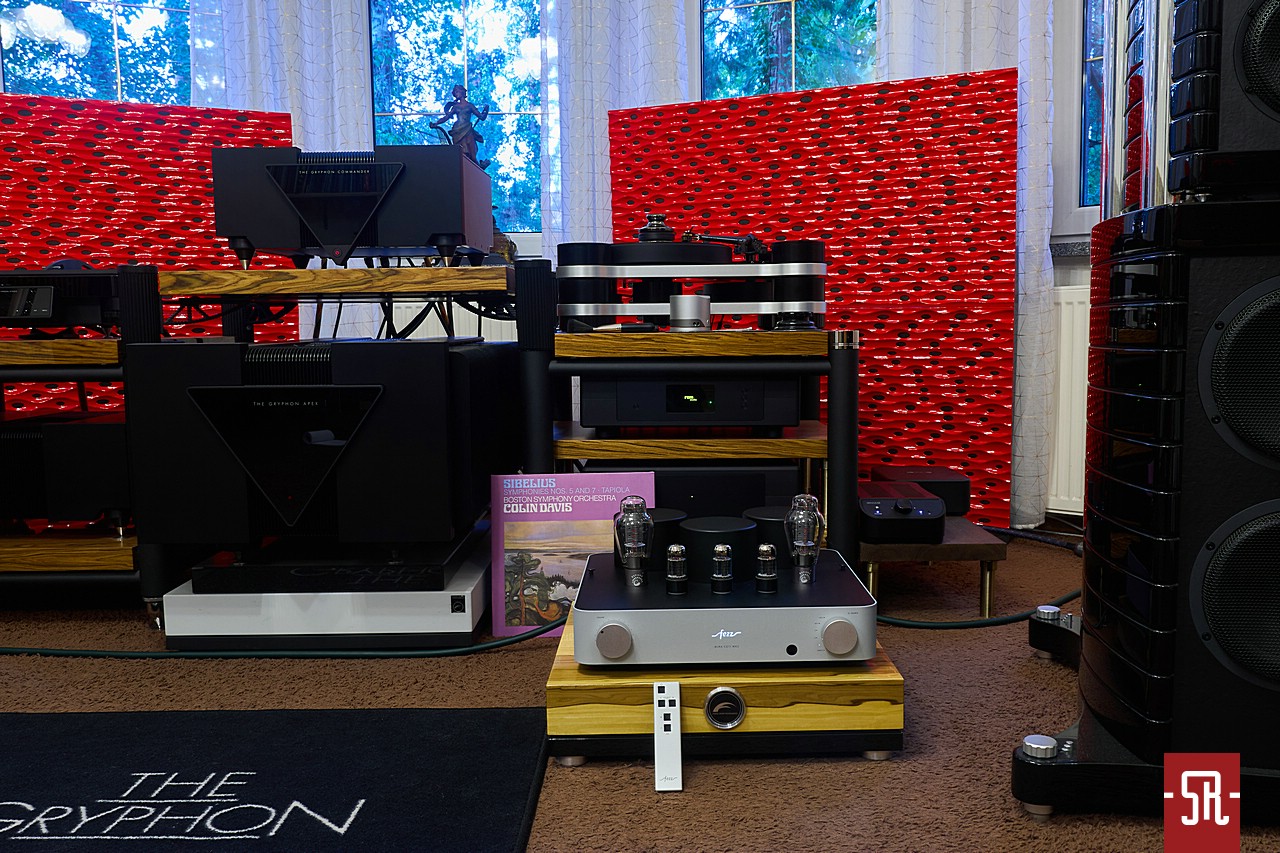
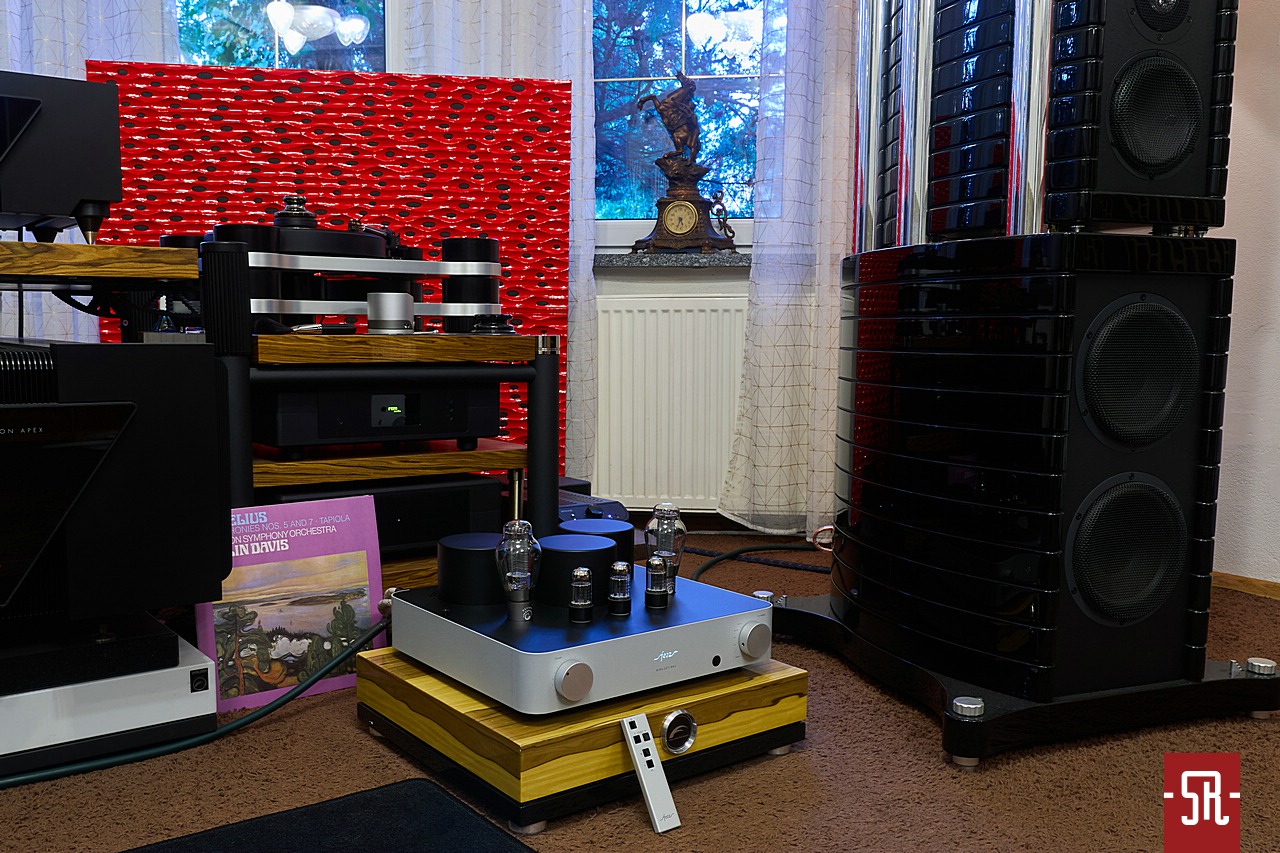
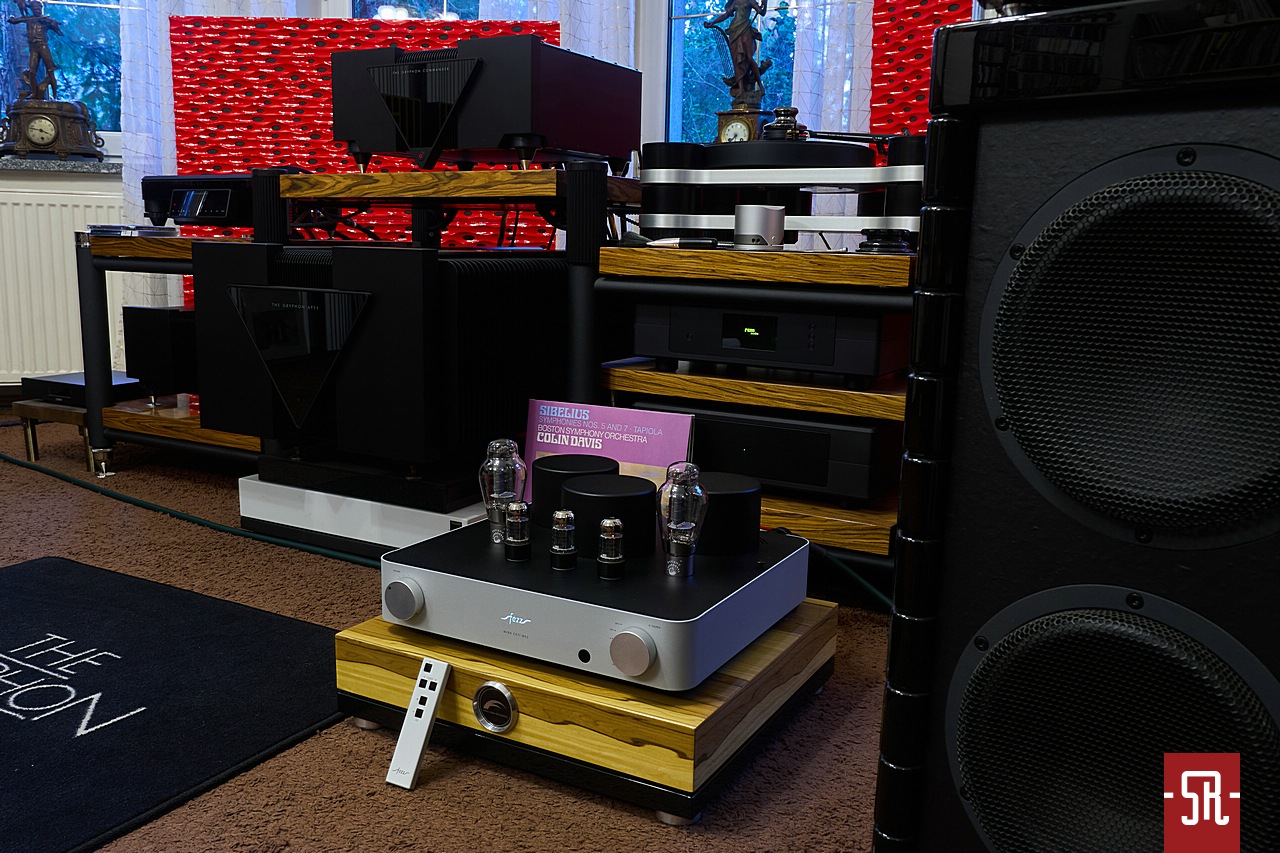
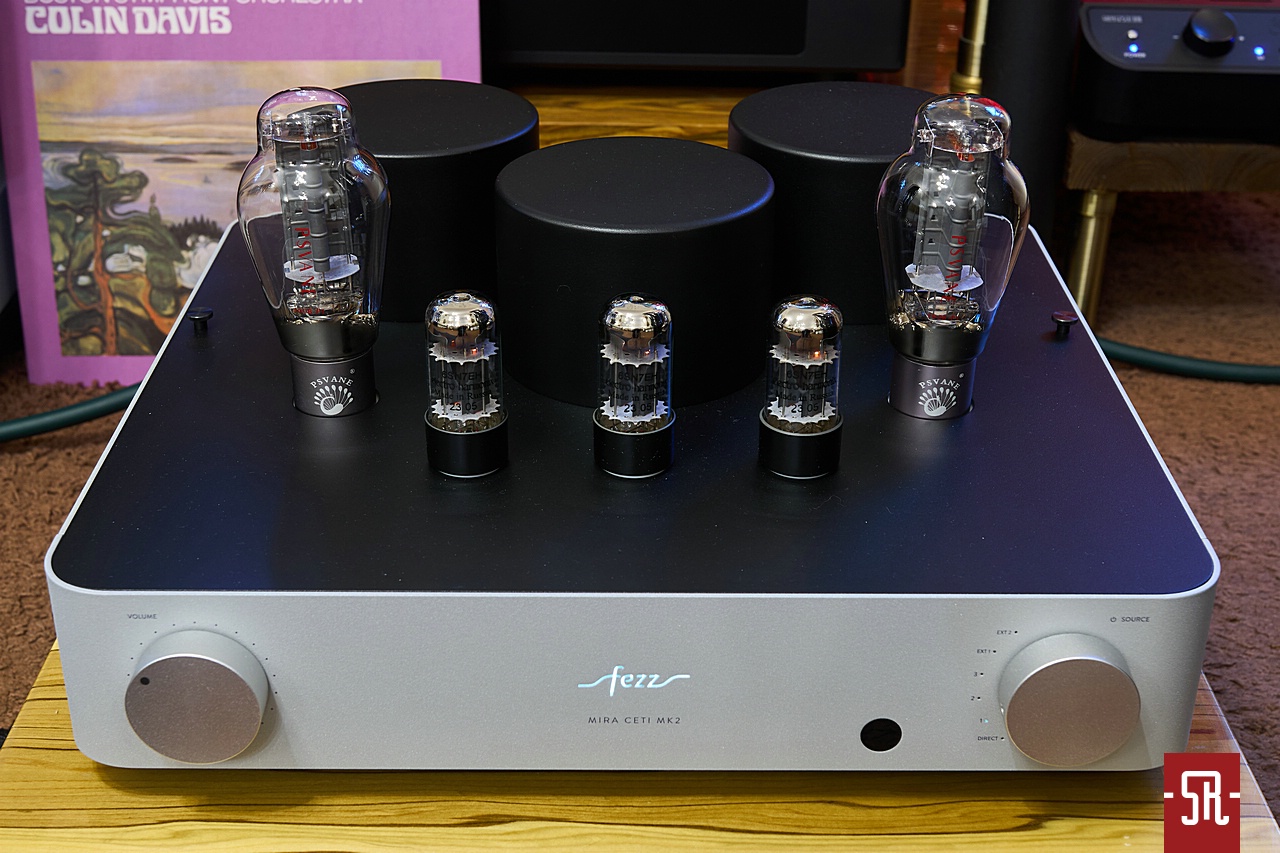
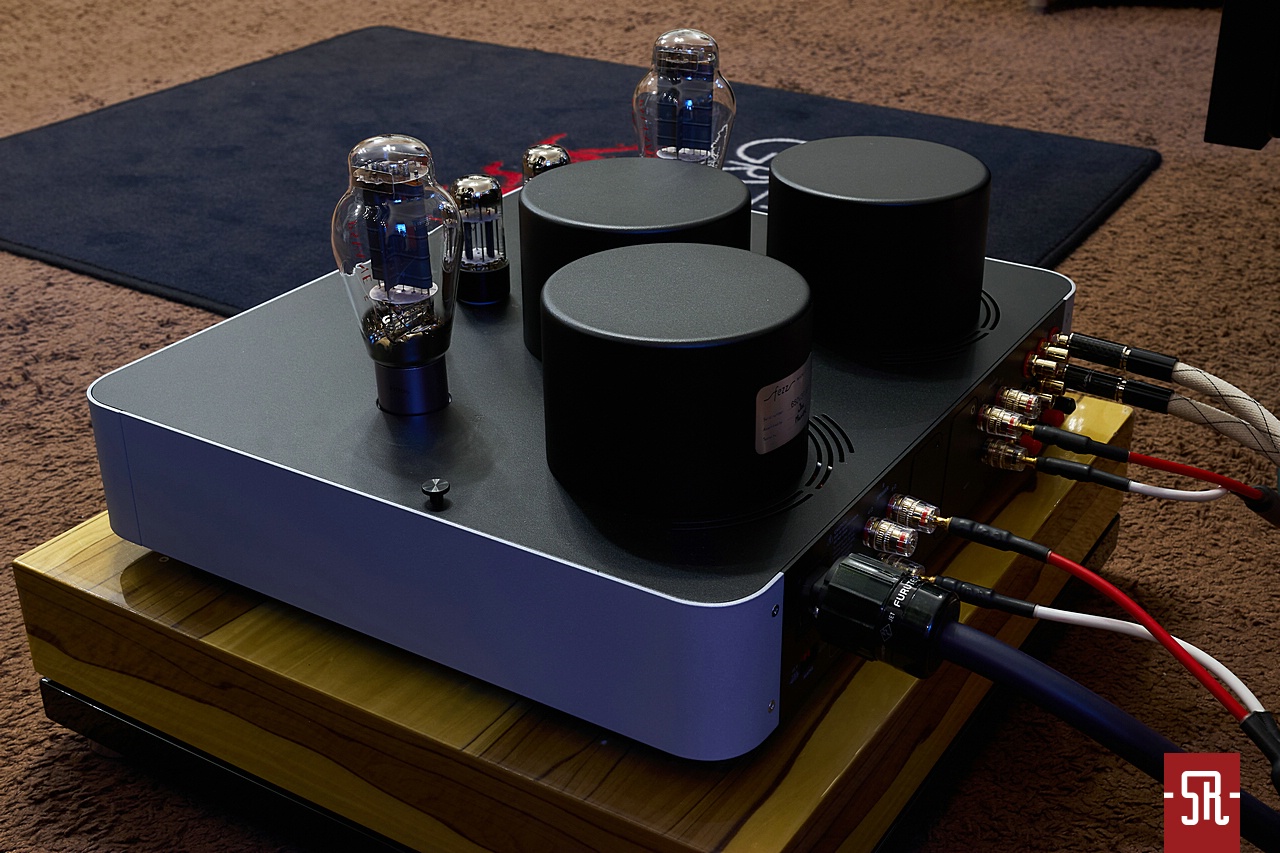
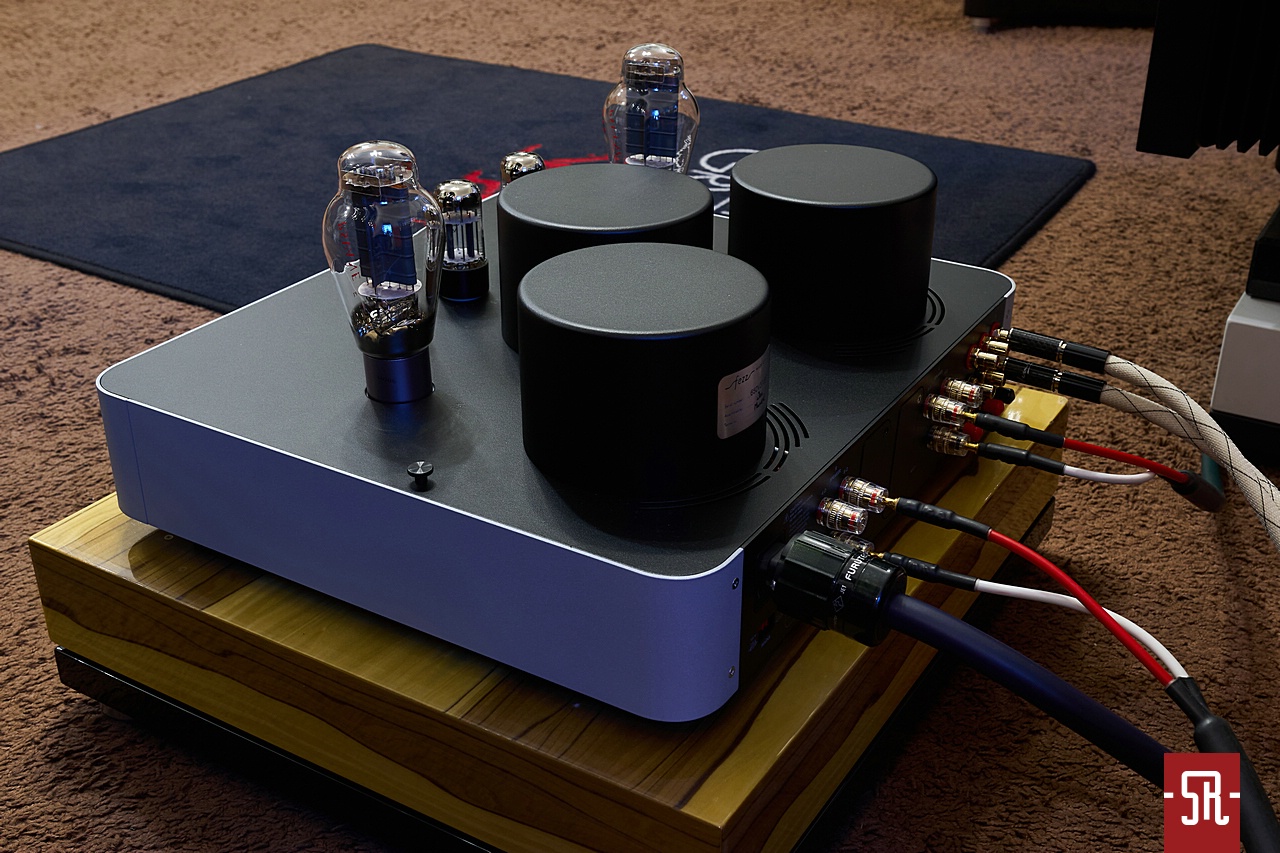
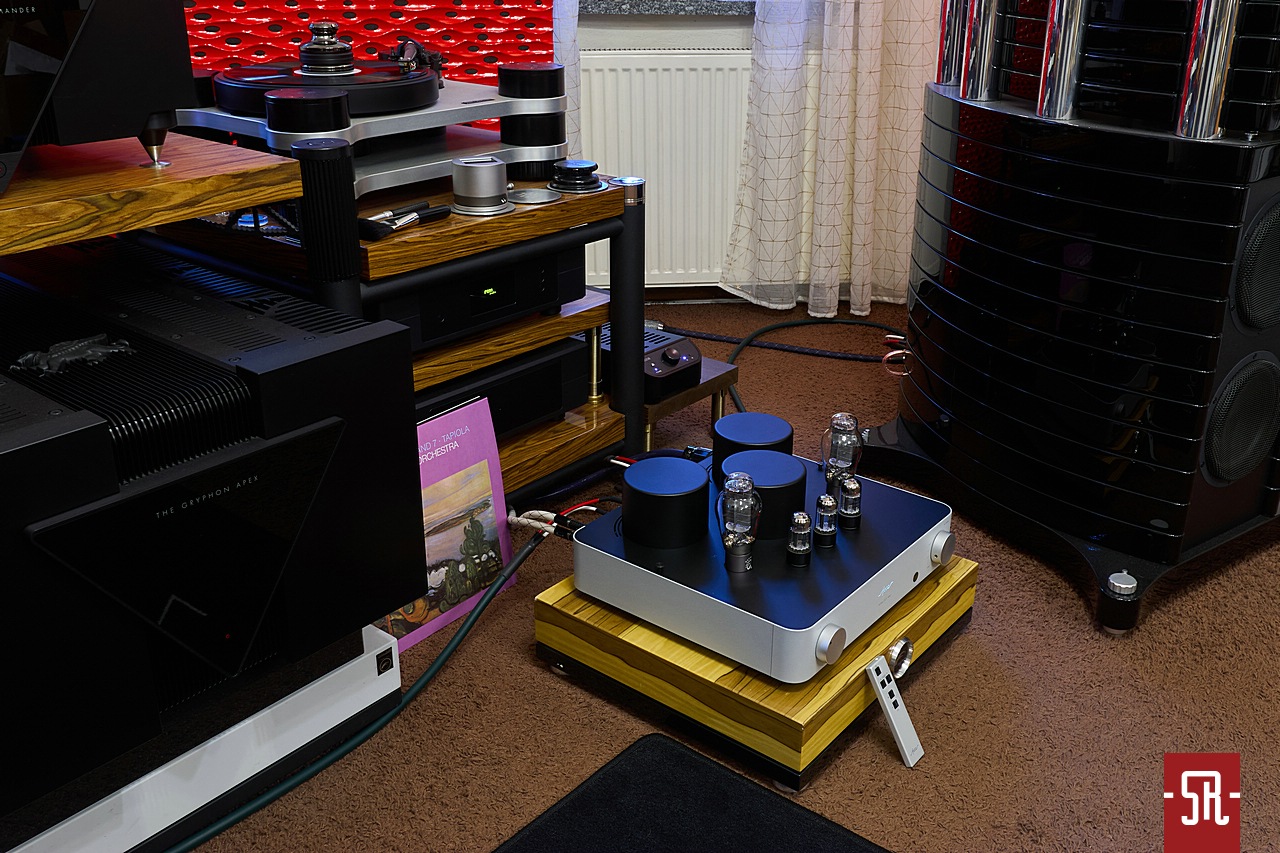
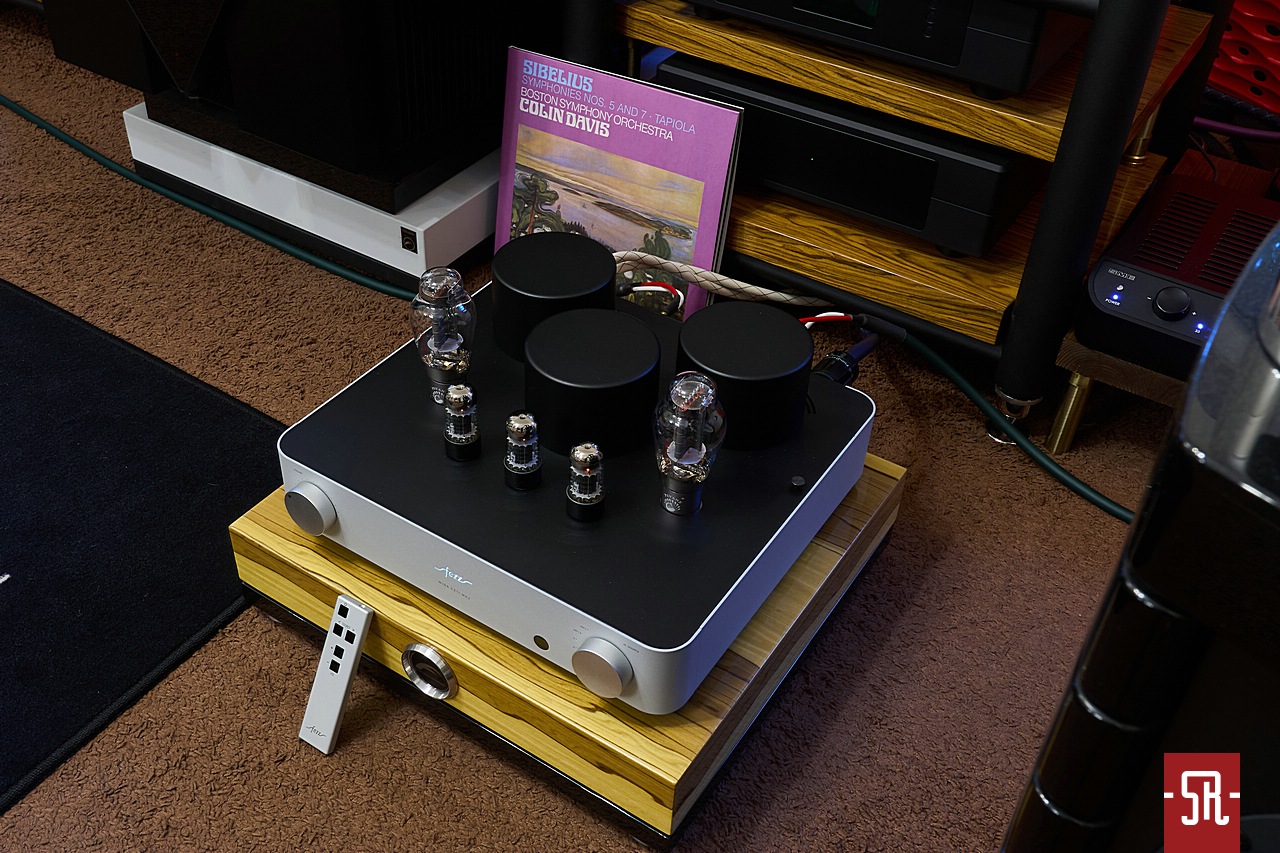
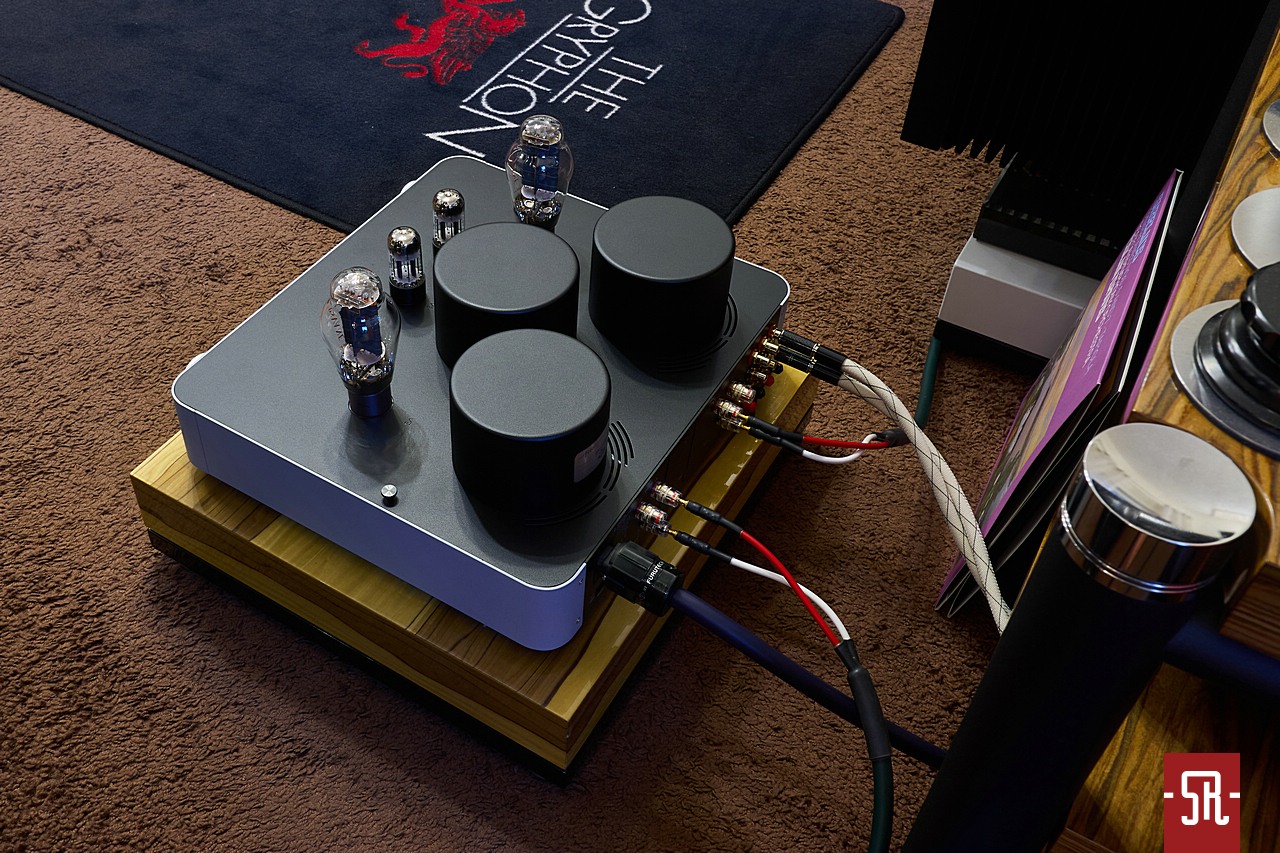
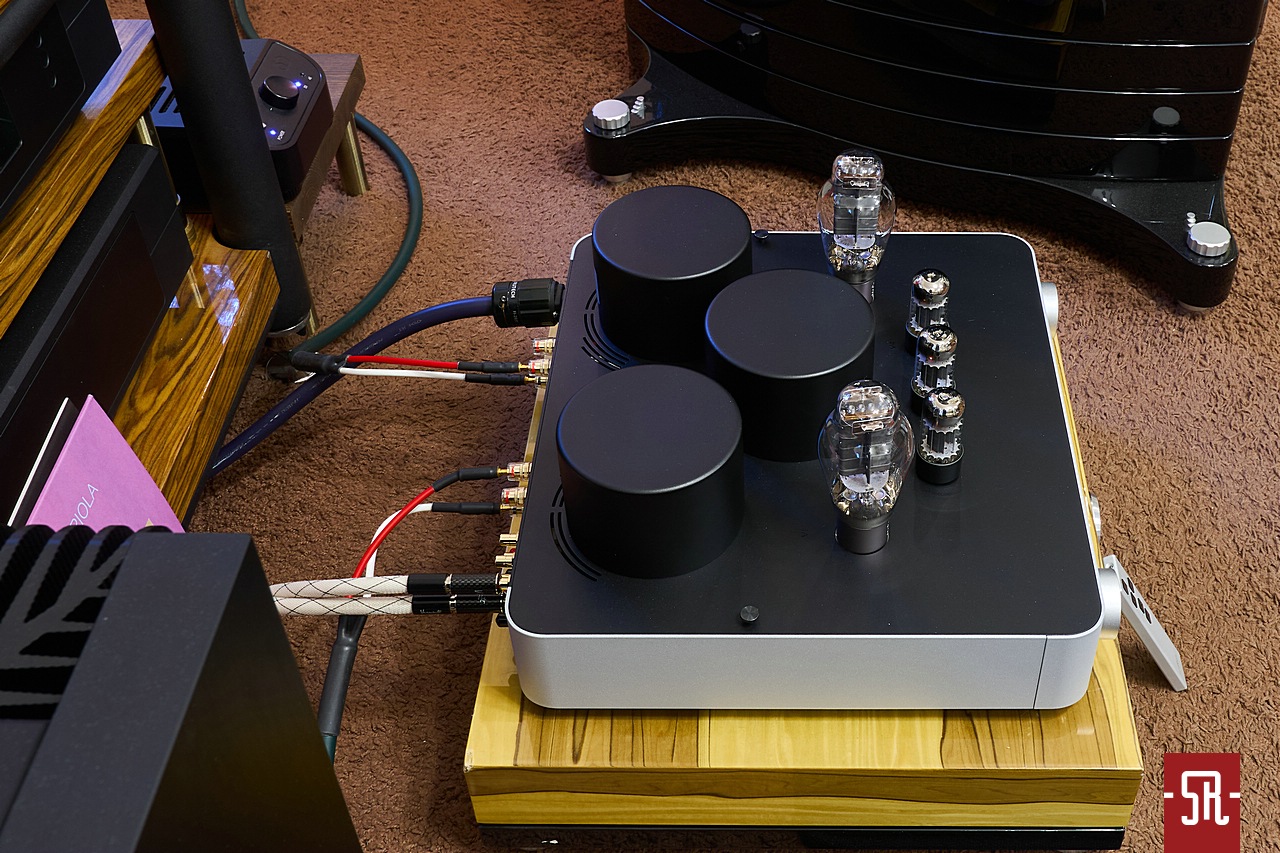
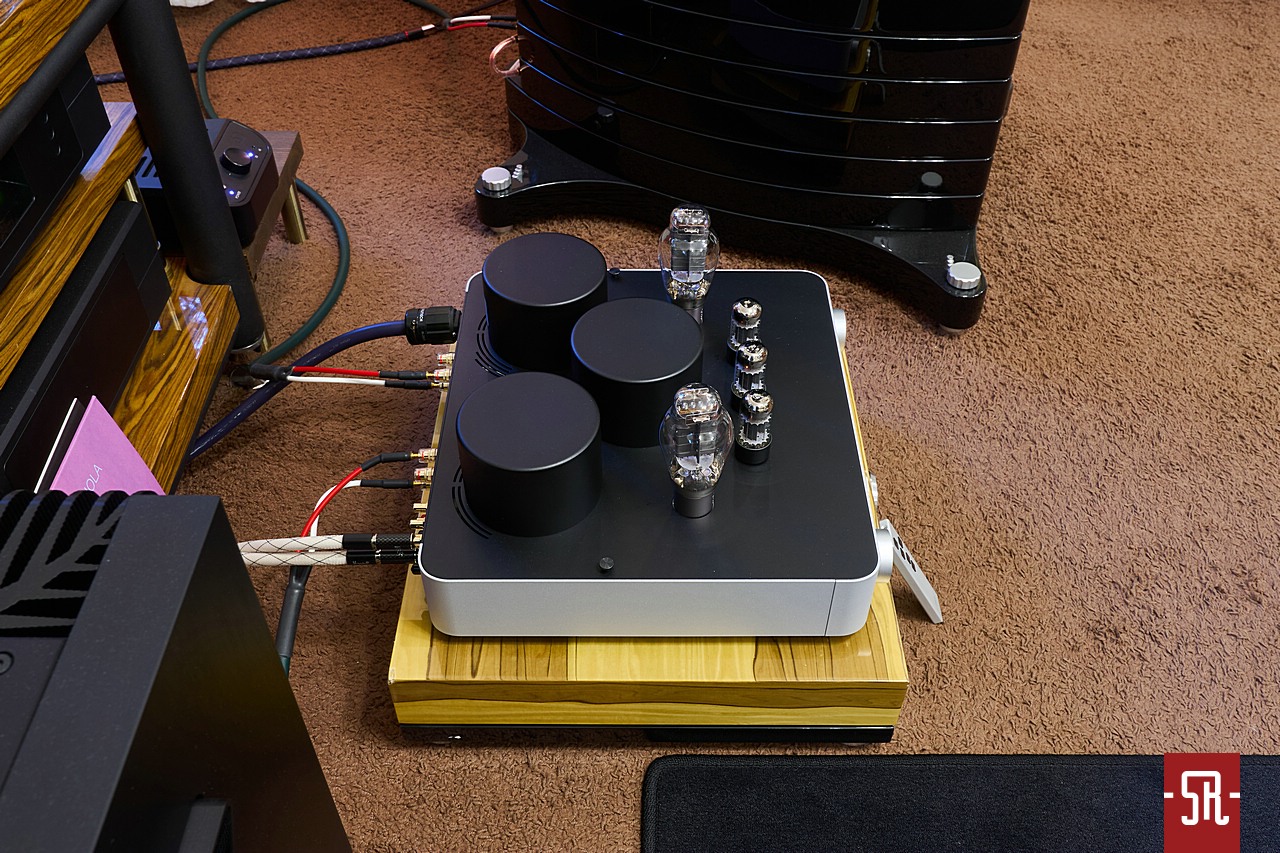
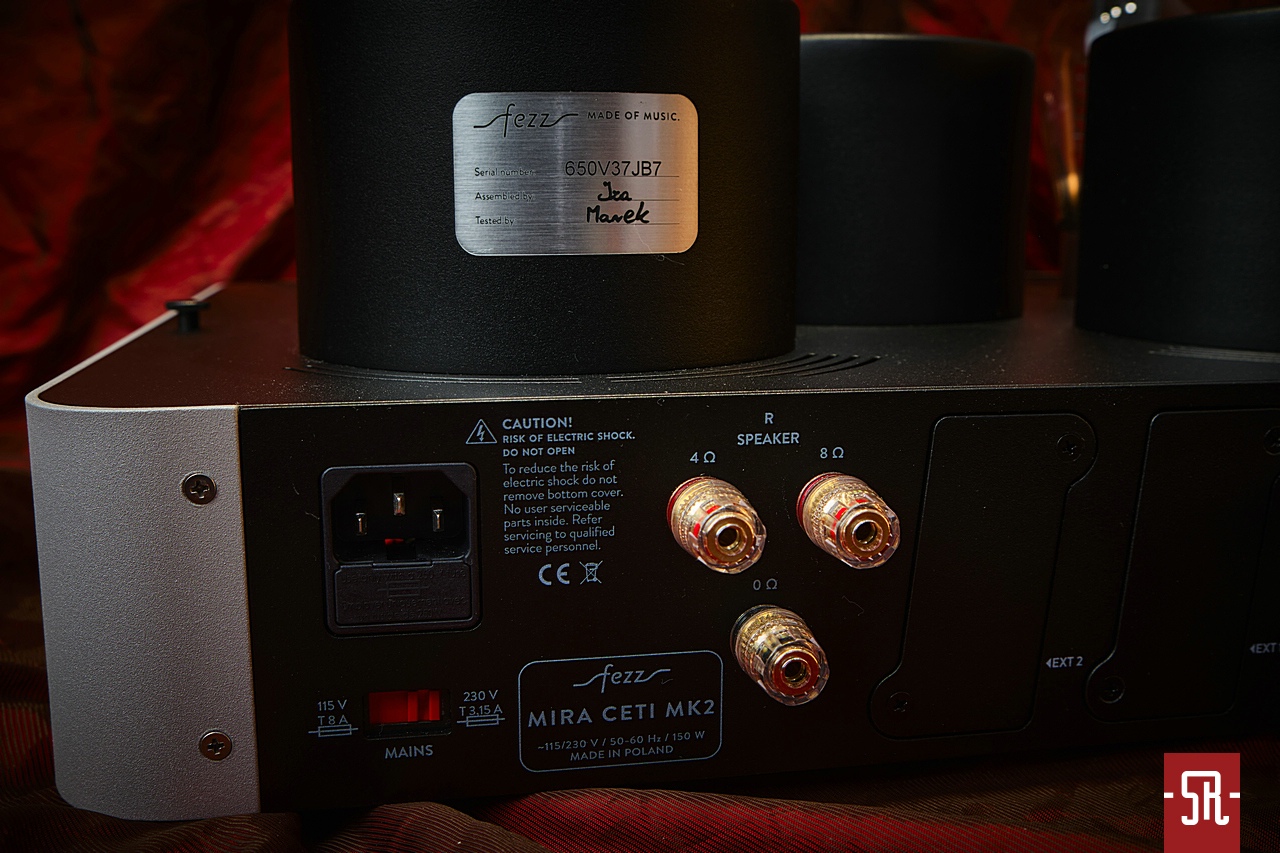
The photos already indicate that the current incarnation of Mira Ceti is a completely different world. Starting from the housing, through the electrical system indicated by the arrangement of the tubes, to the tubes themselves, this is a completely different approach to the subject. Although we are still dealing with a support platform enclosure for the glass bubbles and transformers hidden in fancy cups, this time it is not a poor angular box, made with the proverbial „hammer” during school practical and technical classes. Currently, it is an eye-friendly, rectangular and relatively flat, but with smoothly rounded side edges, black and silver body, hiding the entrails of the amplifier. On its front, we have two large knobs at our disposal that continue the design idea – the left volume knob, and the right one a selection of line inputs. The upper slope is occupied by a set of 3 control and two power tubes, the latter being the iconic 300B version. On the other hand, the reverse offers a potential buyer a rich set of line inputs, output taps for 4 and 8 Ohm speakers and a standard IEC power socket. If you take a look at the series of photos from the unboxing, you will see that on the rear panel we have two more blinded slots for the optional D/A converter and phonostage cards. Of course, we get a remote control in the starter kit. As for the most important technical data, you can find the full set at the end of the review, but for now, due to the cult nature of the design, I will only mention that tube lovers consider this to be the royal Single Ended setup based on 300B tubes, which is able to give 8 W of power per channel.
As you can guess, due to the not very high power of the amplifier in relation to the needs of my speakers in the volume domain, there was no chance to rearrange the walls of the room with volume. However, what surprised me very positively, up to medium sound volume levels, Mira Ceti did unexpectedly well. It offered a nice projection of the lower range, tangible, because spiced up with a note of a well-applied tubes, i.e. a lively and vibrating midrange and sonorous, slightly sweet, but full of unobtrusive expression, treble. Such a package of well-implemented sonic aspects made the music sound very tangible and with such a weight of 3D aesthetics, as if I was personally at a given recording session. I got the typical aesthetic of the royal Single Ended topology. What is more, the whole thing sounded not only graceful, but without the effect of blurring the sharpness of the drawing of virtual sources, so it filled my room with considerable freedom. So successful that when I started the system, I did not need to anything other than changing the repertoire in the CD player. Interestingly the Polish amplifier managed to not only play the more spiritually satisfying music, but also some heavier genres, if not pushed out of reasonable volume levels. Naturally, it was quite far from the expression and control of my solid state amp, but let me remind you, firstly, it is a tube, and secondly, it is by definition weak in power, because it is designed for other loads from speaker units. That is why the originators of the project called Mira Ceti Mk.2 deserve a lot of respect for proposing something universal enough to come out of victorious after clashing with my “dragons”.
A great example of enchanting with music by the Fezz was the contemplative jazz by the Tord Gustavsen Trio „The Other Side”. The music is seemingly easy to reproduce, because it is calm. However, as you know, the devil is in the details, which in this case means chiseling each note and showing its sonority and vibration. Transistor amplifiers, unfortunately, will never convey it in such an excellent way as our hero did – and to be fair, I also mean my Gryphon with this. Of course, it is about dismantling each chord, or even a single note, reserved only for a tube in the good sense of the word. And not because we are looking for the „audiophile” part in such a repertoire – it is there, of course, but not in itself, it is a byproduct of what those artists signed up for when choosing their career path in this and not another musical style. Naturally, the Polish amplifier played it beautifully, because with a good embedding of the piano in the mass, clearly presenting the sound of the double bass and not hiding the overtones served by the brass and other percussive instruments the drummer brought to life. In a word, it was a fairy tale.
As for the rock performances, like the one from Metallica’s „72 Seasons”, for example, it was known that the presentation would not blow me out of the room. But I must admit that despite the very difficult conditions, which theoretically will not occur in the everyday life of an amplifier, because no one will buy it for such large towers, it managed itself interestingly. It kept a good eye on the tempo of the band’s playing, colored and saturated the sound of guitars and vocalizations, which are so important for the band, and even dealt with the drummer’s performances in an interesting way. Of course, it was not a reckless ride, taken straight from a transistor amplifier suitable for the speakers from the test session, but I assure you, the atmosphere of this rock playing was presented to the utmost extent possible. Maybe not at the decibel levels destroying the eardrums, but with a nice kick and a pleasant color. That much for such a weak integrated amplifier is undoubtedly a great positive.
Where would I locate our tested amp? Of course, in places where you love the tangibility of music. However, in this case, tangibility is not in the sense of pulling the hair on your head with the level of unrestrained rock energy, but the proverbial splitting of hair in four during contemplation with music for the spirit. As I mentioned, in the first case, the Mira Ceti Mk2 will also produce a nice show, but you will see the real „spirit” of it only with dedicated, i.e. relatively easy to drive speakers and in a repertoire focused on romanticism. In the latter, for such reasonable money, it is truly outstanding.
Jacek Pazio
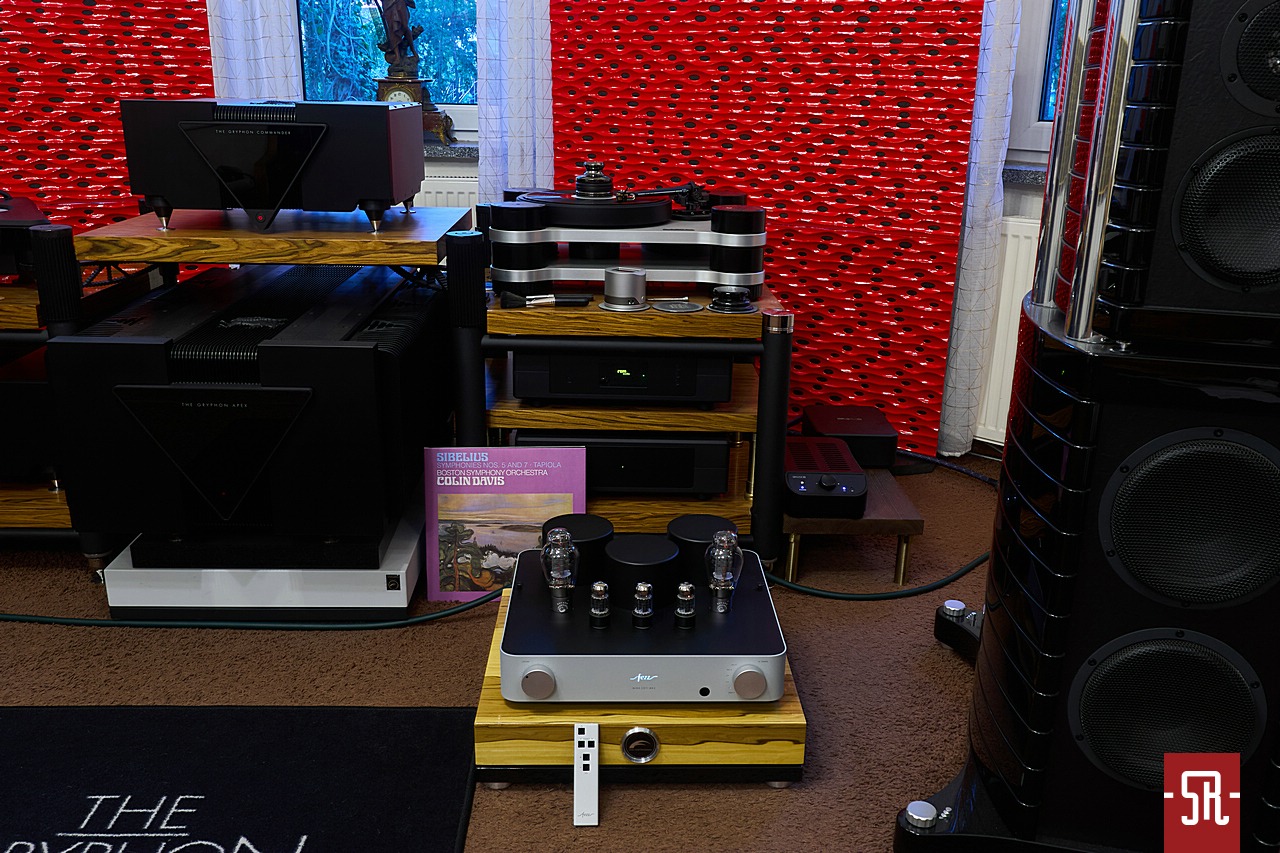
System used in this test:
– CD Player/DAC: Gryphon Ethos
– Streamer: Lumin U2 Mini + switch QSA Red-Silver
– Preamplifier: Gryphon Audio Commander
– Power amplifier: Gryphon Audio APEX Stereo
– Loudspeakers: Gauder Akustik Berlina RC-11 Black Edition
– Speaker cables: Furutech Nanoflux-NCF Speaker Cable
– IC RCA: Hijiri Million „Kiwami”, Vermouth Audio Reference
– XLR: Hijiri Milion „Kiwami”, Furutech DAS-4.1, Furutech Project V1
– Digital IC: Furutech Project V1 D XLR
– Ethernet cable: NxLT LAN FLAME
– USB cable: ZenSati Silenzio
– Power cables: Hijiri Takumi Maestro, Furutech Project-V1, Furutech DPS-4.1 + FI-E50 NCF(R)/ FI-50(R), Furutech Evolution II, Hijiri Nagomi, Vermouth Audio Reference Power Cord, Acrolink 8N-PC8100 Performante, ZenSati Angel
Table: BASE AUDIO 2
Accessories: Quantum Science Audio Red fuse; QSA Silver fuse; Synergistic Research Orange fuse; antivibration platform by SOLID TECH; Harmonix AC Enacom Improved for 100-240V
– Power distribution board: Power Base High End, Furutech NCF Power Vault-E
– Acoustic treatments by Artnovion
Analog stage:
– Drive: SME 60
– Cartridge: My Sonic Lab Signature Diamond
– Phonostage: RCM Audio The Big Phono
– Clamp: Omicron Luxury Clamp
– Eccentricity Detection Stabilizer: DS Audio ES-001
– Tape recorder: Studer A80
Opinion 2
When the first incarnation of Mira came to us at the beginning of January 2017, it was the result of long discussions, lively correspondence and at the same time a certain bending of our rules, i.e. going below the threshold of 10 thousand zlotys we apply for electronics. And even then, despite a slightly more austere design than the usually recommended, for similar price, Leben 300, the Polish design turned out to be a very interesting proposition. However, as you know, time does not stand still, customer expectations are growing, and in the meantime the manufacturer itself has decided to give its portfolio a solid facelift. In this way, after the 100 W Olympia speakers addressed to lovers of a slightly heavier repertoire and owners of not very cooperative speakers, time has come to, maybe not so much to return to the past and repeat, but to meet a completely new version of the ethereal Fezz Audio Mira Ceti Mk2 integrated amplifier, based on the „iconic” 300 B tubes.
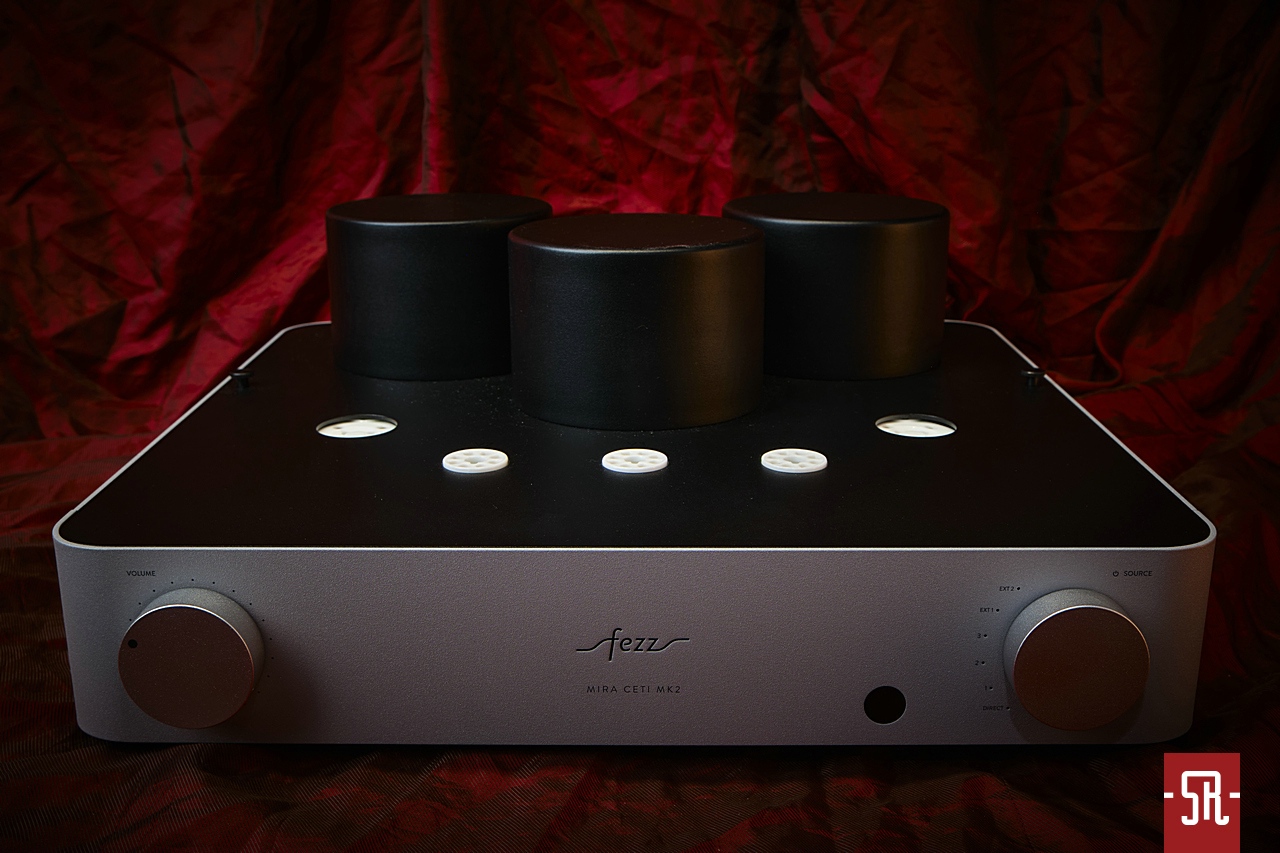
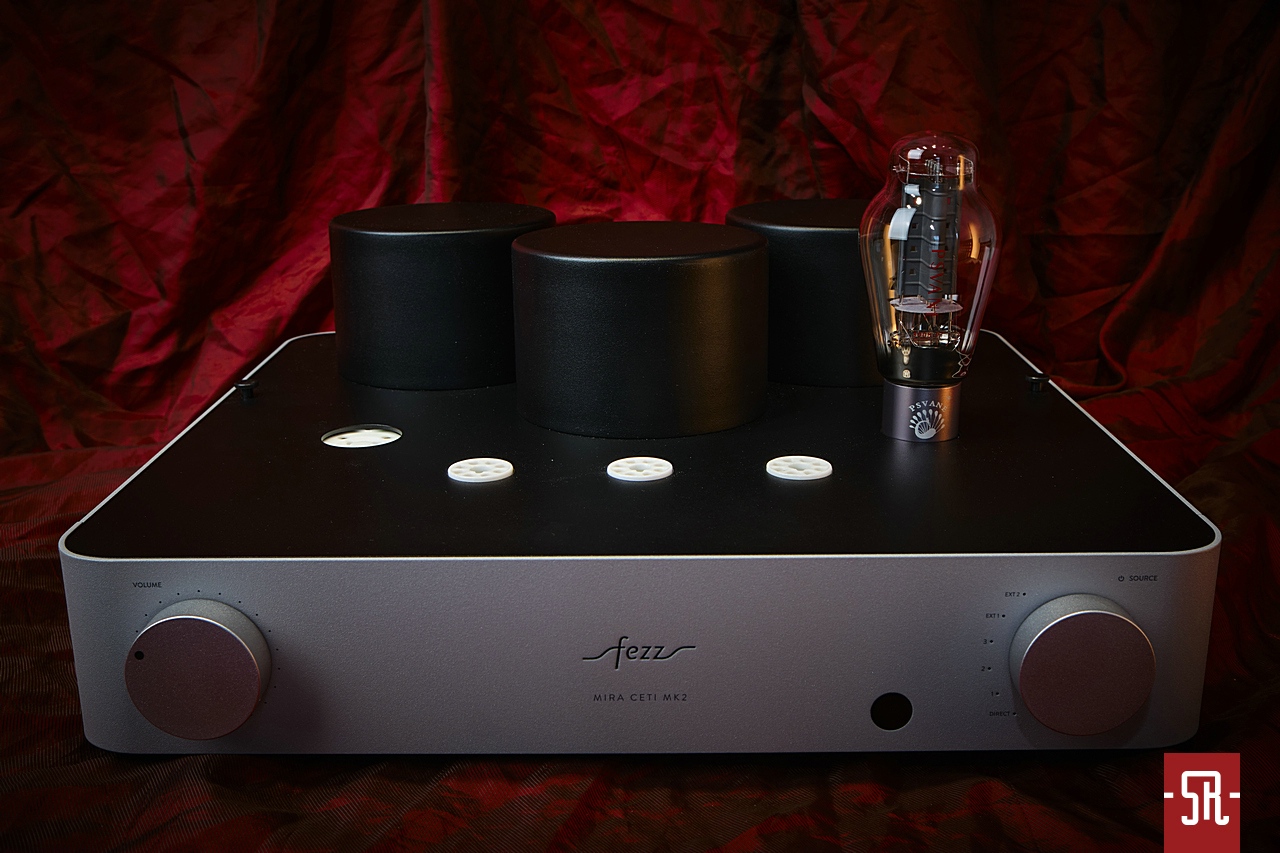
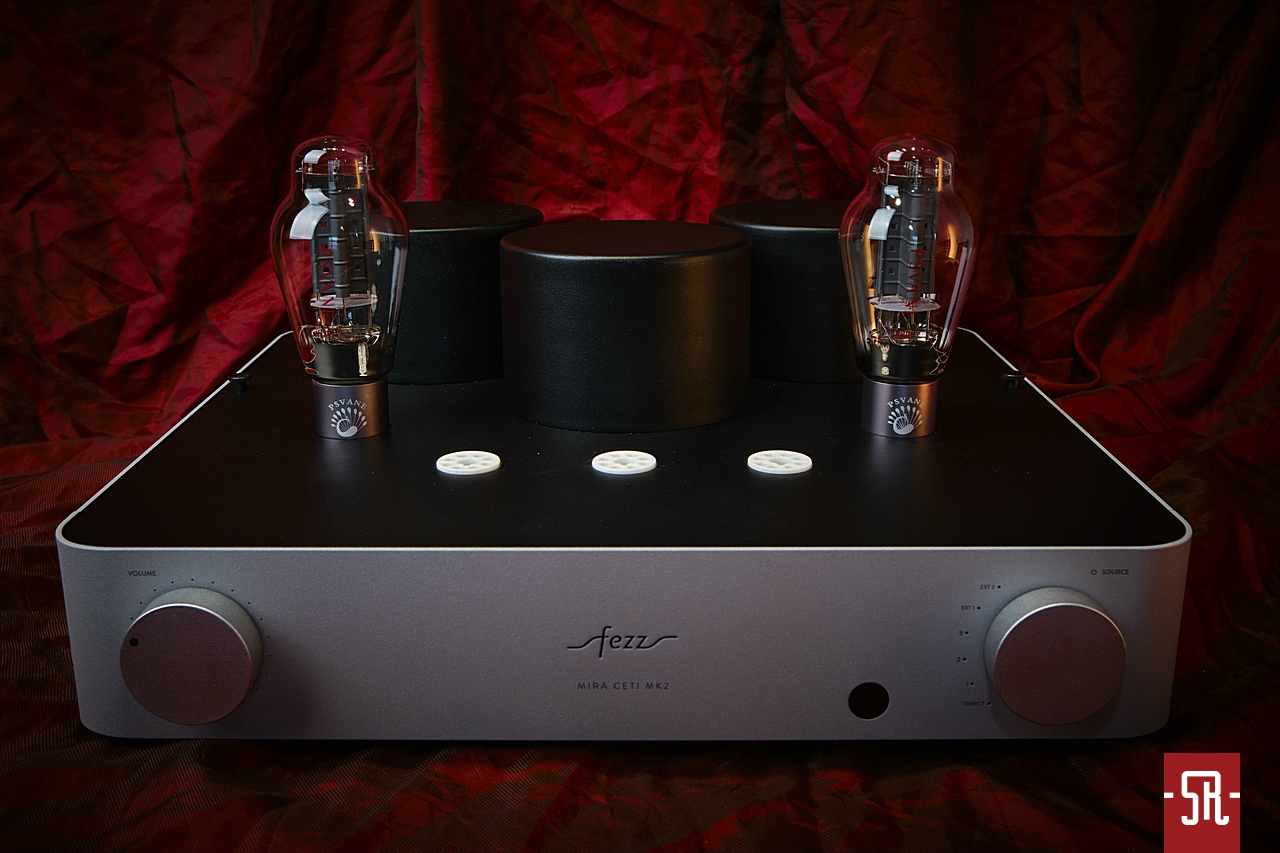
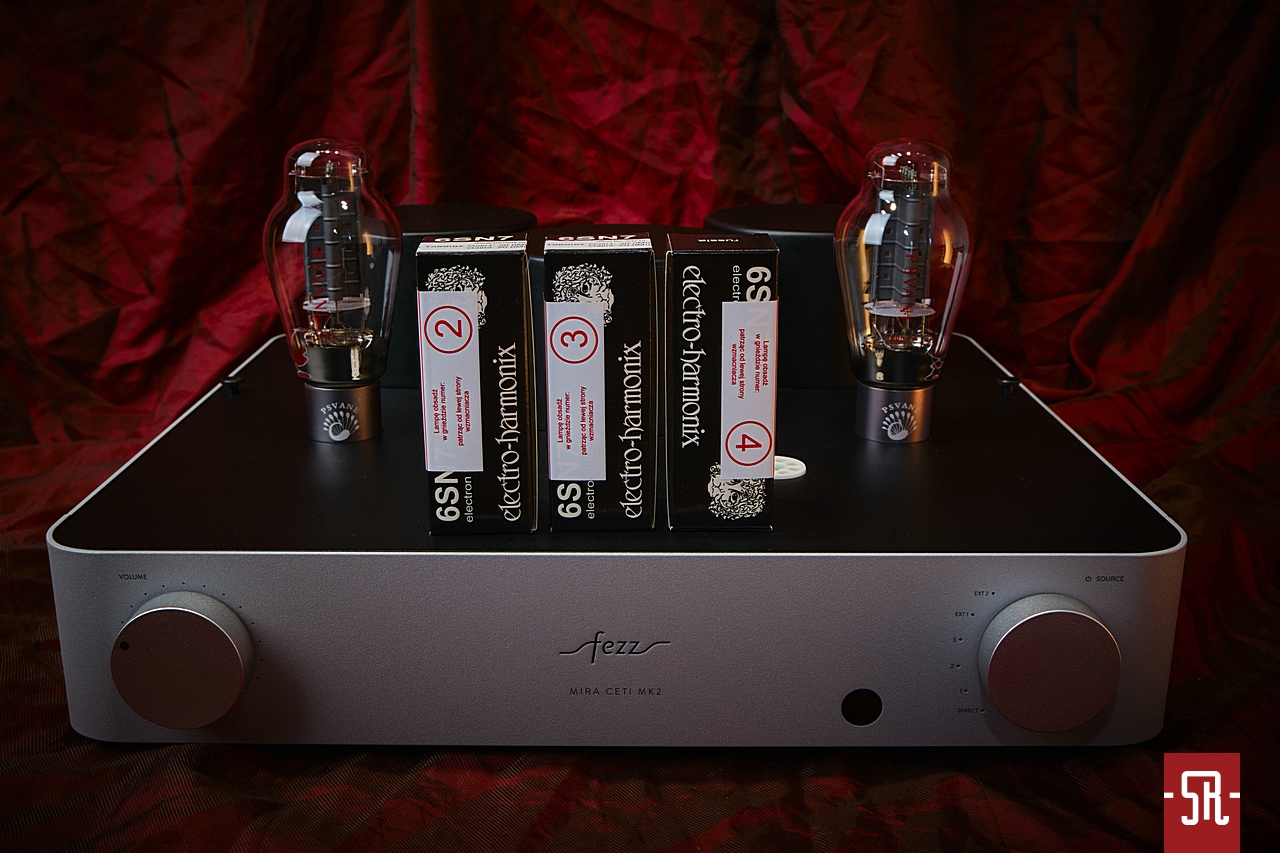
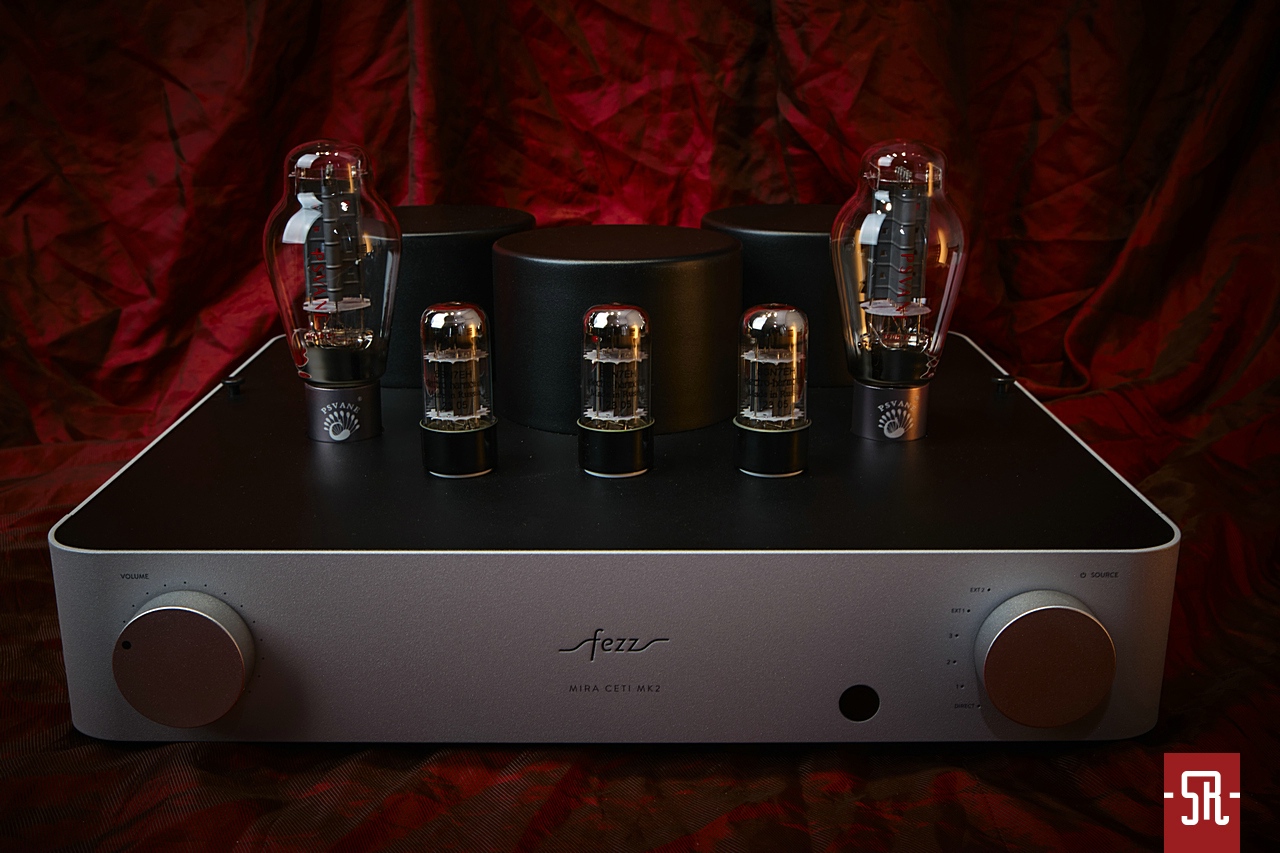
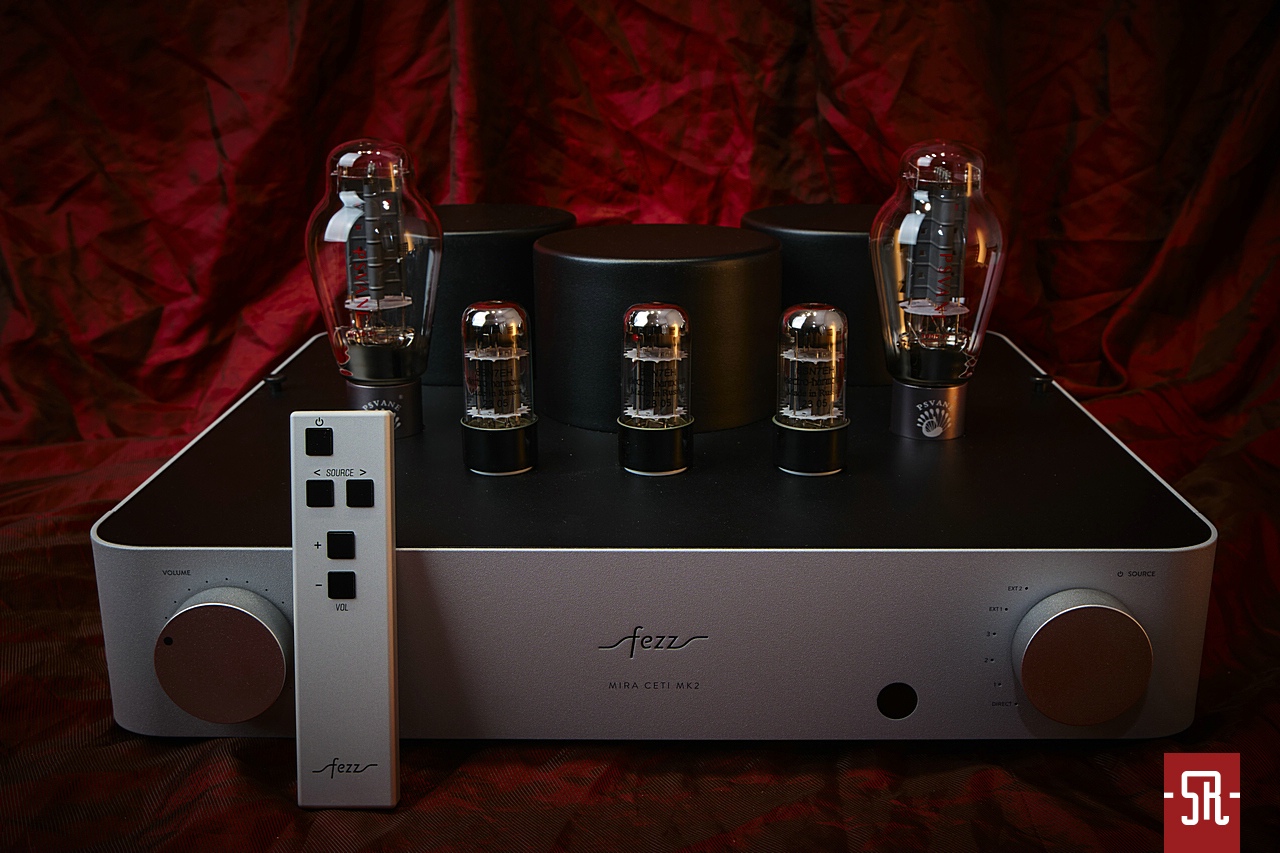
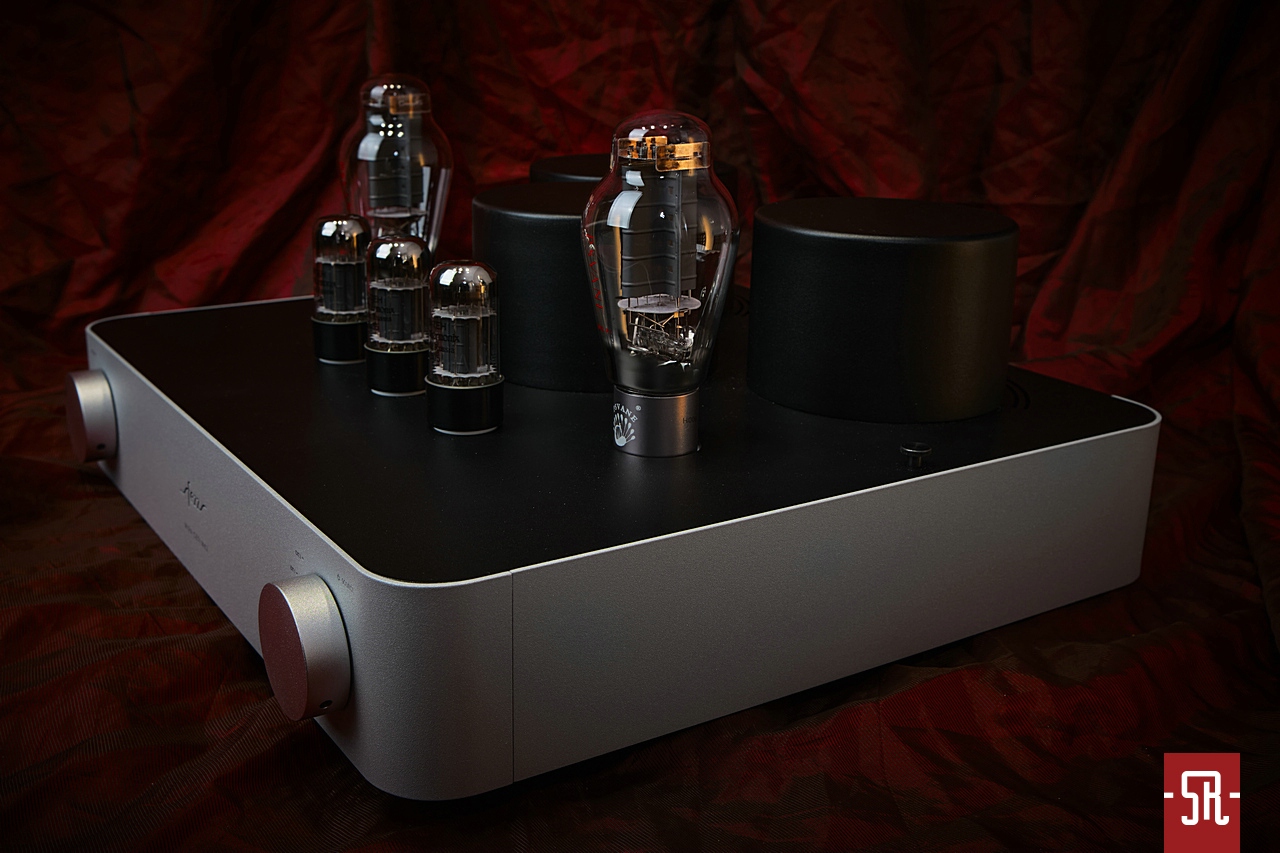
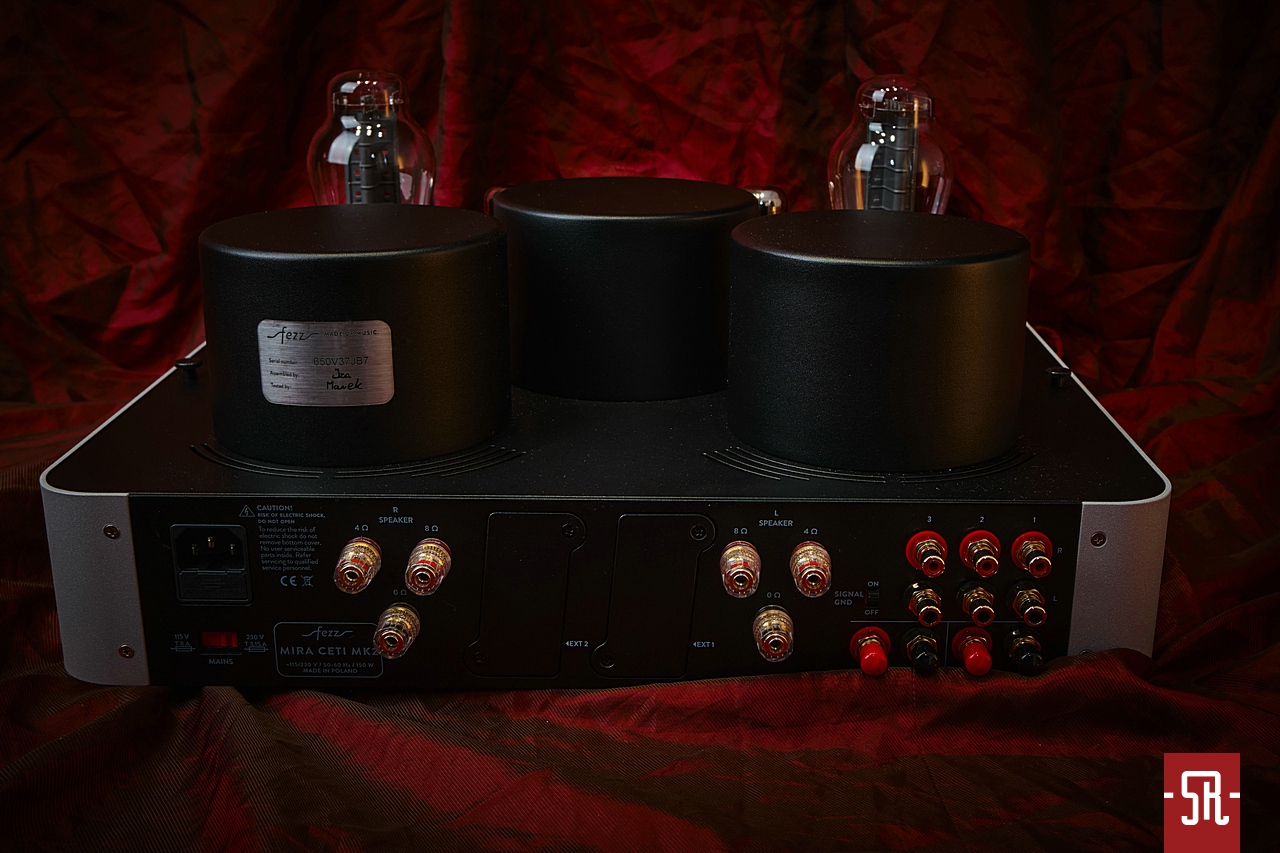
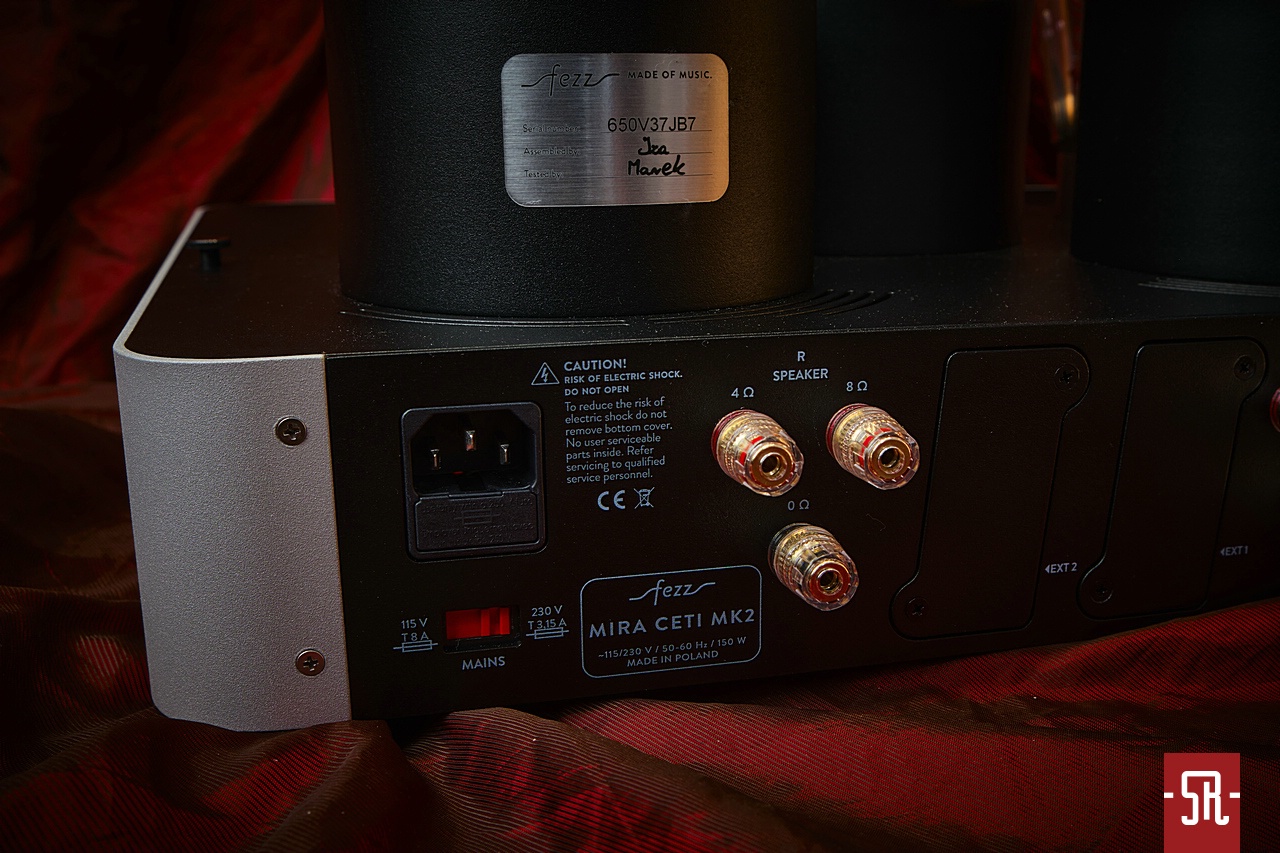
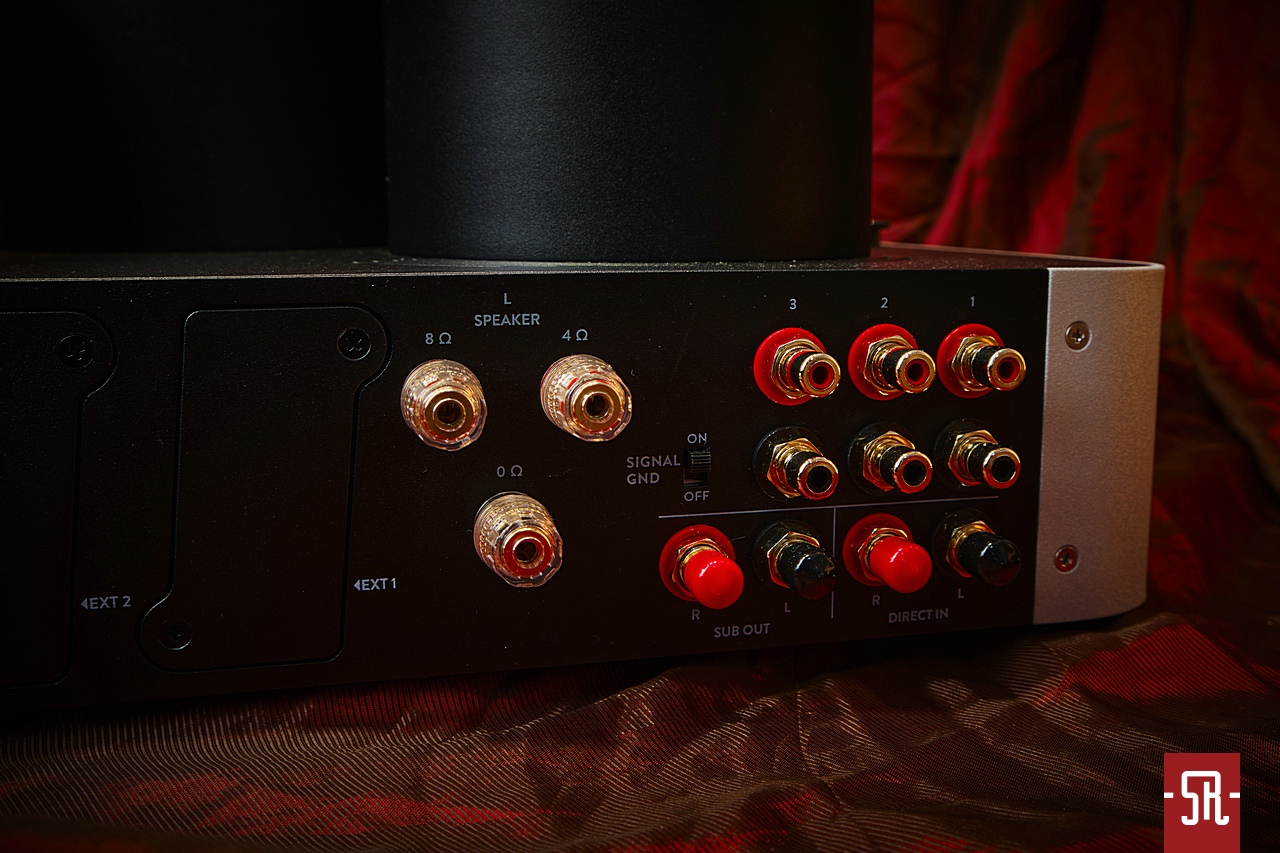
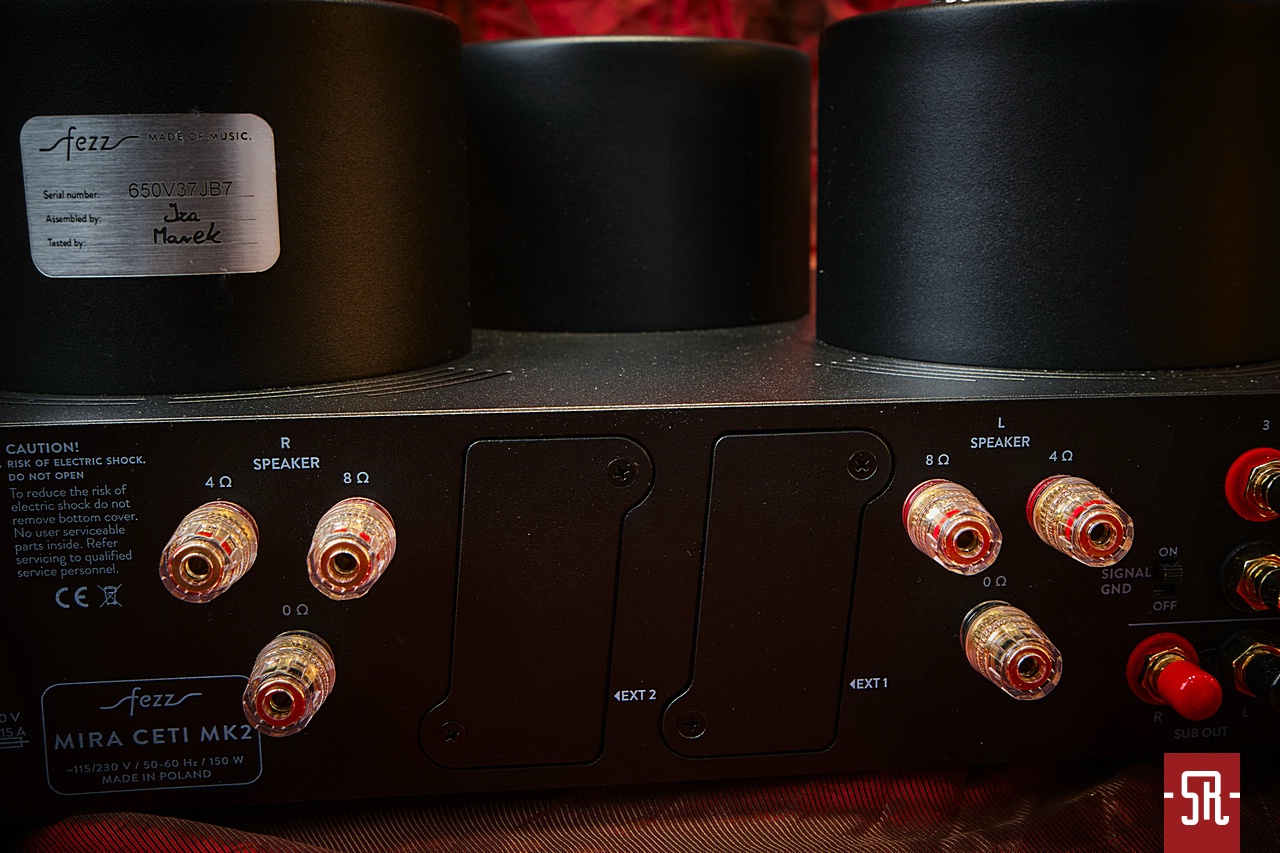
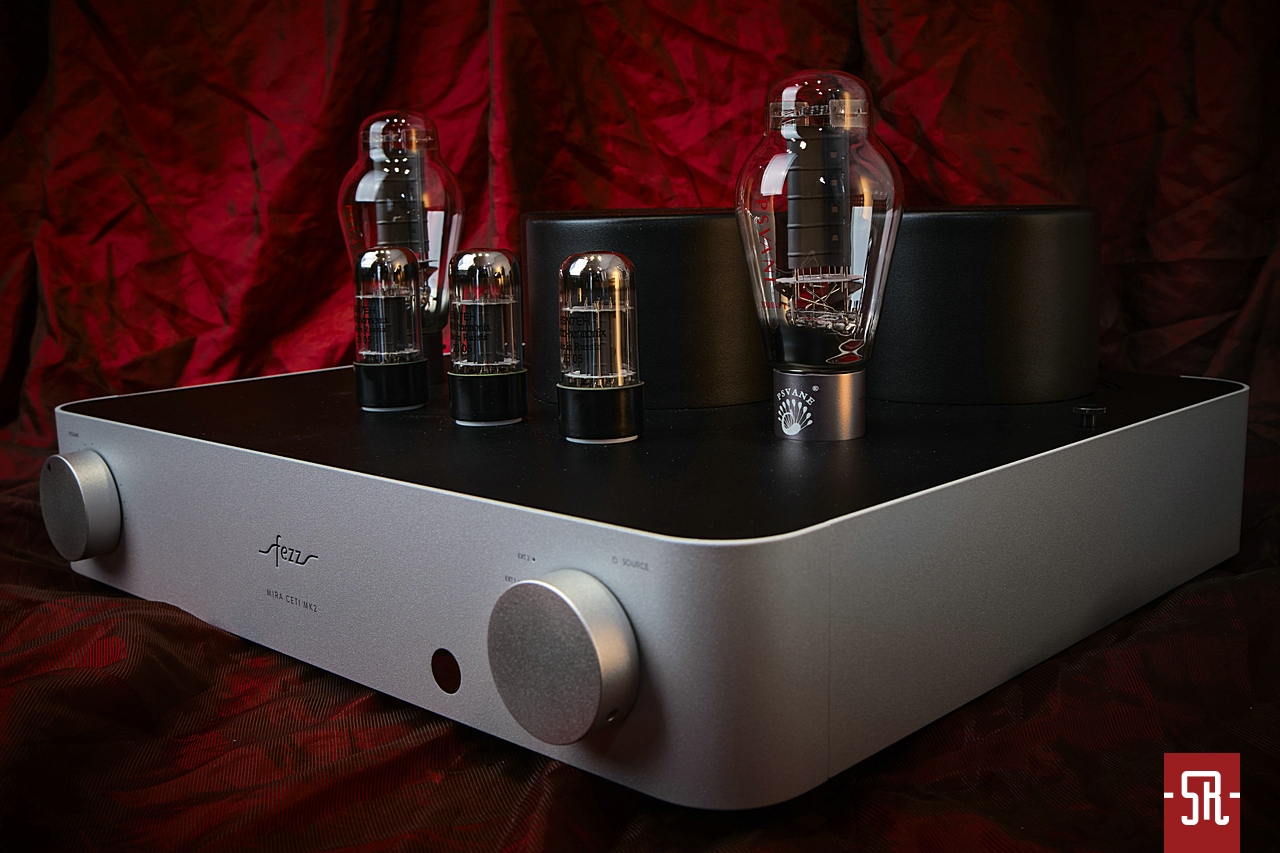
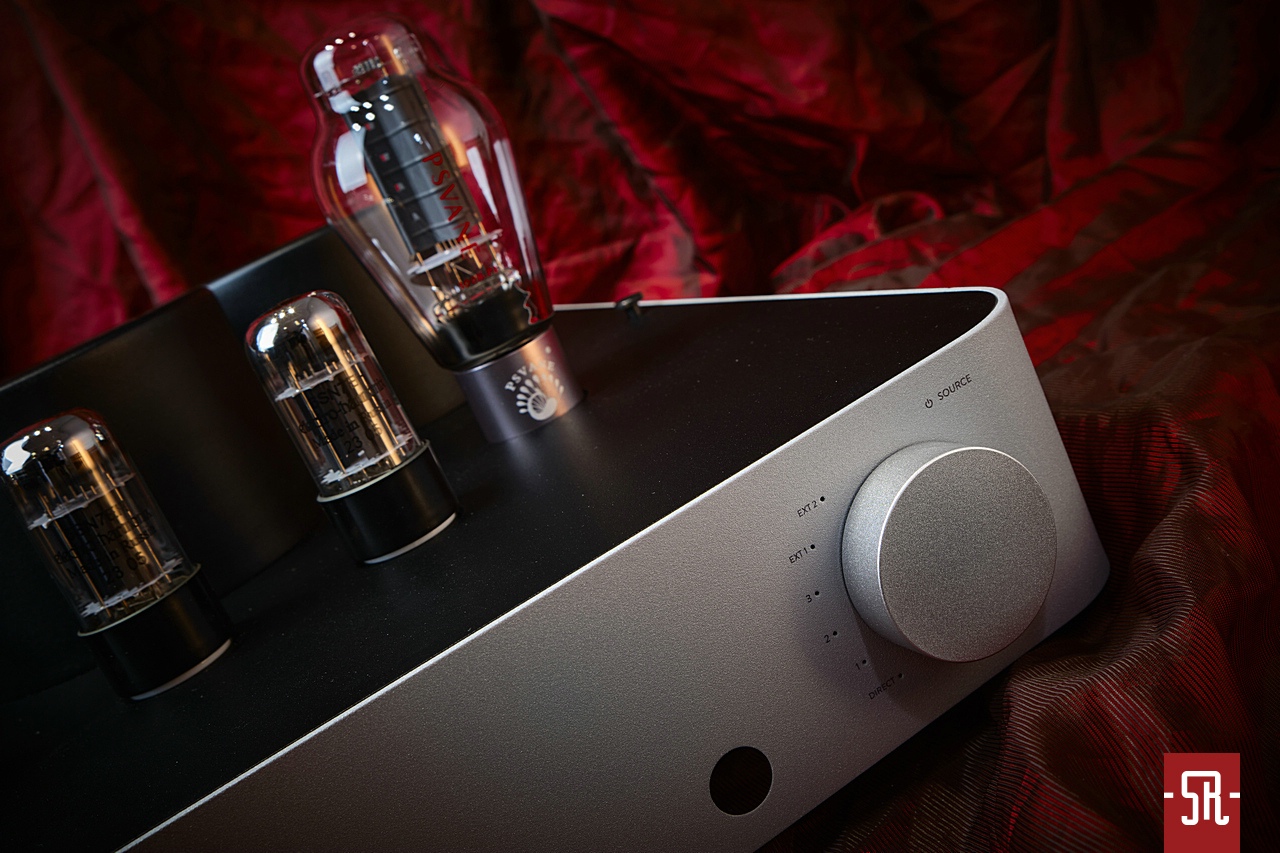
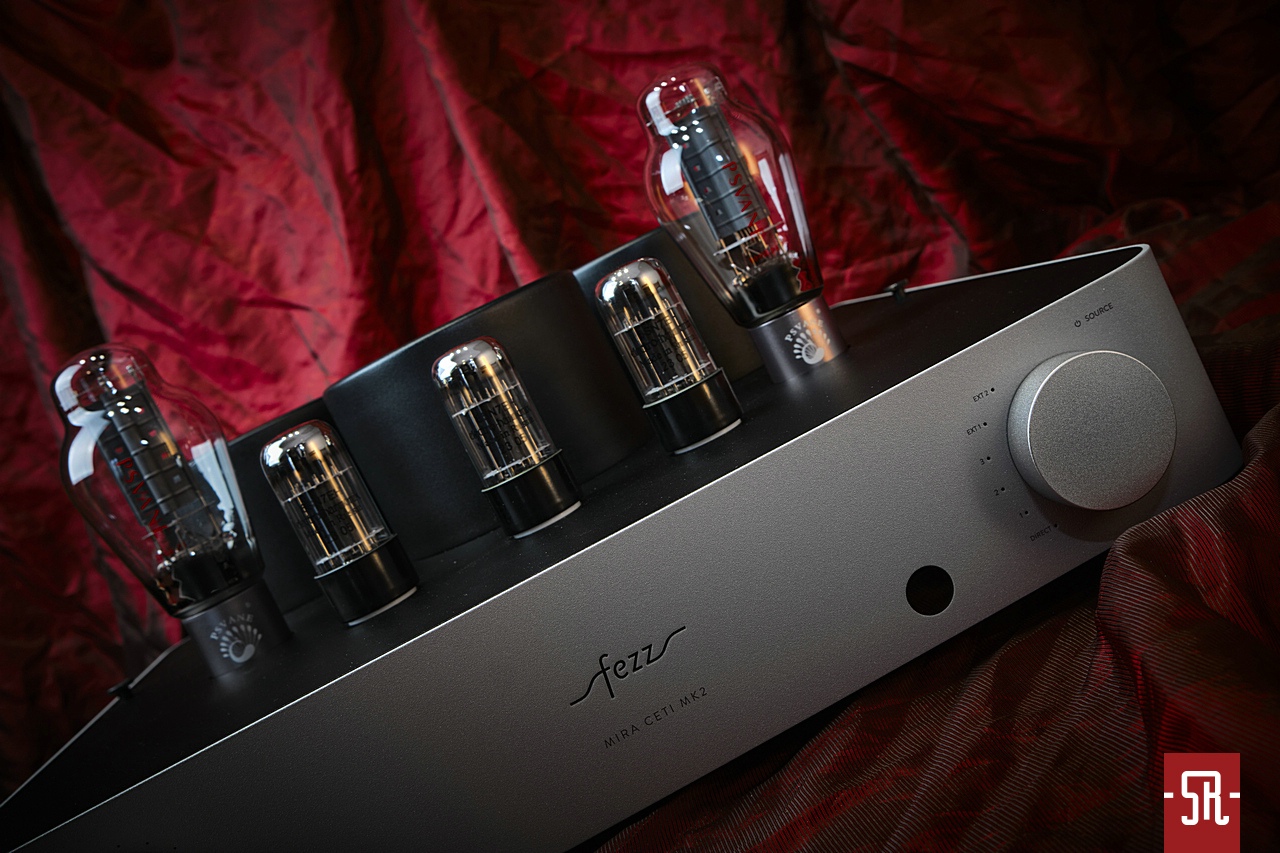
If the above photos do not reflect it, then take my word for it, or even more advisable, go to the local representative of the eponymous brand and verify the fact in person that the Fezz Audio Mira Ceti Mk2 looks simply excellent „live”. The rounded corners of the aluminum body give the whole thing peace, and the minimalist front with a volume knob (left) and a source selector (right) only intensifies this calmness. However, it is difficult to accuse THE Mira of even a trace of boredom, as the whole is enlivened by the centrally placed, illuminated logotype and the black of the top plate and the three „saucepans” hiding the transformers contrasting with the extinguished silver of the obverse and sides. And here is a small digression, because while the copy provided by 21Distribution was characterized by a slightly belaying, silver color (Moonlight), you can also order much more eye-catching versions of Big Calm, Burning Red, Evergreen, or Sunlight. The set also includes a protective cage, which, as in the case of Olympia, I allowed myself not to remove from the foam profiles (I recommend an unboxing session for those interested), which may not particularly reduce the aesthetic values of the title tube amp, but it does not add any beauty to it either, so if we do not have in the house any juvenile progenitor, destructively oriented towards the world around them, or an equally unruly menagerie, I do not see much point in arming the Mira with such protection. Returning to the issue of construction and appearance, it is impossible not to mention the delicious “greenhouse” on the top cover, i.e. the Electro Harmonix’s 6SN7 trio occupying the foreground and the discreetly retracted pair of noble 300B PSVane HiFi Series. Fortunately, the cylindrical silos located behind them with the transformers enclosed in their bowels are not too absorbing, and due to their black color, they practically do not draw any attention to themselves.
The back panel also does not disappoint. Looking from the left, we have an IEC power socket integrated with a fuse chamber, triple speaker terminals (with separate taps for 4 and 8 Ω) between which there is space for two slots for optional expansion cards. Then we have three pairs of line inputs, a direct input for the power amplifier and a dual subwoofer output (all in the RCA standard). The whole thing is placed on four conical legs made of hard rubber, and in the box, in addition to the mentioned „cage” and the described tubes assigned to the appropriate sockets, we will also find an aluminum remote control.
In terms of technology, we are dealing with an original variation of the classics of the genre, i.e. the Single-Ended system based on 300B tubes with a power of 8W, but what is not so common, using unique toroidal transformers (proprietary, that is, branded by Toroidy.pl, from which the Fezz brand comes). In addition, according to the manufacturer’s assurances, Mira’s facelift concerned not only her appearance, but also covered her viscera – the topology of the system was thoroughly redesigned, the signal path was improved and higher-class components were used.
As attentive observers of the domestic audio scene have certainly noticed, unlike its predecessor, the Mira Ceti Mk2 appeared in our country almost immediately after its official premiere, so this time we did not manage to avoid the usual and completely natural excitement associated with dealing with a still fragrant factory novelty. Therefore, instead of writing paeans in her (Mira’s, not excitement) honor on a wave that obviously disturbs the ability to evaluate excitement in a balanced way, we allowed ourselves to approach the topic „coldly”. So we listened, observed, and only when the first emotions subsided did we start critical listening. However, I will point out right away that the aforementioned coldness was by no means a harbinger of any vendetta or revenge, which, as is well known, „tastes best cold”, but a methodology developed over the years to eliminate at least some of the factors that could falsify the final result.
However, even with a completely calm head and emotions put aside, the Fezz Audio Mira Ceti Mk2 not only did not allow for indifference, which practically made Josh Groban’s „CINEMATIC” enchant from the first bars with the depth of timbres, the tangibility of apparent sources, the holography of the sound and the freedom, or even characteristic of a symphonic performance apparatus… power. Yes, yes, it is not a printing imp, but a genuine surprise by the fully tangible fact; because taking into account the very unimpressive 8W that the Mira has at it disposal, especially after switching from a 300W solid state amp, I did not expect something like this. And here you go, both the soloist himself and the occasional guests materialized just in front of the line of speakers, and the accompanying line-up built a surprisingly spacious, and at least highly satisfyingly ordered, stage in terms of the gradation of plans. In addition, compared to the Olympia, which focused on volume and drive, spreading its wings at slightly higher volume levels, the Mira „did well” from the very beginning of the volume knob scale. Of course, there is no need to fool ourselves that with a murmuring like from a kitchen radio, we will experience communing with an audiophile absolute, because physics cannot be fooled in that way. However, even during evening and night sit-ins without exposing your housemates to waking up, or during social gatherings, where shouting over the background music is not in good taste, you can hear everything just fine. There is breath, freedom, precise focusing of individual stage beings and at the same time omnipresent peace that is a derivative of noble sophistication. Because there is no denying that the Mira plays in such a sophisticated, not to say „expensive” way. Without even a shred of looking for a cheap sensation and showmanship that may initially be pleasing. Here, the emphasis is placed with equal attention both on the main characters and on the reverberation aura surrounding them, or the very characteristics of the room in which the recording was made. With the Fezz, we will easily experience the cubature of Bach Church in Arnstadt (Thuringia/Germany) „Bach Motets” by Solomon’s Knot, and at the same time we will not „lose” the polyphonic theme of the presentation, which, at least in my case, requires a little more attention than slightly less complex vocally and lyrically complex compositions (not to mention Rihanna’s „Umbrella”). I do not even mention the ability to convey the full spectrum of naturalness of human voices, because it is obvious and there is no need to dwell on it. They just sound like they are live and that is it.
However, in order not to be so nice, nice and elegant, I did not miss to practice with the Mira a set of „screams” on duty, i.e. „OPVS NOIR Vol.1” by Lord Of The Lost and „In Somnolent Ruin” by Draconian landed on the playlist. And here, instead of the „kind” defeat prophesied by some, who knew my love for pounding, we could safely talk about a pleasant surprise. That is, by definition, a surprise should be pleasant, although I know some that deviate slightly from this definition. Coming back to the substance, however, heavy sounds, as long as I did not try to achieve truly concert volume levels, usually made a greater impression on listeners unaccustomed to similar piles of growls, riffs and blasts than on the eponymous, Polish amplifier, which entered the most brutal cacophony like a hot knife in butter, doing a great job of rendering an undeniably fiery, but intricately woven web of sounds. And no, it did not save itmself with the proverbial wall of them, i.e. a monolithic conglomerate, where it is impossible to distinguish who and what is playing / gurgling at a given moment, because despite the breakneckness of the challenge set before it, the Fezz, with its innate charm, maintained both the coherence of the whole and the diversity of the tissues that make up this whole. Miracles? Not at all, but rather a synergy both in terms of sound and electric character with the AudioSolutions Figaro L2 I own, which have shown more than once and not twice that they like weak tube amps and instead of throwing logs under their feet, they definitely prefer to „pull” them up and squeeze the best out of them. However, it is worth bearing in mind that the Mira Ceti Mk2 has its limitations, so with heavy slaughter it builds dynamics as a derivative of its „micro” variety, encasing it with successive layers of powerful sounds, so when compared directly with the aforementioned Olympia, we will easily notice that its musculature is based mainly on „sculpture” and not mass. This does not mean that the Mira shows any anorexic tendencies, because it is not, but if someone expects it to be the „physical” of an East-German shot putter or weightlifter, they have rather confused the addresses, because they came across sports acrobatics classes. To put it simply, Olympia had better control over the lowest components and retained their full energy longer, while Mira, drawing contours more precisely and reproducing the tissue with greater sophistication, „descends” faster with the energy potential. The only question is, who consciously decided to buy it, will be bothered by this? Because le us be honest, firstly – the above observations come out only with a direct comparison between the above models, and secondly who buys a SET on 300B for death/black/doom and similar derivatives of metal. And yet there is a third option that somehow eliminates the above digressions and at the same time makes the Mira even more versatile. Well, although it may sound like a profanation, if you play sharper and love higher volume levels, it is worth considering the option of using the subwoofer outputs located on its back and supporting it with one or even a pair of appropriate units specialized in infrasound. For example, the not very big SVS 3000 Micro.
In short, I am under a great, and extremely positive, impression of the sonic capabilities of the Fezz Audio Mira Ceti Mk2, and while it would be difficult for me to consider it as the only amplification, as the second, occasionally plugged into the system, for pure pleasure, the amplifier makes sense, the legitimacy of leaving it after the tests is not so debatable at all. The Mira has an extraordinary ability to enchant, but not with stereotypically „tube” viscosity and overheating, but holography and resolution of the presentation. At the same time, it does not fall into too much analyticality, and at the same time respects the intelligence of the recipient without trying to pretend to be something it is not. And in today’s game based on appearances and truly celebrity-inflated egos of individuals aspiring to be stars, it is a great deal of courage and art to bet on realism and not silicone/ozempic illusion. And the Mira Ceti Mk2 enchants with its natural beauty and shows how music can and above all should sound.
Marcin Olszewski
System used in this test
– CD/DAC: Vitus Audio SCD-025 Mk.II + 2 x Quantum Science Audio (QSA) Blue Fuse
– Network player: Lumïn U2 Mini + Farad Super3 + Farad DC Level 2 copper cable + Omicron Magic Dream Classic; I-O Data Soundgenic HDL-RA4TB
– Turntable: Denon DP-3000NE + Denon DL-103R + Omicron Decoupler Clamp
– Phonostage: Tellurium Q Iridium MM/MC Phono Pre Amp
– Digital source selector: Audio Authority 1177
– Integrated amplifier: Vitus Audio RI-101 MkII + Quantum Science Audio (QSA) Violet fuse
– Loudspeakers: AudioSolutions Figaro L2 + Solid Tech Feet of Balance + zwory ZenSati Angel
– IC RCA: Furutech FA-13S; phono NEO d+ RCA Class B Stereo + Ground (1m)
– IC XLR: VLAD Audio Epitome XLR; Furutech DAS-4.1; WK Audio TheRed XLR
– Digital IC: Fadel art DigiLitz; Harmonic Technology Cyberlink Copper; Apogee Wyde Eye; Monster Cable Interlink LightSpeed 200
– USB cables: Wireworld Starlight; Vermöuth Audio Reference USB; ZenSati Zorro
– Speaker cables: WK Audio TheRed Speakers mkII + SHUBI Custom Acoustic Stands MMS-1
– Power cables: Esprit Audio Alpha; Furutech FP-3TS762 / FI-28R / FI-E38R; Organic Audio Power + Furutech CF-080 Damping Ring; Furutech Evolution II Power; 3 x WK Audio TheRed Power
– Power distribution board: Furutech e-TP60ER + Furutech FP-3TS762 / Fi-50 NCF(R) /FI-50M NCF(R)
– Wall power socket: Furutech FT-SWS-D (R) NCF
– Switch: QSA Red + nóżki Silent Angel S28 + Farad Super6 + Farad DC Level 2 copper cable
– Ethernet cables: In-akustik CAT6 Premium II; Audiomica Laboratory Anort Consequence, Artoc Ultra Reference, Arago Excellence; Furutech LAN-8 NCF; Next Level Tech NxLT Lan Flame; TIGLON TPL-3000L-WT (White Tiger)
– Anti-vibration platform: Franc Audio Accessories Wood Block Slim Platform
– Table: Solid Tech Radius Duo 3
– Acoustic panels: Vicoustic Flat Panel VMT
Polish distributor: 21Distribution
Manufacturer: Fezz Audio
Price: 4 200 €
Specifications
Circuit type: Single-Ended
Max. output power: 2 x 8 W @ 4 Ω / 8 Ω
Vacuum tubes: 2 x 300B + 3 x 6SN7
Analogue inputs: 3 pairs RCA + direct
Analogue output: sub-out
THD: <0,3% (1 kHz at full power))
Frequency response: 12 Hz – 48 kHz
S/N ratio: 78 dB
Damping factor: >10
Input impedance: 50 kΩ
Sensitivity: 0,6 V
Power consumption: 150 WColors: Big Calm, Black Ice, Burning Red, Evergreen, Moonlight, Republika, Sunlight
Equipment: tube cage, remote
Optional extension cards: Bluetooth, Phono MM, DAC
Dimensions (W x D x H): 420 x 380 x 226 mm
Weight: 20,5 kg

