Fezz Audio Olympia English ver.
Opinion 1
Say what you want, but the Polish brand Fezz Audio, which is the guest star of today’s review, can be safely called an ambassador of Polish technical thought. What would be the reason for that? I will not dwell too long, but I’ll recall the successful expansion into the Asian market, confirmed, amongst other things, by the company’s showroom in … Guangzhou. Is this not enough? Well, I do not have any more questions. Instead, I propose you to read the report from the test session of a tube amplifier offering a lot of power. As you can see from the photographs, it will be a description of the sound the Fezz Audio Olympia integrated amplifier – provided by the Pabianice based 21Distribution for our testing. It is a small, neat, but, as I mentioned, surprisingly powerful design, which makes it very versatile when it comes to controlling most loudspeakers. Are you intrigued? If yes, I invite you to read the text below.


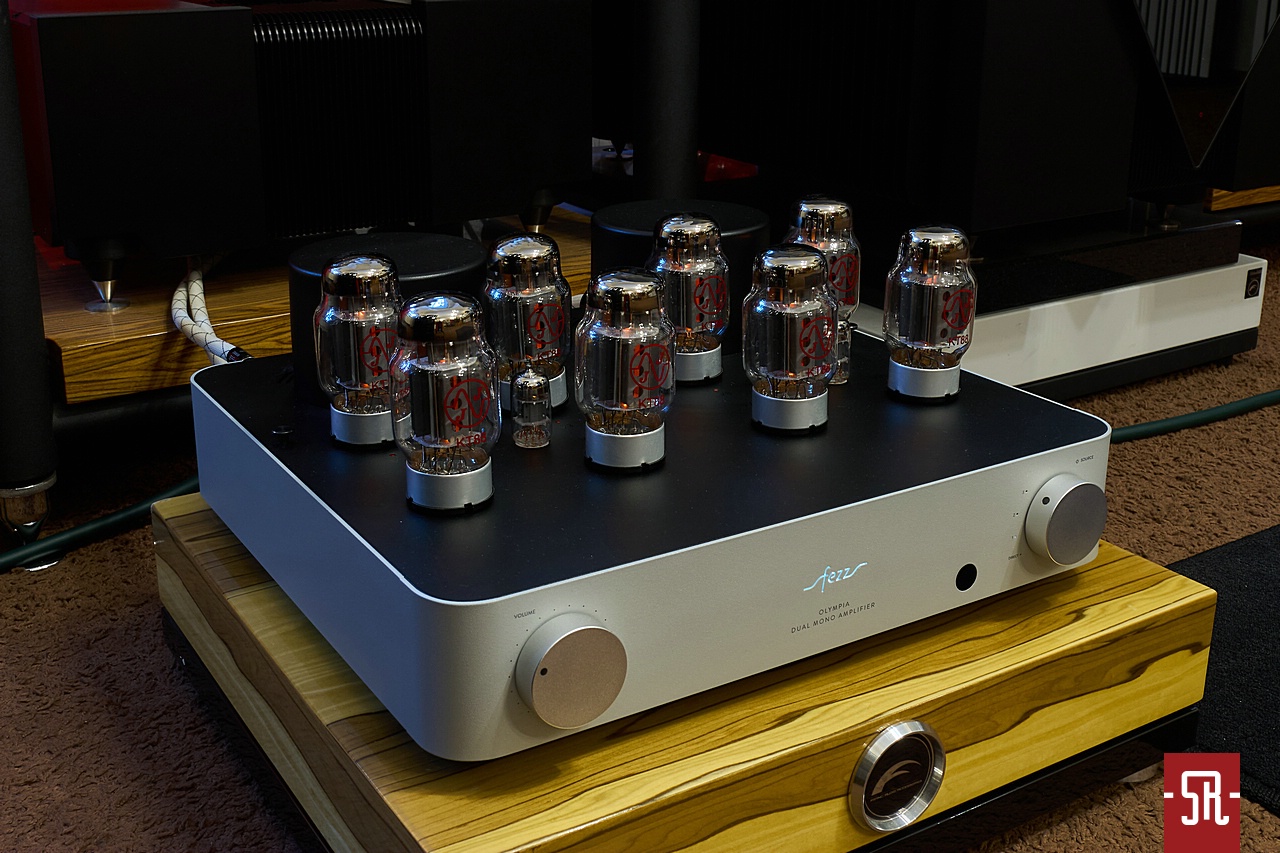
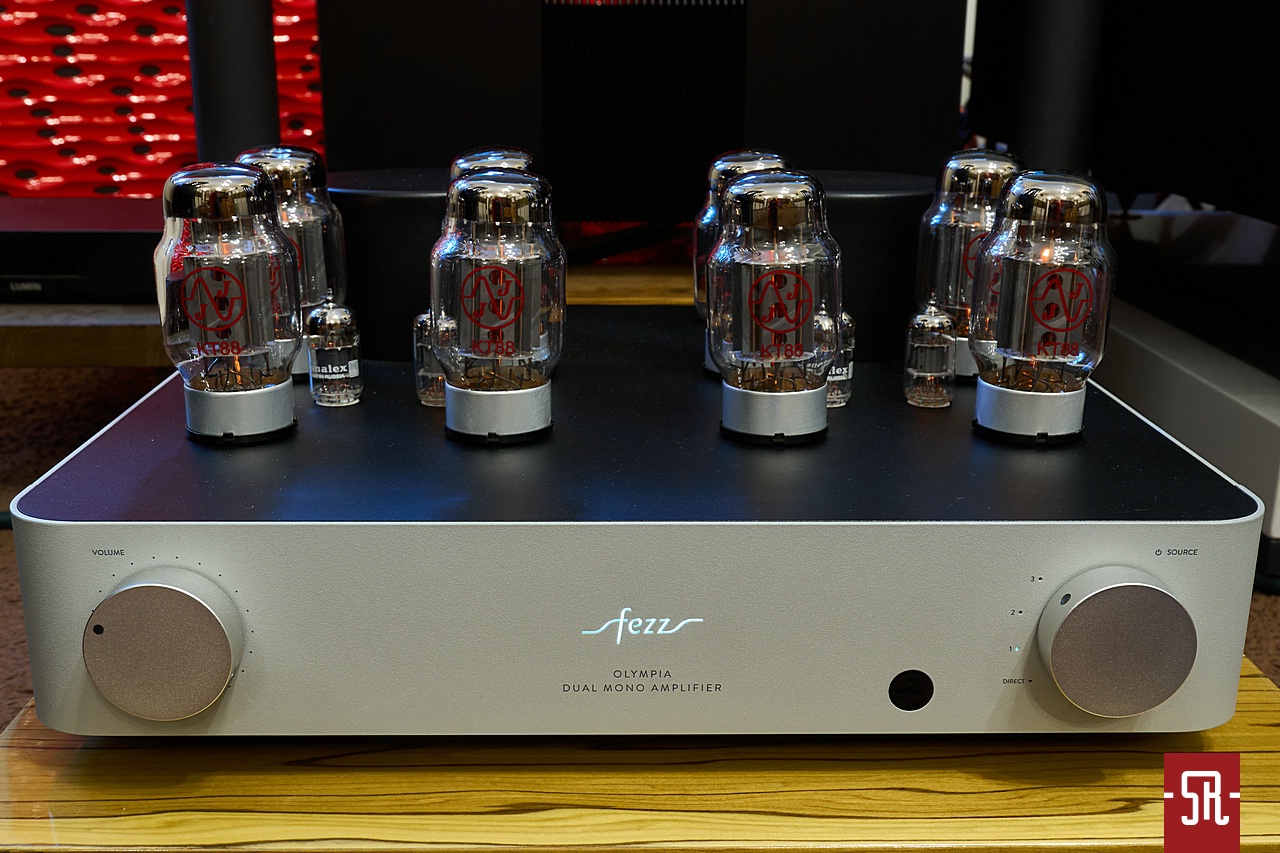
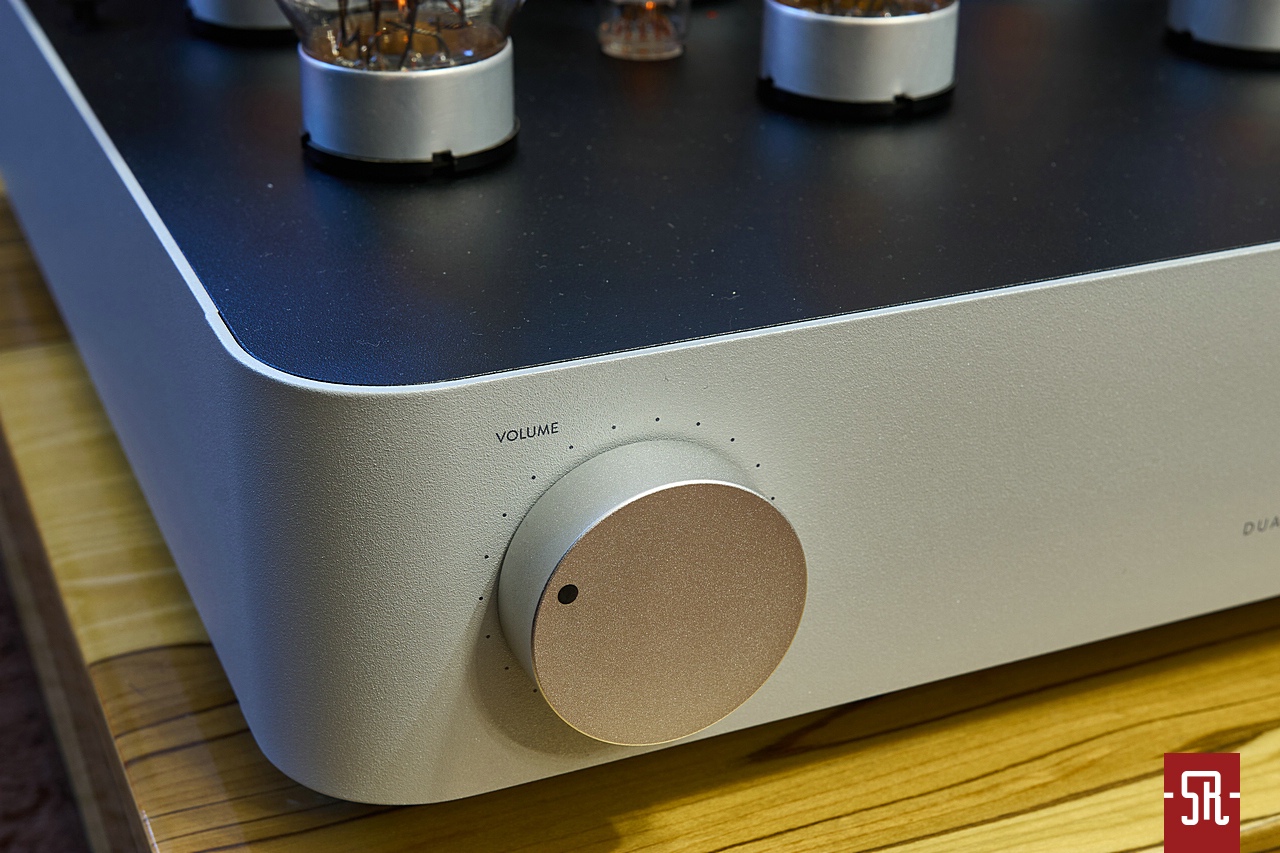
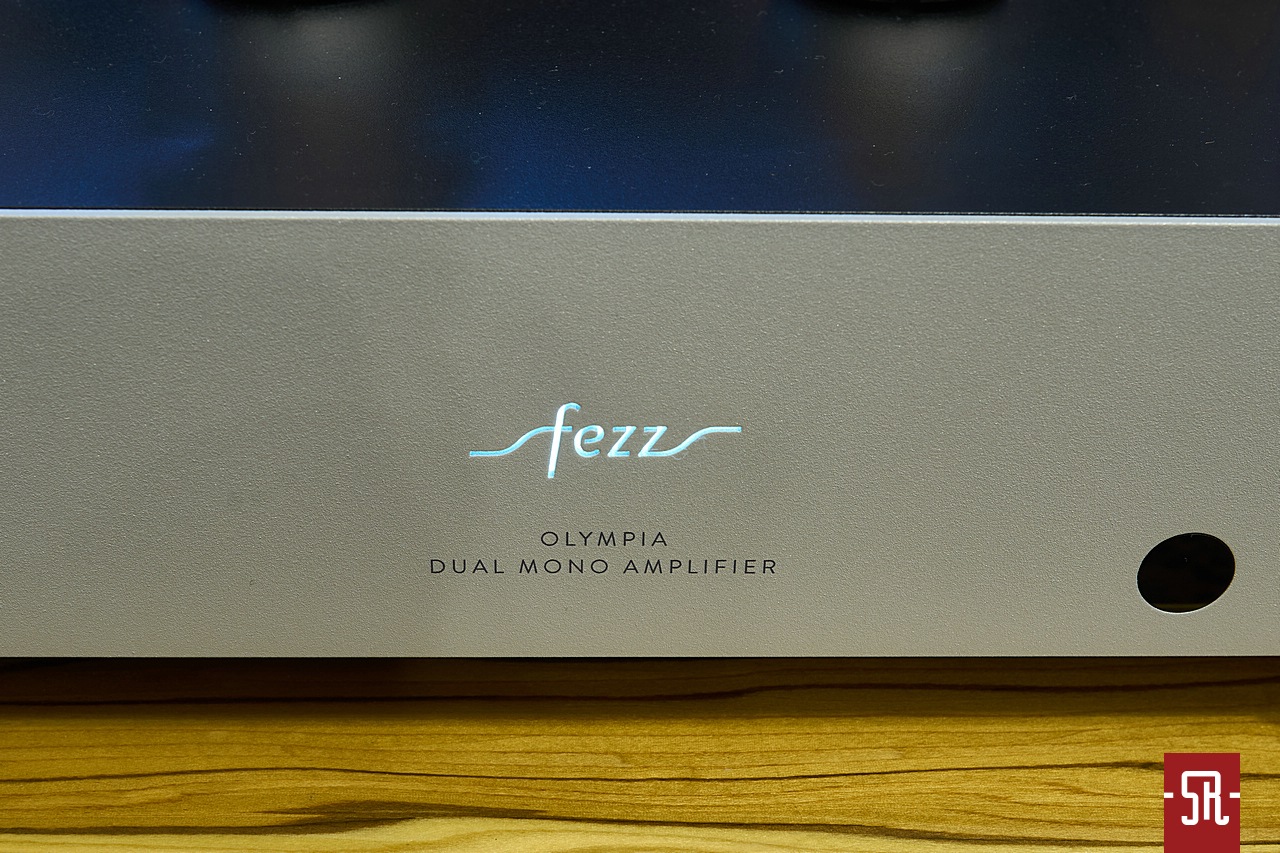
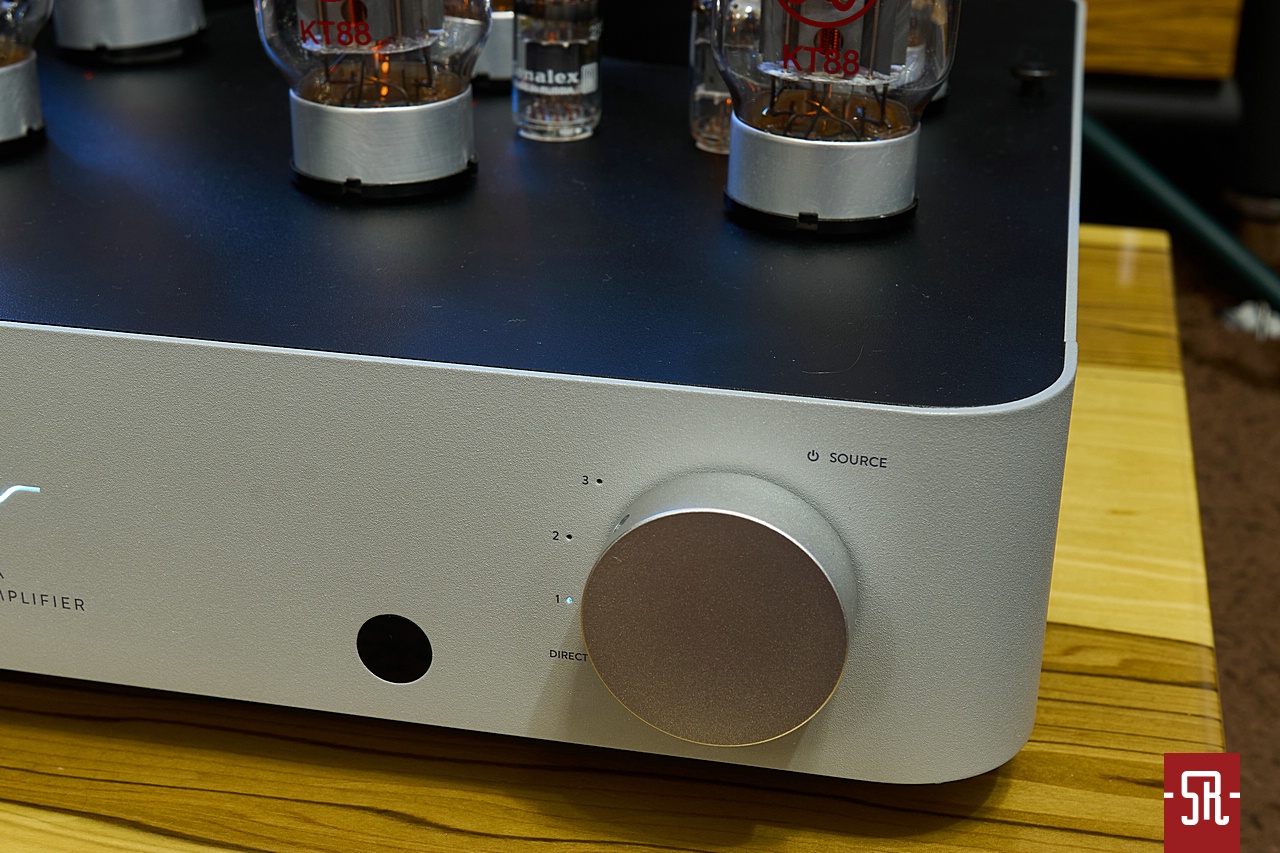
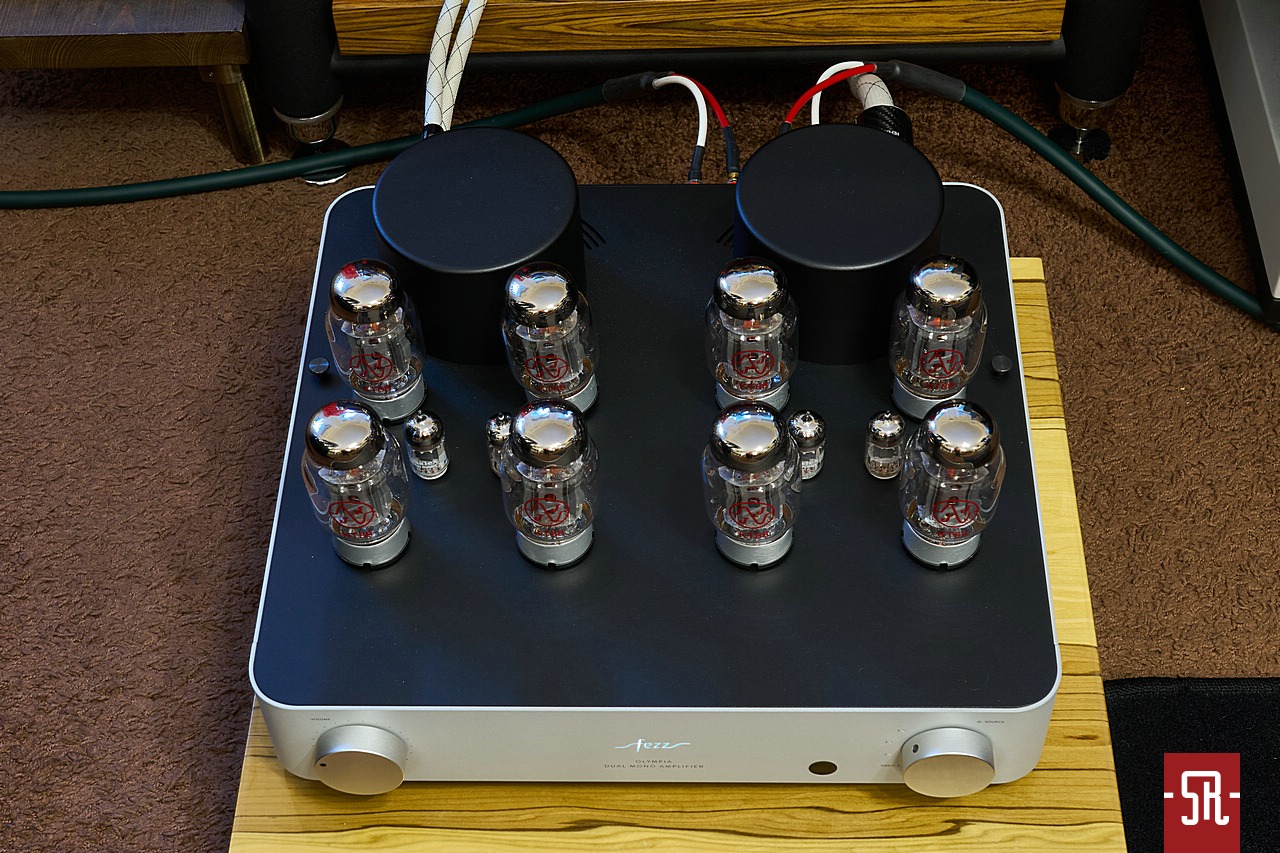
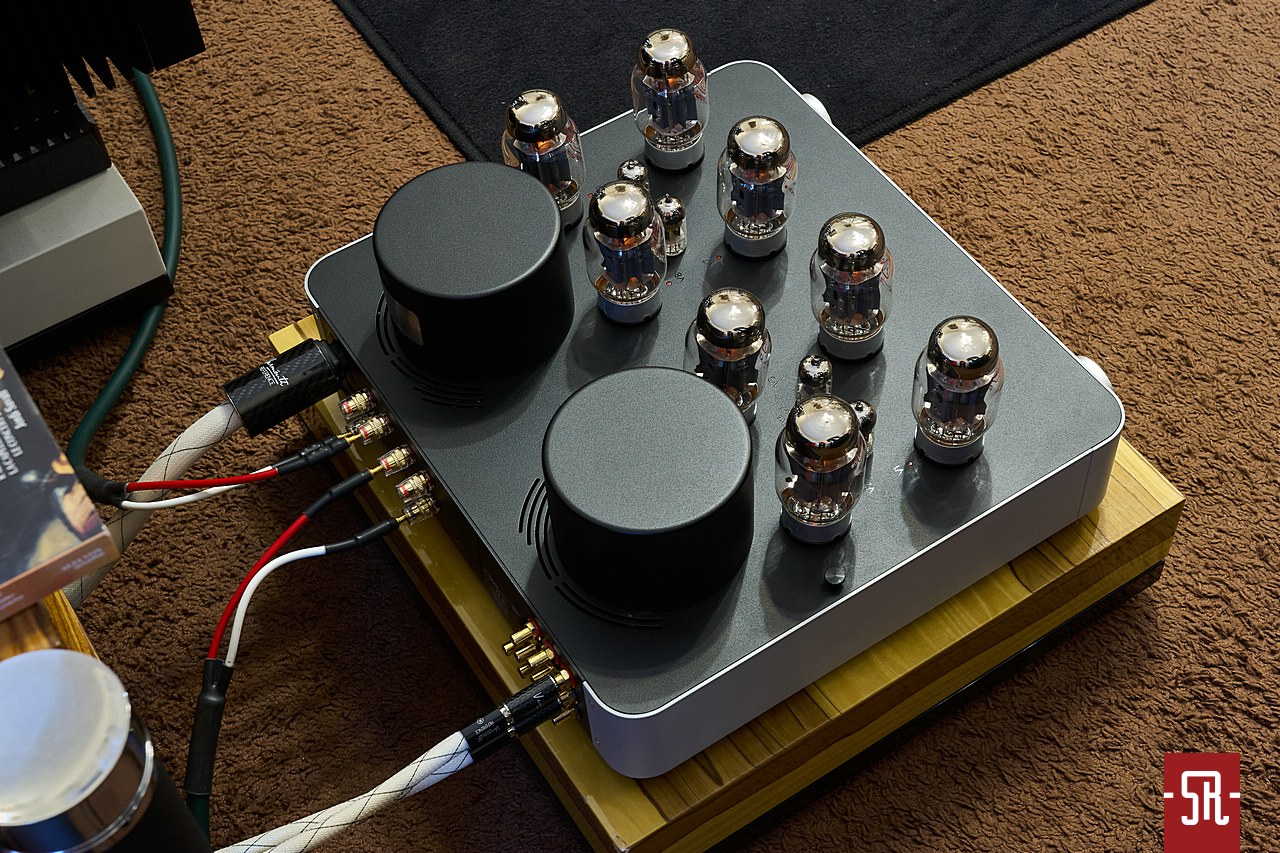


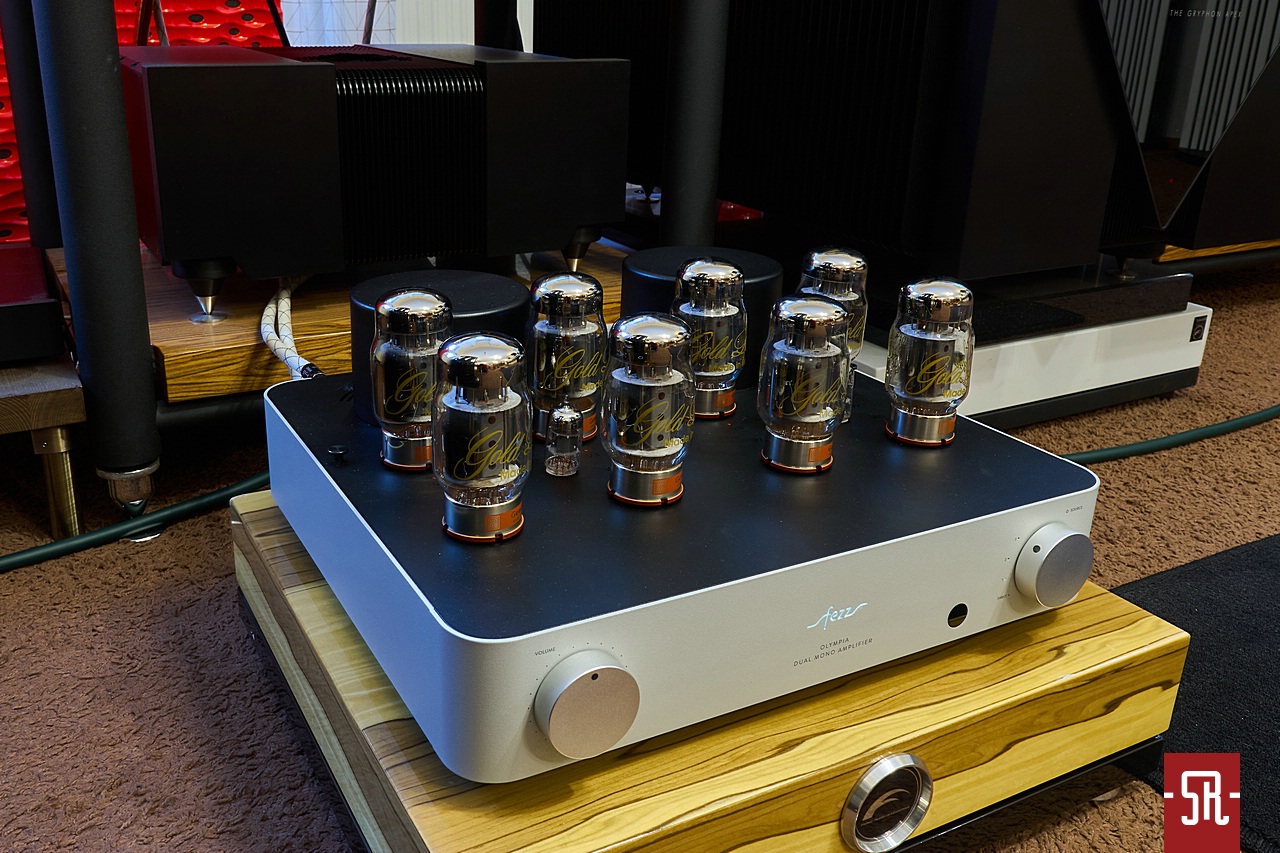
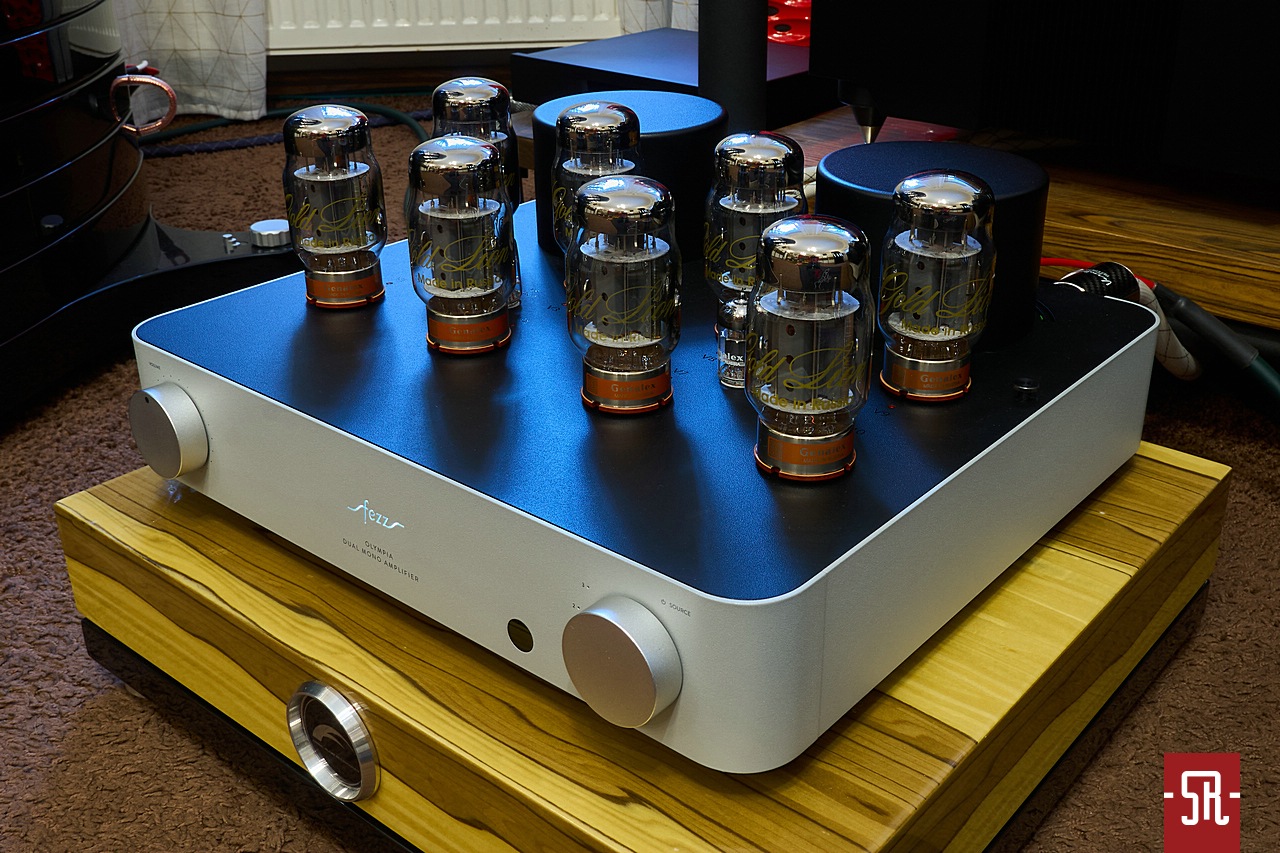
As the photographs show, the Olympia is a neat and eye-pleasing device. We are talking here about an integrated amplifier that hides the electronic bowels inside a platform, typical for many tube devices, exposing the set of control tubes, power tubes and output transformers on top of it. The idea has been known for years, but not always as visually successful as in the case of the nicely designed Fezz Audio. And it is nice because, in addition to using a flat box with rounded at the edges, with glass “bubbles” on its upper surface, an interesting play of colors was also used. Of course, it is about the silver aluminum colored band, slightly overlapping both side walls, and the black color of the upper surface, and this is currently the most fashionable color combination. The fascia is decorated with two large knobs oriented on the outer edges – the left one is volume, the right – input selector and a centrally located, illuminated manufacturer’s logo. As for the reverse, it offers, typical for tube integrated amplifiers, two 4/8 Ohm speaker terminals. Our inconspicuous amplifier is an unquestionable powerhouse, because it uses as many as four KT88 tubes per channel, allowing it to generate very considerable 100W of power, and this is no joke. And I know, because during the test I heard how easily it handles my large speakers. We also have 3 RCA line inputs, a direct input for the power amplifier section, an output for a subwoofer, a ground switch and an IEC power socket necessary for operation. A nice addition is the use of an additional slot – in the tested version it was unused – for the digital-to-analogue converter. Naturally, the starter kit also includes a remote control and a set of tubes from the JJ catalog.
What can the tube Olympia do? Naturally, I started listening using the standard JJ tubes. I will just say that the sound was very good, because in addition to the proper control of my speakers, it offered a good timbre, plasticity and surprisingly expressive drive, in terms of building the reality of stage events. The effect was so interesting that if you do not have any spare funds, you can perfectly well live with it. The sonic effect will never be disappointing, but jumping a little bit ahead of ourselves, this will not be the last word this device delivers. What am I hinting at? Of course, to potentially change the set of tubes to at least those provided by the distributor as a relatively inexpensive alternative -from the Gold Lion brand. Why am I mentioning this? Well, if after the possible purchase of the eponymous integrated you are able to put out a few additional “bucks”, I assure you that it is worth spending them on the aforementioned glowing glass tubes. It may sound lofty, but it is a completely different world. Admittedly, it is less aggressive in terms of sound edges and attack speed, but not only are the losses in these areas minimal, but we gain momentum of presentation, charming vibration of the sound and its greater homogeneity, which automatically translates into better tangibility of the created events on a wider and deeper virtual stage. Suddenly, the music becomes more joyful and colorful. The effect is so successfully implemented that the music aimed at enchanting the listener draws from it to the fullest, and the one that is supposed to energetically torture him, colloquially speaking, reflects the spirit written into their DNA of the rebellious musicians furiously playing their instruments, with only a truly minimal quieting down of the aggression as compared to the JJ tubes.
To illustrate the possibilities of Olympia, let us first take Wojtek Mazolewski, who’s quintet has recently been heavily exploited by me on his concert album „Live Spirit I”. Naturally, despite a few quite expressive songs, in terms of the speed of playing formations, it is a very atmospheric material. Showing not only the virtuosity of the musicians, but also their understanding of each other, which translates into interesting instrumental passages that harmonize nicely with each other. Of course, with a full range of the smallest nuances of each of them. And it was this last aspect that rose to the heights only after the replacement of the vacuum tubes with the GL. The gentlemen were having real fun with their playing, enchanting with the timbre and the way of articulating chords, and let us be frank – a better set of tubes showed this in the best possible way.
After such a show of audiophile flavors, jumping to the other pole of musical achievements, Iron Maiden landed on the test bench with the album „Fear Of The Dark”. Naturally, this is a classic heavy. But even it, well reproduced also for music lovers who do not really like this type of music, can carry a hint of curiosity. Of course, I grew up on this kind of music and I had no problem sinking into it without any resistance, so from the first moments I knew where something was lost and where there were obvious gains. It is obvious that the music was smoother and thus less devilishly attacking the listener, but the overall presentation gained in such areas as timbre and melodiousness, thanks to which the volume level could be raised by a few points. I like to listen loud, so whenever there are similar possibilities, I use them without thinking. Let me tell you, despite a bit lesser sharpness, the sound was still a complete breakaway, because I could get much closer to the concert levels with the volume, and this always compensates for minor shortcomings in kicking me with heavier music. The performance of this amplifier here was also very nice, and in fact, similar to what I heard with jazz.
Who would I recommend this integrated amplifier to? In the first place, naturally, all fans of this type of design. It is powerful, which allows you to drive most of the speakers, and after changing the tubes, you get great timbre and will have all the tube artifacts. And what about solid state lovers? Unfortunately, the orthodox ones will probably not find a thread of agreement with this one. But those open to some concessions, in the name of more music in music, yes. I do not know how big the last group will be. However, I know that the Polish Olympia is a great amplifier with a global reputation, which means that it should be listened to by the full spectrum of both music lovers and audiophiles. I assure you, even if something does not „pop” between you and it, it is still worth a listen.
Jacek Pazio
System used in this test:
– CD Player/DAC: Gryphon Ethos
– Streamer: Lumin U2 Mini + switch QSA Red-Silver
– Preamplifier: Gryphon Audio Commander
– Power amplifier: Gryphon Audio APEX Stereo
– Loudspeakers: Gauder Akustik Berlina RC-11 Black Edition
– Speaker cables: Furutech Nanoflux-NCF Speaker Cable
– IC RCA: Hijiri Million „Kiwami”, Vermouth Audio Reference
– XLR: Hijiri Milion „Kiwami”, Furutech DAS-4.1, Furutech Project V1
– Digital IC: Furutech Project V1 D XLR
– Ethernet cable: NxLT LAN FLAME
– USB cable: ZenSati Silenzio
– Power cables: Hijiri Takumi Maestro, Furutech Project-V1, Furutech DPS-4.1 + FI-E50 NCF(R)/ FI-50(R), Furutech Evolution II, Hijiri Nagomi, Vermouth Audio Reference Power Cord, Acrolink 8N-PC8100 Performante, ZenSati Angel
Table: BASE AUDIO 2
Accessories: Quantum Science Audio Red fuse; QSA Silver fuse; Synergistic Research Orange fuse; antivibration platform by SOLID TECH; Harmonix AC Enacom Improved for 100-240V
– Power distribution board: Power Base High End, Furutech NCF Power Vault-E
– Acoustic treatments by Artnovion
Analog stage:
– Drive: SME 60
– Cartridge: My Sonic Lab Signature Diamond
– Phonostage: RCM Audio The Big Phono
– Clamp: Omicron Luxury Clamp
– Eccentricity Detection Stabilizer: DS Audio ES-001
– Tape recorder: Studer A80
Opinion 2
Turning around all the time in a fairly hermetic environment, that is, conventionally speaking, seeing the same faces day after day, not to mention our own in the mirror, the passage of this „fundamental physical quantity” seems perhaps not so much painless, but almost negligibly imperceptible. After all, all the processes associated with it are continuous and usually slow, somewhat reminiscent of staring at the online broadcast of a rusting park bench, where such systematic, daily peeking does not show the scale of erosion taking place before our eyes. However, it is enough to take a longer break, which, like a hard reset, allows you to look at a given object or our surroundings with a fresh eye. And so it is with our today’s guest, whose fact of existence was not only known to us, but also empirically confirmed by editorial tests, but after two review meetings, our contacts were limited to annual snapshots from the Warsaw Audio Video Show and Munich’s High End. As a result, more than five years have passed since the Lybra 300B test, and Mira Ceti … 9 years. During this time, the Fezz underwent a serious facelift and, what can I say, they simply became more beautiful with the Evolution generation. Instead of classic, austere angularity, their bodies have taken on sexy curves, and the place of slightly „garage” style signs with the company logo has been replaced by illuminated, precise laser cutouts of the front walls. This transformation, which was backed by the design office KABO & PYDO, did not escape the attention of not only the „civilian” audience, but also the design body Design Zentrum Nordrhein Westfalen, which awarded the new artistic design of the aforementioned line with the prestigious Red Dot Award. Of course, the relevant changes also included the bowels of the tube amplifiers, but that is a topic for a separate paragraph. As if that were not enough, the business model of the manufacturer has also changed, now focusing the lion’s share of its attention, apart from the obvious design and production plot, on export activities, entrusting the local market to 21Distribution from Pabianice. In this way, our today’s guest, the Fezz Audio Olympia, came to us not from Kolonia Koplany in Podlaskie Voivodship, but from Pabianice near Łódź.
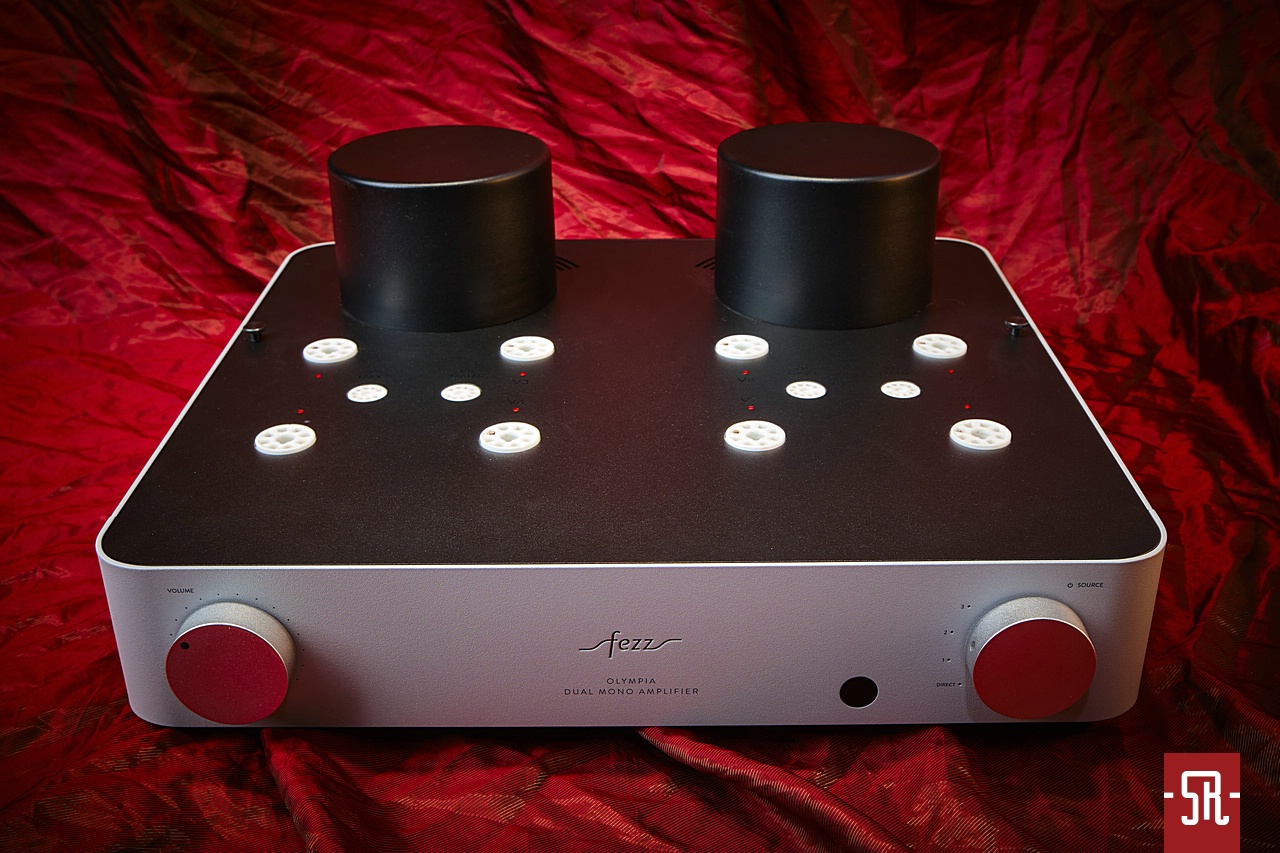
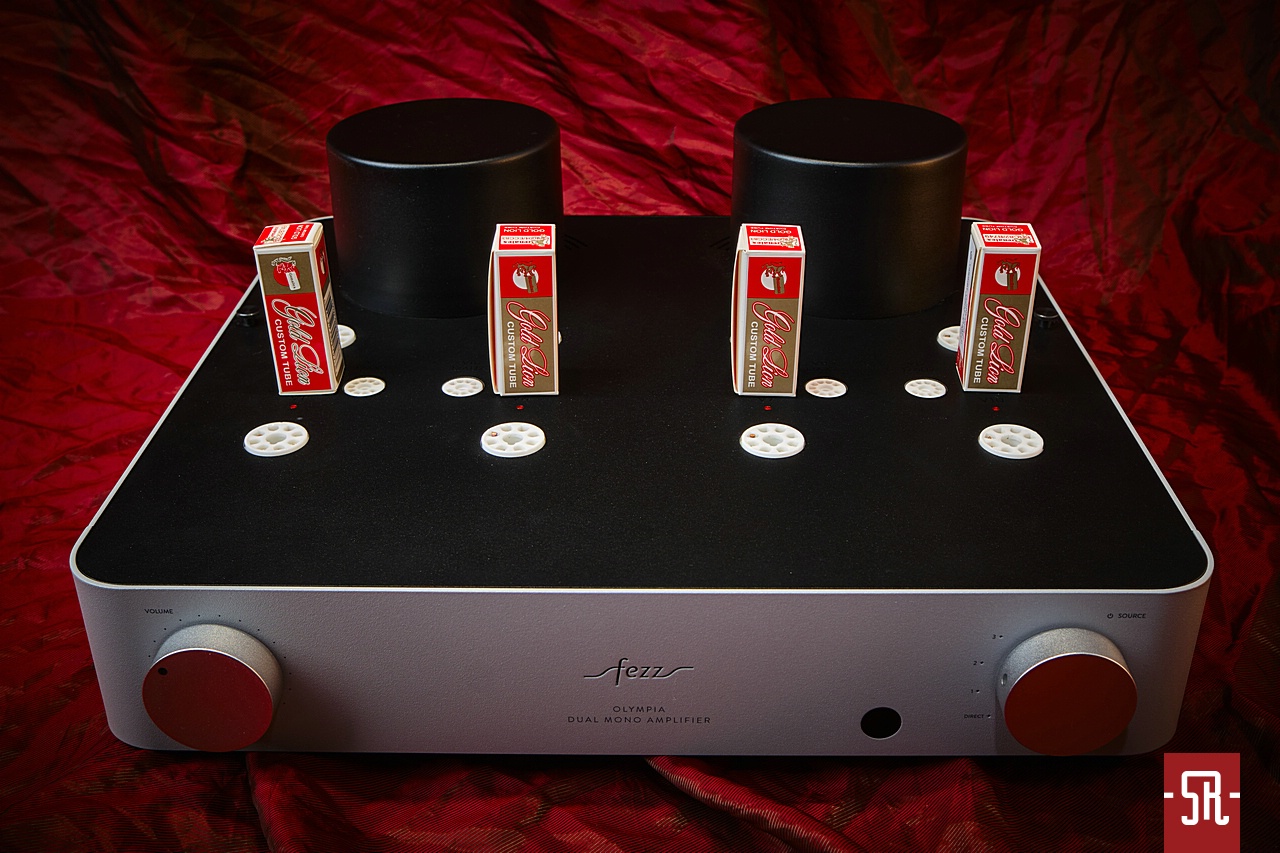
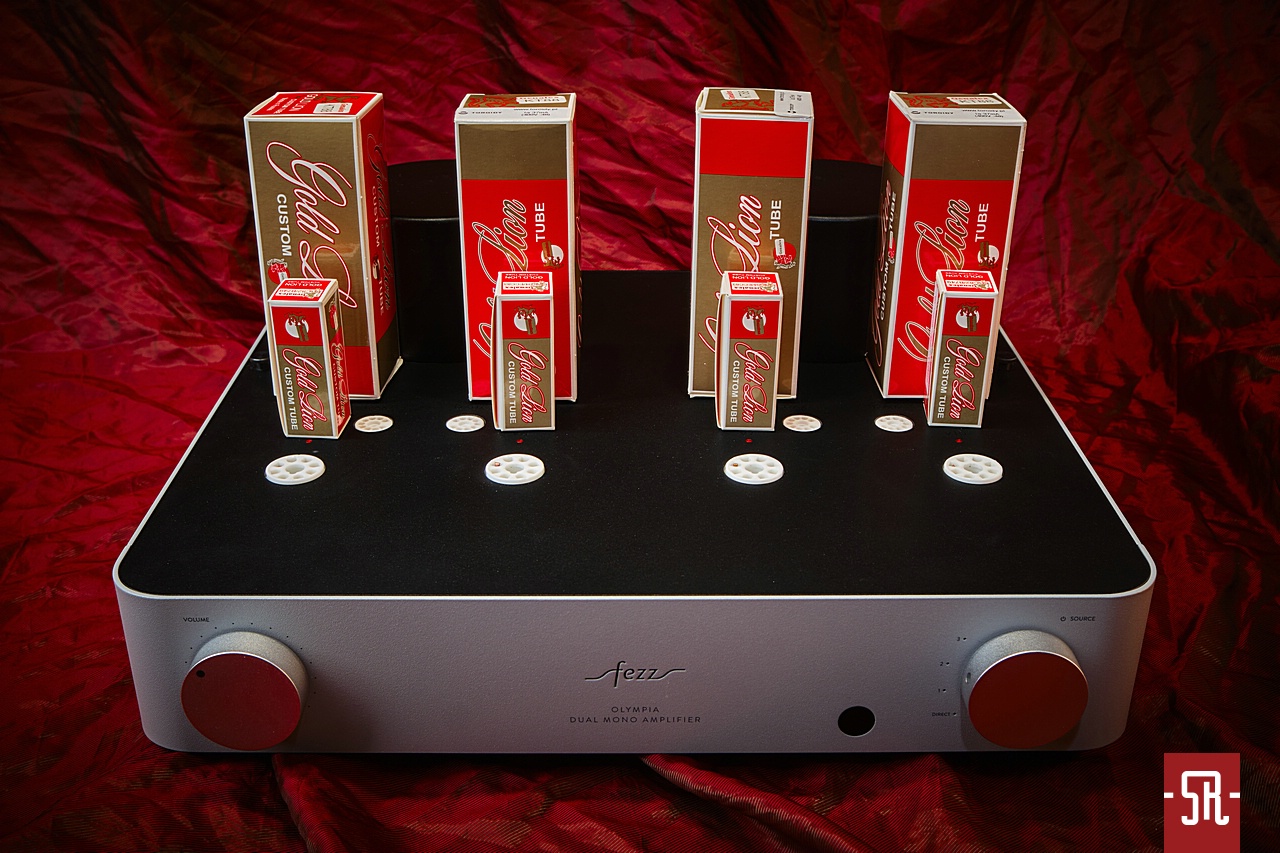
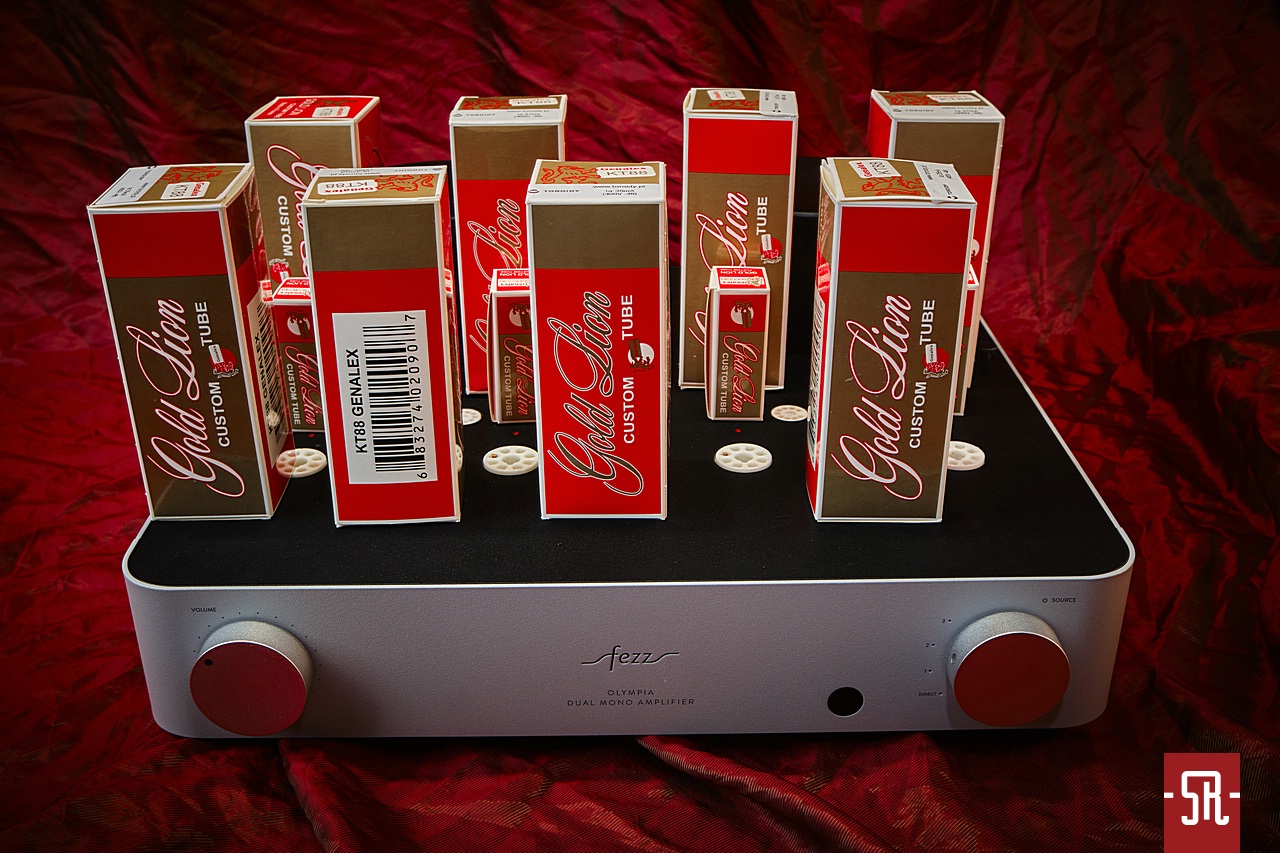
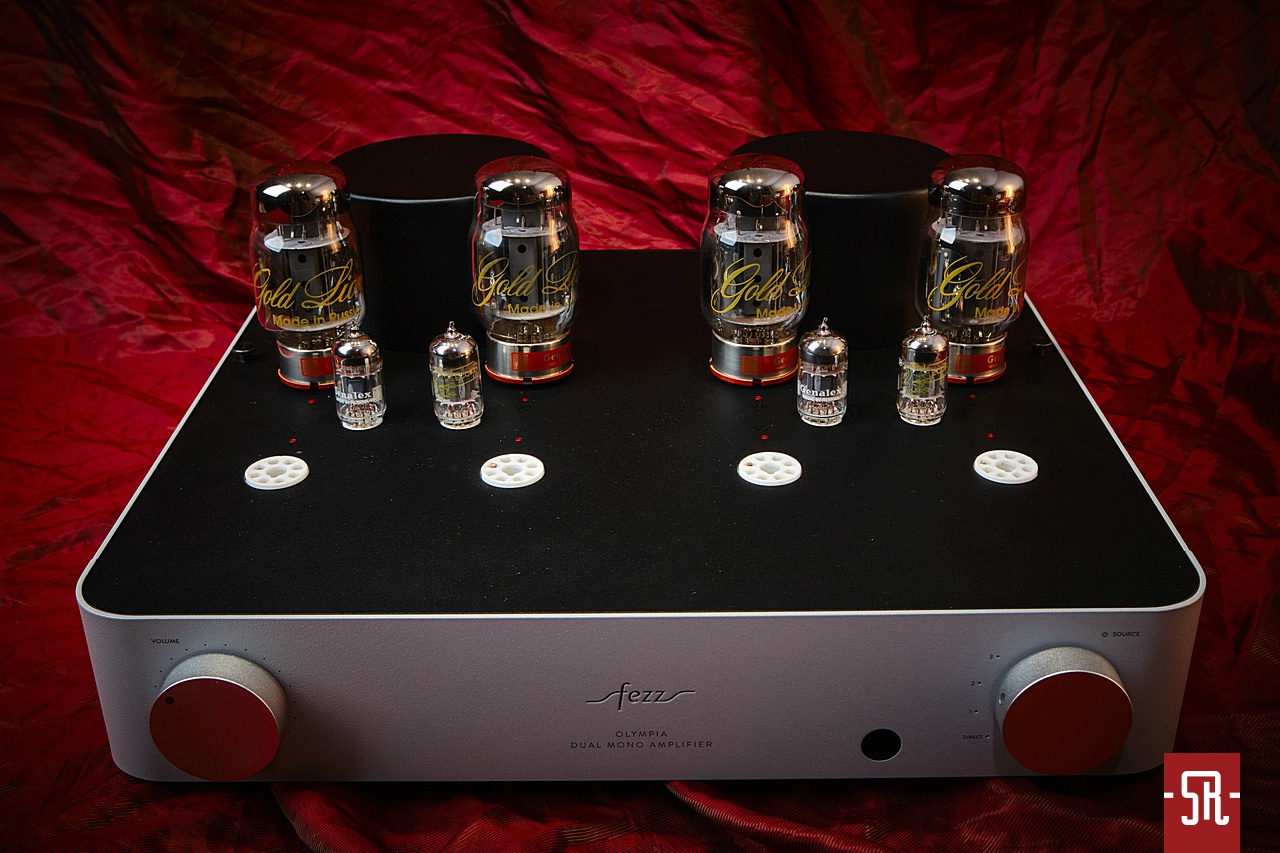
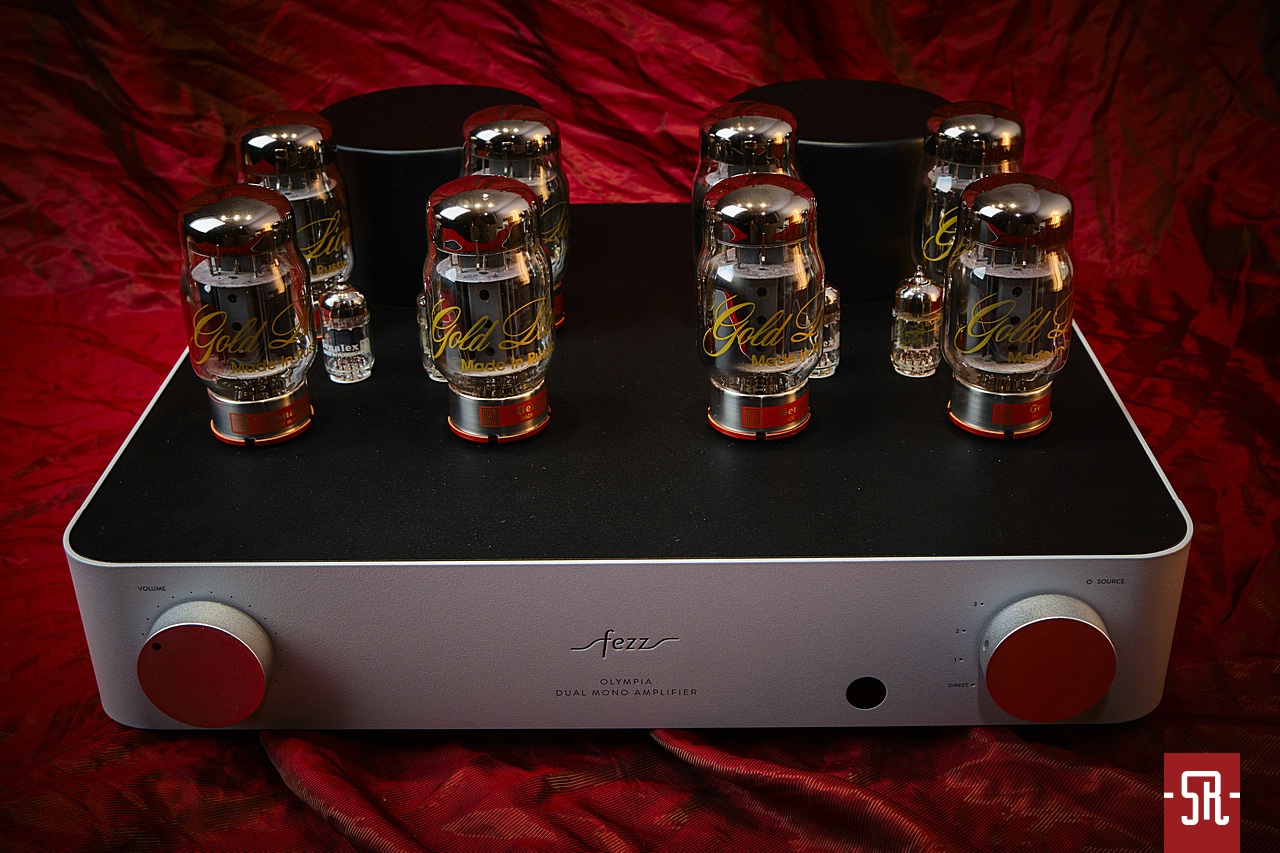


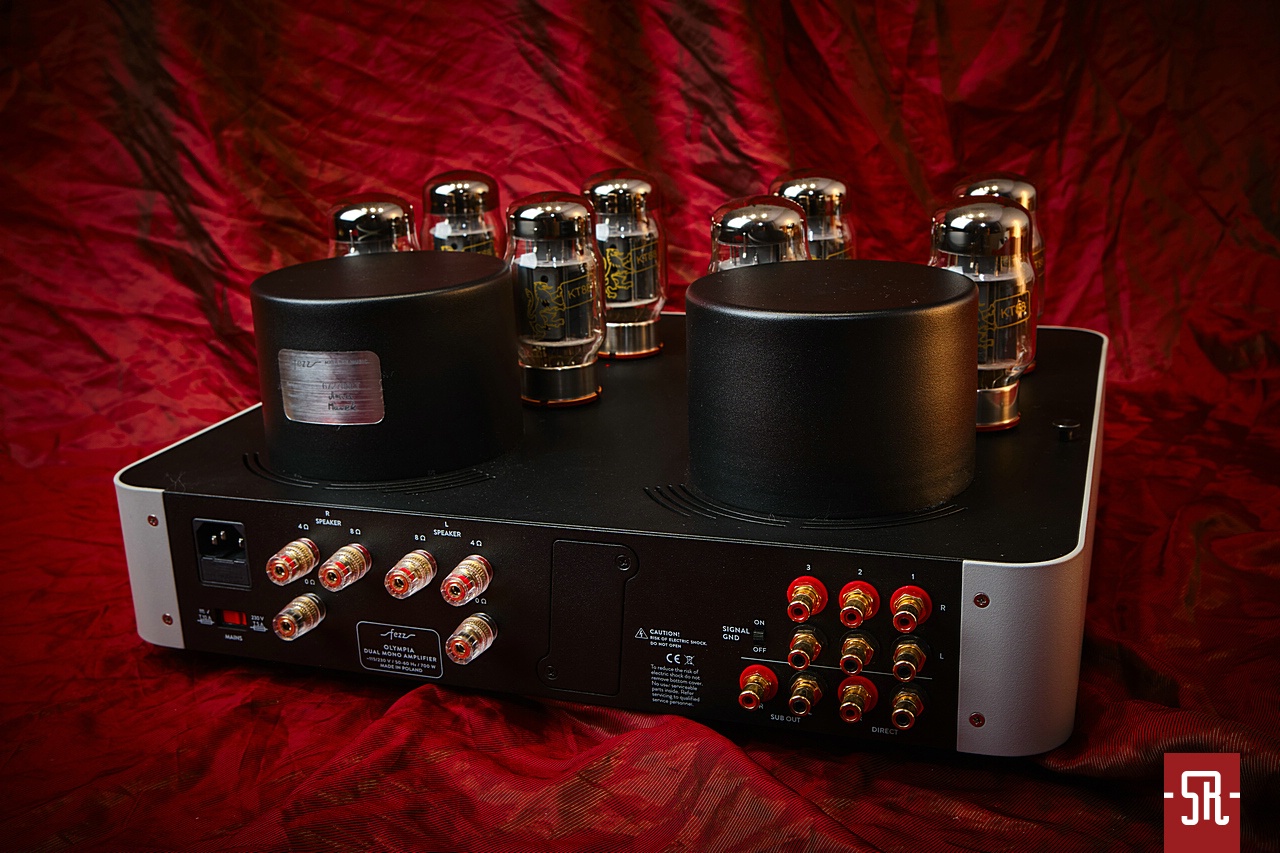
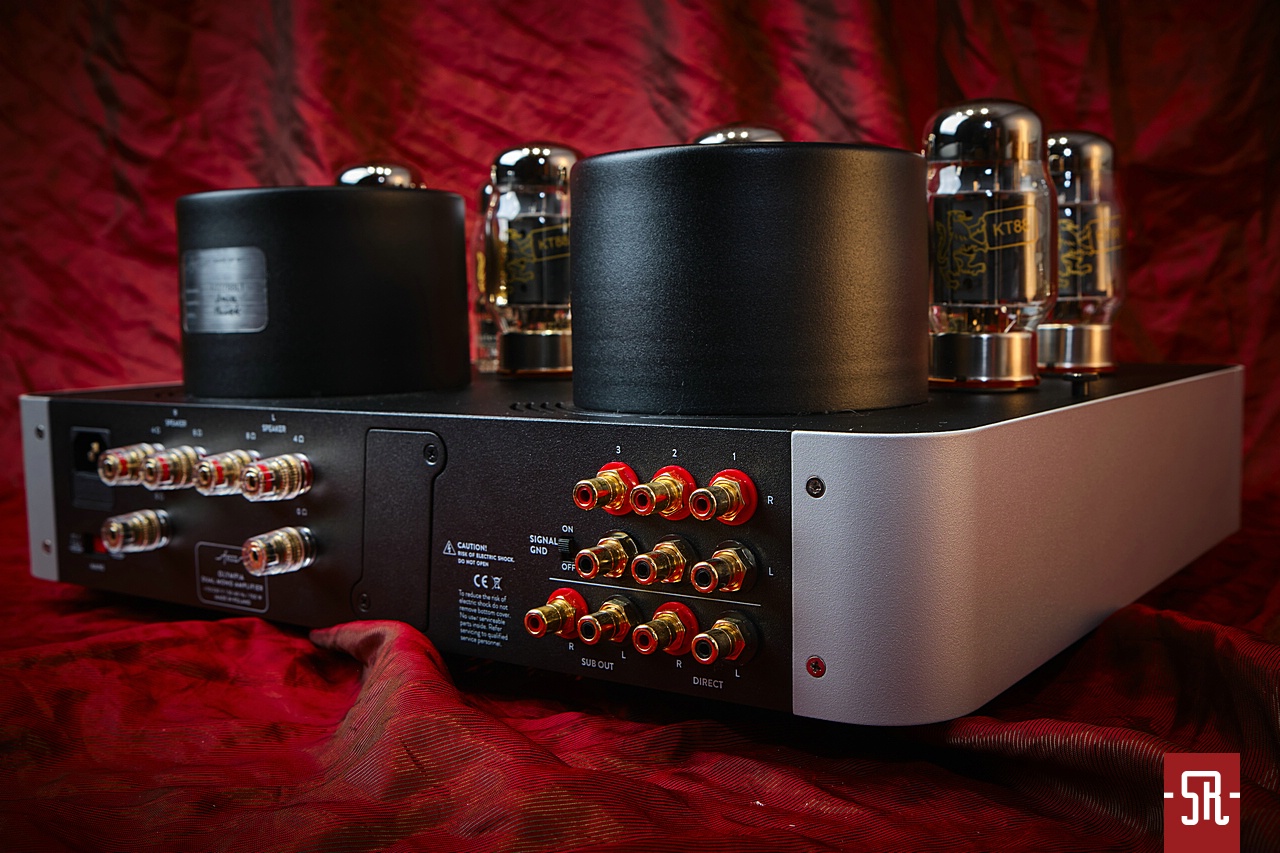
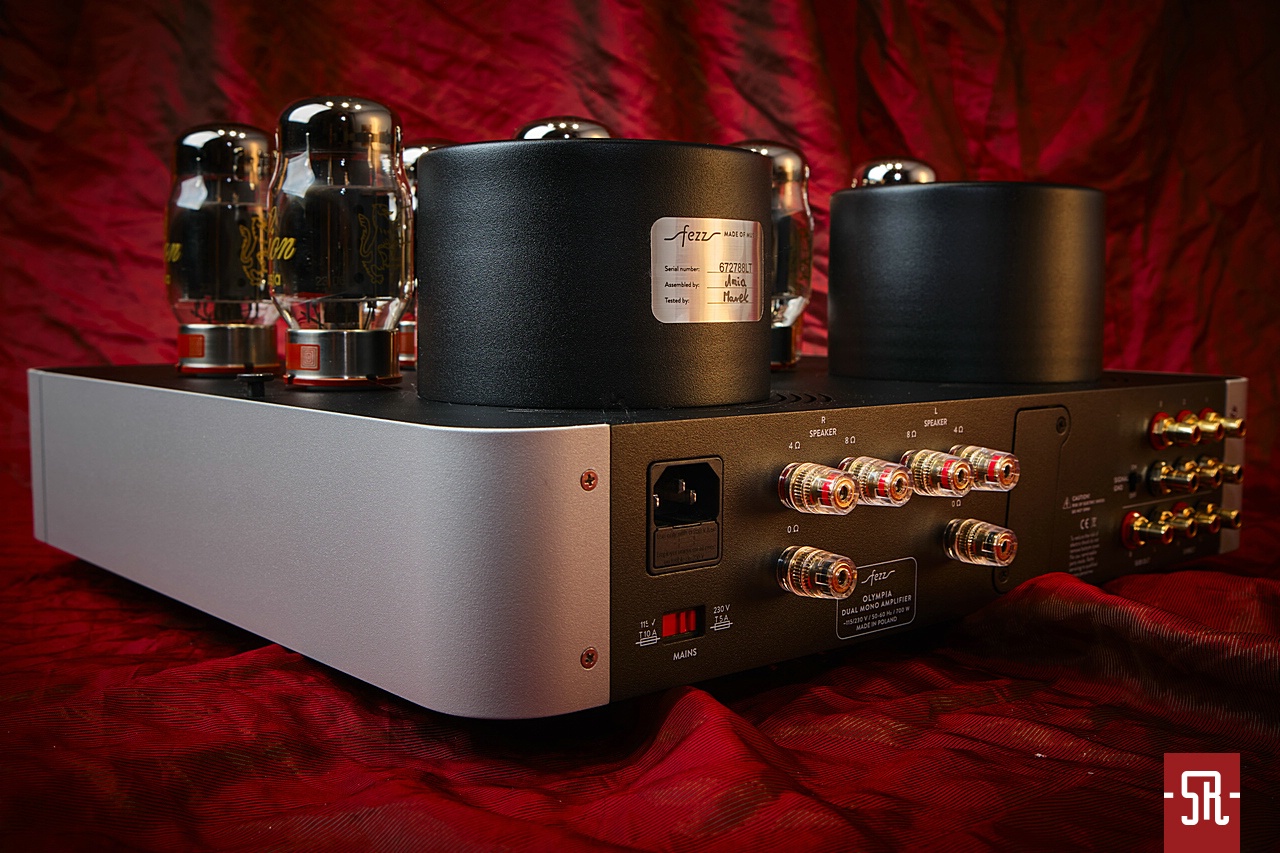
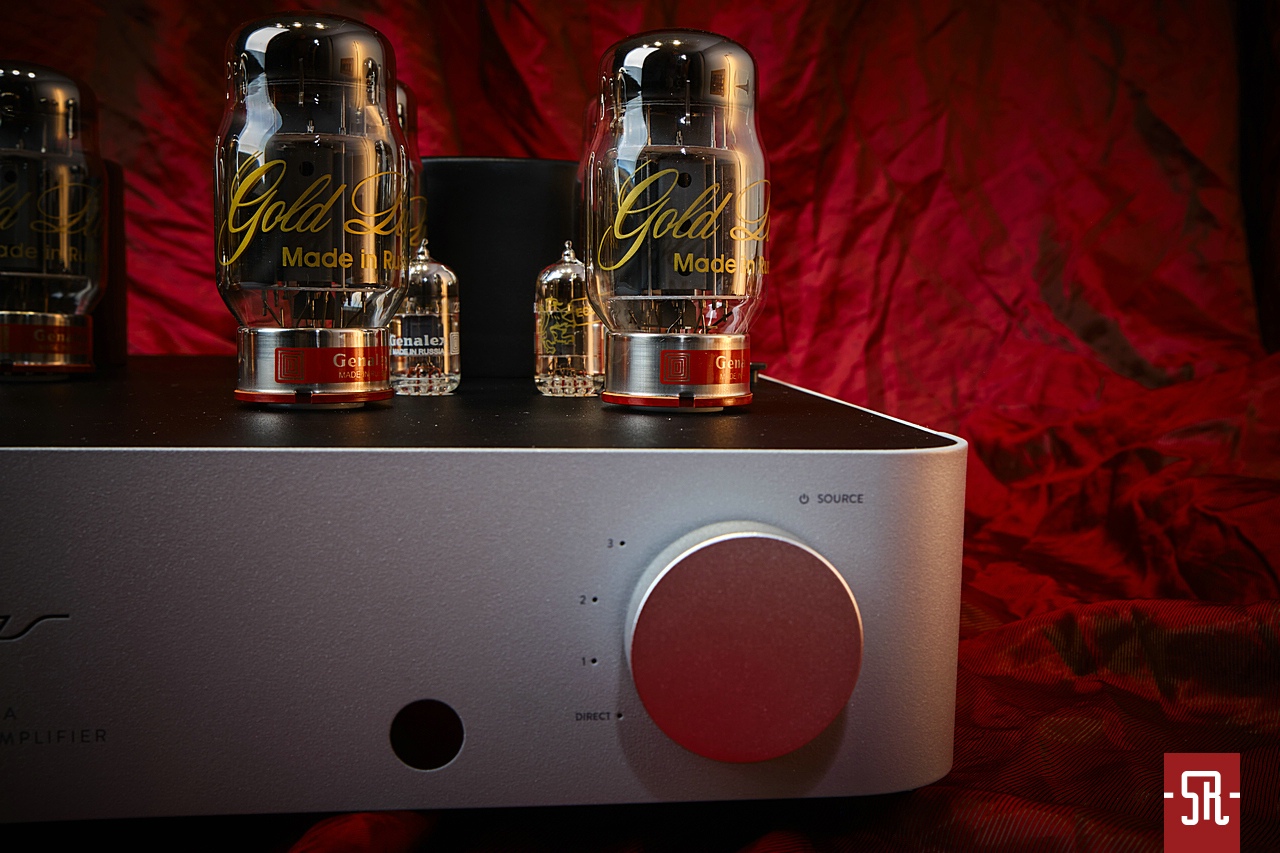

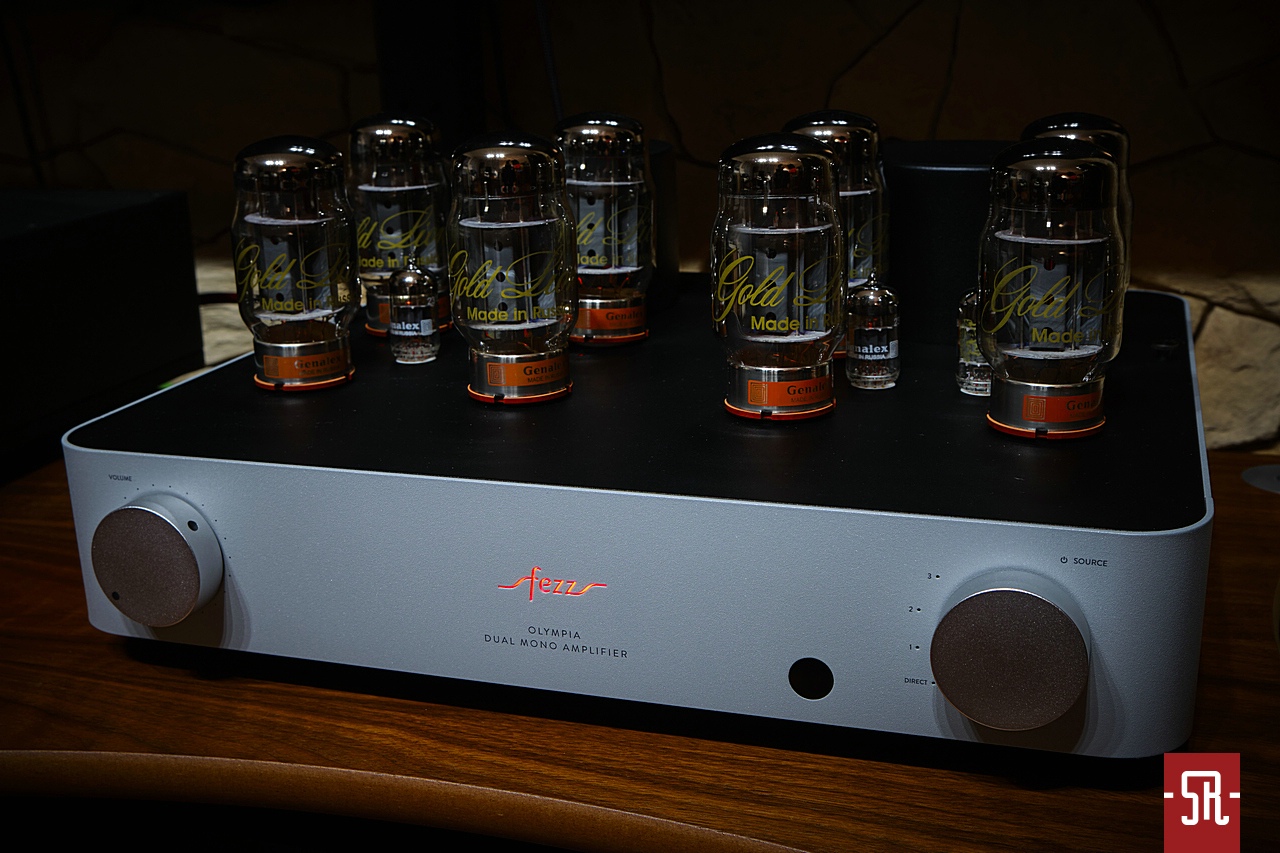
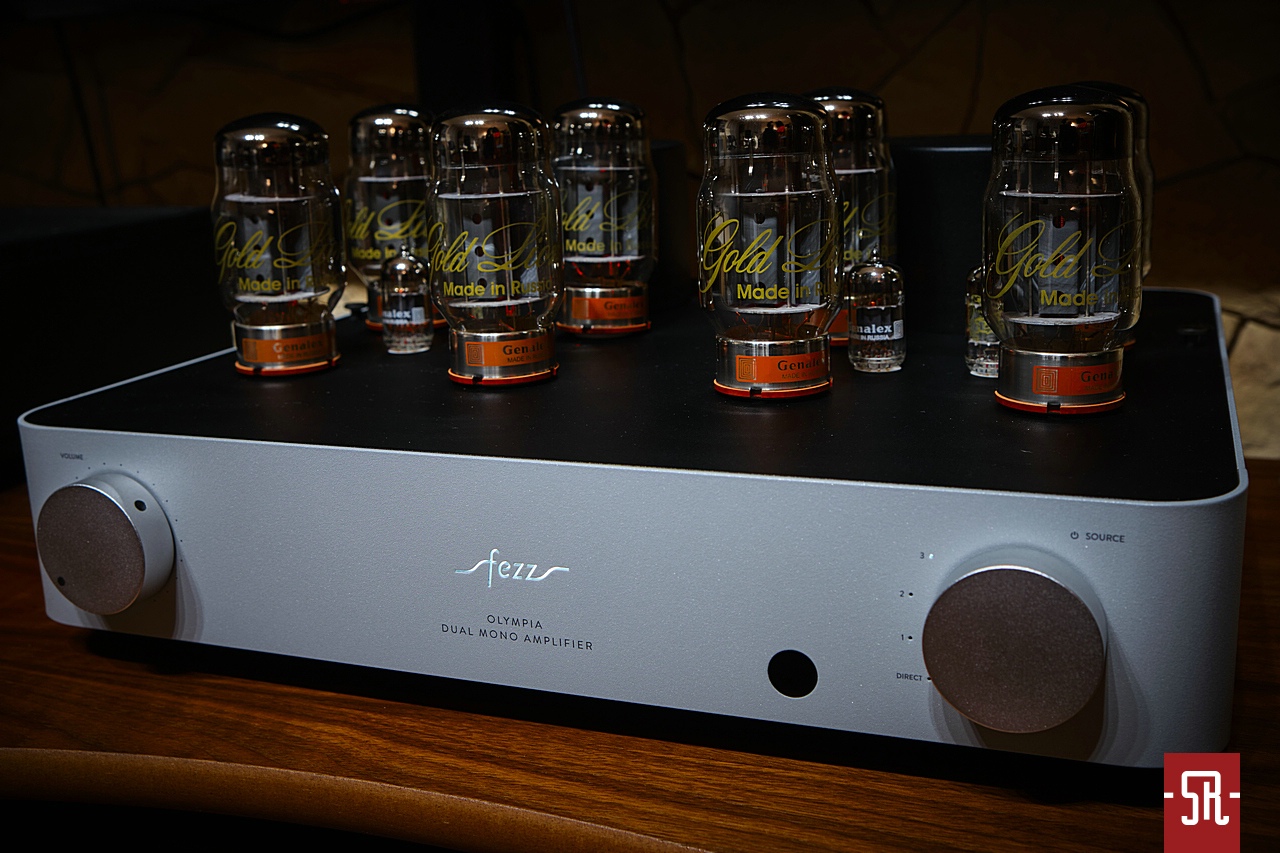
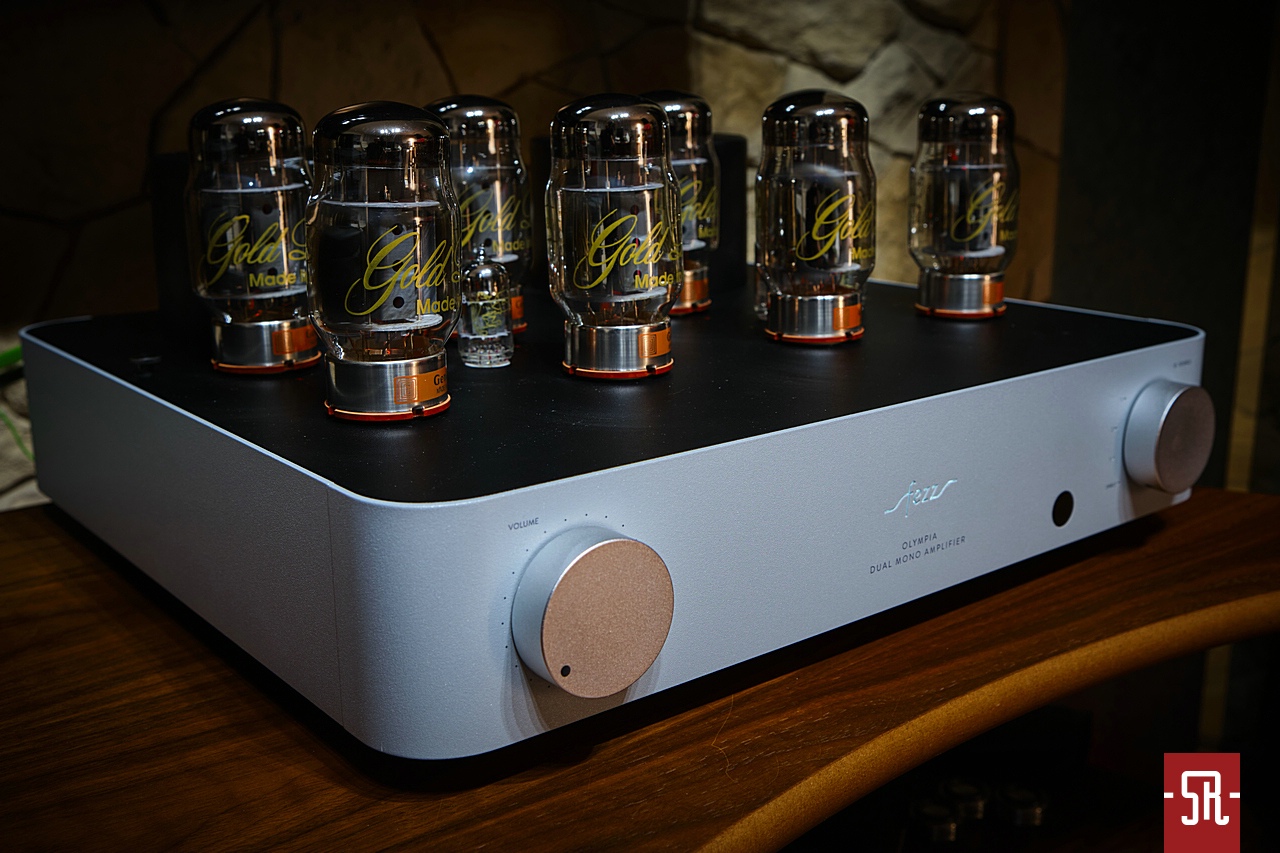

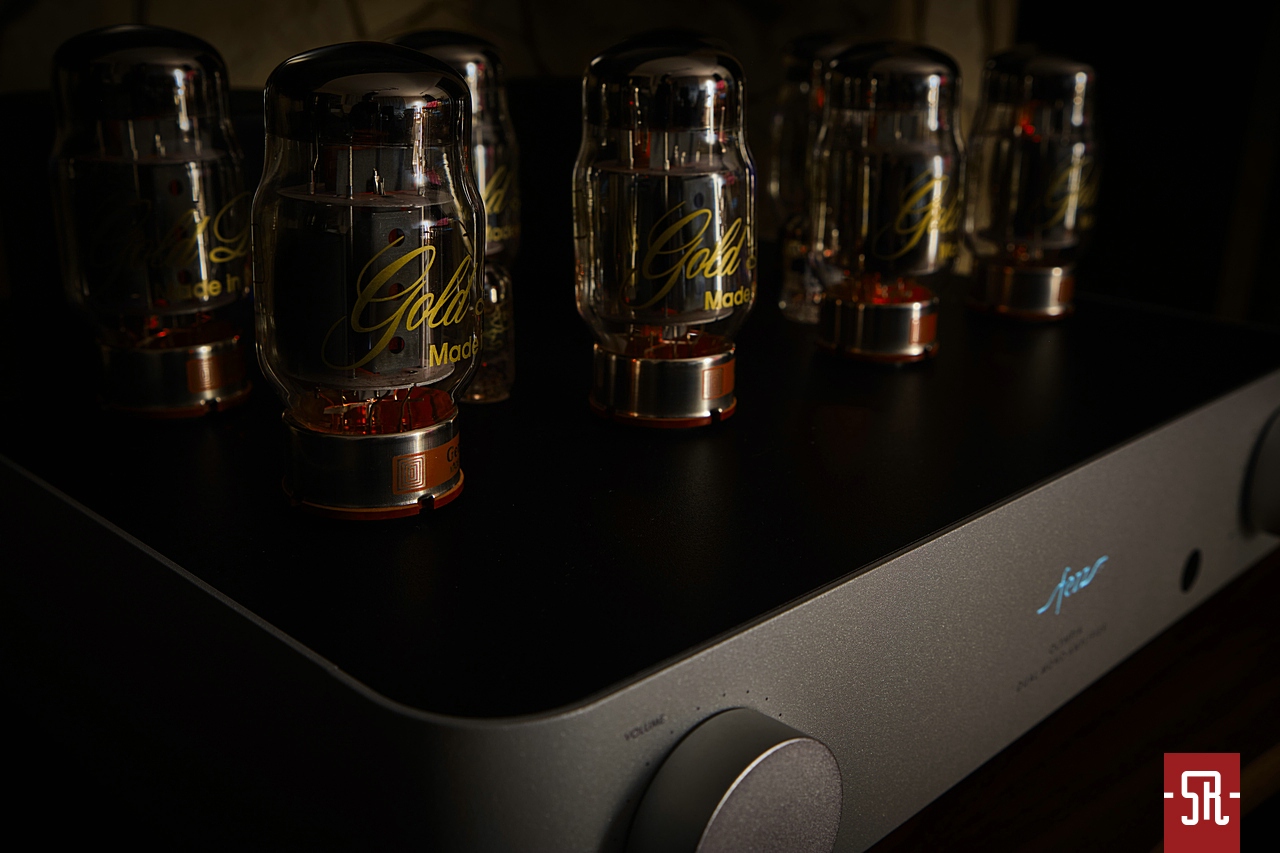

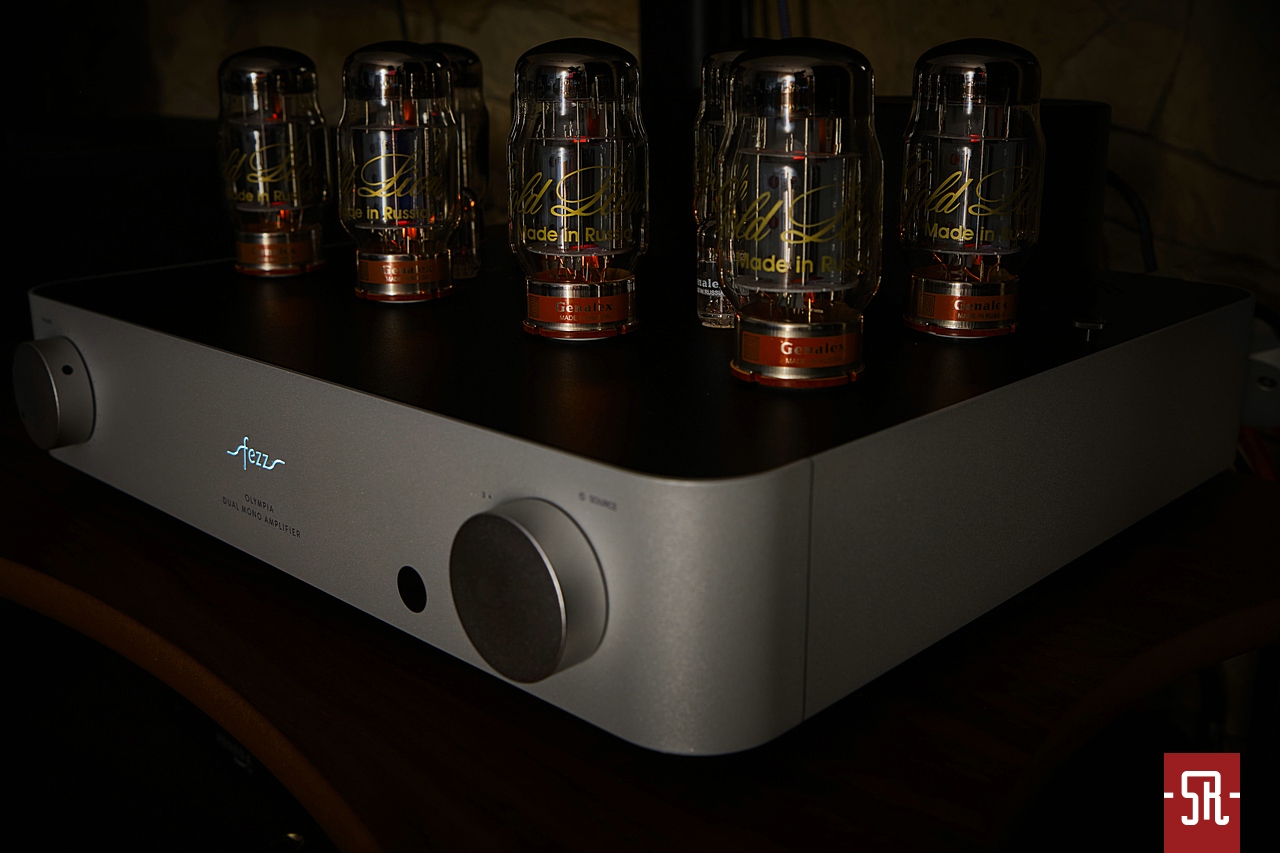

Since I have already mentioned the appearance of Olympia, I will let you scratch a little more about it, because the title integrated clearly deserves it. Its rounded body is surrounded by a strip of satin aluminum, which is available in seven (!!) color options – Big Calm (brown), Black Ice (black), Burning Red (red), Evergreen (green), Republic (black and white), Sunlight (sand) and Moonlight (silver) visible in the photos. Each time the massive knobs – the left one responsible for the volume and the right one for sleeping/waking up from standby and the choice of sources are naturally (aluminum) silver. Just like the cage protecting the tubes, which for a change invariably remains black. I will mention right away that I took the liberty of not installing this cover, so I will only mention that its front of it is a glass pane, so the view of the glowing “greenhouse” boasting on the black support platform is fully comfortable. The main switch is hidden in the „floor”, right next to the front edge. As for the tubes, the Fezz team went crazy and, striving for the greatest possible versatility of the Olympia, equipped it with an impressive, for its surprisingly compact dimensions, set of lamps, about which we will talk literally in a moment. Behind the tubes, we will come across a duo of massive saucepans protecting the trafos. And as for the back, looking from the left, we get an IEC power socket, with an integrated fuse chamber, a set of screw-down speaker terminals with separate taps for 4 and 8 Ω load, a cap for an optional expansion card (Bluetooth, Phono MM, DAC) and three pairs of line inputs plus a direct input (from an external processor / preamp) complemented by a dual subwoofer output (all in the RCA standard). The amplifier is mounted on four conical legs made of fairly hard rubber providing both proper stability and anti-vibration insulation, because vibrations is something the tubes do not like very much.
And one more little thing. According to the information available on the website, the remote control should be included in the kit. Unfortunately, this accessory was missing from the box delivered for testing. Apparently, the Q21 team decided that in preparation for the new season, we would need some movement during the listening sessions. Nevertheless, the end user should expect a remote control in the set, especially since it is a fairly neat and handy unit made of aluminum and equipped with five large, intuitive buttons that allow you to sleep/wake up the amplifier, select the input and adjust the volume. How do I know this? Well, by no means from the news stand, but from last month’s short „romance” with the Luna Mini, tortured for the purposes of a publication outside of Soundrebels.
As far as anatomy is concerned, we are dealing with a dual mono design, in which two pairs of 12AX7 / 12AU7 double triodes work in the input section and as phase reversals, while in the output stage we have a quarter of the popular KT88 stream tetrodes, capable of delivering 100W per channel in push-pull. And here I will allow myself to digress, because in addition to the JJs that are standard equipment for this amplifier, the distributor was so nice and added an optional set of premium tubes, the Gold Lions from the Russian Genalex, and it was on them that I finally conducted the listening test. Of course, the „factory” power tubes can be replaced at any time on your own, and as for the controls, it is worth bearing in mind that as standard Fezz has an ECC82/12AU7 on board selected by TAD (Tube Amp Doctor) and you can safely leave them. In addition, the standard „bubbles” come clearly numbered, so that they can be placed in gilded, porcelain coasters without mistake, while the optional tubes do not have such markings. The interior of the amplifier is quite tightly filled with two large circuit boards (one for each channel) and proprietary (Toroidy.pl) toroidal speaker transformers with very low dissipation inductance working on the output. Chokes are also toroidal. The board with input sockets is equipped with relays and the sockets themselves are gold-plated. The amplifier is equipped with both a soft-start (the procedure takes about 2 minutes) and auto-bias, so we can safely talk about the practically maintenance-free amplifier.
I will not try to enchant the reality that the power tubes used in the Olympia, the KT88, are my favorites, because to put it bluntly, they are not. The KT120s are, although the latest KT150s do not arouse such enthusiasm in me, proving that power is not everything and it is worth remembering about something akin to musicality. That is why I approached the eponymous Fezz without much emotion. Just another tube integrated with enough power to drive most speakers from a similar price range. Meanwhile, from the very first bars of Youn Sun no’s „Lost Pieces” reproduced by the Olympia, it turned out that the Polish tube amp very neatly escapes simple, stereotypical pigeonholing and is able to show itself from a surprisingly advantageous side. However, it is worth bearing in mind that for a tube, Olympia does not particularly feel the ambition to make listeners happy with a thick and sweet sound like maple syrup, as you can easily find fully solid state designs on the market offering a more heated and saturated sound. Well, at least not looking far and at the same time spoiling a bit Accuphase E-700. In addition, the Fezz needs time to fully spread its wings and catch the wind in its sails. And this is both when it comes to pulling it straight out of the carton for initial, post-factory burn-in, as well as during everyday use. To put it simply, even if you have a few hundred hours on the playing counter, it is better to give it 3-4 quarters of an hour each time for current and thermal stabilization and playing, because after waking up, it is usually a bit too conservative emotionally and, especially at low volume levels, unobtrusive in terms of resolution. And after meeting the above conditions, it is easy to notice that Fezz plays silky smooth, slightly lowered tuning with a pleasantly large volume and freedom adequate to the available power. Both the apparent sources and the individual plans are defined with highly satisfying precision, while the organicity and tangibility of the leading artists is downright intimidating. The same applies to the bass timing, which skillfully emphasizes the key role of the rhythm section, not only on the macro scale, but also in its much more „openwork” micro-version, where it is enough to pluck the string of the double bass or hit the snare drum for the listener to subconsciously start to jiggle rhythmically. What is important, however, Olympia does not suffer from tiring nervousness and hyperactivity, or even an obsession with artificially turning up the tempo and looking for a drive where the proverbial game of silence reigns. However, when this silence is scarce like a medicine, or there is no silence at all, as in Ice Nine Kills’ „Welcome to Horrorwood: Under Fire”, it becomes clear that the power declared by the producer is not just wishful thinking or a manifestation of marketing creativity, but a fact. The bass is strong, compact and perfectly controlled, but at the same time without signs of stringiness or too much crunchiness. It is solid, drawn with a strong line and a great variety of filling, which will certainly be appreciated by lovers of sharper climates with its maneuverability and immediacy. It is also worth mentioning that Olympia, on this type of screams lavishly supported with guitar clatter, does not exaggerate with garage sound and tiresome, in the long run, graininess, nor does it try to shave us with fiery riffs, hardening or even falling into the glassiness of the highest components. And yet it is impossible to deny them freedom and energy, so there is no question of withdrawing or extinguishing them. Of course, it is worth keeping common sense and moderation, because Fezz is not always able to present everything, emphasizing only possible advantages and mercifully keeping silent about obvious disadvantages. That is why I suggest you do not expect miracles from bootleg-like nightmares, which even on the tested tube amplifier sound squeaky, flat and without dynamics, as if the recordings were made, if not on a boom-box, then as part of a phone call and from a booth (if there are any left anywhere). And seriously and without demonizing, Olympia is not afraid of heavy playing, so regardless of whether you feel like a dose of thrash served by Megadeth, or monumental death/black metal signed by Behemoth, you can be sure that the tested amplifier, as long as we do not connect it to electrostatic, or other speakers with the effectiveness of a billiard table, will easily unleash a musical apocalypse worthy of concert sensations in your room.
There is no denying that the Olympia is a success of the Fezz Audio team. Not only does it catch the eye with its attractive body and tempt with a wide range of paints, but it can also squeeze a surprisingly large amount of sophistication and music out of popular and inexpensive vacuum tubes. And if we add to this the high power, which is difficult to overestimate, it becomes clear that it is worth considering not only in terms of the first, but also the final tube amplifier. And by the way, this tube quality is visible mainly in the design and the amount of heat emitted, because in terms of sound it is simply a great amplifier and it does not matter that it is a tube one, because as I mentioned in the introduction, you can easily find solid-state designs that sound more „tube” than it. Therefore, if you like to listen to virtually any music for pleasure and not out of the desire to perform analytical vivisection, and at the same time you have a place that allows you to provide Olympia with proper working conditions (it is better not to lock it in a glass cabinet), then it is simply worth paying attention to it and taking it for weekend tests.
Marcin Olszewski
System used in this test
– CD/DAC: Vitus Audio SCD-025 Mk.II + 2 x Quantum Science Audio (QSA) Blue Fuse
– Network player: Lumïn U2 Mini + Farad Super3 + Farad DC Level 2 copper cable + Omicron Magic Dream Classic; I-O Data Soundgenic HDL-RA4TB
– Turntable: Denon DP-3000NE + Denon DL-103R + Omicron Decoupler Clamp
– Phonostage: Tellurium Q Iridium MM/MC Phono Pre Amp
– Digital source selector: Audio Authority 1177
– Integrated amplifier: Vitus Audio RI-101 MkII + Quantum Science Audio (QSA) Violet fuse
– Loudspeakers: AudioSolutions Figaro L2 + Solid Tech Feet of Balance + zwory ZenSati Angel
– IC RCA: Furutech FA-13S; phono NEO d+ RCA Class B Stereo + Ground (1m)
– IC XLR: VLAD Audio Epitome XLR; Furutech DAS-4.1; WK Audio TheRed XLR
– Digital IC: Fadel art DigiLitz; Harmonic Technology Cyberlink Copper; Apogee Wyde Eye; Monster Cable Interlink LightSpeed 200
– USB cables: Wireworld Starlight; Vermöuth Audio Reference USB; ZenSati Zorro
– Speaker cables: WK Audio TheRed Speakers mkII + SHUBI Custom Acoustic Stands MMS-1
– Power cables: Esprit Audio Alpha; Furutech FP-3TS762 / FI-28R / FI-E38R; Organic Audio Power + Furutech CF-080 Damping Ring; Furutech Evolution II Power; 3 x WK Audio TheRed Power
– Power distribution board: Furutech e-TP60ER + Furutech FP-3TS762 / Fi-50 NCF(R) /FI-50M NCF(R)
– Wall power socket: Furutech FT-SWS-D (R) NCF
– Switch: QSA Red + nóżki Silent Angel S28 + Farad Super6 + Farad DC Level 2 copper cable
– Ethernet cables: In-akustik CAT6 Premium II; Audiomica Laboratory Anort Consequence, Artoc Ultra Reference, Arago Excellence; Furutech LAN-8 NCF; Next Level Tech NxLT Lan Flame
– Anti-vibration platform: Franc Audio Accessories Wood Block Slim Platform
– Table: Solid Tech Radius Duo 3
– Acoustic panels: Vicoustic Flat Panel VMT
Polish distributor: 21Distribution
Manufacturer: Fezz Audio
Price: 5 490 €; 5 765 € (with Premium Tubes set)
Specifications
Topology: vacuum tube dual mono integrated amplifier
Nominal output power: 2 x 100 W @ 4 Ω / 8 Ω
Vacuum tubes: 8 x KT88 + 2 x 12AX7 + 2 x 12AU7
Analogue inputs: 3 pairs RCA + direct
Analogue output: sub-out
THD: <0,1% (below 100 W); <1% (full power)
Frequency response: 16 Hz – 80 kHz
Damping factor: >30
Input impedance: 50 kΩ
Sensitivity: 0,7 V
Power consumption: 350 W (idle); 700 W (full power)
Colors: Big Calm, Black Ice, Burning Red, Evergreen, Moonlight, Republika, Sunlight
Equipment: tube cage, remote
Optional extension cards: Bluetooth, Phono MM, DAC
Dimensions (W x D x H): 420 x 380 x 200 mm
Weight: 24 kg

