WK Audio TheRed full set English ver.

Opinion 1
So much time has passed since the November test of the digital Digit Balanced & Unbalanced interconnects belonging to the TheRed series that, together with Witold Kamiński, the man behind the WK Audio brand, we decided that we can now return to the topic. However, by no means taking a look at just another cable from the family, because such a cable may not have appeared yet, it just had a new version, but to approach the issue globally and, following the example of our last meeting with the TheOne series, check how the Polish cables work together as a complete set. However, this is not a reheating of an already fried cutlet, resulting from slow season, or a flashback to maintain interest in the brand itself, but a fully logical step aimed at minimizing the variables in the sound path that could disturb the final judgment and verifying the prevailing, or not (I won’t reveal it yet), synergy within the red-haired family. While a single cable appearing at guest performances has a chance for at most a „marriage of convenience” with the wiring already existing in the system, and it’s possible stumbles can always be blamed on the character incompatibility of a more or less accidental marriage, in the case of a full set, the matter is clear – either it sounds good or not, and in accordance with the collective responsibility of the blame for the failure, or the splendor of success falls on all representatives of the family equally.
In this way, we received an impressive tangle of red snakes consisting of XLR interconnects, hosted previously by us a little over a year ago, a refreshed version of the MkII speaker cables and the progenitors of the family, i.e. three power cables, so we cordially invite you to the test of the whole bunch.


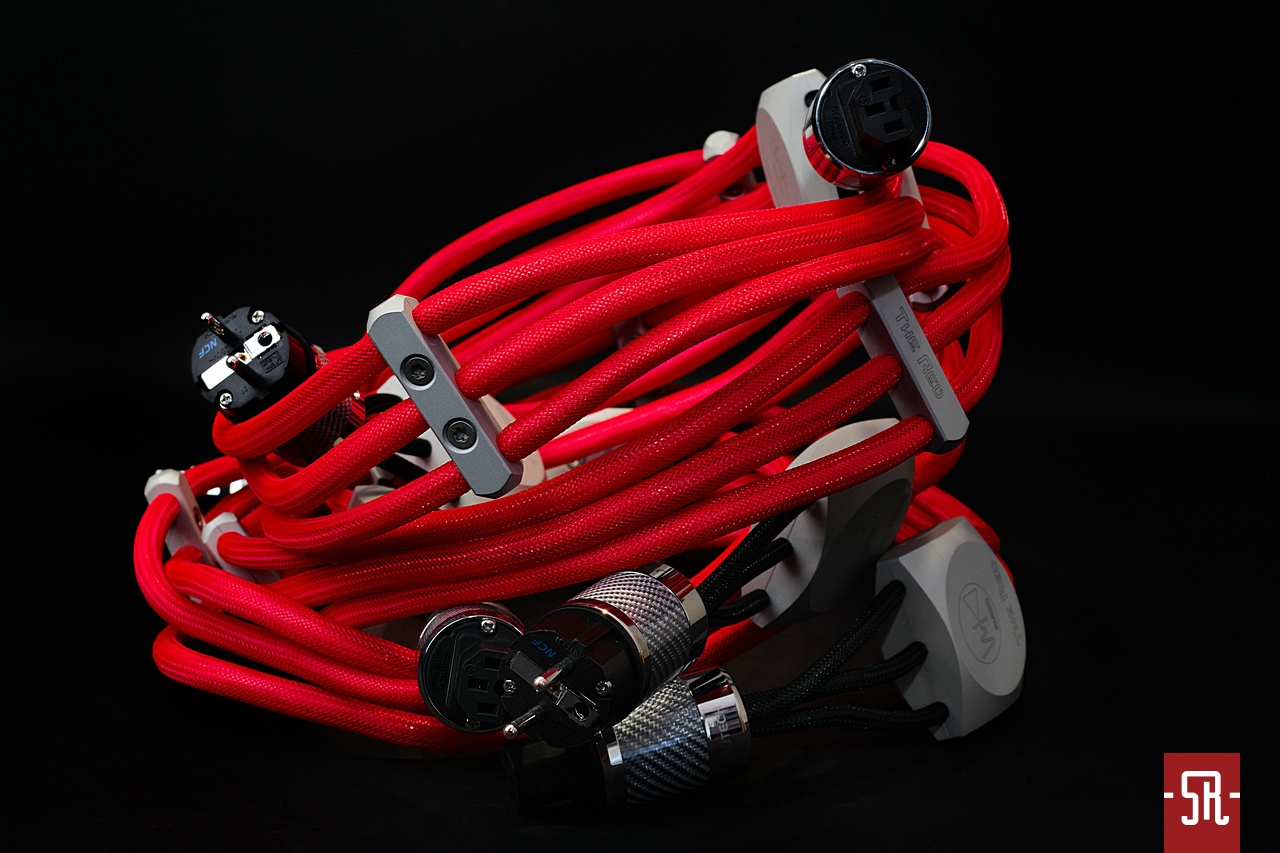

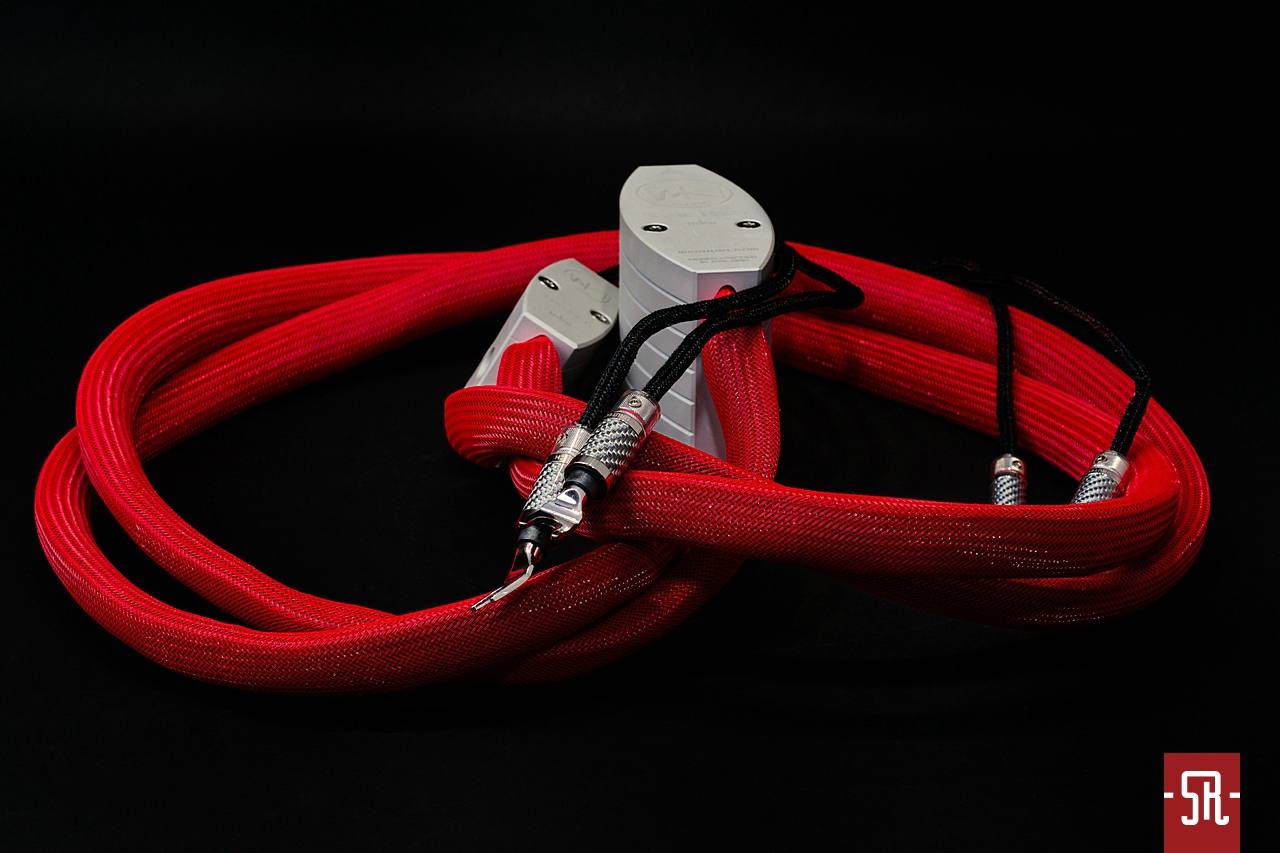

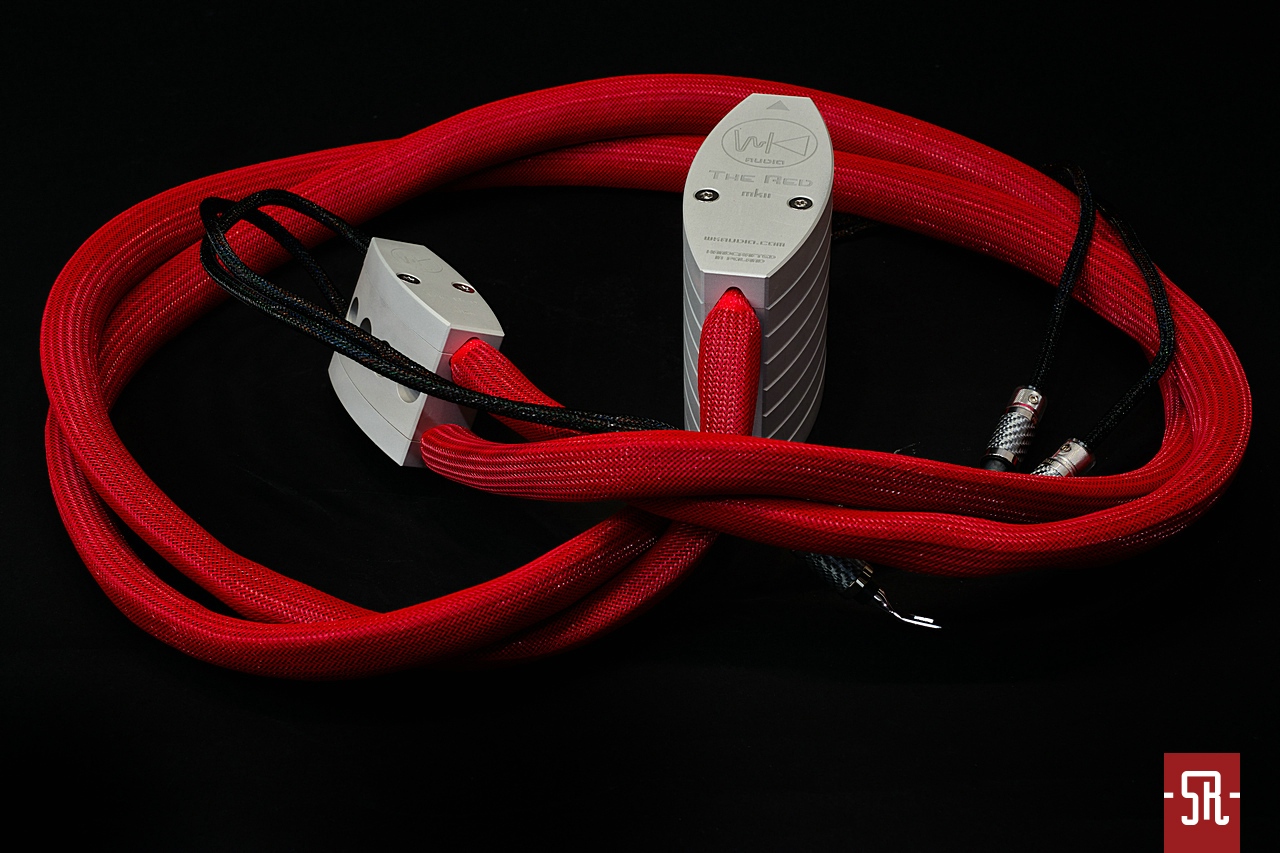
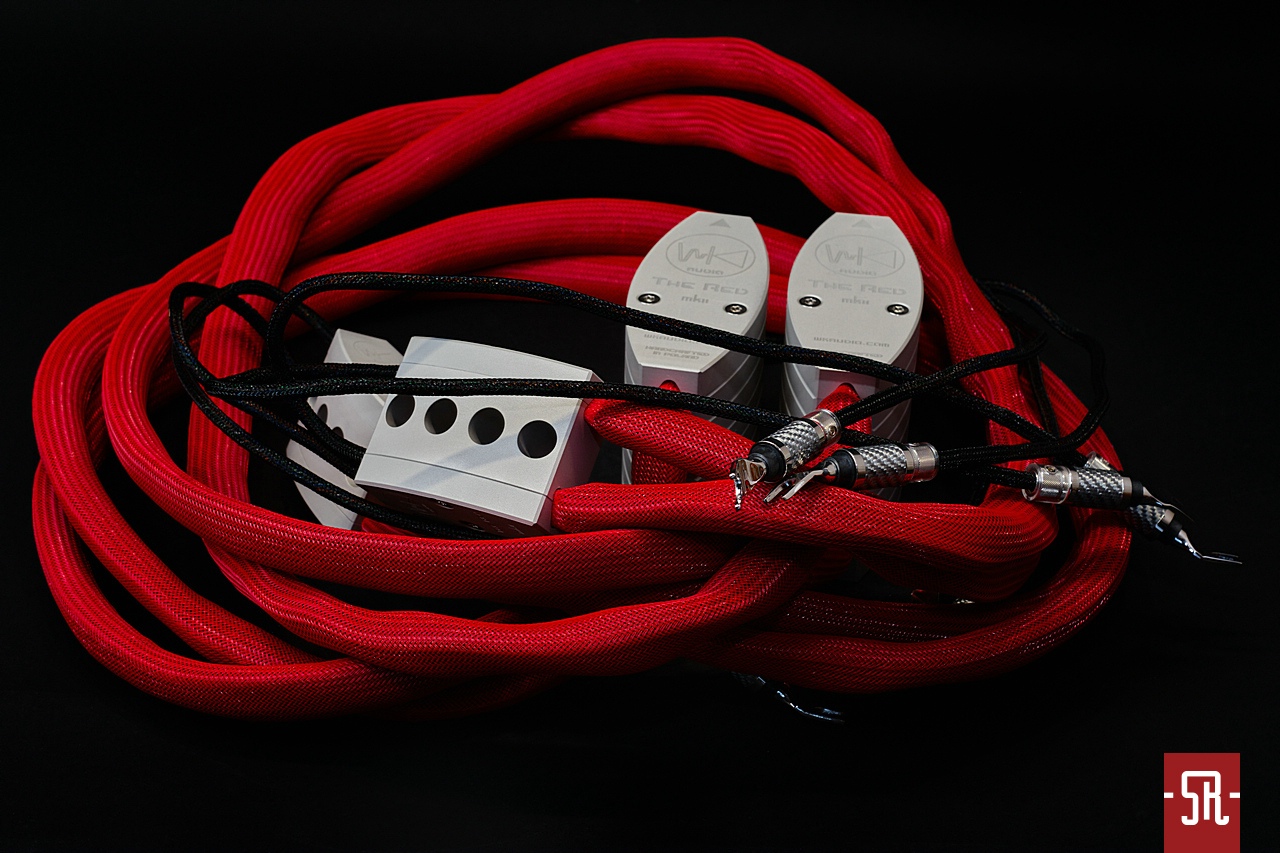


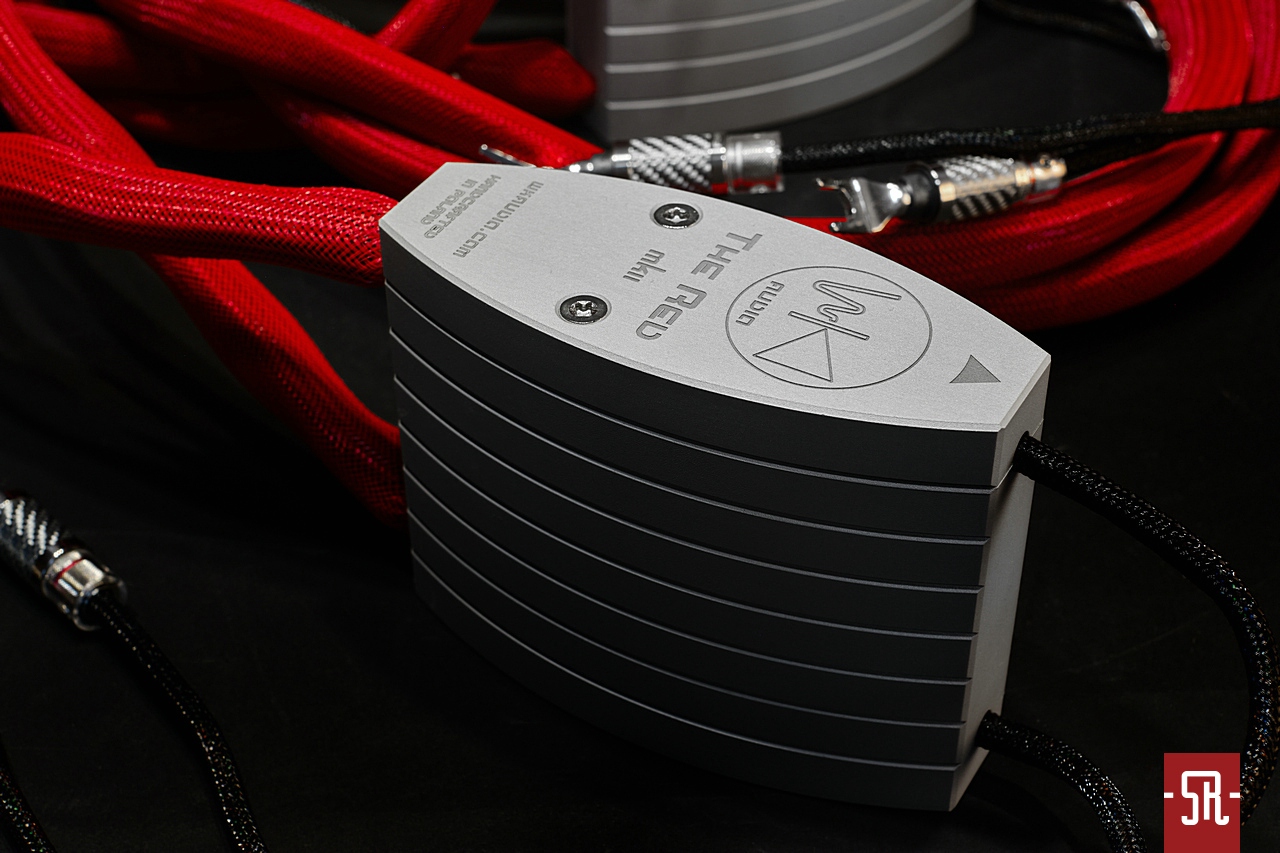


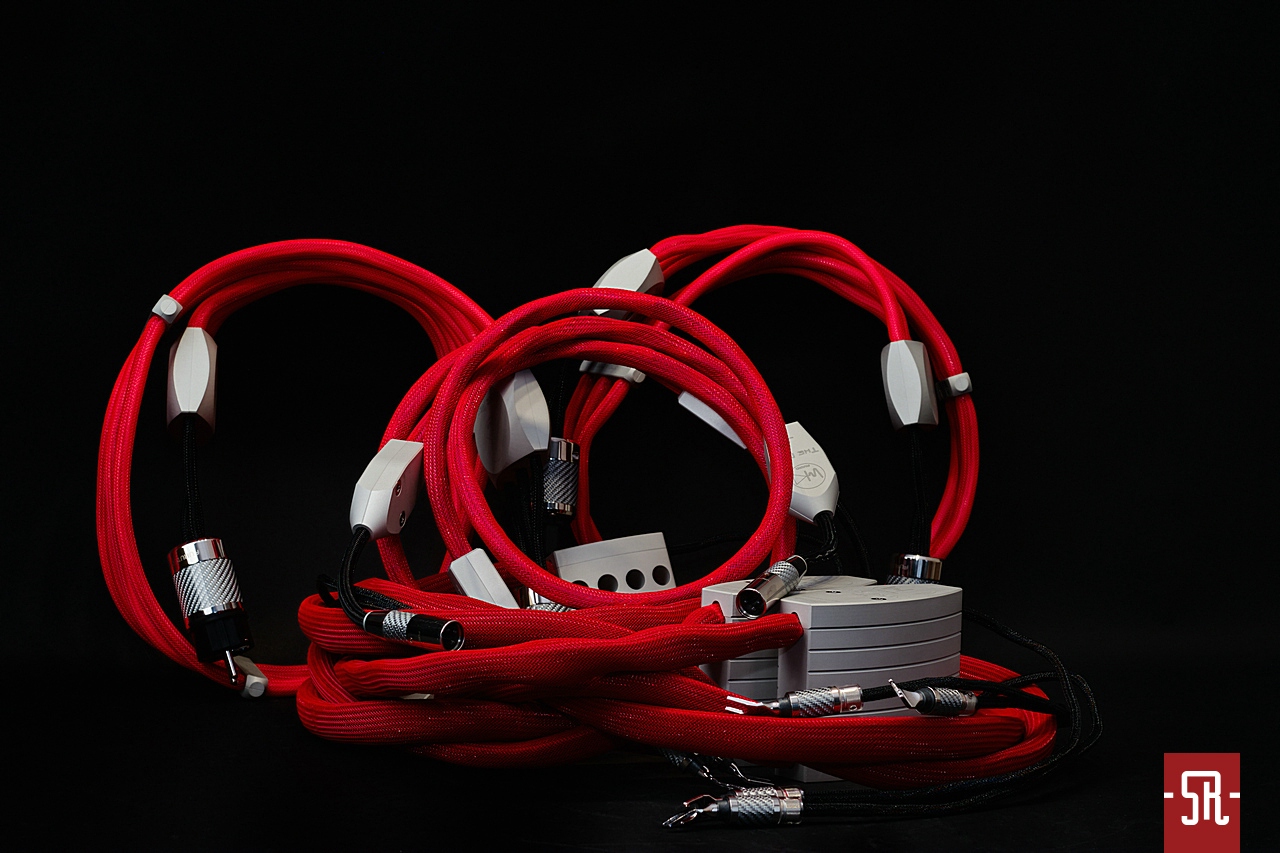
As you can perfectly see in the above photos, the issue of the nature of compliance of the nomenclature with the appearance of the cables we have solved immediately, and to only those suffering from color blindness, and more precisely its most severe varieties – monochromatism and protanopia, I would like to explain that the outer protective sleeves covering the leads of the tested wires are red. On the other hand, it is worth noticing, that the splitters are now made from the same material, because in the first version of the speaker cables balsa was used, which in the current incarnation (MkII) was replaced by aluminum, present in the interconnects and power cables. In fact, I dare to say that instead of taking the easy way out and replacing wooden cubes with look-alikes, or borrowed from interconnects – already produced aluminum „coffin-like” modules, Witek went all the way out and by arduous research came to truly impressive blocks both in terms of size and weight that could easily correspond with the „suitcases” of MIT Oracle, or the „frozen turkeys” decorating Transparent’s Opus. To put it simply, each of the speaker cables consists of two separate circuits connected just before their ends with the aforementioned aluminum blocks, where the one closer to the amplifier is clearly smaller and lighter, and thus can easily levitate suspended on the final wires coming out of it with top Furutech forks (CF-201 NCF R), and the other, monstrous aluminum catafalque, should rest majestically on the floor close to the speakers. This is extremely important, as its interior is filled with a specially selected quartz, which is designed to additionally dampen parasitic vibrations, and the connection sections coming out of it are long enough to reach even a dozen or so centimeters above the floor of the terminals. Both conductors, although they use high-purity anaerobic copper, differ from each other in their structure – amongst others they have different proprietary braid, and their cross-section is 2 mm². As attentive readers have probably noticed, compared to the original, 4mm conductor version, the speakers underwent a serious slimming treatment, but it turned out that the change in the material and weight of the tuning elements entailed the need for a thorough redesign of the whole, which resulted not only in a change in cross-sections, but also in far-reaching modifications of the original braid.
In the power cable, on the other hand, each of the condustors runs through the lion’s share of its length separated from its sisters by aluminum spacers, and only in the final blocks, decorated with the company logo, is it thinned to a diameter that allows the entire trio to be joined together in the power plug. In addition, although all conductors are made of silver-plated high-purity copper, each of them has a different structure and the total cross-section of the conductors is a paltry 18 mm².
Since we have just mentioned the plugs, there is no room for compromise, so here, in the top product line, so the power cables can boast with the Furutech FI-E50 NCF R/FI-50 NCF R plugs that are difficult to be bested (the option is the high-current FI-52 NCF R), and the interconnects with XLR CF 601M NCF R / CF 602F NCF R. In the case of the unbalanced version, however, CF 102 NCF R appears, made of high-purity silver-plated copper. The aluminum splitters present at their ends play not only an informational/decorative role, but also an anti-vibration role, and last but not least, it is with their help that the constructor „tunes” each of the wire runs, precisely selecting the tension of each of the conductors.

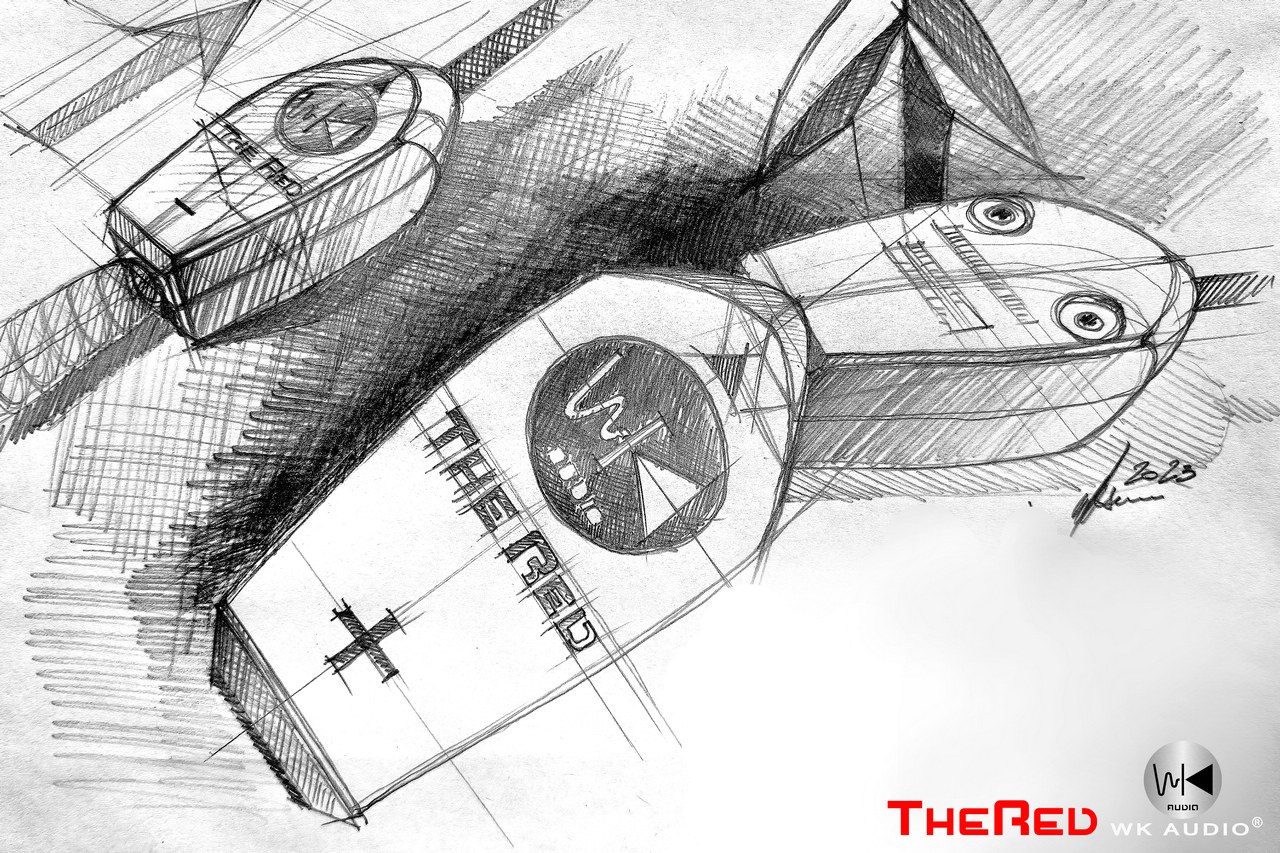


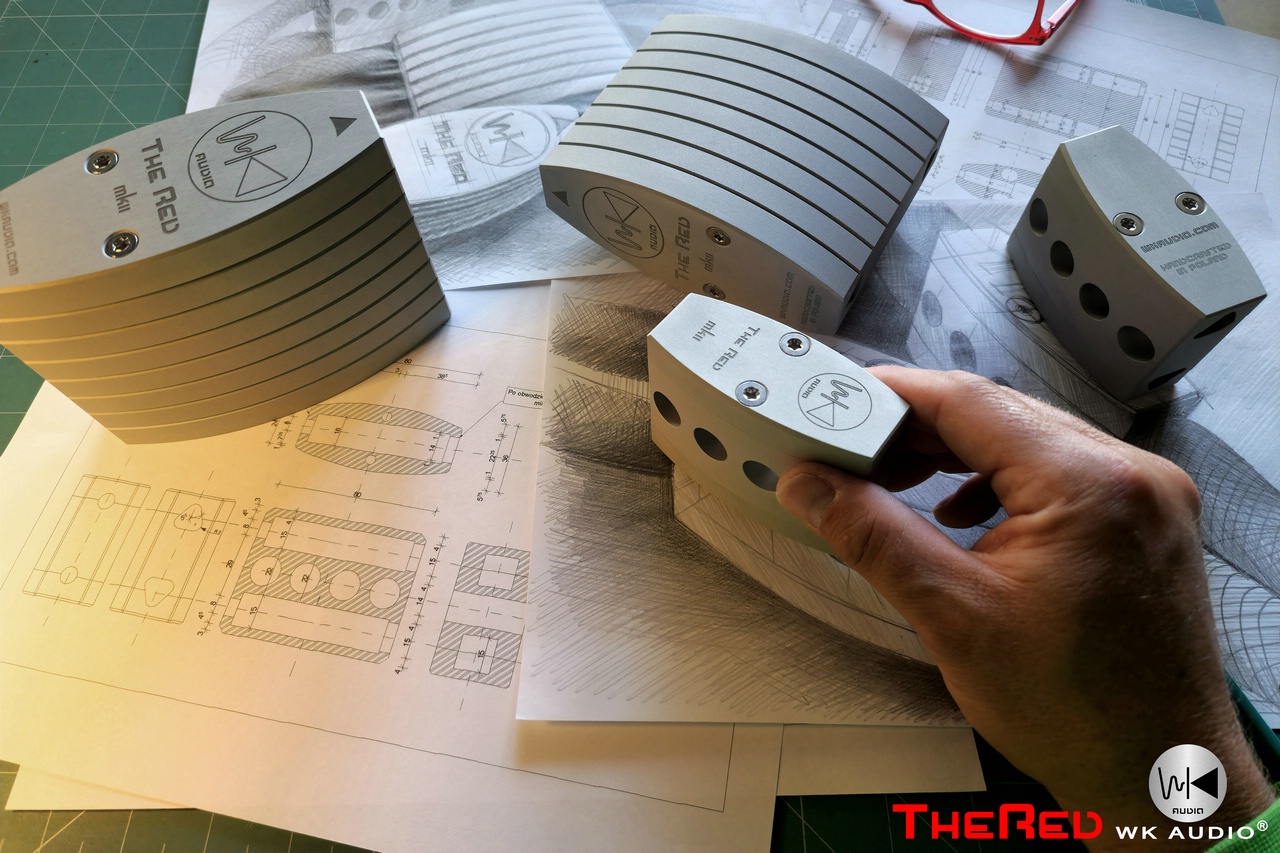


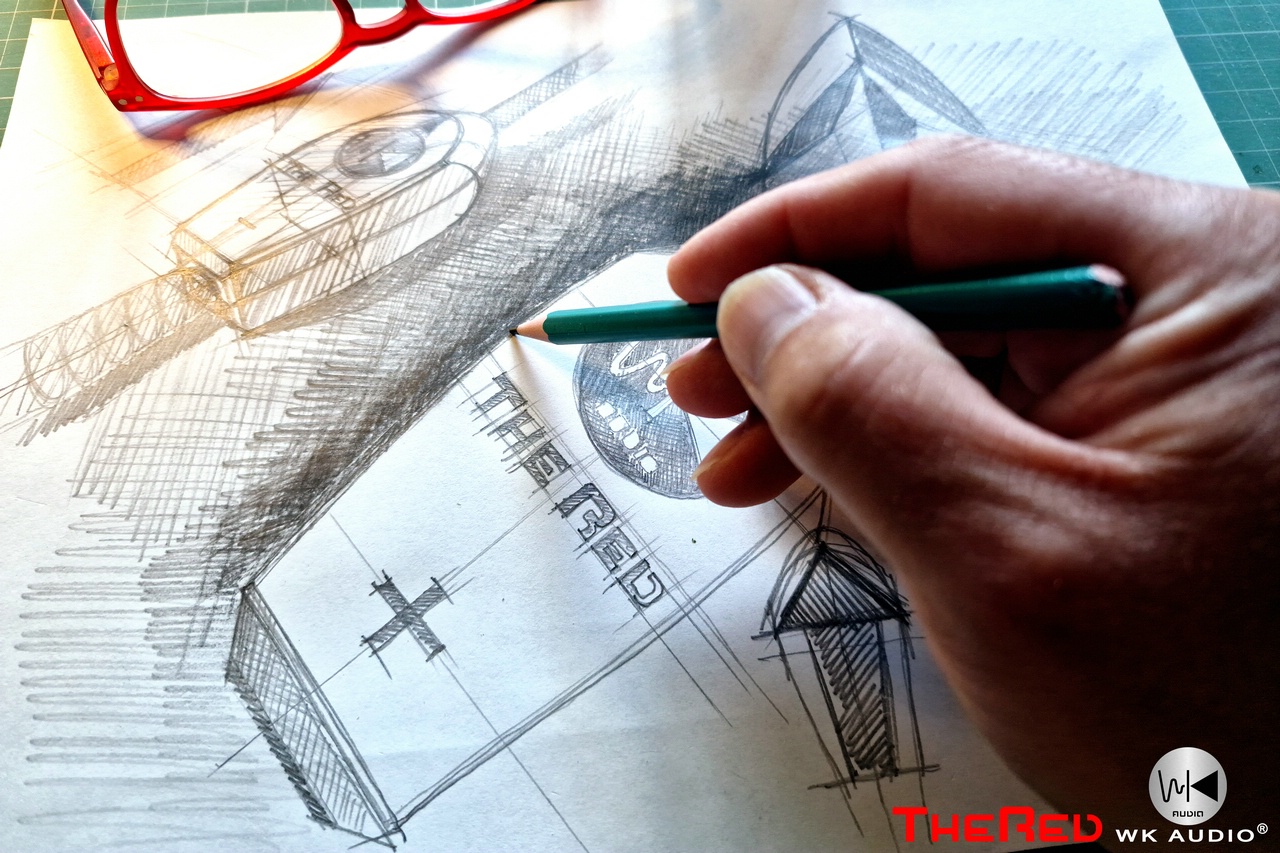

Although, thanks to the power cable, at the time the only one in the series, TheRed WK Audio launched an ambitious attack on the audiophile Olympus, in the meantime, from August 2022, something has changed a bit not only in the Plichtow portfolio, but also on the local market. Regarding the catalog of the title manufacturer, it is enough to mention the practically full (in fact, only USB/Ethernet connectors are missing) closure of the „red” series, the appearance of the TheRay middle line and the basic TheOne. On the other hand, from a broader perspective, looking at environmental issues, i.e. the environment in which WK Audio has come to exist, the already suspended „glass ceiling” of both quality and, unfortunately, price, has once again been broken into smithereens. The aforementioned Olympus, for example, was comfortably occupied by the Danish ZenSati #X and the Japanese Furutech, which, at least as far as the analogue domain is concerned, closed the flagship Project V1, and other ultra-high-end players are constantly tempting with new outings, unattainable for ordinary mortals. To put it simply, just like in competitive sports, so in audiophile salons, the competition is truly murderous, and thus, if you have the right resources, you can pick and choose at will.
And how do TheRed cope in such very demanding natural circumstances? I will honestly say that it seems to be quite sufficient, because based on previous listening to individual representatives of the „red family”, the baggage of strictly empirical experience should be predicted almost on the spot and with great accuracy the final result. And I dare say that I could fall for them, because firstly, the elimination of „foreign bodies” did its job, and secondly, as I have already mentioned in the paragraph devoted to the appearance and anatomy of the latest version of the loudspeaker cables, they are actually connected to the „wooden” ancestors only by color and nomenclature. And that, to put it mildly, can be heard.
However, let us discuss one thing after another, because in order to prepare the right support, as part of the preparation session, I first refreshed my „taste buds” with the lower-born TheRay XLR interconnect, which had been on my mind for a long time, especially since due to the use of speaker cables from the same series, there was a high probability of a very successful synergy. And indeed, the momentum, freedom, resolution and dynamics that blow away your slippers made both the reference point and the bar of my expectations for the eponymous set raised to a truly Olympic level. Fortunately, the lack of time pressure and any pressure from the producer, who only suggested that we deal with the topic before the next edition of the Audio Video Show if possible, allowed me not only to have a calm retrospection, but also to juggle the Reds in my system, by gradually increasing their share in the systemic bloodstream, without being hurried. And just like in the case of TheRay, the interconnect was the first to come to the fore, the appearance of which in the system resulted in a phenomenal increase in the volume of generated sounds, the speed of the action taking place in front of the listeners, the spectacularity of the presentation and… a veritable explosion of resolution. But wait, wait. After all, TheRay were already considered as having a mega-resolution. So, what is happening? Are we moving to the level of the eye-burning demonstration mode, in which large-screen TVs set up in shop windows usually work? None of these things, because TheRed XLR showed the aforementioned aspect not by the offensiveness of exaggerated colors or increase in contrast and the painful biting of the senses by sharpening the edges of the shapes being cut out with a scalpel, but by conveying full harmony and maintaining a perfect balance between the initially perceived quantity and quality of details and nuances that are part of the reproduced repertoire. And so, it was as if there was more of everything and quantity went hand in hand with quality, but the very way of narration directed the listeners’ attention not to individual micro-details, but to the image of the whole. In addition, the same attractiveness and richness of information as in the first plane was also characteristic of further plans, so on „Songs to Sun” Stoned Jesus frontman – Igor Sidorenko did not focus the lion’s share of attention on himself, overshadowing the other members of the band with his „awesomeness”, but also not so much generously, but fully democratically gave them a chance to „shine” on stage. I deliberately put this shine in quotation marks, because stoner-rock, based rather on low tunes and slow, dirty, garage riffs, is not necessarily associated with brilliance, but the point is that even with such rather modest line-up and rudeness of the repertoire, TheRed was able to successfully present the three-dimensionality of the stage and, colloquially speaking, move the further plans far, far away, behind the speaker line. Here, tangibility was not built by favoritism, pushing the foreground to the front, but rather by masterfully operating with perspective. This way of narrating perfectly captured the dark nature of Atli Örvarsson’s „Dong Ji Rescue” soundtrack, where the ability to create veritable acres of space, in which oneiric passages were intertwined with truly epic orchestrations and kodo parts constituting the bass foundation for the sound, was crucial. At this point, it is worth noting how easily the dynamic potential and momentum of the executive apparatus are conveyed, as well as its agility, so that the lowest components do not overflow inertly, but all the time retain the appropriate motor skills, timing and differentiation of the tissue filling them.
The addition of the speaker cables not only intensified the experience, which almost turned the table of my predictions, assumptions and expectations upside down with a bang, thus putting me in a state of almost total bewilderment. It turned out that in the seemingly familiar recordings there are surprisingly rich layers of information, the existence of which I was perhaps not so much unaware of, but so far their presence has only been suggested. And TheReds simply define them, with the precision of a laser rangefinder and a Japanese chronometer, defining their place in both space and time. Do you not believe it? Well, I also defended myself against this novelty with all my might, but the moment the hackneyed „House of the Rising Sun” came out of the speakers, this time performed by Paloma Dinella Chesky (the album „Soul on Soul”), I gave up and started listening to something I had been reaching for many times before, so to speak, anew. And it was not that sounds that reached my ears were not in the recordings before, but rather revealed their complexity, that is, sometimes where there was one sound before, it suddenly turned out that it has a much more complicated structure and outside the sound shape itself, or its impact, something happens before it or after it. For example, a prosaic hit on the cymbals, or a pluck of a guitar string, which suddenly ceased to be binary events, and Keith Richards’ voice on „Crosseyed Heart” was joined by a completely obvious breath, and a clear movement on the chair placed by the microphone, and if I wanted to and exert my old senses, I would probably still be able to hear his mischievous smile and a twinkle in his eye. That is, we get a complete and complete picture both in terms of structure, the smallest components and details, as well as the coherence and harmony that determines its coherence as a whole, where even a rough and quite simple riff shocks with its authenticity and perfect fit into the context.
And at the moment when it would seem that we can easily end this full of oohs and aahs, somewhat unintentional, „laurel card” they enter the scene – the three horsemen of the apocalypse, i.e. the three TheRed Power and complete the work of destruction. Just like that, without warning, announcement and deeper reflection, acting on the principle of the primal hunting instincts of hounds that have just smelled blood. Is there supposed to be a slaughterhouse? Well, here you go – the playlist includes such gems as „Inside My Head” by Until I Wake, or „Hymns in Dissonance” by Whitechapel and I already know that I have two things out of my head – weekend vacuuming of speaker membranes, because it is physically impossible to keep anything on their surface with such dynamic jumps, and good neighborly relationships with half of the apartment block at least until … Christmas. But what to do when it is supposedly possible to listen to this type of repertoire quietly, but with a whole bunch of red-haired demons at your fingertips, you beg to „ride” at almost concert volume levels. Similar tendencies are caused by the great symphonics, because „Beethoven: Symphonies Nos.5 & 7” performed by the Berliner Philharmoniker under the baton of Herbert von Karajan himself requires an appropriate setting, and this is not a chamber ensemble piece, but a symphony in XXL size, where an orchestra is capable of blowing away even the most powerful matrons from the front rows with the momentum of the ordained tutti. And that is how TheReds play – with uninhibited dynamics, intimidating multi-layeredness, and when the score requires it, how far without looking for „Koptycus” by Oleś Brothers and Dominik Strycharski also … quietness. To put it simply, at the moment of practically complete wiring of the system with TheRed, one could get the impression that although everything seemed OK, or even better than that before, only now everything „jumped” into place. As if after countless combinations constituting an enigma or a challenge with a level of difficulty at least equal to the arrangement of the largest existing (49x49x49) Rubik’s cube, constructed by Preston Alden, the intricate puzzle suddenly turned out to be complete and finished. Every, even the smallest detail found its proper place and our eyes, that is, ears, saw, that is heard, a musical absolute.
I really do not know, and at the same time I do not feel the need to delve into whether it is due to the fact that both during the design process, and the everyday listening conducted only for him and his family, Witek used and still uses Vitus Audio electronics, which is also standing in my listening room for a long time, but undeniably TheReds and Danish High-End get along excellently. The fact is that the longer I was able to interact with such an ecosystem, the more I was convinced that it was not a coincidence, but rather a fairly clear sign that could not be ignored.
Well, it is high time for probably the longest summary in the history of SoundRebels. As you surely remember, not so long ago I hosted a complete ZenSati Angel set, which (the set not time) made me de facto almost sure that nothing better can happen to me with the current state of possession (electronics + speakers), so proverbially grabbing God by the legs, I should not think for a moment and leave this copper-gold set with me. And I will honestly say that such a very radical move did not happen by a hair’s breadth, but as you know, plans and wishful thinking are one thing, and perverse fate writes its own scenarios, which are the ones that end up on the big screen of our lives, so in the end the huge box with „Danish angels” returned to Helsinge, leaving behind wonderful memories and no less noticeable painful gap in my system, which, by a strange coincidence, since then no longer wanted to play at the same level as it did before. However, as it is commonly said, time not only heals wounds, but also creates opportunities and opportunities for new sensations or seemingly completely innocent cases. And it is in terms of a happy coincidence, on the one hand, and the aftermath of the extraordinary awareness of the importance of coherence within one product line, that Witek Kamiński, who is behind the TheRed series, suggested that this test should be considered. In addition, a test that was supposed to be just a collective summary of the cables that have already been hosted by us. Meanwhile, this seemingly standard procedure consisting of an almost mechanical … plugging in, listening to and disconnecting the eponymous wiring finally turned out to be a real October Revolution, during which the „red Plichtowians” cut down my to date reference cabling, existing in the greenhouse of editorial bliss, including even the TheRay connected to them by blood ties, as they also had to acknowledge the superiority of TheReds.
To sum things up – although, for understandable reasons, the title set also went to Jacek for several days of listening, after completing the entire listening and photographing procedure, it did not return to the manufacturer, but to … me. This means that when you read these words, it is an integral and inseparable component of my humble system, becoming the embodiment and fulfillment of my private ideas and expectations as to what High-End should sound like. Good, because Polish? Nonsense. Good and Polish. And at this point, I am not at all speaking of thoughtless patriotism, but rather three decades of more or less serious dealing with audio topics, which, regardless of whether it was just fun, a hobby, or a way to share my own observations (m.in. on the pages of SoundRebels) with readers, had to meet one main and basic criterion – to give me pleasure. And the wiring of WK Audio The Red not only intensifies this pleasure, which is a real cherry on top (even the color is right) on the metaphorical cake of my experiences so far.
Marcin Olszewski
System used in this test:
– CD/DAC: Vitus SCD-025mkII + 2 x Quantum Science Audio (QSA) Blue Fuse
– Network player: Lumïn U2 Mini + Farad Super3 + Omicron Magic Dream Classic; I-O Data Soundgenic HDL-RA4TB
– Turntable: Denon DP-3000NE + Denon DL-103R
– Phonostage: Tellurium Q Iridium MM/MC Phono Pre Amp
– Digital source selector: Audio Authority 1177
– Integrated amplifier: Vitus Audio RI-101 MkII + Quantum Science Audio (QSA) Violet fuse
– Loudspeakers: AudioSolutions Figaro L2 + Solid Tech Feet of Balance + ZenSati Angel jumpers
– IC RCA: Furutech FA-13S; phono NEO d+ RCA Class B Stereo + Ground (1m)
– IC XLR: Organic Audio; Vermöuth Audio Reference; Furutech DAS-4.1
– Digital IC: Fadel art DigiLitz; Harmonic Technology Cyberlink Copper; Apogee Wyde Eye; Monster Cable Interlink LightSpeed 200
– USB cables: Wireworld Starlight; Vermöuth Audio Reference USB; ZenSati Zorro
– Speaker cables: WK Audio TheRay Speakers + SHUBI Custom Acoustic Stands MMS-1
– Power cables: Esprit Audio Alpha; Furutech FP-3TS762 / FI-28R / FI-E38R; Organic Audio Power + Furutech CF-080 Damping Ring; Furutech Evolution II Power; Furutech Nanoflux Power NCF
– Power distribution board: Furutech e-TP60ER + Furutech FP-3TS762 / Fi-50 NCF(R) /FI-50M NCF(R)
– Wall power socket: Furutech FT-SWS(R)
– Switch: Quantum Science Audio (QSA) Red + Silent Angel S28 + Farad Super6 + Farad DC Level 2 copper cable
– Ethernet cables: In-akustik CAT6 Premium II; Audiomica Laboratory Anort Consequence, Artoc Ultra Reference, Arago Excellence; Furutech LAN-8 NCF; Next Level Tech NxLT Lan Flame
– Anti-vibration platform: Franc Audio Accessories Wood Block Slim Platform
– Table: Solid Tech Radius Duo 3
– Acoustic panels: Vicoustic Flat Panels VMT
Opinion 2
For our readers who regularly visit our portal, today’s form of the test should certainly not come as a surprise, but I would like to inform those who visit us occasionally that today’s meeting will be the second summary of the work of the eponymous Polish manufacturer. Namely, the fact that after a series of single meetings, it was time to take a full set of wiring from one line to have a closer look at. The reason, of course, is important, because usually – although it is not a rule – a given audio set is affected differently by a single cable and by a full set. Contrary to appearances, the topic is important, because the multiplication of wiring, and thus the intensification of the original sound style, give different sonic results. Therefore, if a business entity – even the one we are testing today – is not afraid of a head-on collision with reality, it delivers the full set of its constructions to our editorial office with full awareness of the risk. In the case of today’s hero, after the review of the TheOne series, we will have a look at the full set of the WK Audio TheRed from Plichtów near Łódź, which includes 3 power cords, a loudspeaker cable and an XLR interconnect.


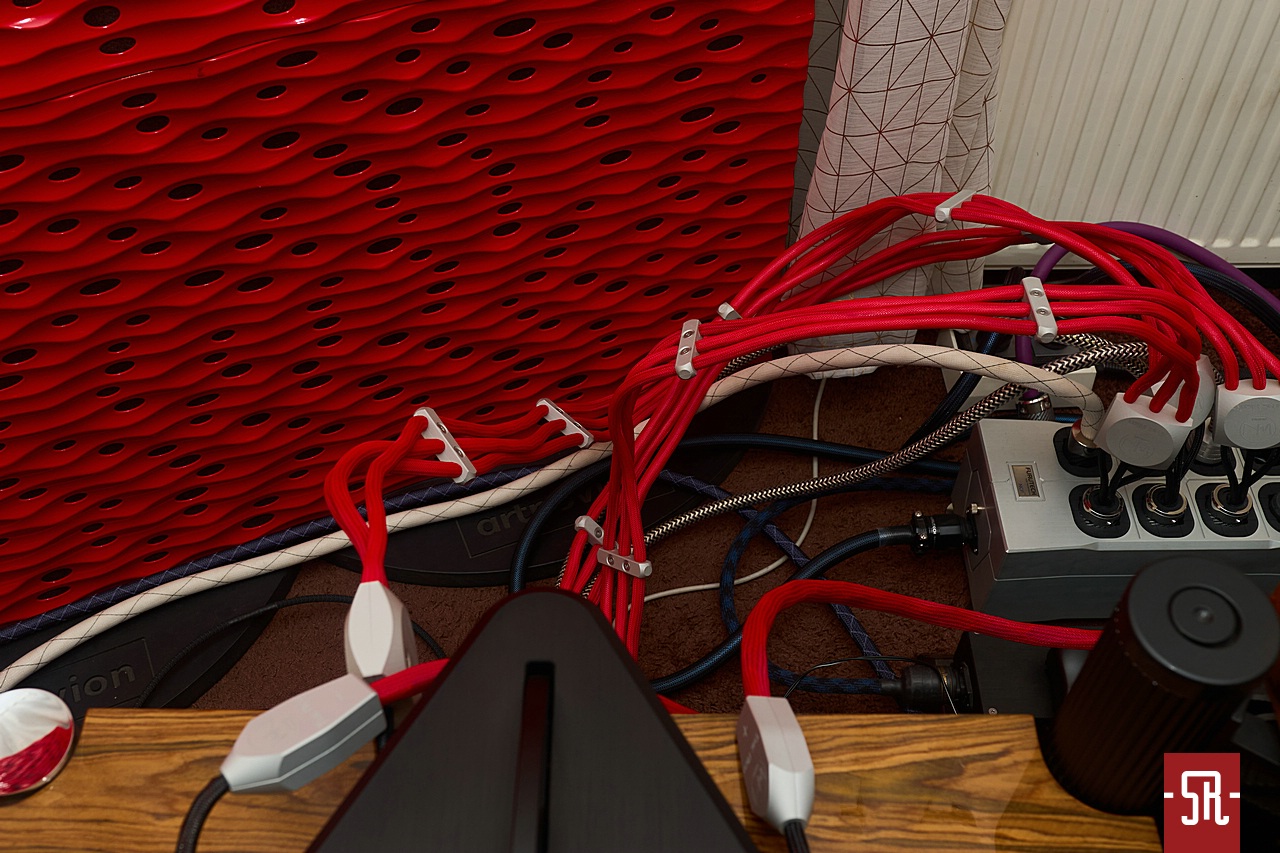


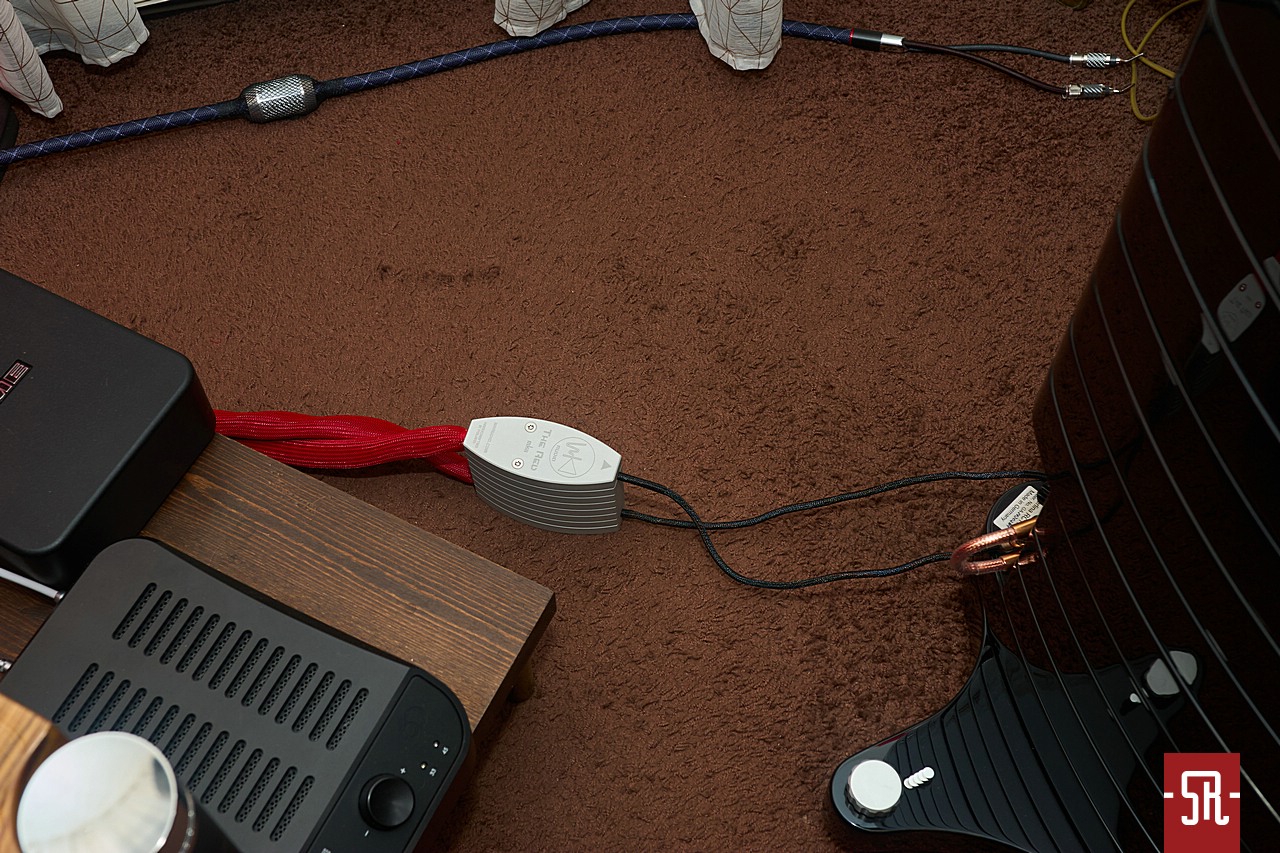


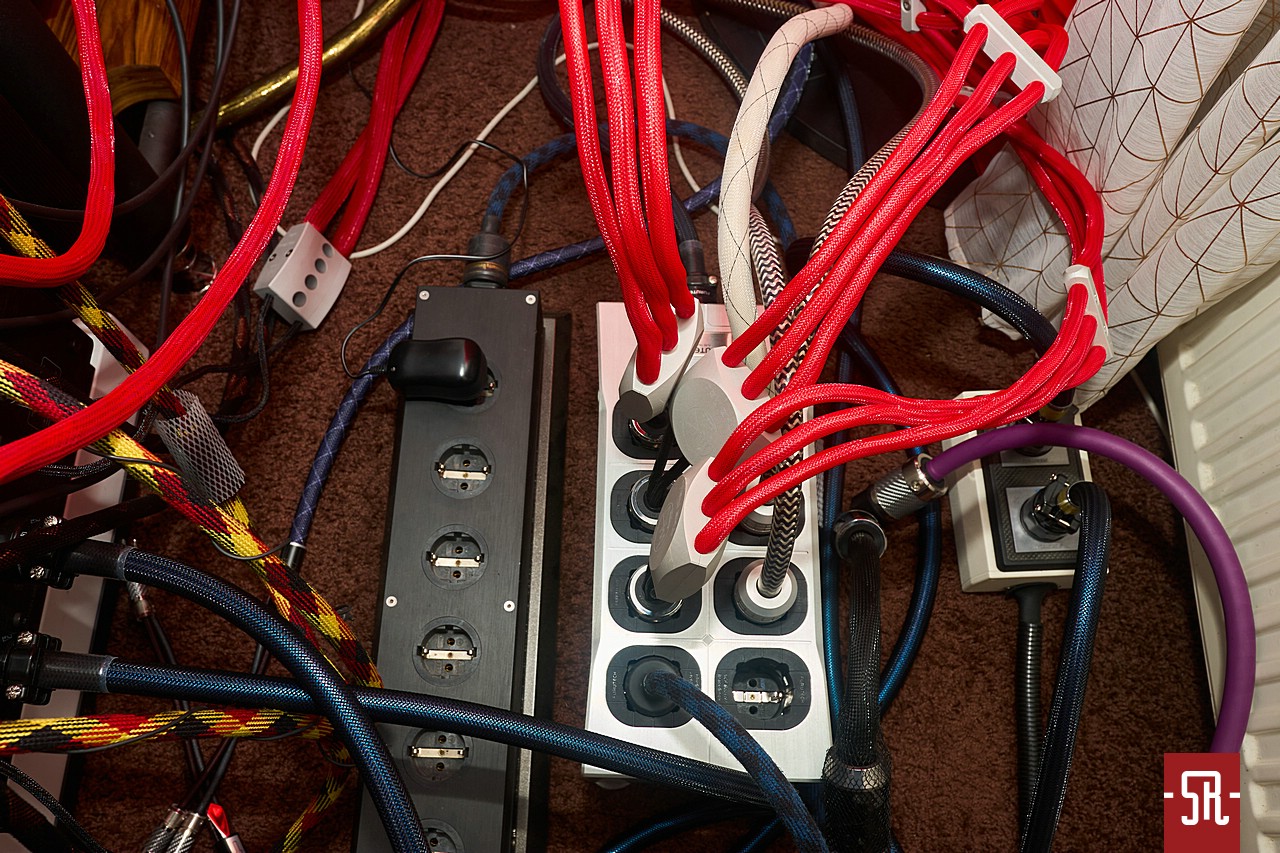

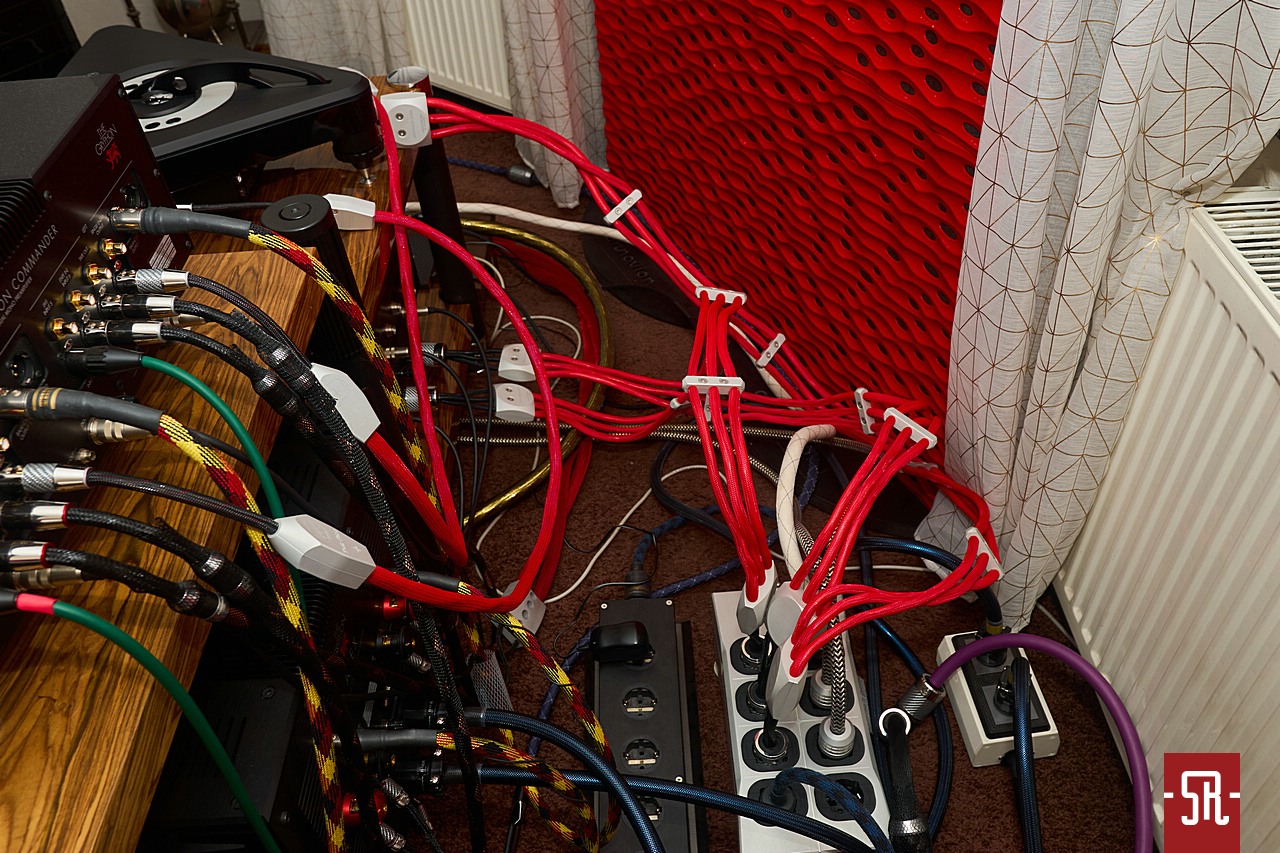

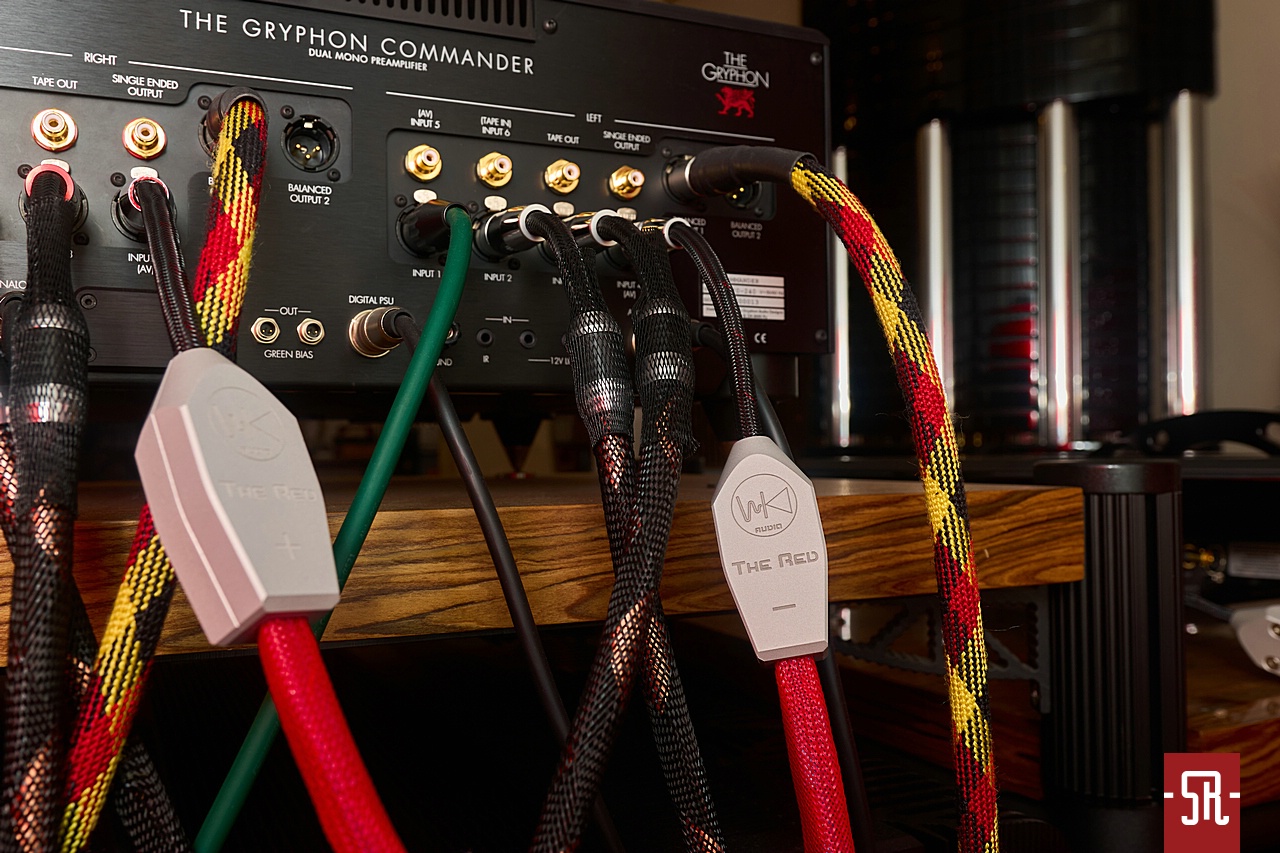


As is often the case recently, for the sake of its know-how, the manufacturer informs us about the described wiring only in a very general form without going into details. For some it is not enough, for others – sufficient, but regardless of the position you take, one thing is certain, the most important thing is the sound offered. However, before we get to that, I will at least symbolically mention the details taken from the official website.
As for the power cables, their conductors are made of high-quality silver-plated oxygen-free copper. Their construction is based on 3 cores, each of which has a different internal structure and weave method. In order to eliminate harmful vibration, the conductors, in addition to appropriate damping materials, proprietary anti-vibration systems were additionally used to stiffen the cable between the aluminum blocks. The cable made in this way has a total working cross-section of 18 mm² and top Furutech plugs.
Column cables, on the other hand, are based on high purity oxygen-free copper. This time we have two different cores with a different weave. Following in the footsteps of its predecessors, the use of appropriate passive damping materials supported by an active system in the form of tensioning the signal conductors between the aluminum blocks was not forgotten – the aforementioned „pucks” is a slight change compared to the first version of this cable, which used balsa cubes. Importantly, the larger module was additionally filled with specially selected quartz granules. Closing the issue of speaker cables, I cannot fail to mention the total cross-section of the working conductors at the level of 2 mm² and, of course, the use of forks at the top of the Furutech range.
I will treat the topic of signal XLR very briefly due to genetic compatibility with its siblings. And not because I do not want to, but instead of repeating myself, I will just mention silver-plated high purity oxygen-free copper in the role of the (three) conductors of different construction and weave, and a screen. There is also a proprietary vibration damping system and the cables are fitted with top range Furutechs. To conclude the above description, I will add that after dressing the TheRed cabling series in a phenomenal-looking, shimmering vivid red plastic cover, each set is packed in an aesthetically pleasing plywood box padded with a profiled sponge.
What was the result of today’s domination of my system by the Plichtow cabling? Surprising – in the right sense of the word. Each test of individual designs so far has been phenomenal, because it has funded a skillfully dosed, yet relatively small dose of adrenaline. The wiring of the WK Audio TheRed has always supported the music drive and controlled the applied additional energy well, which, while maintaining the openness of the presentation in the upper registers, left no other option than to completely immerse yourself in the music you were listening to. And this regardless of its origin, because the aforementioned attractions created by the eponymous wires related to the juiciness of the sound impulse and the speed of signal build-up, did not format the music in a single, aggressive fashion, but these qualities accentuated the most important aspects for a given genre; they gave the impression of a stronger approximation to the stage events created between the speaker. Thanks to this, there was never any boredom, but on the other hand, I did not ever notice the effect of exceeding good taste in dosing their directness. Yes, it was very clear and unpredictable, but in a way known only to their designer, it always got precisely on the point of the appropriate delivery. As you can see from the description above, the title cables in solo performances enchanted with an encouragement to listen to music endlessly. Admittedly, the music was more of a madness than a romantic dissolution, but it was only a different, yet successful view of music, and not something problematic. But let me remind you that these were individual „implants” in my system, which meant that they could only signal their presence, and not brutally dominate it. And here we come to the clou of this story, because now I got a much larger injection of this idea for sound. So what verdict will I give on the application of such a marriage? Well, the matter is as follows. I would be dishonest if I did not admit that the features described a moment ago could be heard every time I plugged another cable into my setup. It was so easy to catch that I could literally show the changes I was making with my finger. However, the most important information about this action – read: adding more wires – was only a slight tweaking of the nuances of the predecessor. And as you can see in the series of photos, I changed a total of 3 types of wiring in the amount of 5 pieces, which in many cases ends up balancing on the edge of listening pleasure at best, and often painful exaggeration of the presentation. With the WK Audio set, there was nothing like this even for a moment. As I mentioned, each subsequent cable gently polished the final sound of the system, but the sum of all the changes never turned into anything alarming. Rather the opposite, as a set of wires showed every component of the sound with an incredibly precise, but well-received reverence. The bass descended surprisingly low being in full control, the midrange was essential and rich in a package of information enchanted with the tangibility of the music, and the upper range, without jumping out in front of the line, only allowed the music to shine, and not, as is often the case, to scream in the name of the apparent serving of the transparency package. In a word, after applying the tested set for a few days in my listening room, things happened, in the good sense of this phrase, with a capital “H”.
Let us take a strong sound, in theory, because when you get acquainted with this album, it turns out that it not always like that, in the form of John Zorn’s free-jazz „Masada Live In Sevilla 2000”. In my opinion, it turned out great, because not only did it show a strong impact with a full line-up of musicians madly using their instruments to rearrange the walls of the listening room, but in the slower and quieter passages, it enchanted with the essential and vibrating saxophone masterfully handled by the frontman. A saxophone that reflects not only the perfect timbre of the sound of a wooden reed with its colors and vibrations, but also the ability to change the speed of sound attack striking the listener with a strong chord lasting a fraction of a second. As you can guess, such a well-shown multi-layered expressiveness of this instrument was naturally the result of squeezing all the best out of my system by the Plichtow constructions. Of course, I mean getting the maximum out of the understanding of a good presentation, and not balancing on the verge of exaggeration, which might somehow defend itself in calm parts, unfortunately with the madness that is a special feature of this formation, such as: general drive, immediate changes of pace and energy, it would end in a shameful failure. I have no idea how the creator of the tested cables did it, the important thing is that he somehow combined water with fire. The aim is to have the stereo meet the sonic requirements of the mentioned band. I am talking about the two above-mentioned versions of the album in question. The first one is mercilessly whipping the listener with free-jazz madness, and the second one is different – let me remind you that this is a live concert and artists have to translate fast songs with something calmer, because they will get out of breath – it is often melancholic, and certainly allows to show the virtuosity of playing instruments, chiseling every note. In both cases, the sound aesthetics of the tested products successfully dosed the necessary advantages to show the artists’ intentions, which, despite the aforementioned tendencies of the eponymous cables for showing music with a slightly cranked up presentation aesthetic, proved their friendly versatility. And versatility because I have always tuned my setup to sound rather lively than melancholic, which the test configuration did not turn upside down, but slightly changed the most important features, still showing all the best in a given musical piece, coming out of this difficult clash with a win.
What do I think about those cables and to whom would I recommend trying out the tested wiring set? Answering the first part of the question, I can say without a doubt that their style of playing is clearly my fairy tale. Well-understood spontaneity, fully controlled walking on a path full of energy, predatoriness and transparency in the delivery of music are for me the elements, without which I am bored after a few songs. And it does not matter whether I listened to free or melancholic jazz, because all the mentioned sound nuances presented in the way proposed by the brand from Plichtow were very well implemented. Yes, they raised the level of adrenaline while listening, but adequately to the situation. At one time, they supported the unpredictability contained in the material, while at other times they supported the chiseling of a single note, with the required level of interference with the world of music visualized in my room. As for the second part of the question from the beginning of this paragraph, the only, I repeat, the only individuals who are not automatically doomed to failure, but should be careful during personal endeavors, are the owners of very nervously configured systems. Additional „doping”, in a good sense of the word, may not be good for them, and then there will be unjustified grievances. So if you do not belong to a really very small group of gourmets of excessively „expressive” sets, the way to verify the possibility of wiring with the WK Audio brand of your stereo system is open. Perhaps nothing will come of it in the end, but one thing is certain, just like in my case, during this meeting, “things will happen”. And if so, it would be a shame to waste the opportunity to taste the reasonably dosed madness, without which music is simply boring.
Jacek Pazio
System used in this test:
Source:
– CD Player/DAC: Gryphon Ethos
– streamer: Lumin U2 Mini + switch Quantum Science Audio (QSA) Red-Silver
– Preamplifier: Gryphon Audio Pandora
– Power amplifier: Gryphon Audio Apex Stereo
– Loudspeakers: Gauder Akustik Berlina RC-11 Black Edition
– Speaker cables: Furutech Nanoflux-NCF Speaker Cable
IC RCA: Hijiri Million „Kiwami”, Vermouth Audio Reference
IC XLR: Hijiri Milion „Kiwami”, Furutech DAS-4.1, Furutech Project V1
Digital IC: Furutech Project V1 D XLR
Ethernet cable: NxLT LAN FLAME
USB cable: ZenSati Silenzio
Power cables: Hijiri Takumi Maestro, Furutech Project-V1, Furutech NanoFlux NCF, Furutech DPS-4.1 + FI-E50 NCF(R)/ FI-50(R), Hijiri Nagomi, Vermouth Audio Reference Power Cord, Acrolink 8N-PC8100 Performante, Synergistic Research Galileo SX AC, ZenSati Angel
– Table: BASE AUDIO 2
Accessories: Quantum Science Audio Red fuse; QSA Silver fuse; Synergistic Research Orange fuse; antivibration platform by SOLID TECH; Harmonix AC Enacom Improved for 100-240V
– Power distribution board: POWER BASE HIGH END, Furutech NCF Power Vault-E
– Acoustic treatments by Artnovion
Analog stage:
– Drive: SME 60
– Cartridge: My Sonic Lab Signature Diamond
– Phonostage: RCM Audio The Big Phono
– Clamp: Omicron Luxury Clamp
– Eccentricity Detection Stabilizer: DS Audio ES-001
– Tape recorder: Studer A80
Manufacturer / Polish distributor: WK Audio
Prices (Europe & USA only)
TheRed IC (XLR, RCA): 5 500€ / 1,5 m + 1 100€ / 0,5m
TheRed Speakers mkII: 10 000€ / 2 x 2,5m + 2 000€ / 2 x 0,5m
TheRed Power: 5 500€ / 1,5 m + 1 100€ / 0,5m

