Zikra Audio Preamplifier & Stereo 300B XLS English ver.
Opinion 1
Finally!
What does this sigh mean? Take a look at the history of our meetings with the designs of this manufacturer, and you will see that so far we have been playing around with only some „small things”. A naturally extended, two-part line preamplifier is a very serious and excellent-sounding design, but the fact is, that even after adding a great step-up transformer, we have not hosted a full set from the portfolio of this Danish manufacturer. Fortunately, today, thanks to the logistical commitment of the Polish distributor, a full amplification setup has been delivered to our doorstep. Admittedly, at first with only a stereo amplifier, but firstly, as they say, „something is always better than nothing”, and secondly, it is a novelty in their offering, which completely compensates for the expectations for the most extensive configuration of this type, which is soon to appear in our premises. So, what will we focus on? Giving away a bit of a secret already in the introduction, this time we got a pre-power set, which includes the Zikra Audio Preamplifier line preamplifier, which has already had its five minutes in a solo performance, together with the Zikra Audio Stereo 300B XLS power amplifier. Both devices come from a Danish brand and were supplied to our listening room by Prestige Audio from Olsztyn, Polish distributor of the mentioned brand. Are you curious how this complete set of audio signal amplification will compare to the previous, in my opinion, very positive performances? If so, I invite you to take a comfortable chair and read on.


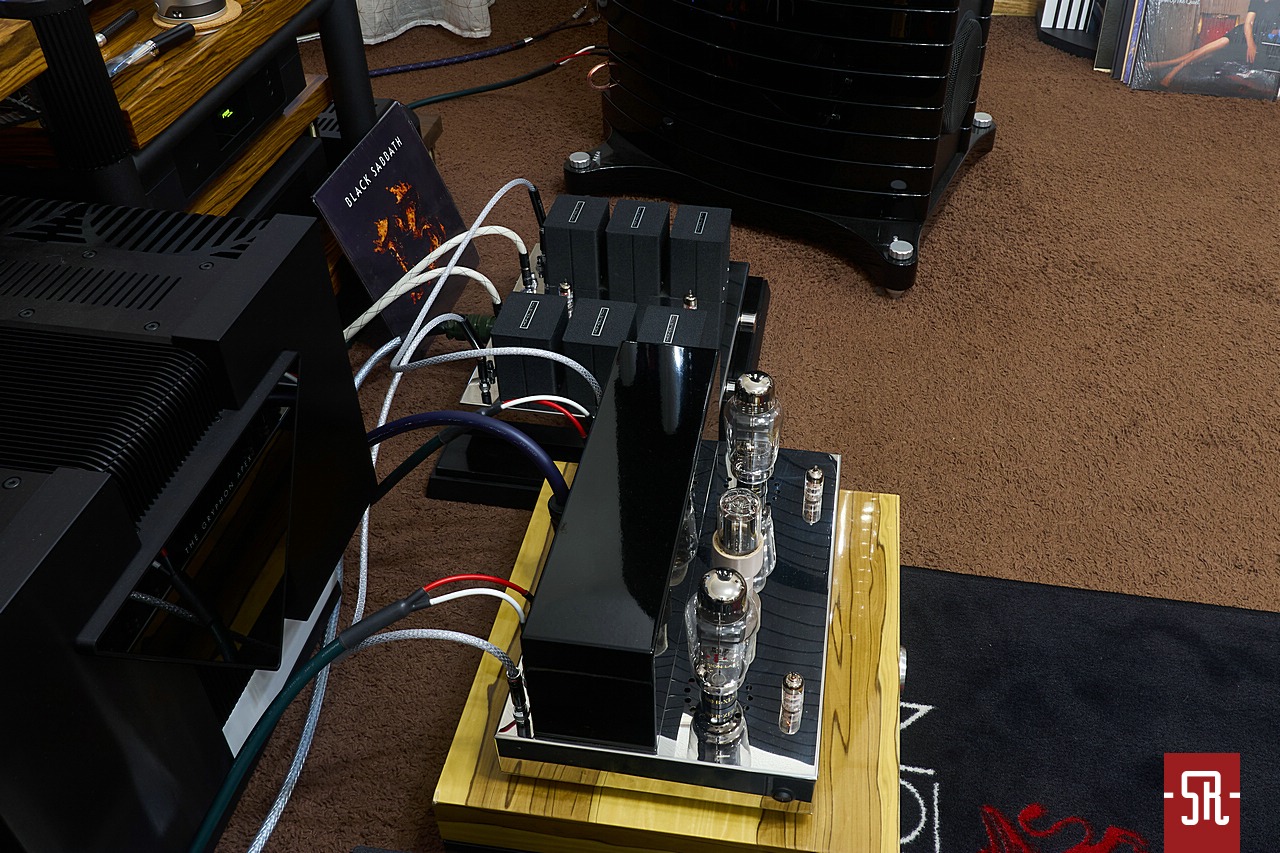
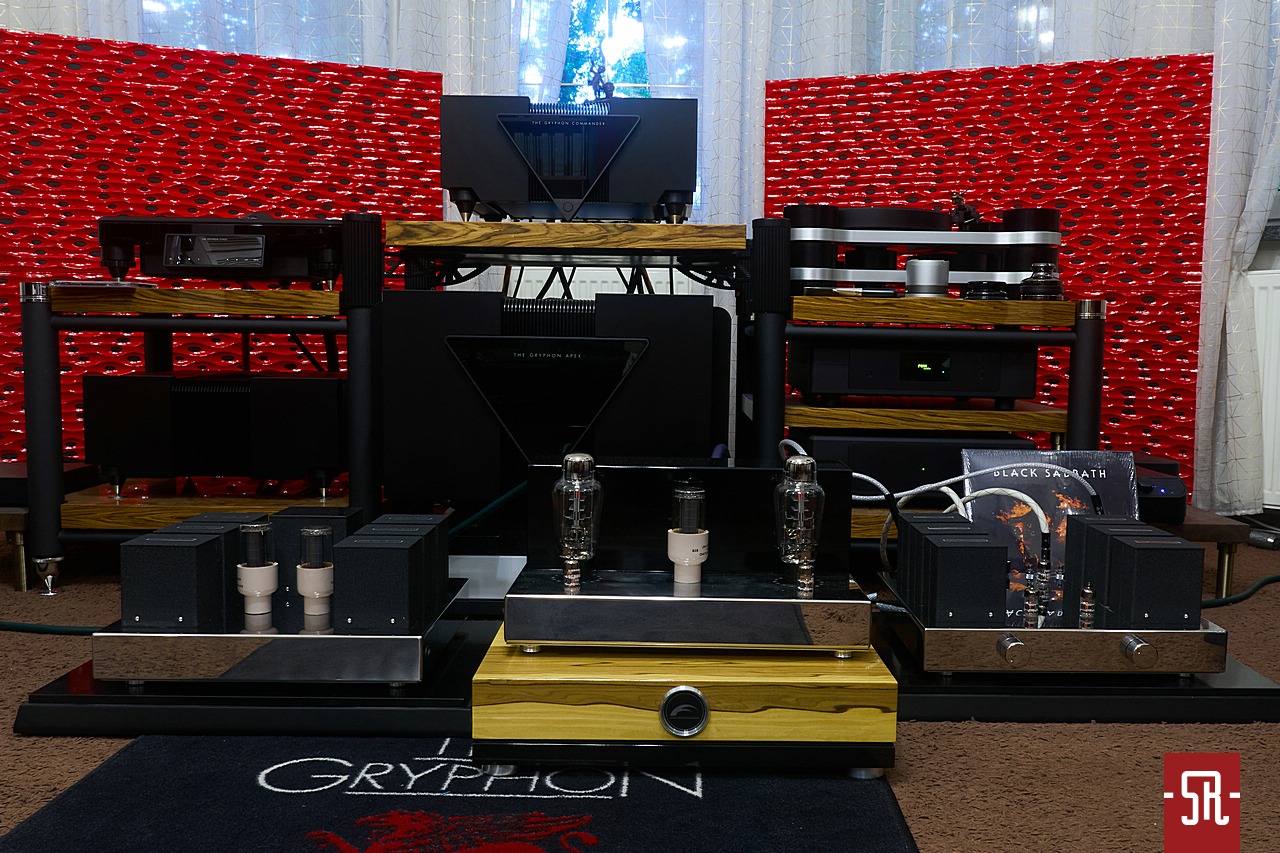

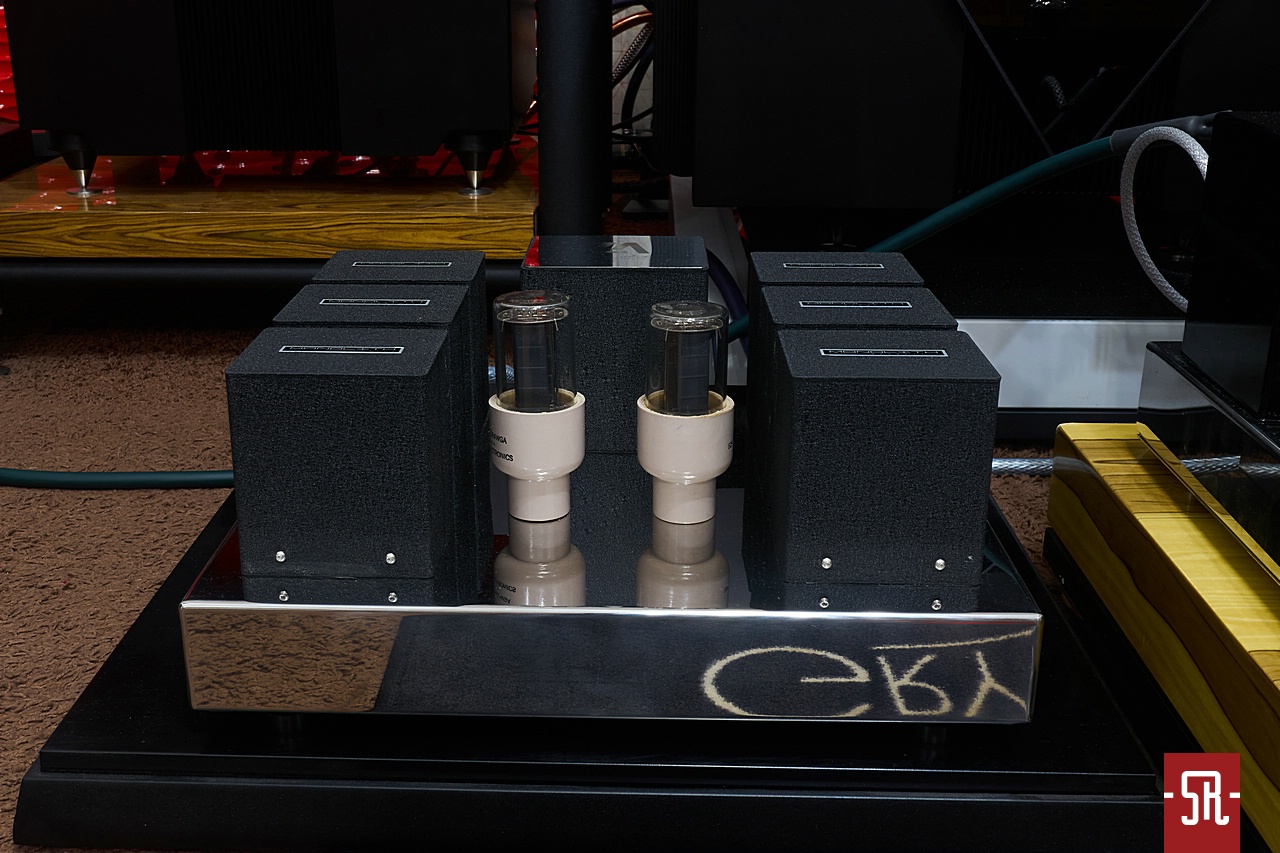


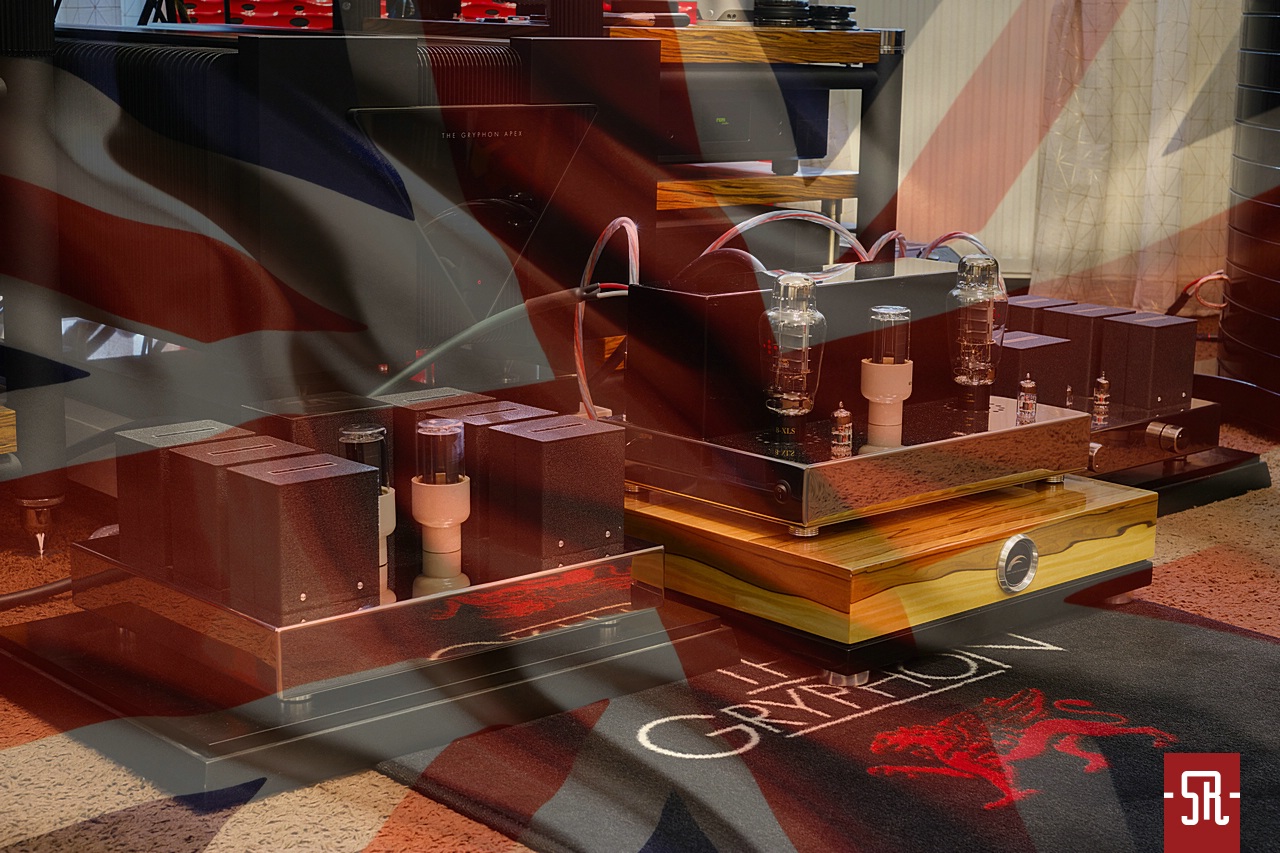
Trying to describe the external appearance of our heroes, we see a typical solution for devices built around tubes. Naturally, I mean having a support platform for the aforementioned glass bubbles with transformers enclosed in rectangular cups and hiding the necessary electrical systems under them in a flat box. A topic known since the dawn of time, and knowing that for some potential buyers it sometimes turns out to be boring, I reassure the eternal malcontents in advance, that Zikra Audio, wanting to unobtrusively revive, and in some way modernize, the design of its chasses, made the aforementioned enclosures from hand polished stainless steel. Not chrome-plated, to avoid artificiality, but brought to the final effect by a true hand polishing process, which adds an additional flavor to the devices, and for many is the true implementation of the production process referred to as „Hand Made”. Effect? Interesting, because we have a cool gloss of the case, which is not artificial and successfully contrasts with the matte black of the transformer covers and the amber glow of the tubes placed in front of or between them. Say what you want, but despite my current avoidance of this type of products, after performing many tests, even I can see for myself that it is very easy to fall in love with their appearance, which naturally happened in this case as well. Moving on to connections and functionality, the preamplifier and the power amplifier perform different tasks so in a natural way, they are different. Starting the report, in both devices we are dealing with platforms with series of transformers located on the sides of each upper surface, hidden under aesthetic lids and sets of electron tubes between them, and connection terminals on the rear panel, necessary to receive and exchange the life-giving electricity drawn from the network. One difference between the two components is that on the front of the control section, there are two input and volume selector knobs and a set of RCA line inputs in the rear part of the top panel. Unfortunately for many, but I know from experience that this is a fully conscious procedure, to ensure the best possible sound of the device, the manufacturer did not provide for the use of a remote control. This, of course, when choosing the appropriate listening volume, means you need to do some trips to the table with your equipment, but as I mentioned, experience teaches that for the world’s top designers – for example, in the case of the linear preamplifier from Koda I once owned – this is a standard.
When it was the turn of the power amplifier, the first piece of information I need to the mention is the usage of a slightly different case size. Still in the form of a platform, but rather wider than deeper, with a differently planned setup of tubes and transformers on its upper surface. The first ones, which include the iconic 300B, stand in the first row, and behind them, there is one big container that occupies the entire width of the case, hiding the transformers. As for the connection package that allows the amplifier to be applied to the existing stereo, this one is also located in the back of the roof of the box. The photos show that there is a power socket, a fuse socket, one RCA line input and WBT loudspeakers terminals. Is that all? None of these things. I only approximated the general appearance, so that, similarly to the Step-Up MC test, after reading the manufacturer’s statement, in which wishful thinking is avoided, I once again paste it below, as it provides a more detailed description of the device.
„Stereo 300B XLS power amplifier in Amorphous High Gain Silver Wired version with amorphous output transformer core, wired in pure silver, braided with cotton and silk, with interstage transformer from the Monolith Magnetics. Like all Zikra Audio projects, it is a fully point-to-point design, with no printed PCBs. The case is distinguished by a minimalist, bent and hand-polished stainless-steel housing. We do not plan to add a cage to protect the tubes or other gadgets, because we like Scandinavian simplicity. It is not a childproof design, but that is what a real 300B amp should look like! The power tubes are Emission Labs 300B XLS, which allow you to reach power level of 17 W per channel. The input is powered by Siemens EC 8010 Gold Pin tubes, and the whole offers a wide frequency response – from 12 Hz to 150 kHz. The amplifier supports loads from 4 to 16 Ω, has RCA/WBT inputs and an input impedance of 10 kΩ. It is a device for discerning purists, as it combines the combination of craftsmanship precision with the highest quality components and the classic character of 300B tubes with better control and resolution. An additional advantage is the 10-year warranty that we offer on all our amplifiers (except tubes). The model provided for review is the flagship and most expensive stereo variant in the range. If you want to start your adventure with a power amplifier in a lower configuration, there is a version with a regular Monolith Magnetics transformer, with weaker parameters, internally wired with copper, and not pure silver as in the case of the flagship. An offering which is a little less technically advanced, but equally interesting in terms of sound.”
Before I get into the specifics of the Zikra Audio set presented above, in order to understand the final opinion of this test, I will articulate a few issues that bothered me from the very beginning. The first was to see how it would cope with my loudspeakers, which are very difficult to drive having only 17W of power. The second is the verification of the decision of the designer to continue or not to continue the aesthetics of music presentation proposed by the linear preamplifier itself. And the third, and for me probably the most important in this case, is to prove that the hitherto excellent approach to the definition and descent of bass was not just the result of chance. As you can see, we are looking at very important matters in general, but for me it is all even more important, because tube solutions sounding in the way presented by the Danish are very rare, not to say exceptional, confirming the rule that the world of the tube is music flowing with milk and honey. Always fluid, essential and without a shred of aggression, usually unwanted by users, which simply becomes boring for me in the long run. Perhaps this is the aftermath of the current fascination, with the much more unpredictable in artifacts of well-understood directness and unpredictability of presentation, solid state technology, but as the products from the trademark of today’s hero show – I refer to the test of a linear preamplifier, a glass tube with a common-sense preservation of its advantages in the center and top of the band can show some silicon roughness in the lower registers. But does it happen always? Naturally, the last question was not asked without reason, but as a provocation to the answer the questions asked at the very beginning of this paragraph. Therefore, answering it with full responsibility, I state that in the case of Zikra Audio, always. Namely, it is about confirming the continuation of the idea for music according to the line preamplifier also in the power section. The effect is, that from the often boring tube, which often glues the sound into one mush, it leaves only a colorful, but very vivid and phenomenally creating a 3D effect, vibration, thanks to which it enhances the tangibility of the stage event in the midrange. The upper and lower ranges are a completely different sonic fairy tale from the typically applied vacuum containers. The treble does not become golden and sweet, but sparkles with endless transparency while maintaining the truth about their color and weight of for example the drummer’s cymbals shining in this frequency band. There is no effect of crushing food grade aluminum foil, only hitting a hard metal disc made of sheet metal, which allows you to recognize not only the moment of hitting it with a wooden stick, but also the sound of a rather thick metal lid resisting it. Anyone who pays attention to such nuances knows what I am talking about. As for the bass range, it can easily show the often inaccessible descent of this register, but also, depending on the musical material, energy, sometimes hard and sometimes full of juicy modulated pulses. For me, this is a phenomenon, because it can easily convey the diversity of playing the double bass, from immediate changes in tempo and juiciness of the attack on the strings, to showing the full palette of shades of their work after reinforcement with the belly, when the material requires it, by meticulously marking its edge, sometimes sharp, and at other times slightly round. Surprised? I certainly was, because based on many encounters with this type of equipment, it really is the highest skill, which the Danish once again passed with flying colors. However, to be completely honest, I have to signal, that this does not happen with the full spectrum of volume – at least with very difficult speakers. What am I talking about? Pay attention to my first question related to the control of the Gauder speakers I have. These are dragons that, despite a certain kind of versatility – many weak amplifiers could easily cope with them – are still quite a challenge for the tube. So much so that the 300B XLS presented the quality of music I mentioned only to the average levels of everyday listening, which is still an excellent result for me. I repeat, it is an excellent result. Later, despite the still good reception of the musical spectacle, it could unfortunately be heard that 4 woofers plus a 3-speaker mid-tweeter section were still making themselves felt. But I note, that is why I bought large speaker units, so that, colloquially speaking, they would move the walls, and that is why I have a powerful transistor amplifier. And while it would seem that such a stance disqualifies me and some of you from a possible life with a tube, the Zikra Audio set made surprisingly much of the expected unpredictability of music presentation visible, in a slightly different way, but resulting in the same disturbing aspects that torment my restless spirit when played at a lower volume level. Usually, when turning on my system, I automatically focus on a truly concert experience, but during this one, as well as the previous test with the Danish vision of music, this view was turned upside down. Yes, I did not rearrange the walls, but the audioferak does not live by earthquakes alone, and there comes the time to celebrate music in the aesthetics of ethereality. But not in the domain of over sweetening, and thus losing a specific expression, but as the set from Denmark showed once again, always with a strong kick and volatility. And when it would seem that not getting a concert presentation can really be a kind of problem sometimes, Marcin came to me for his test session. In the strongest variant, he listens at home at least half as quiet as me, which broke the aforementioned problem of the requirement of concert sensations into the proverbial dust. In my opinion, he listened very quietly, and yet every now and then his eyes showed that the title tube collection surprised him with all those elements often lost somewhere in the background, due the amplifier not being able to reproduce resolution and timbres of each frequency subrange properly. And I assure you, these were not one-time „antics”, but a feast of nuances rarely shown by even many times more expensive devices, with the bass range being the most spectacular. This, in turn, only confirmed my conclusions about the class of the system configured for the test. Does Marcin’s test session mean that large speakers are unnecessary in this case, because quiet „strumming” gives just as much joy? Not at all, because from the very beginning large loudspeakers give greater freedom to visualize even the most emotionally crazy music, and if you have a chance to live with such speakers at home, I recommend taking advantage of the opportunity. If Marcin had a choice, he would also use my configuration, but I mention it only to show two completely different performances with different expectations of how music is created, but to my and his surprise with almost identical conclusions. I assure you, such a level of consent is rare with us.
To illustrate the above-mentioned state of affairs, I will use the jazz album „Homage” https://tidal.com/album/430781533 by the fusion ensemble Marcin Wasilewski Trio in cooperation with saxophonist Joe Lovano. It is jazz playing with the so-called silence. Overall calm, but with many touches free jazz, which is still easy to absorb even by beginner listeners. What enchanted me so much about this music? To tell the truth, everything, and probably most of all, that the whole thing was presented with phenomenal freedom, volatility and transparency. And while in many configurations it ended in a tiring overinterpretation, only the „tubey” midrange signaled by Zikra –and wit that I mean symbolic warmth and vibration – skillfully heated up the atmosphere of pensiveness in this music, giving filling and sonority to both the piano and the saxophone reed shining with its wood flavor, and the lower range was on the point, allowing to show the tiniest sound entities, often brought to life by accidentally touching the string, while, with the energy of the lower range, it phenomenally turned up the emotions associated with not only creating a single sound, but also absorbing of the full composition of this musical event. And not only in the understanding of a music lover, which is often used to justify exceeding the good taste of essentiality and the weight of sound, but also of an audiophile, which is my second nature. The album turned out phenomenally, but not wanting to artificially dilute this text too much, I will not disassemble it into even smaller primary factors. However, in order to convey the emotions it aroused in me, I deliberately described my sensations in one, admittedly quite long, and therefore many times complex sentence. I try to avoid such tapeworms, but in order to convey the true state of mind, sometimes it is not possible to do it differently, you may even necessitate to do it like that. Finally, I will only add that I received every music in the same way. Naturally, the one poorly executed with all the shortcomings emphasized, but this is the result of dealing with sophisticated devices and you cannot put the blame on them. What about rock and similar genres? Yes, sometimes the power of the transistor was missing, and yet in most cases everything sounded good. But only good, not excellent, because we all know that tube amplification is not an ideal partner for playing the usually poorly engineered musical rebellion. Yes, you can always do it, but if you want to rearrange the walls in the way Zikra presents genres based on contemplation and enjoying the silence contained in them, this is not the way to go. For me, this is completely understandable. If for someone it is not, then that person probably has not yet grown up to the highest quality music presentation through truly high-end systems.
Is the eponymous Zikra Audio pre-power set a remedy for all the needs of every music lover and audiophile? In my opinion, if you agree with my last thought from the previous paragraph, it definitely is. Every, I repeat, every aspect of the presentation by the tested setup meant, that not only was there no chance to break away from the music listened to at a given moment, but I even subliminally felt forced to automatically place the next record on the turntable’s platter. Every time it was something magical. And not only in the sense of listening to your favorite album, but also because competitive products rarely reach a similar level of quality. Thanks to the descent and resolution of the lower registers, the tangibility of the sound created by the vacuum tubes and the clear arrangement of the virtual stage, the system made me sit all the time as if I would be enchanted. However, not with sweetness and smoothness, but with well-understood unpredictability. Nothing but listening, which I did with great pleasure for several days. Was this the case for every material? Well, I think we have already clarified that. Although for me rock in many cases also reached an acceptable point – let us remember about the evident mismatch of the speakers with the power of the amplifier, with my solid-state amplifier feeding the great German columns I achieved a higher level of engagement. There is only one „but” – who in their right mind wants to test the resistance of their hearing organs by playing rock at the concert level with difficult loudspeakers, using a tube amplification offering a symbolic amount of power? Of course, I know, but in order not to offend anyone, I leave this issue to you. Another thing, when the configuration is consistent with the art, i.e. poor power of the amplifier in cooperation with effective loudspeakers, then it is a different story. Still slightly different from the aesthetics and momentum of a transistor, but then certainly rich in the amount of controlled unpredictability. In this edition, it will only be a choice of aesthetics, not the sound quality of the system, because both versions will show the highest level. At least the one with Zirka Audio on the sound path, will, in my opinion, for sure. Unfortunately, you have to make your own opinion about the set with the transistor you own, because for natural reasons I don’t know it, but I assume that if you are looking for a phenomenal tube in the type of the titular Danish, it is at a similar level.
Jacek Pazio
Opinion 2
Already during previous meetings with the preamplifier and step-up, we signaled that Michael Zingenberg behind them – the founder, chief designer and owner of the Danish brand Zikra Audio – operates not even on the fringes of the audiophile mainstream, but rather has settled in the underground explored by orthodox audiophiles and does not particularly feel the need to jump out of every refrigerator. It is not enough that, at least at present, he does not have such processing capacity to aspire to the group of global hegemons, and on the other hand, due to its fully intended niche and boutique nature, he does not have to cling too tightly to the „mass product” requirements, such as the need to enclose all kinds of tubes in cages that do not give them any justice. Therefore, not being able to boast any child- or animal- safety, it directs its products to „adults”, who have already grown out of the proverbial shorts. And it was from this pool, thanks to the efficiency of Olsztyn’s Prestige Audio, that we managed to obtain a linear preamplifier for testing for the second time, which this time was given only the role of the „chaperon” to main star of the evening, a tube power amplifier, using the iconic 300B tubes, the Stereo 300B XLS.


Since Jacek and I have managed to confess extensively about the appearance, construction, and sonic qualities of the preamplifier, this time in the descriptive part, I will focus all my attention on the eponymous power amplifier, and if any of you would like to refresh your memory about the preamp, I cordially invite you to the source materials. Moving on to the substance and taking a look at the above gallery, it becomes clear that our today’s leading protagonist turns out to be surprisingly compact, at least compared to his „chaperon” who leads him by the hand. To be completely happy, it only needs a single, not a double, minimalist body made of polished stainless steel, where the front landing pad is equipped with a very beautiful set of tubes, about which we will talk about literally in a moment, while the second line is occupied by a rectangular black catafalque hiding the transformers inside. And at this point, it is worth mentioning that the de facto main star of this meeting has reached us in its highest specification, i.e. Amorphous High Gain Silver Wired, which means the use of not only amorphous cores in Monolith Magnetics transformers, but also silver wiring in cotton and silk braids. For the sake of completeness, I will only mention that the basic version, armed with „ordinary” transformers and copper wiring, costs „only” €14,500. All connections are state of the art, in point to point wiring technology, thus eliminating printed circuit boards. In the input section, Siemens EC 8010 Gold Pin tubes are being used, while in the output stage we will encounter Emission Labs 300B XLS tubes capable of outputting 17W per channel. The list is completed by a single Chatham JAN CAHG 5R4WGA rectifier lamp. The main switch is located on the left side and all connections (speaker, a pair of RCA and power inputs) are located vertically on a small „windowsill” along the rear edge.
To tell the truth, moving on to the listening part, correlating the manufacturer’s declared and surprisingly high power of 17W for a single 300B, with the editorial „black towers” from Gauder Akustik, we were constantly preparing a contingency plan. So if we noticed that the Zikras were running uphill and just getting tired, we would load the Danish electronics into the trunk and transport them to my home to relieve their suffering and connect them with my, definitely more merciful for the weak tube amplifiers, Audiosolutions Figaro L2, with which even the 11.5 W (8Wrms) BonaWatt Tamesis was not afraid to roar menacingly to Alissa White-Gluz on Arch Enemy’s „Deceivers” . However, as it turned out, the trip turned out not to be necessary, because contrary to our (by no means unfounded, because for example, for 16W (at THD 5%) Western Electric 91 E we had to procure the highly effective Klipsch Horn 75 TH Anniversary SE) fears, in the so-called blink of an eye, the Stereo 300B XLS found a thread of agreement with Berlinas and from the very first bars of the Japanese pressing of „Agent Provocateur” from Foreigner showed itself from an extremely attractive side. Interestingly, surprisingly not a … tubey side. The point is that the Zikra duo played with intimidating resolution and delightful freedom, showing the momentum and multi-faceted rock arrangements. The bass was characterized not only by infectious timing, but also by such diversity that was difficult to expect from a 17W tube. No averaging, no saving yourself from drawing contours with a thick line, or betting on romantic oneir. Here there was a reliable adherence to the facts and even if the drums played in unison with the bass, both sources were defined to the millimeter on the virtual stage with truly watchmaking precision. Of course, as a precaution, I will only mention that we did not have such irrational ideas as attempts to play with truly concert volume levels, but please believe me that even with slightly higher decibels than our standard doses, I did not notice any disturbing symptoms indicating shortness of breath of the Danish amplification. Only the metalcore „Searching for Solace” by The Ghost Inside turned out to be beyond Zikra’s capabilities at the volume levels proper to this type of joyful creation, which honestly must be admitted, did not particularly surprise and worry me, because since the Danish combo coped with a less problematic, more civilized input, both in terms of resolution and dynamics, I was able to accept a certain correction of the playlist. And the fact that the 300B threw in the towel by thumping that could make inexperienced listeners suffer from a pre-heart attack is hardly surprising, since much more muscular audiophile legends can be brought to their knees on it.
Returning to the tastes of most of the supposed recipients of this type of construction, i.e. jazz devoid of slight commercialism, I reached for the minimalist and meditative „Koptycus” by the Oleś Brothers and Dominik Strycharski, on which seemingly economical sounds suspended in space built intricate cobwebs of musical installations. And here too, an innate precision came into play, allowing us to carefully follow both individual solo parts and group improvisations. However, it was not an antiseptic vivisection aimed at breaking every sound into atoms, but an intimate presentation more engaging than walking in the swamp, based on an extremely careful rendering of not only the musical notation, but also the textures and colors of the instruments used, as well as the flows of energy between the participants of the recording. You could feel the flow and mutual understanding prevailing during the sessions, and the boundary between musicians and listeners perhaps not so much disappeared completely, but became a completely negligible element of reproduction.
Perhaps due to its niche, and thus the laboriously built awareness, Zikra Audio is not (yet) the brand of first choice for lovers of tube High-End, but I dare say that the Preamplifier and Stereo 300B XLS signed by Michael Zingenberg can be successfully considered the pinnacle of dreams of most golden eared music lovers. They play absolutely phenomenally, with drive, resolution and freedom, which may not be so much unmatched, because after all, whether it is Kondo, Audio Tekne, or Air Tight do not take prisoners either, but the eponymous Danish set successfully deserves to be included in a very elite group of references unsurpassed by many competitors.
Marcin Olszewski
System used in this test:
– CD Player/DAC: Gryphon Ethos
– Streamer: Lumin U2 Mini + switch Quantum Science Audio (QSA) Red-Silver
– Preamplifier: Gryphon Audio Commander
– Power amplifier: Gryphon Audio Apex Stereo
– Loudspeakers: Gauder Akustik Berlina RC-11 Black Edition
– Speaker cables: Furutech Nanoflux-NCF Speaker Cable
IC RCA: Hijiri Million „Kiwami”, Vermouth Audio Reference
IC XLR: Hijiri Milion „Kiwami”, Furutech DAS-4.1, Furutech Project V1
Digital IC: Furutech Project V1 D XLR
Ethernet cable: NxLT LAN FLAME
USB cable: ZenSati Silenzio
Power cables: Hijiri Takumi Maestro, Furutech Project-V1, Furutech NanoFlux NCF, Furutech DPS-4.1 + FI-E50 NCF(R)/ FI-50(R), Hijiri Nagomi, Vermouth Audio Reference Power Cord, Acrolink 8N-PC8100 Performante, Synergistic Research Galileo SX AC, ZenSati Angel
– Table: BASE AUDIO 2
Accessories: Quantum Science Audio Red fuse; QSA Silver fuse; Synergistic Research Orange fuse; antivibration platform by SOLID TECH; Harmonix AC Enacom Improved for 100-240V
– Power distribution board: POWER BASE HIGH END, Furutech NCF Power Vault-E
– Acoustic treatments by Artnovion
Analog stage:
– Drive: SME 60
– Cartridge: My Sonic Lab Signature Diamond
– Phonostage: RCM Audio The Big Phono
– Clamp: Omicron Luxury Clamp
– Eccentricity Detection Stabilizer: DS Audio ES-001
– Tape recorder: Studer A80
Manufacturer: Zikra Audio
Prices
Zikra Audio Preamplifier: 40 000 €
Zikra Audio Stereo 300B XLS: 23 500€
Specifications
Zikra Audio Preamplifier
– Tubes: 4 x EC8010; power supply – 2 x GZ34 or 2 x 657G (rectifier)
– Inputs: RIAA (MM), 2 pairs RCA (line)
– Outputs: RCA, XLR
– Frequency response: 12-115 kHz
– Dimensions (W x D x H): 440 x 330 x 210 mm
– Weight: 25 kg + 28 kg (power supply)
Zikra Audio Stereo 300B XLS
– Output tubes: Emission Lab 300B XLS
– Input tubes: EC8010
– Power output: 2 × 17 W / 4–16 Ω
– Input impedance: 10 kΩ
– Frequency response: 12-150kHz
– Connections: RCA/WBT
– Dimensions (W x D x H): 440 x 330 x 210 mm
– Weight: 28kg

