Monthly Archives: kwiecień 2016

When this brand was first reviewed on our portal, I have never expected, even in my wildest dreams, that in such short timeframe – no more than half a year – I will be able to host its flagship models at home. On one hand it is a pity to finish the acquaintance so quickly, especially when it was almost a dream, on the other, this marathon showed clearly, how the quality of sound increases when we climb up the rungs of the price list. So what is most important, when we progress so quickly? The response is quite obvious. The short intervals between the tests did not allow to forget the important nuances of each of the meeting. I know, that there are masters, who can make explicit comparisons even years after having listened to a given device, but please do not be mistaken, many small, and at this price level very important, items disappear, or turn into a different reference. This is the reason, that despite some nostalgia caused by the end of a nice episode, its, quite short, duration is the most important added value to the whole saga called “The truth about music by Audio Tekne”. So having dried the tears caused by the last meeting with the brand, I would like to invite you cordially to the, probably most heavy of those I had, contact with the Japanese constructions from the Audio Tekne brand. This time the company was represented by the line preamplifier TFA-9501, two monstrous monoblocks being the phonostage TEA-9501B and the 11 Watt strong power amplifiers TM-9502 based on the 6AS7G tubes in push-pull setting, named the most natural sounding tubes ever by the constructor, Mr. Kiyoaki Imai. To allow the set to fully show its potential, the whole was cabled with proprietary power and interconnect cables. In addition I used the XLR LessLoss Anchorwave for the pre-power connection, RCA Hijiri Million Maestro from the digital source and the set of Harmonix Exquisite and SLC 101 loudspeaker cables. Of course the tested equipment was provided by the company Natural Sound.


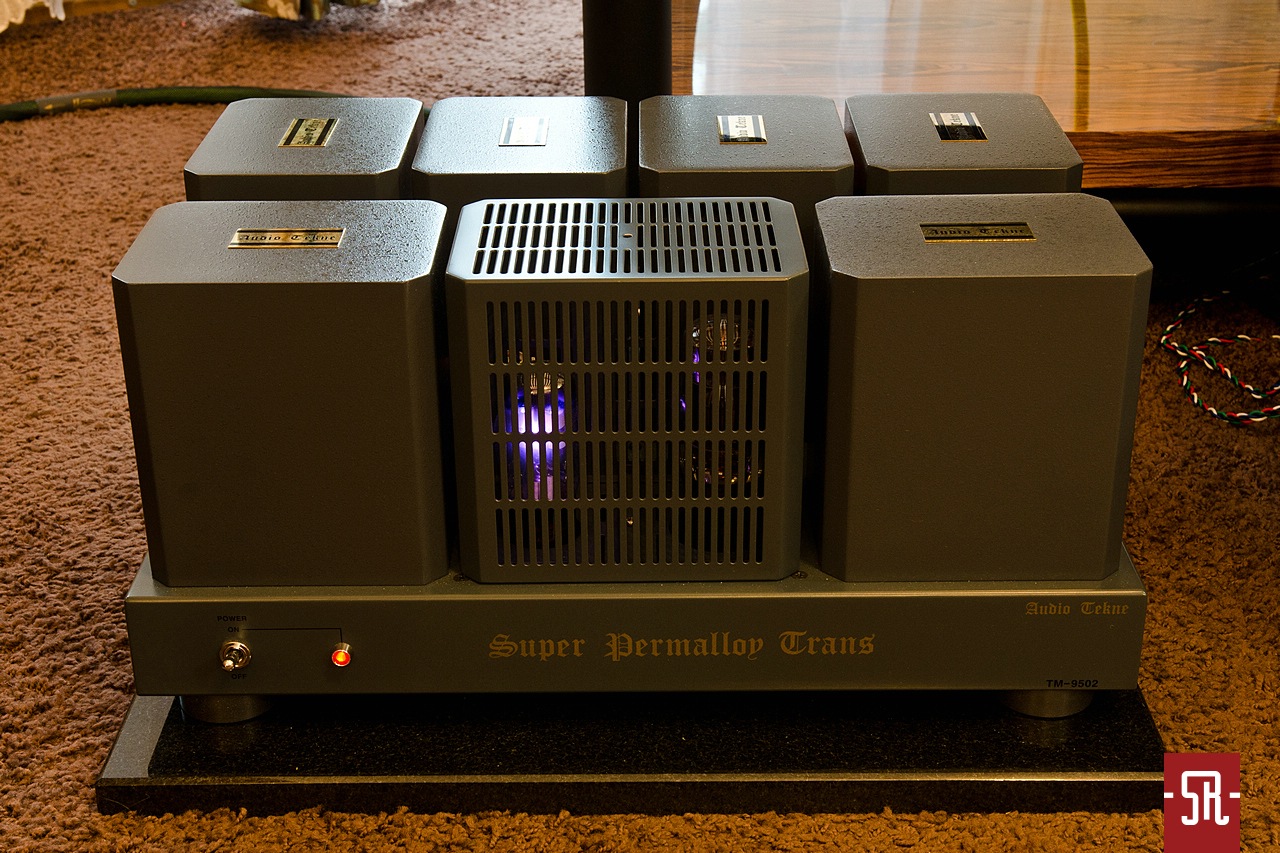
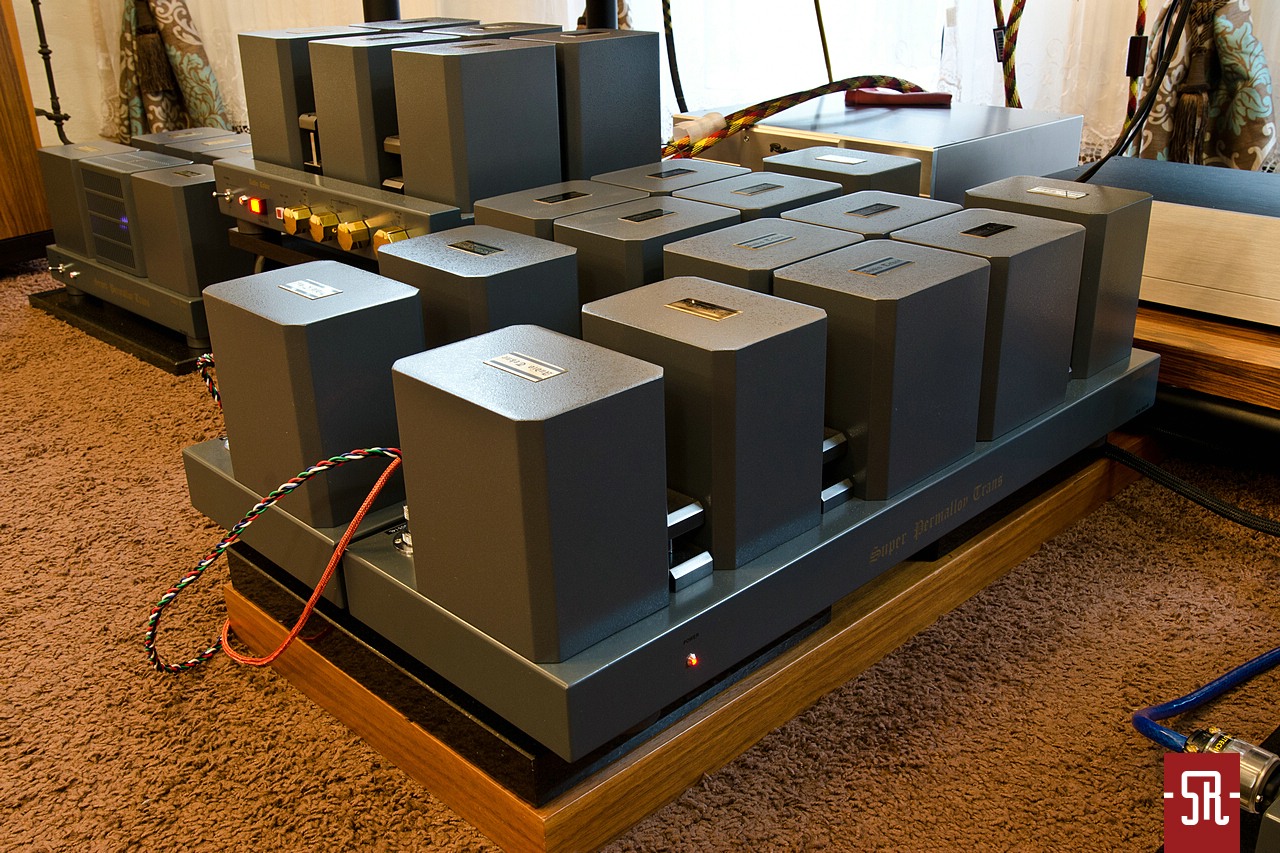
The description of the external looks I will start from the logistics. Typical for the High End, the AT products are very heavy. But this is not really visible on the outside, as they are quite compact for the mass. If somebody does not have had a chance of meeting with them before, and will try to lift one of them, then either he will drop it, or will have a solid back pain. You do not believe me? The constructs visible on the photos seem to go against all standards, as the phonostage alone is composed of two modules weighing 63kgs each, and that without the power supply unit, which is mounted in the line preamplifier, which brings another 55kg on the dial. The lightest elements are the power amplifiers, but they still have a lot of steel in them and reach 45kg each without problems. As you can see, there is a lot to carry around. But please do not worry, when you buy the products, a representative from the distributor will put them in the final destination and connect all the cables. When you look at the devices it is clear, that the main motive of the construction are the flat platforms, housing all the electrical connections, on top of which transformers, enclosed in protective cases, and electron tubes were placed, protected from mechanical damage and resonances. The line preamplifier has the most controls on the front. It has four golden, hexagonal knobs – two sets of two for the volume control and source selection, a rectangular, red lighted power button for the phonostage, another one for switching on the recording output, a red power indicator and a simple power switch. The back panel offers power sockets for the phonostage, dedicated XLR connectors for that device, five RCA inputs, one recording output, one XLR or RCA (switchable) for the power amplifiers and a power socket. The power amplifiers have just the power switch and the indicator on the front, while on the back XLR and RCA inputs, a singular loudspeaker terminal and a power socket. The phonostage is the humblest from the tested elements, it has only a single LED indicating power-on on the front, and on the top there is the power connector and the connectors for the cartridge. Finally I will just say, that trying to exchange the supplied cables to anything else turned out to be detrimental, what allows to save some money, as the devices are expensive themselves.






Starting the review of the sonic capabilities, I need to note, that since I received information about the proposed test, I was worried, if the 11 Watts in Push Pull would be sufficient to drive my loudspeakers. They have 90dB at 8 Ohm, but from experience, I expected some issue there. Finally, when I listened quietly, then it was fine, but when the volume knobs were turned to the right, then we could hear the struggle of the AT with the loudspeakers, posing too much of a load. Even more, I heard the potential hidden in the Japanese guests, which was there, but could not be released. This urged me to find loudspeakers, that would match the tested set not only in terms of efficiency, but also in terms of sound refinement. Fortunately, when I made some phone calls, I was able to locate an adequate loudspeaker system. So my review will be based on a few different sessions with loudspeakers build in a different ways, what allowed to have a broader look at the Audio Tekne products.
As I mentioned before, the first test were done with my ISIS. I do not listen too loud, so I could have a closer look at some important aspects of the combination. First impression? I mentioned those already during the test of the previous test. Despite my true love to the brand, Reimyo is making music prettier, and Audio Tekne is just playing it. For many music lovers going up the ladder, during the first moments of listening it can be a big surprise, because when the tested set starts playing, then the bells usually jumping to the front, or the virtual sources appearing like soap bubbles, suddenly get their rightful place on the sound stage. The first thought is, that there is a worsening, or at least boredom. Nothing out of the ordinary happens, everyone sits in their places, and the vocalist, who was sitting on our knees, now stands behind the microphone and does not move any closer. This is really surprising, but I will tell this: when you understand what audio is all about, and when you listen to the tested system, then the return to the old kind of presentation will be hard. And this is not all, I guarantee, that if you will not be able to afford the system, then all your searches will circulate around this master. It may seem a bit harsh, but it is better to strive to the real truth, and not the one imagined in our head. Of course one basic condition must be met, the full synergy of the whole system, which I achieved with the previously tested, middle system of the manufacturer. Unfortunately, like mentioned before, the combination of the Japanese with the Austrian did not allow the music to gain full breath, but the aspect of more truth correlated clearly with what I heard before, when the synergy was full. Apart from all bad fate, despite not having full freedom with the reproduction of the volume of the sounds, all the details of creating the stage in terms of its depth, width and height were reproduced phenomenally. What is important, the far planes were readable due to the resolution, and not any artificial darkening of the background, what is often done by the competition. Another important information is that there were solid layers of saturation in the midrange, also the frequency response was great at the bottom part, what was brilliantly shown with classical music which included organs. Here, despite the problems with high volume levels, at the levels I was listening at, the might of the monumental instrument was clearly audible. So loaded with very optimistic observations, I provided the Japanese a much easier load, the loudspeakers Alter II from the Polish brand Ardento.


The visit of the open baffle speakers completely reevaluated the perception of the set, as this construct, having a very short and quick bass with a not colored midrange, allowed the air to appear on the stage immediately. This showed me, that the top model from the Audio Tekne stables brings so much of the color hidden in the notes, that any help from any of the buyers is absolutely unnecessary. And yet I have never hidden the fact, that my Trenner do have the saturated way of sounding, I like so much, what caused here the lack of full synergy. When I listened again to the discs I used in the first configuration, I heard a much stiffer bass, but the most important things were the general freedom and increase of the speed of rising of the sound impulses. Somebody may ask, if the open baffles were not too heavy for the 11Watt power amps. I will answer, that I had a similar question that I posed to the constructor of the speakers, and he answered, that this loudspeaker model has 95dB measured, and if this would be a closed cabinet, then this value would be above 100. This was the reason I took the big speakers home. It was also important, that in this setting too, the virtual sound stage was very wide and deep. I am not sure if this is visible, but my loudspeakers, which are already very wide, are 10 cm narrower than the Alter. For many amplifiers this results in a flattening of the sound stage. Here this aspect was guarding the positioning of the artists and their instruments. Unfortunately time passes very quickly, and I did not notice when time came to exchange the speakers for another contender, which brought some subtlety and allowed to take all the best from the sound filling my room.


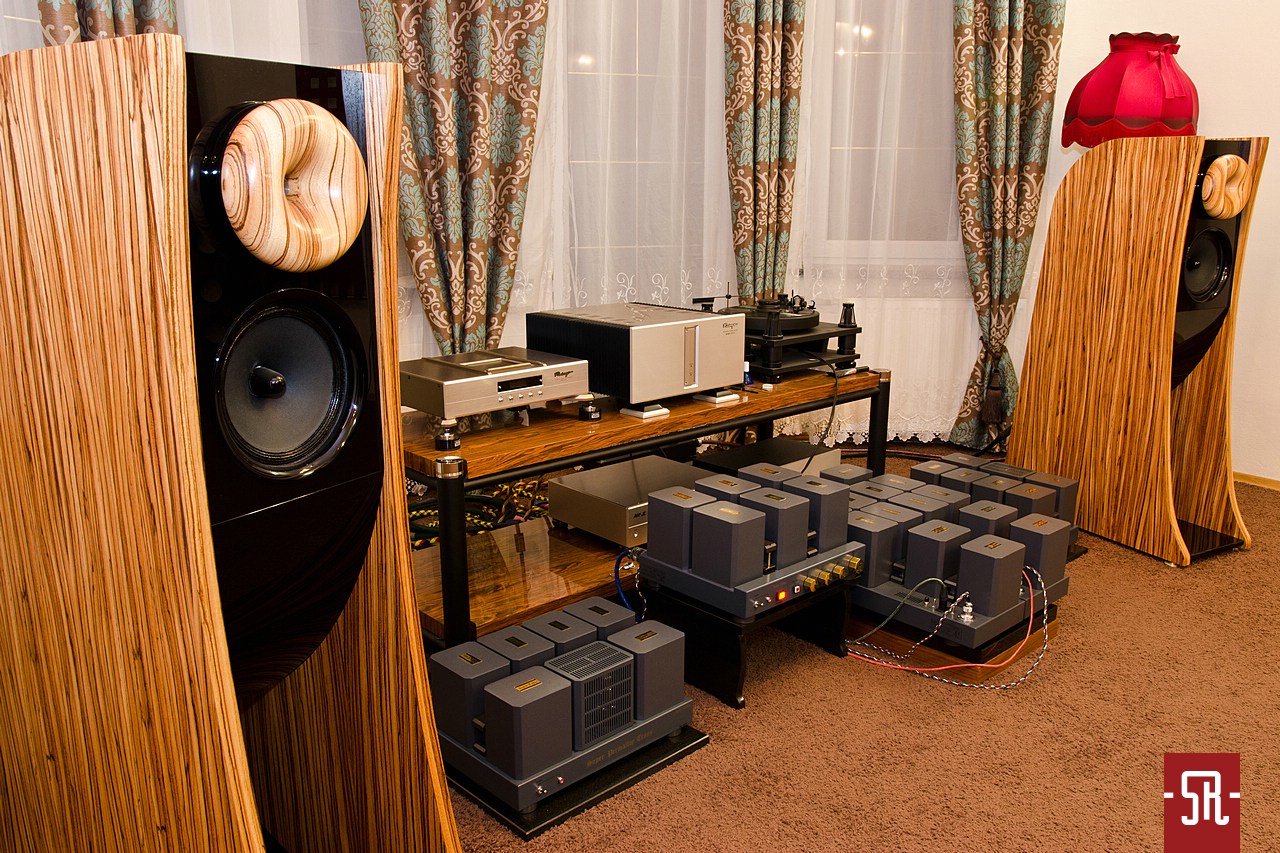
When after two series of discs played, the German came with relief in the form of the loudspeakers Cessaro Chopin I, it turned out, that another two decibels of efficiency can do wonders. The boxes were much easier to drive, due to the smaller drivers and in the end it elevated the sound to levels unreachable before. Of course this does not mean, it cannot be done better. I will even say that I am sure, that the Japanese set can perform even better, as I felt unused abilities in some aspects. Unfortunately it is not easy to get refined high efficiency speakers and I needed to work with what I could get my hands on. But let us get back to the topic. Putting the Cessaro into the system resulted in a much better reproduction of the sound stage size in all directions, width, height and depth. Interestingly, with the Polish speakers the virtual sources seemed to be bigger than they should, with the German ones, they returned to normal. Another item worth mentioning is, that any hint to chilliness of the sound, which accompanied me during all the previous encounters with the brand, regardless of the technical advancement, starting with the integrated amplifier and the entry level phonostage, and finishing with the synergetic combination of the previous set with my loudspeakers. And all of that using the company provided wires, that look like simple, run-off-the-mill cables. Any attempts to change those to the acclaimed Harmonix wires made things worse. And I am not talking about any degradation, just any interference in the signal resulted in loss of truth in the music. Like I mentioned, the tested set had already such big amounts of dense and at the same time high resolution sound in it, so that it only needed easy to drive loudspeakers, due to the low output power, which do not impose their way of playing on the sound. They just need to have enough resolution and be coherent. When all the pros and cons were named, time came to invite the set for a concert at my listening room. In the beginning it served me the greatly mastered meeting of Keith Jarrett with Gary Peacock and Jack DeJonette called “Still Live”. The splendid reproduction of the size of the concert hall housing the musicians with the positioning of the artists on the stage and the very real applause of the audience, made me play the double album from the very beginning to the end. All the sustain of the cymbals, the vividness of the piano of the front man as well as the contrabass seemed to materialize in my room. And I would like to remind you, that this is not the final statement of the tested set. This is what it can offer with the loudspeakers I had, and it was easy for me to realize, as the cheapest set was absolutely synergetic with my ISIS. So where do I see the unused potential? With all the timbre, if we would fulfill the quality requirements for the loudspeakers, the readability of the far planes would be much better. In this model of loudspeakers we have only one mid-bass driver, what resulted in the contrabass losing readability in quick and dense passages, what did not happen in the previous configuration. There each part of the frequency range had its own driver at its disposal, and the midrange did not need to share the diaphragm with the bass. But like I said, that there was slight chilliness in the sound, and here we get such a dose of homogeneity, that even for me, the too contoured Altera II turned out to be demons of smoothness. Well, how will it be with quick and dense free jazz? To test that I invited Ken Wandermark. The brass section did not show any signs of losing readability, despite all the craziness. The loads of mass on the midrange supported the sound of saxophones fantastically, what was a pure orgy of senses for any lover of this genre. What is important, the set informed me ideally about the quite small and low room, where the musicians performed during the recording session. Finally it also showed how the AT master the beryllium tube speakers from Germany, and they did that surprisingly well. I was positively surprised by how the beryllium drivers performed, as they are widely regarded as being overly offensive. In this combination they were just brilliant, they just showed how the cymbals of the percussion set are shining, while in another moment they highlighted the triangle, which was delicately touched. Impossible? Please try it out for yourselves, but I must warn you, when you get what this all is about, then the audio world will not be the same anymore.
I am a bit sad, the adventure with the Audio Tekne products comes to an end, at least for some time. The reason is simple, as during this six months I went through most of what the company offers, while being surprised, that tube devices can sound with such resolution. Do I see myself with this kind of sound? After listening to tenths of expensive and well sounding devices I know, that I have grown to appreciate the truth of the sound as offered by the AT. The only item remaining are the finances. Sad but true. But I am not fully convinced, that you are prepared for it. Here are no bells appearing out of nowhere, the sound is just played back as it was recorded on the disc, in the most natural way possible. All my attempts to change the cables, which usually improve the final effect, here resulted in introducing some artificiality into the sound, what showed clearly, that the way to achieve true sound does not rely on sound improvers, but on the abilities of the electronics. If you will be able to listen to such presentation for some time, then the initially seemingly boring sound will change your reference point in such a way, that returning to old habits will no longer be possible, or at least very painful. So all clients without solid nerves should be wary, as the top set of Mr. Imai does not take prisoners.
Jacek Pazio
Distributor: NATURAL SOUND s.r.o.
Prices:
TFA 9501: 69 000 €
TEA 9501: 89 000 €
TM 9502: 155 000 €
Technical Details:
TFA 9501
Inputs: Phono, CD, Tuner, Tape, AV, Aux.
Maxsimum input : 3 Vrms
Outputs: Rec Out; Pre Out XLR i RCA
Frequency response: 20 Hz – 20 kHz (+/- 1 dB)
Dimentions (W x H x D): 445 x 225 x 346 mm
Weight: 55 kg
TEA 9501
MC dedicated LOW & HIGH
Maximum inputs phono:: Phono Low 25 mV rms | Phono High 85 mV rms
Outputs att: 1,6 V rms (std.) – 13 V rms (max)
Outputs: XLR, RCA
RIAA accurcy: +/- 1,5 dB (20 Hz-15 kHz)
Power supply Provided by TFA-9501
Dimentions (W x H x D): 750 x225 x 240 mm
Weight: 63 kg each ( 126 kg total)
TM-9502
Inputs: RCA, XLR
Input impedance: 1 V/3,3 kΩ
Power output: 11 W
Harmonic distortion: < 5%/11 W
Frequency response: 10 Hz-20 kHz (- 1 dB/- 3 dB)
Szumy własne: < 1 mV/8 Ω
Power consumption: 160 W
Dimentions (W x H x D): 475 x 225 x 300 mm
Weight: 51 kg each
System used in this test:
– CD/DAC: Reimyo CDT – 777 + Reimyo DAP – 999 EX
– Preamplifier: CAT – 777 MK II
– Power amplifier: Reimyo KAP – 777
– Loudspeakers: TRENNER & FRIEDL “ISIS”, ARDENTO ALTER II, CESSARO CHOPIN I
– Speaker Cables: Harmonix HS 101-EXQ (mid-high section); Harmonix HS-101 SLC (bass section)
– IC RCA: Hiriji „Milion”
– Digital IC: Harmonix HS 102
– Power cables: Harmonix X-DC 350M2R Improved Version, X-DC SM Milion Maestro
– Table: SOLID BASE VI
– Accessories: Harmonix Beauty Tone Milion Maestro, Harmonix TU 505EX MK II, Stillpoints „ULTRA SS”, Stillpoints ”ULTRA MINI”; Harmonix AC Enacom Improved for 100-240V; Harmonix Room Tuning Mini Disk RFA-80i; antivibration platform by SOLID TECH
– Power distribution board: POWER BASE HIGH END
Analog stage:
– Turntable:
Drive: SME 30/2
Arm: SME V
Cartridge: MIYAJIMA MADAKE
Phonostage: RCM THERIAA

Wielokrotnie zwracaliśmy uwagę na pewien, oczywisty ze względów czysto marketingowych mechanizm działania zachodzący w przypadku zmiany dystrybucji i dotyczący wzmożonej aktywności nowego przedstawiciela marki. W końcu trzeba się pokazać, zrobić wokół siebie trochę szumu i przede wszystkim wykazać przed głodnymi sukcesu „mocodawcami”. O ile w przypadku kompletnych, dopiero wkraczających do zaklętego kręgu audio producentów sprawa jest o tyle łatwa, że jest to novum totalne i globalne, więc wszyscy czują choćby delikatną ekscytację przed nieznanym i wszyscy niejako jadą na tym samym wózku. Nieco inaczej przedstawia się sytuacja starych wyjadaczy, czy wręcz prawdziwych dinozaurów, którzy mając dość stagnacji, bądź kolejnych dość wątpliwych zarówno pod względem wizerunkowym a czasem wręcz zdroworozsądkowym ruchów dotychczasowego przedstawiciela postanawiają coś w tej materii zrobić i zaufać nowej, świeżej krwi. I właśnie z drugim przypadkiem mieliśmy okazję ostatnio się zmierzyć, gdy obecny na naszym rynku od niepamiętnych czasów francuski Focal postanowił trochę namieszać powołując do życia FOCAL POLSKA FNCE S.A.




Samo zaistnienie tzw. podmiotu gospodarczego niby niczym niezwykłym nie jest, ale pojawienie się na stołecznej mapie nowego salonu już wcale tak często się nie dzieje. Dlatego też, gdy tylko poadaptacyjny kurz w firmowym salonie FOCALa opadł i nadarzyła się ku temu nader intrygująca okazja nie omieszkaliśmy jej wykorzystać i udaliśmy się z sąsiedzką wizytą. W dodatku niewątpliwą atrakcją i dość intensywnym wabikiem stała się okazja posłuchania kompletnego, dostarczonego przez warszawskiego NOMOSa, systemu niegdysiejszej legendy High-Endu – Sonic Frontiers. Niepotrzebnie nie przedłużając kurtuazyjnego trzy po trzy wspomnę jedynie, że w klimatycznych wnętrzach zlokalizowanego w Alei Wyzwolenia 3/5 salonu oczy i przede wszystkim uszy cieszył set w składzie:
– dzielony odtwarzacz: transport SFT-1 + DAC SFD-2 MKII z zasilaczem Line3
– przedwzmacniacz Line 3
– monobloki Power 3
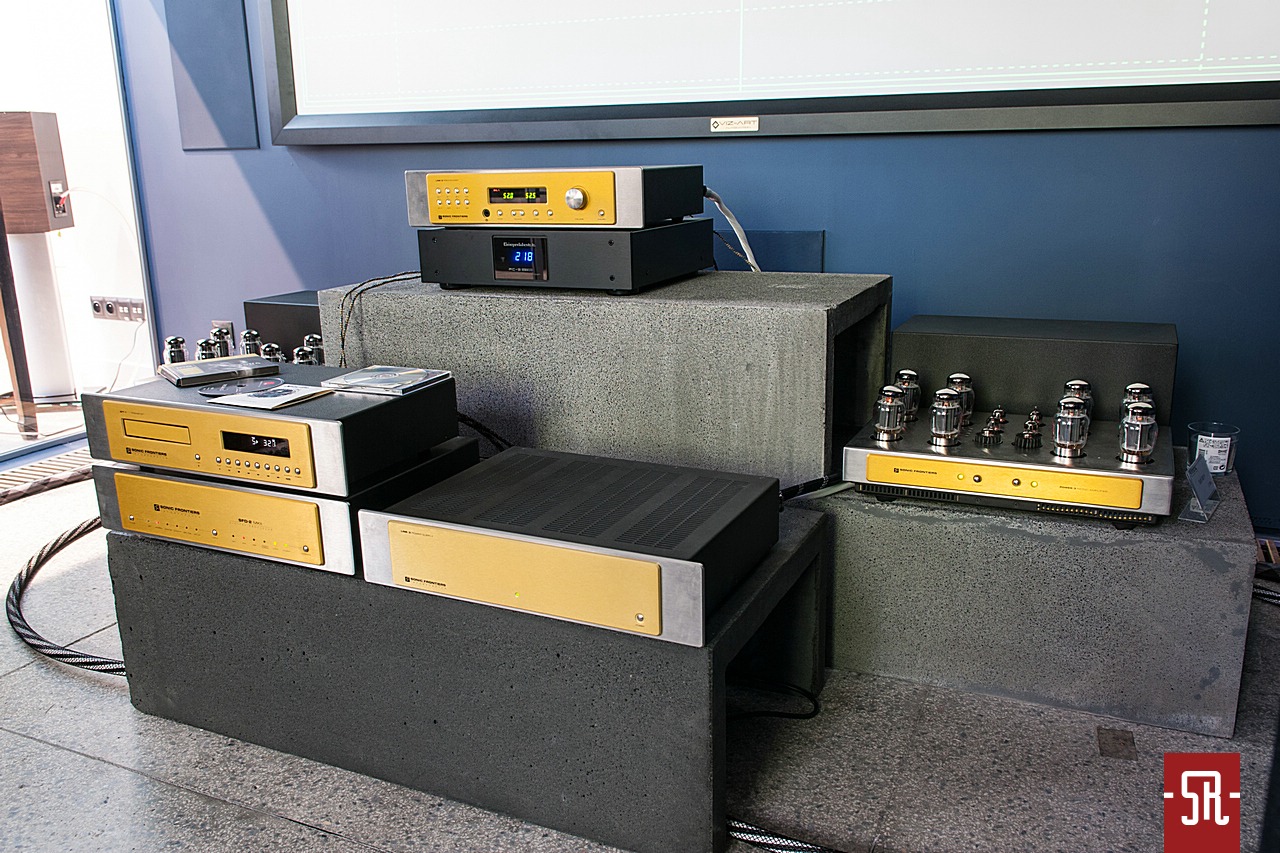


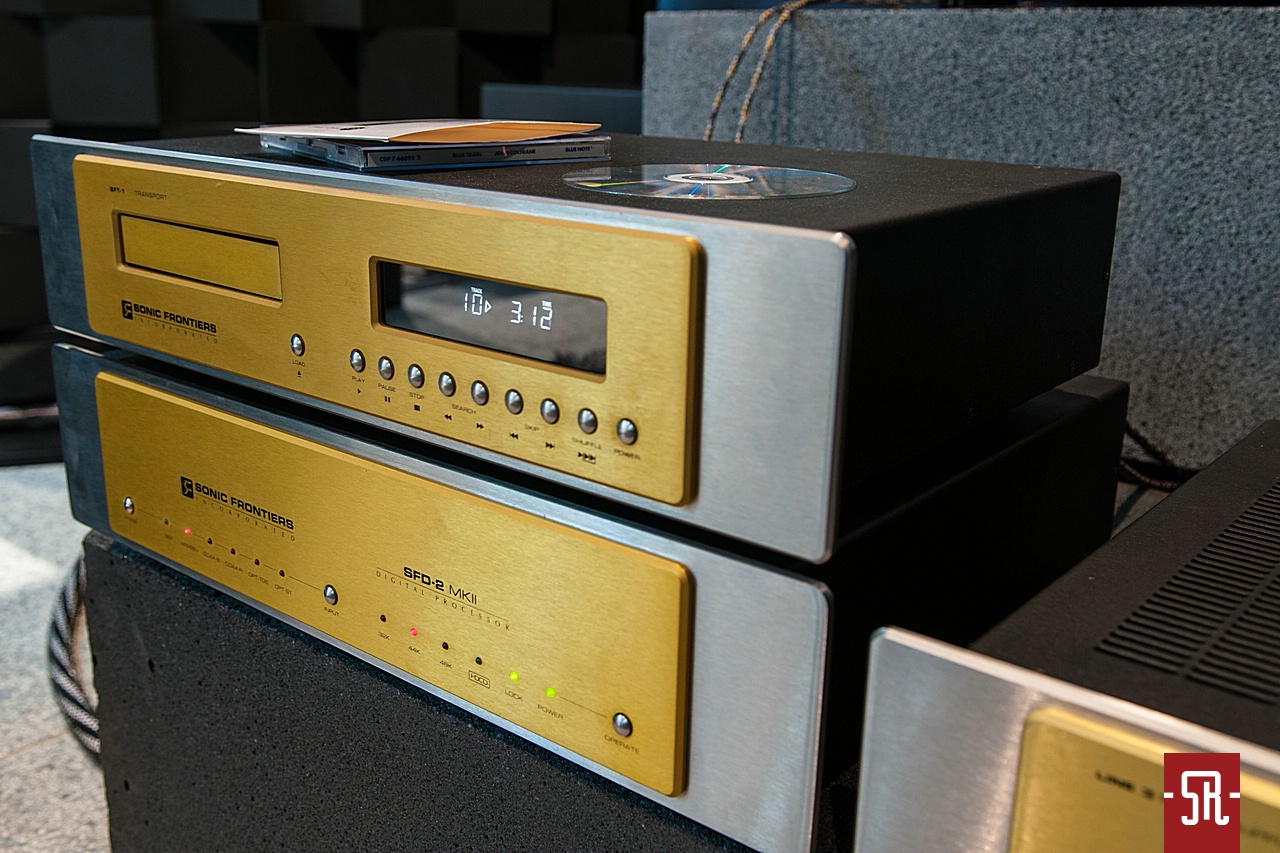


Jeśli kogoś w tym momencie dziwi taki czysto vintage’owy (w znaczeniu wyłącznie pozytywnym) zestaw to śpieszę wyjaśnić, że w tym pozornym szaleństwie jest metoda. Po prostu zamiast się niepotrzebnie spinać, wdawać w jakieś nie zawsze i nie do końca korzystne dla finalnego brzmienia układy ekipy salonu i NOMOS postanowiły połączyć ogień z wodą napędzając współczesne i ultranowoczesne zespoły głośnikowe elektroniką nie tylko pamiętającą, ale będącą niejako dowodem minionej złotej ery audio, kiedy High-End był tym, czym być powinien a niestety zapomniał. Świetnie grającymi urządzeniami w niewątpliwie wysokiej, ale dalekiej od szokowania cenie.

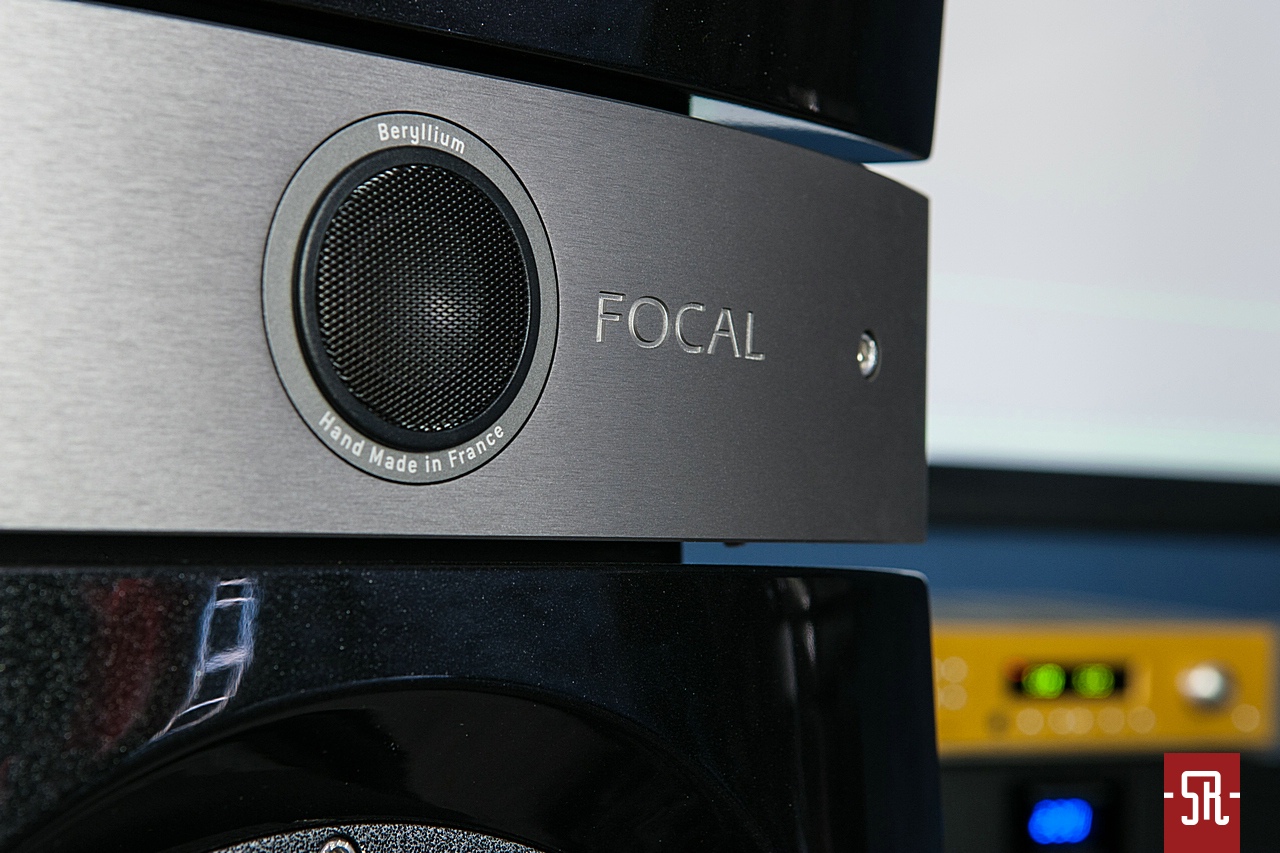


Skoro zatem doszliśmy do kolumn, to wczorajsze spotkanie miało dwie, a raczej dwie i pół odsłony. Pierwsze półtorej tury przypadło kruczoczarnym Utopiom Scala V2. Czemu używam ułamków? Cóż … nie wchodząc zbytnio w szczegóły prezentacja ww. kolumn miała dwie odsłony ze względu na drastyczne zmiany brzmieniowe powodowane zmianami ustawienia bocznych ustrojów akustycznych. Ich początkowa, lokalizacja może by i sprawdziła się w laboratoryjno – prosektoryjnych wnętrzach o akustyce poczekalni Dworca Centralnego, lecz w nie we wstępnie zaadaptowanym demo-roomie. Po prostu w takiej konfiguracji dźwiękowi brakowało nie tylko swobody, ale i blasku, ale czego jak czego po Utopiach anorektyczności raczej nie należało się spodziewać a tymczasem … całość wypadała niepokojąco mało przekonująco. Trzeb było zatem zakasać rękawy i co nieco poprzesuwać. Wystarczyło bowiem panele ustawić za linią kolumn, by dźwięk się uwolnił, zaczął lśnić a całość złapała przysłowiowy wiatr w żagle. I to było to.


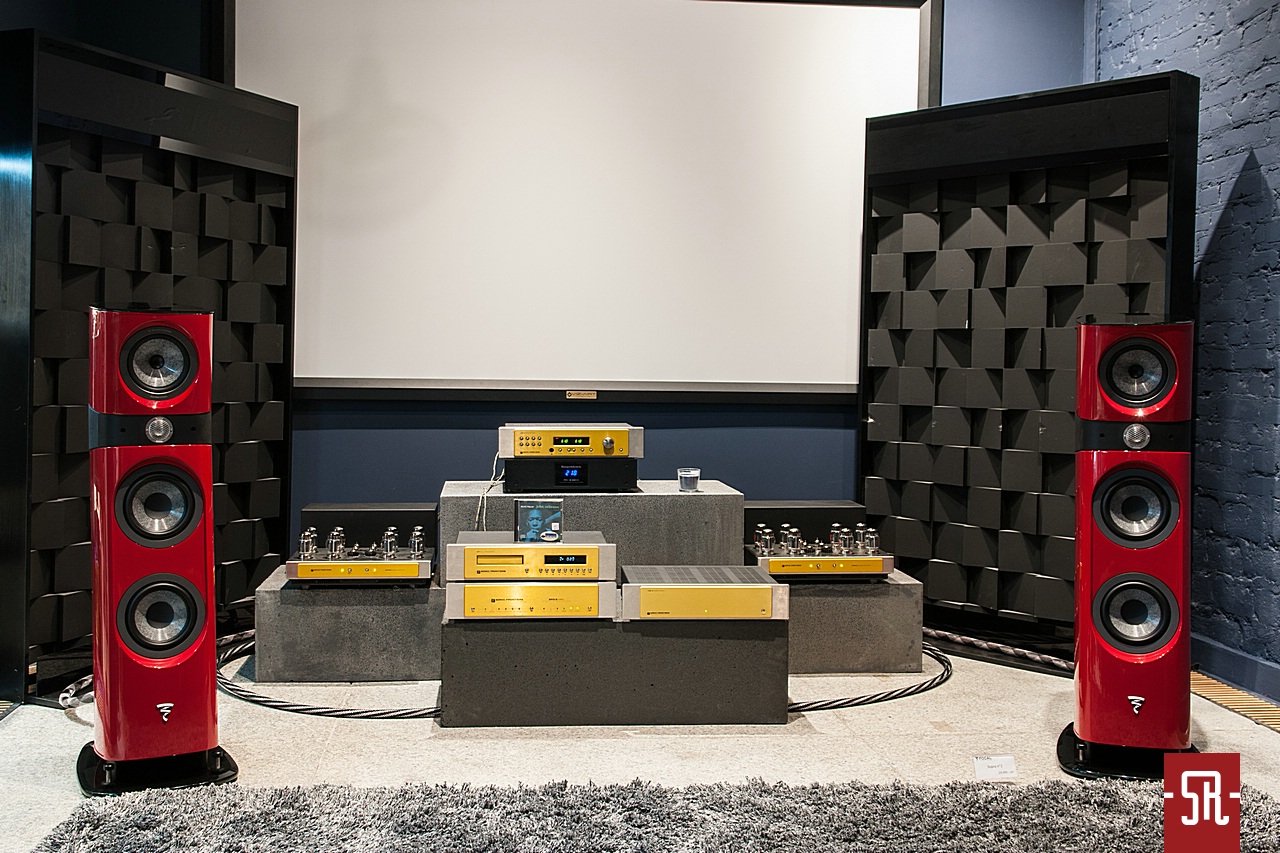


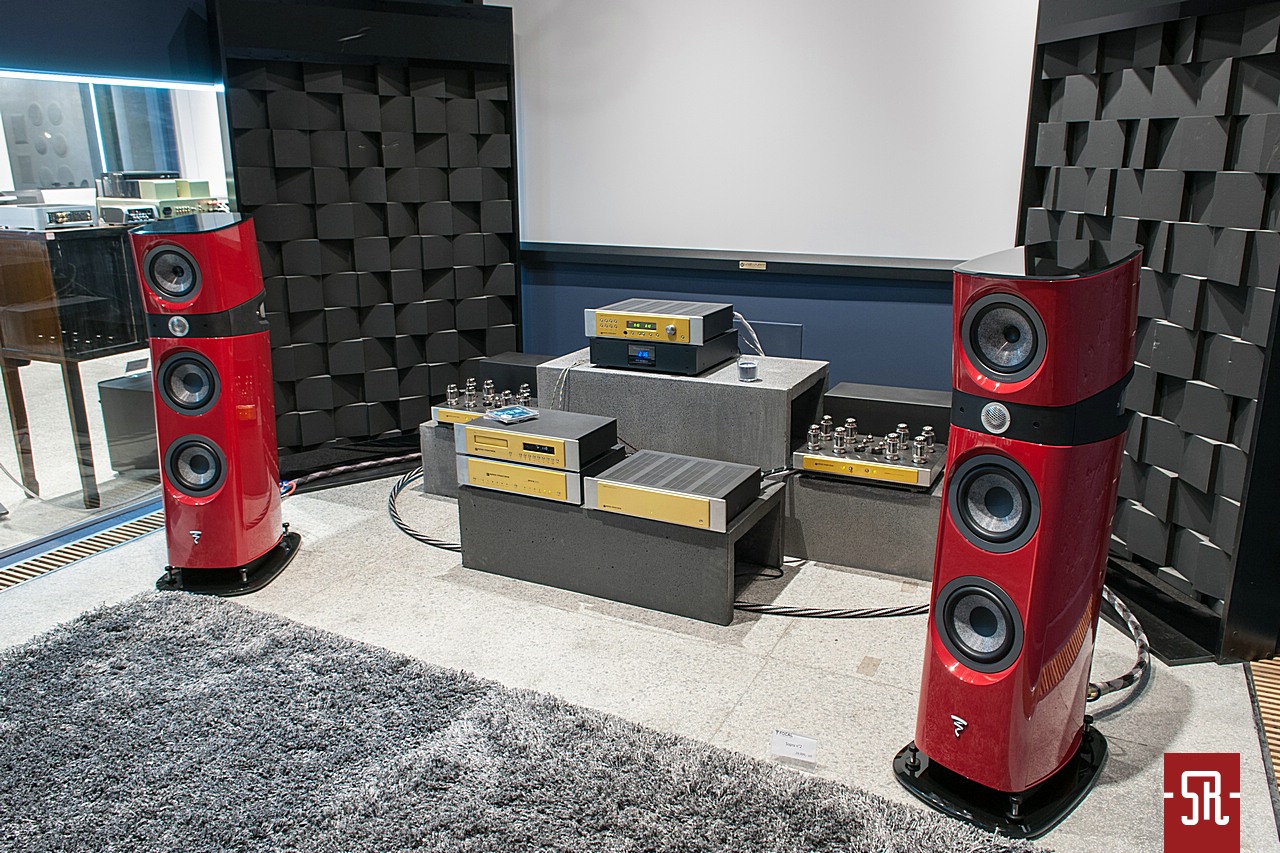

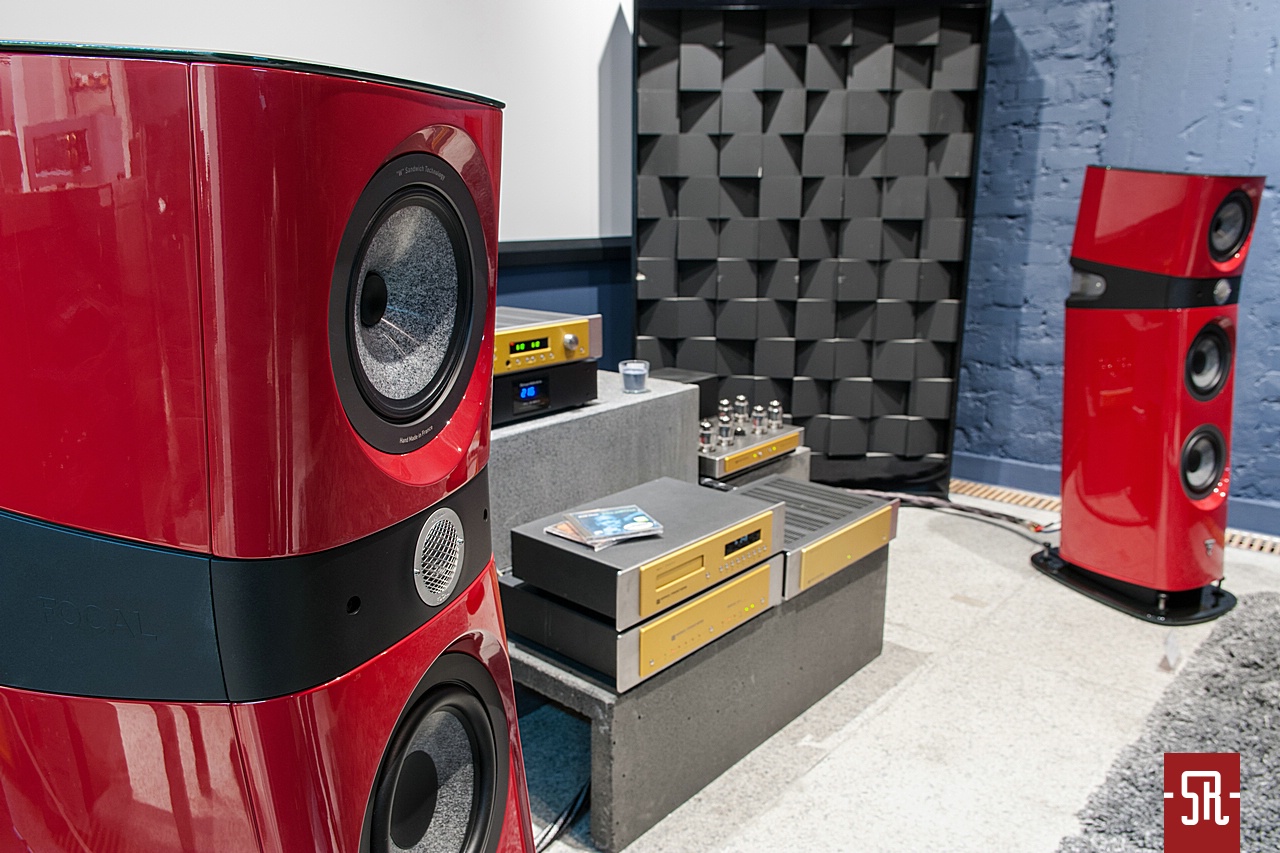


Rozochoceni nad wyraz pozytywną metamorfozą uznaliśmy, że skoro nadarza się okazja, to szkoda byłoby poprzestawać jedynie na jednej parze kolumn i Scale zastąpiły nieco mniejsze, lecz niezaprzeczalnie zdecydowanie bardziej łapiące za oko ognistoczerwone Focale Sopra n°2. Chwila na akomodację, kilka utworów Coltrane’a i … z głośników popłynęła przeurocza twórczość Theriona. Mało audiofilsko? Oczywiście, ale słuchało się tego zaje …, znaczy się bardzo dobrze. Świetnie kontrolowany, punktowy i zróżnicowany bas, gładka – zaskakująco słodka średnica i mieniąca się mnóstwem detali góra idealnie wręcz zgrywały się z ponadprzeciętnie atrakcyjnym malowaniem. Słowem było to całkiem zgrabne połączenie lampowej maniery z właściwą Focalom witalnościom. W brzmieniu Sopr może nie było pewnej „wyczynowości” Utopii, ale im dłużej się ich słuchało, tym bardziej utwierdzaliśmy się w przekonaniu, że nie mielibyśmy nic przeciw aby taka parka zagościła u nas na dłużej.
Nie wiadomo kiedy czwartkowe popołudnie przeszło w całkiem zaawansowany wieczór, więc mając na uwadze konieczność stawienia się bladym świtem w zakładzie pacy chciał nie chciał zmuszony byłem opuścić trwający w najlepsze odsłuch. Z kuluarowych plotek dość jasno wynikało, że wczorajsze spotkanie nie było odosobnionym przypadkiem i tego typu atrakcje mają szanse na stałe zagościć w audiofilsko-kulturalnym kalendarzu a skoro na chwilę obecną Focal Polska nie jest zbyt silnie związany z żadnym producentem/dystrybutorem elektroniki to coś czuję w kościach, że okazji, by francuskich kolumn posłuchać w naprawdę ciekawych konfiguracjach będziemy mieli pod dostatkiem.
Serdecznie dziękując za gościnę i okazję do zapoznania się w zdecydowanie bardziej przewidywalnych, aniżeli hotelowo – wystawowe warunkach brzmieniem Focali polecamy się na przyszłość z uwagą śledząc nową kartę marki na naszym rynku.
Marcin Olszewski

Accuphase przedstawia nowy stereofoniczny wzmacniacz mocy, będący bezpośrednim następcą obecnego na rynku od roku 2006 modelu P-7100. P-7300 uzupełnia od góry katalog końcówek pracujących w klasie AB i gromadzi w sobie wszystkie doświadczenia zdobyte wyniesione z obecności na rynku swojego poprzednika, uzupełniając je rozwiązaniami opracowanymi na 40-lecie firmy dla A-klasowego A-200 oraz monobloków M-6200. Wśród najważniejszych zmian producent wskazuje zmniejszony poziom szumów własnych (S/N wynosi 125 dB dla wzmocnienia maksymalnego i 131 dB dla poziomu –12 dB) i dalszą poprawę współczynnika tłumienia (gwarantowana wartość wynosi co najmniej 1000!). To pierwsze osiągnięto m. in. za pomocą poprawionej topologii układów MCS+ pracujących w klasie A, a drugie – przez zbalansowany układ sprzężenia zwrotnego z punktem pomiarowym „śledzącym” sygnał przy zaciskach wyjściowych, zastąpienie przekaźników mechanicznych tranzystorowymi MOS-FETami, a także zastosowanie na wyjściu cewki z miedzi o przekroju prostokątnym i większej powierzchni. Każdy kanał stopnia końcowego dysponuje własną płytką z dziesięcioma tranzystorami w równoległym trybie push-pull, dającymi liniowy wzrost mocy muzycznej: od bazowych 125 W / 8 Ω, przez 250 W / 4 Ω i 500 W / 2 Ω aż do 800 W / 1 Ω. Wzmacniacz wyposażony jest też w czteropozycyjny selektor wzmocnienia (-12, -6, -3 dB, MAX), który steruje bezpośrednio stopniem wejściowym, zbudowanym w konfiguracji wzmacniacza instrumentacyjnego, minimalizującego szumy własne przy niższych poziomach wzmocnienia. Cechy te zapewniają stałe napięcie na wyjściu niezależnie od warunków pracy i swobodne wysterowanie głośników o bardzo niskiej impedancji. Jeśli ktoś będzie miał niedostatek mocy, może wykorzystać P-7300 jako monoblok, który w trybie zmostkowanym odda 1600 W na 2 Ω. Zniekształcenia harmoniczne wzmacniacza nie przekraczają poziomu 0.05 %.
P-7300 kupimy w Polsce za 79 900 zł.


Więcej szczegółów i specyfikacja na stronie: http://accuphase.pl/p-7300.html

Audio-Technica wprowadza na polski rynek słuchawki ATH-MSR7NC. W tej nowej konstrukcji projektanci połączyli wszystkie zalety modelu ATH-MSR7, m.in. naturalne brzmienie, możliwość odtwarzania dźwięku wysokiej rozdzielczości i wygodę użytkowania, z rewolucyjnym systemem redukcji hałasu. Dzięki temu wymagający fani muzyki mogą cieszyć się czystym brzmieniem nagrań, np. podczas podróży lub w trakcie przebywania w hałaśliwym otoczeniu
W ślad za sukcesem przełomowych słuchawek ATH-MSR7 Audio-Technica wprowadza nową, bliźniaczą konstrukcję. Model ATH-MSR7NC łączy umiejętność wiernego odwzorowania dźwięku wysokiej rozdzielczości z najnowszą wersją systemu aktywnej redukcji hałasu. Projektanci zadbali o to, aby jakość brzmienia pomiędzy trybami pracy aktywnym i pasywnym była na takim samym poziomie. Dzięki temu bezkompromisowemu podejściu najnowsze wokółuszne słuchawki gwarantują niezrównane wrażenie akustyczne podczas odsłuchu i zapewniają najwyższy poziom komfortu użytkowania, tak w domu, jak i poza nim.


W każdej chwili rozkoszowania się zachwycającym brzmieniem najnowocześniejszych formatów audio wysokiej rozdzielczości użytkownika oczarowuje skuteczność systemu redukcji hałasu. Ten dopracowany układ sprawia, że model ATH-MSR7NC nigdy nie zaskoczy użytkownika jakimkolwiek pogorszeniem jakości dźwięku – dzięki precyzyjnemu umiejscowieniu mikrofonu w stosunku do specjalnej wentylacji akustycznej, projektanci zminimalizowali różnicę w jakości brzmienia pomiędzy pracą z włączonym i wyłączonym systemem redukcji hałasu.
Korzystając z innowacyjnego systemu aktywnej redukcji hałasu, dookólnego w pełnym zakresie 360 stopni, ATH-MSR7NC skutecznie blokuje odgłosy otoczenia, zapewniając bardziej relaksującą i angażującą atmosferę podczas odsłuchu. Bezkonkurencyjny czas pracy, 30 godzin po trwającym cztery godziny ładowaniu wbudowanego akumulatora, oznacza, że fani muzyki nigdy nie zostaną pozbawieni dostępu do swoich ulubionych nagrań, nawet podczas długich podróży.
Słuchawki Audio-Technica ATH-MSR7NC zostały zaprojektowane tak, aby zapewnić maksymalny komfort w trakcie wielogodzinnych sesji odsłuchowych. Miękkie nauszniki, wypełnione pianką z pamięcią kształtu, pewnie i precyzyjnie dopasowują się do kształtu głowy, a muszle, które całkowicie skrywają uszy użytkownika, gwarantują najwyższy poziom wygody i jednocześnie optymalizują brzmienie niskich tonów, pozwalając odtwarzać bardzo głęboki bas.
Opierając się na dziedzictwie profesjonalnego brzmienia wielokrotnie nagradzanych słuchawek ATH-MSR7, nowy model przygotowany został do wiernego odtwarzania dźwięku wysokiej rozdzielczości. Sercem słuchawek są 45-milimetrowe przetworniki hi-res „True Motion”, w których precyzyjna membrana współpracuje z niezwykle lekką cewką, aby skrócić do minimum czas reakcji i zredukować zniekształcenia dźwięku. Zapewnia to płynne, detaliczne i precyzyjne brzmienie w każdym z odtwarzanych zakresów.
Maksymalną dynamikę dźwięku pozwala zachować specjalnie opracowany system Dual-layer Air-Control Technology. Wykorzystując mieszaninę warstw aluminium i magnezu projektanci stworzyli lekkie i jednocześnie bardzo sztywne obudowy, które eliminują niepożądane wibracje. Te ostatnie mogłyby ograniczać wysoką jakość dźwięku. Wewnątrz warstwowej konstrukcji umieszczono system specjalnych kanałów wentylacyjnych (Triple-venting Acoustic Airflow), który wykorzystuje trzy precyzyjnie rozmieszczone przewody – ich zadaniem jest kontrolowanie przepływu powietrza. Rozwiązanie to gwarantuje dużo bardziej angażujące i bogatsze w niuanse akustyczne brzmienie.
Ukłonem w stronę często podróżujących użytkowników słuchawek są praktyczne akcesoria dołączone do ATH-MSR7NC: kabel USB do ładowania, etui ochronne pozwalające bezpiecznie przechowywać słuchawki podczas transportu i adapter samolotowy, dzięki któremu użytkownicy mogą korzystać ze słuchawek w połączeniu z pokładowym systemem rozrywkowym. Ponadto słuchawki ATH-MSR7NC dostarczane są z dwoma odłączanymi przewodami o długości 1,2 m każdy – jeden z nich wyposażony jest w moduł zdalnego sterowania z mikrofonem i przeznaczony jest dla osób, które bardzo często słuchają muzyki ze smartfonu.
Słuchawki Audio-Technica ATH-MSR7NC już są w sprzedaży. Najnowszy model dostępny jest w czarnej wersji kolorystycznej, a jego poglądowa cena detaliczna wynosi 1599 zł.
Specyfikacja techniczna:
| Słuchawki | ATH-MSR7NC |
| Typ | zamknięte, dynamiczne |
| Średnica przetwornika | 45 mm |
| Pasmo przenoszenia | 5-40 000 Hz |
| Czułość | 97 dB/mW (tryb pasywny); 104 dB/mW tryb aktywny) |
| Impedancja | 30 Ω (tryb pasywny); 150 Ω (tryb aktywny) |
| Waga | 305 g (bez kabla) |
| Mikrofon | |
| Charakterystyka kierunkowości | dookólna |
| Czułość | -40 dB (1 V/Pa przy 1 kHz) |
| Pasmo przenoszenia | 50-4000 Hz |
Dystrybucja: Audio Klan

Sennheiser ogłasza promocję swoich słuchawek w kompletach z przetwornikiem DAC brytyjskiej marki Chord. Teraz wysokiej jakości pliki muzyczne możesz zabrać wszędzie ze sobą!
Minęło dużo czasu, od kiedy muzyka przeszła do plików. Przez lata słuchacze męczyli się z marną jakością plików MP3 , szybko jednak zostały wprowadzonych inne formaty, w których można zapisywać muzykę w jakości takiej samej, co na płytach CD. A od kiedy pamięć urządzeń przenośnych pozwala na zapis tych plików, można je mieć zawsze przy sobie. Jedynym problemem dotychczas była jakość samych urządzeń odtwarzających i przetwarzających te pliki w sygnał dźwiękowy. Ale i to okazuje się już być w zasięgu ręki. Możesz słuchać swojej ulubionej muzyki w bezkompromisowej jakości dzięki słuchawkom Sennheisera i przetwornikiem Mojo marki Chord. Teraz zakup kompletu urządzeń jest ułatwiony dzięki akcji promocyjnej polskich dystrybutorów tych marek: Aplauzu i Voice.


Akcja promocyjna rusza od 1 maja 2016 i trwa do wyczerpania zapasów w wyselekcjonowanych salonach audio w całej Polsce. Informacje o produktach, kompletach i salonach sprzedaży można uzyskać na stronie sennheiser.pl/sennheiser-mojo
ZESTAWY PROMOCYJNE:
1. Sennheiser HD 630VB + Chord MOJO
W podróży czy też w domu
Najnowszy model Sennheiser HD 630VB oferuje niesamowite właściwości i posiada szereg funkcji, których normalnie nie znajdziemy w słuchawkach audiofilskich. To pierwsze zamknięte słuchawki audiofilskie marki Sennheiser. Przetworniki o przełomowej konstrukcji zapewniają czystą i potężną reprodukcję dźwięków, dając możliwość usłyszenia subtelnych niuansów w naszych ulubionych nagraniach muzycznych. Wbudowany regulator natężenia basów działa delikatnie, lecz wyraźnie. Przy charakterystyce częstotliwościowej w zakresie od 10 do 42000 Hz, możemy odsłuchiwać pliki z muzyką o wysokiej rozdzielczości. Dlatego też w zestawie z wysokiej jakości przenośnym DAC Chord Mojo te słuchawki sprawdzą się znakomicie.
Cena regularna: 4619 zł
Cena promocyjna: 3599 zł
Więcej informacji: http://sennheiser.pl/hd-630vb-chord-mojo-zestaw-promocyjny
2. Sennheiser MOMENTUM M2AE + Chord Mojo
Pasja dla doskonałości
Słuchawki wokółuszne MOMENTUM nowej generacji są wyposażone w składany pałąk, dzięki czemu zajmują mniej miejsca i wraz z nowymi pokrowcami są wzorem mobilności. Jednocześnie konstrukcja nie straciła sztywności, bo wciąż wykorzystuje mocną i lekką stal nierdzewną. Dzięki nowe modele są równie solidne jak poprzednie modele. Jednak dopasowanie i komfort użytkowania w nowych modelach sięga jeszcze wyżej. Pałąk został przeprojektowany – wciąż jest pokryty luksusową skórą, lecz teraz ma bardziej obły kształt dla wyższego komfortu. Wokółuszny model MOMENTUM wyposażony jest w przeprojektowane, większe i miększe poduszki nauszników, wciąż pokryte wysokiej jakości skórą. Ich asymetryczne ustawienie zapewnia lepsze dopasowanie do głowy i wygłuszanie dźwięków zewnętrznych. W zestawie z wysokiej jakości przenośnym DAC Chord Mojo te słuchawki sprawdzą się znakomicie.
Cena regularna: 3839 zł
Cena promocyjna: 2999 zł
Więcej informacji: http://sennheiser.pl/momentum-m2ae-chord-mojo-zestaw-promocyjny
3. Sennheiser MOMENTUM M2IE + Chord Mojo
Styl i wartość bez kompromisów.
Słuchawki dokanałowe MOMENTUM In-Ear zostały wykonane z niecodziennych materiałów: stalowe szczegóły, gładkie chromy i niezwykły dwukolorowy przewód wyróżniają je z tłumu. Korzystają z najnowszej technologii projektowania przetworników akustycznych i zamykają je w ergonomicznej obudowie. Brzmią tak, jak pozostałe modele serii MOMENTUM: z pełnym basem, detalicznym odwzorowaniem głosu i instrumentów oraz z niezwykłą scena brzmieniową. Adaptery douszne w kilku rozmiarach dostarczane w komplecie są montowane na stalowy wylot powietrza, dzięki czemu całe ciśnienie akustyczne trafia wprost do ucha, skutecznie blokując dźwięki z zewnątrz. W sumie to zupełnie wyjątkowe doświadczenie dźwiękowe w najmniejszej, kompaktowej formie. W zestawie z wysokiej jakości przenośnym DAC Chord Mojo te słuchawki sprawdzą się znakomicie.
Cena regularna: 2919 zł
Cena promocyjna: 2299 zł
Więcej informacji: http://sennheiser.pl/momentum-m2ie-chord-mojo-zestaw-promocyjny
INFORMACJE:
Strona akcji: http://sennheiser.pl/sennheiser-mojo
Więcej informacji: http://sennheiser.pl/a/sennheiser-mojo
ZESTAWY DOSTĘPNE W SALONACH:
Warszawa: AUDIOPOLIS, AUDIOPUNKT, MEDIA-CENTRUM
Kraków: HIFISTATION
Gdańsk: ALBATROS
Katowice: AUDIO STYL | MEGA HZ
Białystok: RMS
Pabianice: Q21
Częstochowa: DELTA-AUDIO
Rzeszów: NAUTILUS 2
ORGANIZATORZY AKCJI:
Aplauz Sp. z o. o. – dystrybutor marki Sennheiser
Voice Sp. z o. o. – dystrybutor marki Chord
Oferta dostępna jedynie w salonach z listy. Podano ceny sugerowane detaliczne brutto, ceny w salonach mogą odbiegać od podanych. Niniejsza informacja nie stanowi oferty w rozumieniu prawa handlowego, a jest jedynie zaproszeniem do zawarcia umowy kupna

Uznana na całym świecie pianistka Katarzyna Borek – na swojej najnowszej płycie “Space In Between” łączy upodobanie do prawdziwej wirtuozerii i brzmieniowych eksperymentów. Artystka stworzyła i nagrała swoją osobistą kompilację ulubionych kompozycji, zabierając je w kosmiczną przestrzeń. Krążek w limitowanej edycji wyjdzie nakładem oficyny Leszka Możdżera – BITTT Records.
Pianistka odniosła już wiele spektakularnych sukcesów na scenie międzynarodowej, zarówno w dziedzinie muzyki klasycznej jak i na gruncie łączenia różnych gatunków muzycznych (płyta Classica & Electronica “Tempus Fantasy” i spektakl teatru tańca “Tempus Fantasy” we wrocławskim Teatrze Capitol) czy tworzenia własnych kompozycji (teatr, muzyka filmowa). Często przedstawia muzykę w różnych niekonwencjonalnych, oryginalnych kontekstach i świetle współczesnej rzeczywistości. Tak jest i tym razem…


Na płycie „Space in Between” artystka zestawiła starannie wyselekcjonowane tematy idące w kierunku muzyki neoklasycznej czy filmowej. Są to hipnotycznie brzmiące utwory wspaniałych kompozytorów (Arvo Part, John Cage, Ludovico Einaudi, Craig Armstrong, John Adams, Takashi Yoshimatsu, Joaquin Rodrigo, Manuel de Falla).
Pomiędzy utworami usłyszymy dźwięki planet i gwiazd, zarejestrowane przez sondy NASA. Szumy bezkresnego kosmosu same w sobie tworzą wspaniałą, unikatową, muzyczną przestrzeń. Każdemu z nagranych na płycie kompozytorów pianistka zadedykowała symbolicznie kawałek tej przestrzeni. Głównym bohaterem nagrania jest jednak sam fortepian, często preparowany i efektowany elektronicznie. To on zabiera słuchacza w kosmiczną podróż. Wsłuchując się w muzykę można się przekonać, że dźwięki fortepianu i kosmosu tworzą spójną całość.
„Przez muzykę odkrywam kosmos a kosmos odkrywa przede mną muzykę. Album „Space in Between” to mój osobisty koncept, na którym dobrałam swoje ulubione utwory światowych kompozytorów, prezentując je w mantrycznym i minimalistycznym stylu. Łączy je ambientowy, przestrzenny charakter. Zbudowałam także kilka swoich autorskich, neoklasycznie brzmiących aranżacji na dwa instrumenty – rhodes i fortepian. Płytę zamyka ambientowa, syntezatorowa impresja na temat hipotetycznej Planety X” – mówi artystka.
“Space in between” to pozycja skierowana zarówno dla miłośników muzyki fortepianowej i przestrzennych, ambientowych brzmień oraz dla fanów szeroko pojętej muzyki filmowej. Płyta ukaże się w nakładzie limitowanym do 450 sztuk. Dystrybutorem krążka jest Outside Music. Płyta od 9 maja będzie dostępna w Side One i w sklepie BITTT Records.

LG w duecie z Kubą Błaszczykowskim tworzą mistrzowski klimat dla fanów rozrywki w najwyższej rozdzielczości
Firma LG Electronics oficjalnie zaprezentowała swoje najnowsze linie telewizorów LG Super UHD TV 4K oraz UHD 4K na 2016, wprowadzane tuż przed mistrzostwami w piłce nożnej.
Z tej okazji Ambasadorem telewizorów zarówno LG Super UHD 4K jak i LG OLED TV został Kuba Błaszczykowski – gwiazda polskiej i światowej piłki nożnej. Jako jeden z najlepszych polskich piłkarzy zostanie „twarzą” kampanii najnowszych telewizorów LG, które dzięki innowacyjnej jakości obrazu dostarczą widzom niezapomnianych wrażeń podczas zbliżających się mistrzostw.
Szeroka gama telewizorów LG na rok 2016 wyróżnia się nie tylko atrakcyjnym designem, ale także wyjątkowymi technologiami, dzięki którym widzowie będą w stanie zobaczyć jeszcze więcej detali w jeszcze żywszych kolorach. Wyposażone w panel IPS Quantum 4K, funkcje HDR Super z DOLBY VISION oraz najnowszą wersję systemu operacyjnego webOS 3.0, dostarczą konsumentom najlepszych wrażeń i komfortu użytkowania na wyższym poziomie.


Obraz godny mistrzów – technologie LG udoskonalające obraz
LG przygotowało w I połowie roku na polski rynek aż 8 serii telewizorów SUPER UHD 4K i UHD 4K o różnej wielkości ekranu od 40” po 75” cali. Nowe modele zostały wyposażone w udoskonalone technologie poprawiające jakość obrazu takie jak panel IPS Quantum 4K oraz funkcje HDR Super z technologią HDR Dolby Vision oraz HDR 10.
HDR Super – najwyższy standard HDR na rynku
Technologia HDR Super zastosowana w najwyższych modelach linii telewizorów LG Super UHD TV 4K dostosowuje jasność i pozwala na uzyskanie jeszcze szerszej palety barw, której nigdy wcześniej nie można było zobaczyć na ekranie telewizora. Jest to obecnie najwyższy standard technologii HDR dostępny na rynku zgodny z formatem Dolby Vision HDR preferowanym przez najlepsze studia filmowe. W odróżnieniu od innych technologii HDR, standard DOLBY VISION analizuje treści klatka po klatce dostosowując optymalne parametry wyświetlania na ekranie telewizora w czasie rzeczywistym. Ponadto telewizory LG Super UHD są w stanie obsługiwać zarówno standard HDR DOLBY VISION jak i HDR10, co nie jest możliwe w przypadku telewizorów kompatybilnych tylko z formatem HDR10. Standard HDR DOLBY VISION został zaimplementowany w najnowszych seriach TV LG UH950, UH850 oraz UH770. Dzięki temu nowe serie LG precyzyjne dostosowują jasność ekranu po to, by jak najwierniej odwzorować rzeczywisty obraz.
Dzięki technologii HDR SUPER od LG, widz jest w stanie dostrzec jeszcze więcej szczegółów zarówno w najjaśniejszych, jak i najciemniejszych obszarach obrazu. Technologia ta poszerza zakres jasności oraz barw, tak że staje się on bardzo zbliżony do zakresu tonalnego oka ludzkiego.
Ponadto, w nowych modelach zastosowano także specjalny konwerter z inteligentnym algorytmem przekształcającym standardowy obraz na obraz HDR. Dzięki temu, widzowie mogą cieszyć się treściami zbliżonymi do jakości HDR ze znacznie szerszą paletą barw nawet jeśli zostały stworzone w innym formacie.
Jakość obrazu bez kompromisów
Matryce LG wzbogacono o szereg nowych, ale także tych znanych i sprawdzonych rozwiązań podwyższających jakość odwzorowania barw. Pierwszą z nich jest technologia ColorPrime Plus, która poszerza paletę barw, umożliwiając uzyskanie żywego, bardziej realistycznego obrazu o większej głębi.
Kolejna technologia – Billion Rich Colors, wykorzystując 10-bitowe przetwarzanie obrazu, pozwala wyświetlić na ekranach telewizorów LG Super UHD 4K ponad miliard różnych kolorów, dzięki czemu widzowie mogą cieszyć się niesamowitym bogactwem barwnych detali. Co więcej, jakość obrazu na panelu IPS Quantum 4K nie zależy od kąta patrzenia, dlatego obraz wygląda tak samo dobrze bez względu na to, które miejsce na kanapie zajmuje widz.
Topowe modele z nowej linii LG, UH950,UH850, czy UH770 wyposażono także w pozostałe innowacyjne funkcje: True Black Panel oraz Contrast Maximizer. Pierwsza z nich to autorska technologia LG, która redukuje refleksy i zwiększa kontrast, natomiast druga, dzięki wyraźnemu rozróżnieniu obiektów znajdujących się na pierwszym planie od tych w tle, pozwala uzyskać wyjątkową głębię obrazu. Dzięki nim oglądanie telewizji staje się wyjątkowo przyjemnym doświadczeniem.
Wyjątkowe wzornictwo telewizorów LG SUPER UHD 4K
Telewizory z linii LG SUPER UHD zostały zaprojektowane tak, by nie tylko idealnie pasowały do wystroju każdego mieszkania, ale także były jego ozdobą nawet wtedy, gdy są wyłączone. Dzięki wzornictwu ULTRA Slim telewizor staje się nowoczesnym elementem wnętrza i pozwala na optymalne wykorzystanie przestrzeni. Co więcej, flagowe modele zaprojektowano także zgodnie z koncepcją UniScreen, opartą na połączeniu panelu i obudowy w jednolitą całość. Dzięki wyjątkowo smukłej ramce panelu (w przypadku modelu UF9500 jest to zaledwie 6,6 mm), widzowie mogą odnieść wrażenie, że obraz unosi się w powietrzu, co dostarcza dodatkowych wrażeń. Prosty i elegancki design, pozbawiony elementów rozpraszających uwagę, pozwala skupić się na tym, co najważniejsze – jakości obrazu o wyjątkowych walorach kolorystycznych dostrzegalnych w każdym detalu.
Dźwięk sygnowany przez Harman/Kardon
Modele z linii Super UHD zostały wyposażone w wysokiej klasy system audio, zaprojektowany we współpracy z renomowaną firmą Harman/Kardon – liderem wśród producentów sprzętu audio klasy premium. Przed wydaniem certyfikatu, zostały one poddane rygorystycznym badaniom, dzięki którym dźwięk został dostosowany do wysokich kryteriów oceny Harman/Kardon. Co więcej, telewizory LG zostały wyposażone w pierwszy na świecie algorytm bezprzewodowej cyfrowej korekcji akustyki pomieszczenia, dzięki czemu dźwięk płynący z głośników telewizora nie jest zniekształcany przez jego otoczenie. Flagowe modele posiadają także dodatkowe funkcje takie jak algorytm HiFi Audio, bezprzewodowa synchronizacja dźwięku z innymi urządzeniami poprzez Bluetooth, czy Czysty głos III, który eliminuje dźwięki tła oraz uwydatnia mowę, dzięki czemu dialogi filmowe czy wiadomości są jeszcze wyraźniejsze.
Prosta i intuicyjna obsługa dzięki systemowi webOS 3.0
Cieszący się dużą sympatią użytkowników, autorki system w LG Smart TV – webOS 2.0 został udoskonalony o kolejne funkcje ułatwiające użytkowanie. Nowa wersja, webOS 3.0 oprócz charakterystycznych dla oprogramowania LG elementów takich jak pasek Moje Kanały, odtwarzacz muzyczny, czy pilot Multi-view, posiada także nowe rozwiązania: Magic Zoom i Magic Mobile Connection. Pierwsza z nich pozwala powiększać słabo widoczne obiekty lub litery nawet o 500% bez pogarszania jakości obrazu. Druga, dzięki aplikacji LG Remote App daje możliwość podłączenia smartfona do telewizora bez konieczności konfigurowania skomplikowanych ustawień. Dzięki temu w prosty sposób można przesyłać obraz z innego urządzenia na ekran telewizora, by wybierać, uruchamiać i edytować aplikacje mobilne. Udoskonalono także pilot Magic remote – w tym roku dodano przyciski ułatwiające sterowanie tunerem/dekoderem. Ponadto, zmniejszono obszar nakładki pilota, tak aby nie przesłaniała obrazu.
„LG nieustannie rozwija technologie obrazu, aby zapewnić naszym widzom jeszcze bogatsze wrażenia i emocje. Jesteśmy przekonani, że nowa linia TV umocni pozycję LG, jako synonimu wysokiej jakości obrazu wiernie oddającego rzeczywistość, w wygodnej formie funkcjonalności Smart TV. A do tego stanie się ikoną stylowego wzornictwa” powiedział Marcin Kubiszak, Category Manager działu Home Entertainment w LG.
Nowa linia telewizorów LG Super UHD TV 4K na 2016 obejmuje serie UH950,
UH850 oraz UH770, zaś linia UHD TV 4K obejmuje serie: UH750, UH660, UH650, UH630, UH610) sukcesywnie wchodzi na rynek od połowy kwietnia i będzie dostępna w największych sieciach handlowych w całej Polsce.

Występująca dzisiaj jako główny bohater marka produkująca kolumny za sprawą modelu No. 28 miała już na naszych łamach swoje solidne pięć minut. Jednak, jak się stosunkowo niedawno okazało, od tamtego czasu zdążyło upłynąć w Wiśle na tyle dużo wody, że nie tylko ów recenzowany jako pierwszy zestaw przeszedł drobny lifting, ale również przyszedł czas na test całkowicie nowego wyrobu. Muszę przyznać, iż w rozmowach przed testowych przewijały się ustalenia o nausznej weryfikacji wartości sonicznych po wprowadzonych zmianach pierwszego modelu, ale koniec końcem stanęło na produkcie nieco mniejszym, w którym w tubie pracuje jedynie głośnik wysokotonowy. Co więcej, pomysł budowy podobnie do starszych braci nadal opiera się o dwa moduły, jednak w tym przypadku trochę inaczej umiejscowiono zestaw przetworników. Gdy przyjrzymy się fotografiom, okaże się, iż dwuipółdrożny podział poskutkował zarezerwowaniem górnego modułu dla tweetera, a dolną zdecydowanie większą gabarytowo wentylowaną firmową wariacją bas-refleksu skrzynię przeznaczono na sekcje: średnio-niskotonową i niskotonową. Tak więc bez zbędnych ceregieli zapraszam na spotkanie z pomysłem na dźwięk naszego zachodniego sąsiada, czyli marki Odeon, który za sprawą katowickiego RCM-u do celów testowych tym razem dostarczył model Otello.


Gdy spojrzymy z profilu na bryłę prezentowanych dzisiaj kolumn, wyraźnie widać, iż przy stosunkowo prostym, bo prostopadłościennym obrysie całości podział pomiędzy górną, a dolną skrzynką przebiega pod lekkim skosem, na rzecz zwiększania się powierzchni frontowej z głośnikiem wysokotonowym ubranym w tubowy lejek. Takie rozwiązanie jest z pewnością ucieleśnieniem pewnego pomysłu konstruktora na eliminację wewnętrznych rezonansów, ale trzeba powiedzieć, że przy okazji zastosowania różnych wykończeń poszczególnych komór (dolna w naturalnym fornirze, a górna w czarnym macie) nieco ożywiły wizerunek konstrukcji. Czy to się podoba, czy nie, pozostawiam do subiektywnej oceny, niemniej jednak ów wspomniany przed momentem kontrast ma swój udział w postrzeganiu całości przez pryzmat lokalizacji w naszych domach. Jak zdążyłem już wspomnieć, dolna skrzynia na froncie uzbrojona została w dwa przetworniki (górny średnio-niskotonowy, dolny niskotonowy), a tył w dość wysoko umieszczoną tabliczkę znamionową z pojedynczymi terminalami przyłączeniowymi. Jeśli chodzi o plecy górnego modułu, zdobi je jedynie łączący obie części zakończony widłami kabel przyłączeniowy. I gdy na pierwszy rzut oka wydawałoby się, że sprawy konstrukcyjne mamy już za sobą, to muszę przypomnieć, iż z racji bas-refleksowego wentylowania tego modelu Odeonów, powietrze znajduje ujście pomiędzy bocznymi ściankami, a zwiększającą stabilność kolumn podstawą wykończoną w kolorystyce główki z tubką. Jednak nie są to typowe okrągłe otwory, tylko występujące na całej długości ścianek szczeliny. Nie wiem, czy to uspokoi oponentów rozwiązań z dziurą, ale przyznacie, że brak typowego tunelu z pewnością koi skołatane nerwy wiecznie niezadowolonego audiofila.
Jak grają Otello? Jak to jak? Rasowo, czyli typowo dla konstrukcji tubowej w pierwszej kolejności stawiając na otwarcie i oddech. Co ciekawe, myliłby się ten, kto sądziłby, że ów przypisany dla tego rodzaju rozwiązań sznyt ma swój udział tylko w górnych rejestrach w konsekwencji sprawiając, że obcujemy z porządnie policzoną w środkowym i dolnym paśmie ze wspomaganą „krzykiem” na górze konstrukcją. Takie niebezpieczne wnioski może oczywiście sugerować zastosowanie tubki wokół tweetera, ale całość jest tak fajnie zestrojona, że uczucie doświetlenia przekazu za pomocą lejka dodatkowo delikatnie wspiera środkowy wycinek częstotliwości, co dzięki płynnemu przejściu pomiędzy poszczególnymi zakresami przekłada się na dobrą spójność przekazu muzycznego. Zdaję sobie sprawę, że przeciwnicy potomków megafonów i tak odbiorą to jako szkodliwą nadpobudliwość, ale nie można mieć pretensji do czegoś, co jest pochodną pewnych, z premedytacją realizowanych założeń. Tuba ma grać jak tuba i szlus, gdyż wszelkie udające coś innego hybrydy może i znajdą swoich zwolenników, ale przez brak wyrazistości i przynależności do pewnej szkoły dźwięku prędzej czy później giną w zalewie podobnych wynalazków. Tutaj nie musimy się tego obawiać, mamy typowego przedstawiciela miłośników spektaklu na żywo nawet w najmniejszym metrażowo zaciszu domowym. Ale ale, proszę nie odbierać tego jako straszaka dla hołubiących spokój w muzyce, gdyż przybyłe na testy kolumny są bardzo łatwe w konfiguracji. Wystarczyła zmiana końcówki mocy na A-klasową ASX-2000 ze stajni rodzimego ABYSSOUNDA, aby ten wulkan informacji nabrał stosownej ogłady. W wartościach bezwzględnych nadal wszystko było w najlepszym porządku, ale zamiana wzmacniaczy przybliżyła punkt “G” kolumn do oczekiwań nawet tak zmanierowanego w temacie homogeniczności grania malkontenta jak ja. A dlaczego w ogóle zmieniłem piec? Nie żeby wcześniej nie dało się słuchać, tylko dlatego, że przy bardzo dobrym występie w tandemie z Reimyo, z doświadczenia wiedziałem o szansie na prawie z rozdzielnika spełnioną pełną synergię królewskiej klasy „A” z tubą w roli generatora dźwięku. Jak się w konsekwencji okazało, moje podejrzenia były strzałem w dziesiątkę, co odwdzięczyło mi się fantastycznym okresem testowym. I nie piszę tego dla usprawiedliwiania kolumn, tylko pokazania łatwości ich aplikacji w docelowym systemie nawet bardzo wymagających słuchaczy. Co ważne, wszystkie zmiany na dobre nie były okupione większymi stratami w zakresie pakietu informacji, tylko pewnym zbliżającym ogólny przekaz do moich preferencji balsamem, a to często nie do końca wychodzi fundując nam spore uśrednienia. Po tym wywodzie będąc w miarę bezstronnym muszę wziąć jednak w obronę ortodoksyjną stawiającą na szybkość grania część audiofilskiego świata, gdyż oni pławiąc się w jak dla mnie w nadmiarze alikwot prawdopodobnie staną do niego w opozycji. Niestety zawsze jest coś za coś, dlatego mają takie prawo i nie będę z tym dywagował, tym bardziej, że powrotna zmiana wzmocnienia bez problemów skierowałby możliwości Odeonów na właściwe dla wspomnianej grupy tory. Kończąc temat zakresów częstotliwościowych muszę dodatkowo wspomnieć, że biorąc pod uwagę gabaryty Otello ilość najniższych rejestrów zadowoli nawet bardzo wyczulonego na ten aspekt audiofila. Byłem nawet lekko zdziwiony, jak dobrze jest osadzony, co z jednej strony pomagało w definiowaniu nisko operujących instrumentów, ale z drugiej w moim odczuciu wprowadzało delikatną tendencję grania skrajami pasma z minimalnym wycofaniem średnicy. Ale nie oszukujmy się, taki rodzaj kolumn ma swoje preferencje brzmieniowe, dlatego klient musi wiedzieć czego oczekuje. Jeśli ten warunek będzie spełniony, z pewnością na jego twarzy pojawi się nuta zadowolenia, tym bardziej że ów sznyt wyszczuplenia na środku dla wyraźnego pokazania nawet drobnych niuansów brzmieniowych przy połączeniu z japońskim piecem trochę rozdmuchałem, a zmianą wzmacniacza na “A”- klasowy wyrównałem. Gdy ogarnęliśmy temat ogólnej prezentacji częstotliwościowej, przyszedł czas sposób budowania sceny muzycznej. Ta idąc częstym tropem tub nieco zbliżyła do mnie skład muzyków, jednak bez efektu stawiania ich w jednej linii. Po prostu usiadłem kilka rzędów bliżej dostając w ten sposób pełny wgląd w artykulację generowanych przez nich głosów, co wielu melomanów często stawia na pierwszym miejscu. Najważniejszy jest jednak fakt, iż rysowanie rozkładu muzyków było bardzo czytelne, a co za tym idzie bez najmniejszych problemów mogłem – gdy oczywiście tego chciałem – przyglądać się poszczególnym wirtualnym bytom. Gdybym miał przywołać kilka przykładów płytowych, to dla pokazania mocnych punktów niemieckich kolumn z pewnością na pierwszym miejscu postawiłbym jazdę bez trzymanki z grupą Percival Schuttenbach i sławną już w moich zmaganiach z ostrym graniem kompilację „Svantevit”. Może pod względem wypełnienia i gęstości riffów gitarowych miewałem lepsze odtworzenia, ale dzięki zaletom kolumn tubowych stałem się pełnoprawnym uczestnikiem koncertu na żywo. To był nieosiągalny dla wielu kolumn przekaz energii drzemiącej w połączeniu dwóch skrajnych nurtów, jakimi w tym przypadku były folklor i muzyka metalowa. Było zadziornie, szybko i co najważniejsze, gdy spuściłem ze smyczy swoje trzymane na wodzy emocje, z łatwością dawałem wciągnąć się w ten szaleńczy pęd ku destrukcji narządów słuchu. I obojętna była mi powściągliwość w środku pasma, gdyż liczyło się tylko tu i teraz. W takim też duchu odebrałem muzykę grupy Massive Attack, co tylko potwierdziło, że słuchana muzyka w bardzo dużym stopniu determinuje dobór kolumn. Pewnie, że można lepiej, ale weźmy pod uwagę, iż Otello rozpoczynają ofertę, a to pozwala domyślać się, co będzie po przeskoczeniu w cenniku choćby o oczko wyżej. A gdzie doskwierało mi delikatne niedogrzanie środka? Oczywiście w wycyzelowanej realizacyjnie i wykonawczo muzyce dawnej, co biorąc pod uwagę fakt marginalności słuchaczy tego typu plumkania traktowałbym jedynie jako malutki minusik. Dodatkowo scedowałbym ten stan rzeczy na fakt potwierdzenia według mnie starej reguły, że nie ma kolumn zdobywających mistrzostwo świata we wszystkim aspektach, bez względu na ilość oponentów tej teorii. Nie wierzycie? Trudno. Jednak wieloletnie doświadczenie pokazuje mi, że każdy rodzaj muzyki okraszony jest pewnymi zarezerwowanymi tylko dla niej niuansami, które prawie palcem pokazują braki w próbujących być tymi “naj” kolumnach.
Gdyby przed tym testem ktoś powiedział mi, że mimo uczucia zbytniej zwiewności tak ważnego dla mnie zakresu średniotonowego będę miał tyle frajdy ze słuchania, śmiałbym się do rozpuku. Tymczasem drobne zmiany konfiguracyjne, czyli roszada końcówek mocy, pozwoliły odkryć drzemiący w najtańszych Odeonach potencjał. Mimo że trochę złośliwie i trochę w ramach solidności recenzenckiej pod koniec testu zapuściłem się w trudne dla nich rejony muzyczne. nie dostałem kładącego konstrukcję na łopatki “zonka”, tylko swoją muzę w delikatnej estetyce tuby. A to z punktu widzenia potencjalnych nabywców wbrew pozorom jest bardzo ważną wskazówką, gdyż mówi o pewnej uniwersalności kolumn. Natomiast, gdy na tapetę recenzencką powędrowały gatunki stawiające na niepohamowaną ekspresję przekazu, niepozorne Otello dzięki dobremu dociążeniu basu i otwartości środka płynnie współpracującego z górą dawały pokaz swoich umiejętności. I gdy po przeczytaniu tego tekstu zaczniecie rozpatrywać wszelkie za i przeciw recenzowanych paczek, proszę, abyście wzięli pod uwagę ukrytą gdzieś zakamarkach podświadomości stronniczość osobnika przeprowadzającego jakikolwiek test. Nie bierzcie wszystkiego za wyrocznię, tylko pewien epizod interesującego Was sprzętu, który należy zweryfikować na własnym organizmie.
Jacek Pazio
Dystrybucja: RCM
Cena: od 14 000 € (widoczna na zdjęciach wersja w okleinie Makassar 16 000 €)
Dane techniczne:
Zastosowane przetworniki:
– wysokotowe: 1 x 1″ z 18 cm tubą
– nisko -średniotonowe: 2 x 18 cm
Częstotliwość podziału: 2200 Hz
Pasmo przenoszenia: 29 – 22 000 Hz (+/- 3 db)
Skuteczność: 94 dB
Impedancja: 6 Ω
Wymiary (W x S x G): 112 x 21 x 35 cm
Waga: 30 kg
System wykorzystywany w teście:
– Cd: Reimyo CDT – 777 + Reimyo DAP – 999 EX Limited
– przedwzmacniacz liniowy: Robert Koda Takumi K-15
– końcówka mocy: Reimyo KAP – 777, ABYSSOUND ASX 2000
Kolumny: TRENNER & FRIEDL “ISIS”
Kable głośnikowe: Harmonix HS 101-EXQ (sekcja średnio-wysokotonowa), Harmonix HS 101-SLC (sekcja niskotonowa)
IC RCA: Hiriji „Milion”
IC cyfrowy: Harmonix HS 102
Kable zasilające: Harmonix X-DC 350M2R Improved Version, X-DC SM Milion Maestro, Furutech NanoFlux – NCF
Stolik: SOLID BASE VI
Akcesoria:
– antywibracyjne: Harmonix Beauty Tone Milion Maestro, Harmonix TU 505EX MK II, Stillpoints „ULTRA SS”, Stillpoints ”ULTRA MINI”
– platforma antywibracyjna SOLID TECH
– zasilające: Harmonix AC Enacom Improved for 100-240V
– akustyczne: Harmonix Room Tuning Mini Disk RFA-80i
– listwa sieciowa: POWER BASE HIGH END
Tor analogowy:
– gramofon:
napęd: SME 30/2
ramię: SME V
wkładka: MIYAJIMA MADAKE
przedwzmacniacz gramofonowy: RCM THERIAA

Opinia 1
Rozwój technik audiowizualnych to nie tylko pasmo sukcesów, lukratywne kontrakty i łatwy kawałek chleba, lecz również ślepe uliczki, pozamerytoryczne argumenty, podstolikowe układy i typowe ślepe zaułki. Pamiętają Państwo wielościeżkowe magnetofony, system Video2000, kwadrofonię, czy niezbyt daleko sięgając wstecz wielokanałowe DVD Audio i SACD? Niby pojawiły się, zrobiły trochę zamętu na rynku i po kilku latach spaliły się niczym meteoryty wchodzące w ziemską atmosferę. Teoretycznie można zatem machnąć na nie ręką, zamruczeć pod nosem „to se ne vrati” i … bezkrytycznie patrzeć w przyszłość. Czasem jednak ludzka natura buntuje się przeciw takiemu status quo i szepce z ulotnej podświadomości, że może warto byłoby, choćby z czystej ciekawości, ekshumować jakiś dawno temu uśmiercony format i na własne uszy, przy pomocy współczesnej technologii na własne uszy przekonać się o co wówczas było tyle szumu.
Najwidoczniej Wiesław Zawada i Jacek Siwiński z firmy Muarah takie głosy we własnych głowach usłyszeli, gdyż we właśnie zmierzającą ku swojemu końcowi sobotę postanowili podzielić się z przybyłymi do warszawskiego Sound Clubu melomanami swoimi intrygującymi fascynacjami. W dodatku nie chodziło wcale o baśnie z mchu i paproci opowiadane przy ognisku i lampce bursztynowego destylatu, lecz pełnokrwisty, rasowy kwadrofoniczny odsłuch z użyciem nie tylko płyt ale i na wskroś współczesnego, bo wykonanego przez ww. jegomości przedwzmacniacza gramofonowego SQ – MU-1. Zapowiada się ciekawie?


Po zaopatrzeniu się w stosowne polepszacze percepcji zostaliśmy uraczeni krótką notką historyczną o niezwykle krótkiej karierze kwadrofonii, która patrząc z perspektywy czasów była niejako zapowiedzią zbliżającej się wielkimi krokami znanej nam z autopsji współczesnej wielkokanałowości. Niestety w latach 70-ych ubiegłego ziarno kwadro nie spadło na odpowiedni grunt i najogólniej rzecz ujmując nie zyskując poza stanami Zjednoczonymi zbytniej popularności po prostu umarło śmiercią naturalną. Ot taki wypadek przy pracy, którego przysłowiowym gwoździem do trumny okazał się spory bałagan z wiązany z brakiem unifikacji i bratobójczą walką pomiędzy formatami dyskretnymi (m.in. CD-4) a matrycowymi (QS i SQ). Rezultaty widać gołym okiem, o kwadrofonii możemy co najwyżej poczytać w archiwaliach a na rynku wtórnym tylko gdzieniegdzie można upolować jakieś zachowane w akceptowalnym stanie winyle.


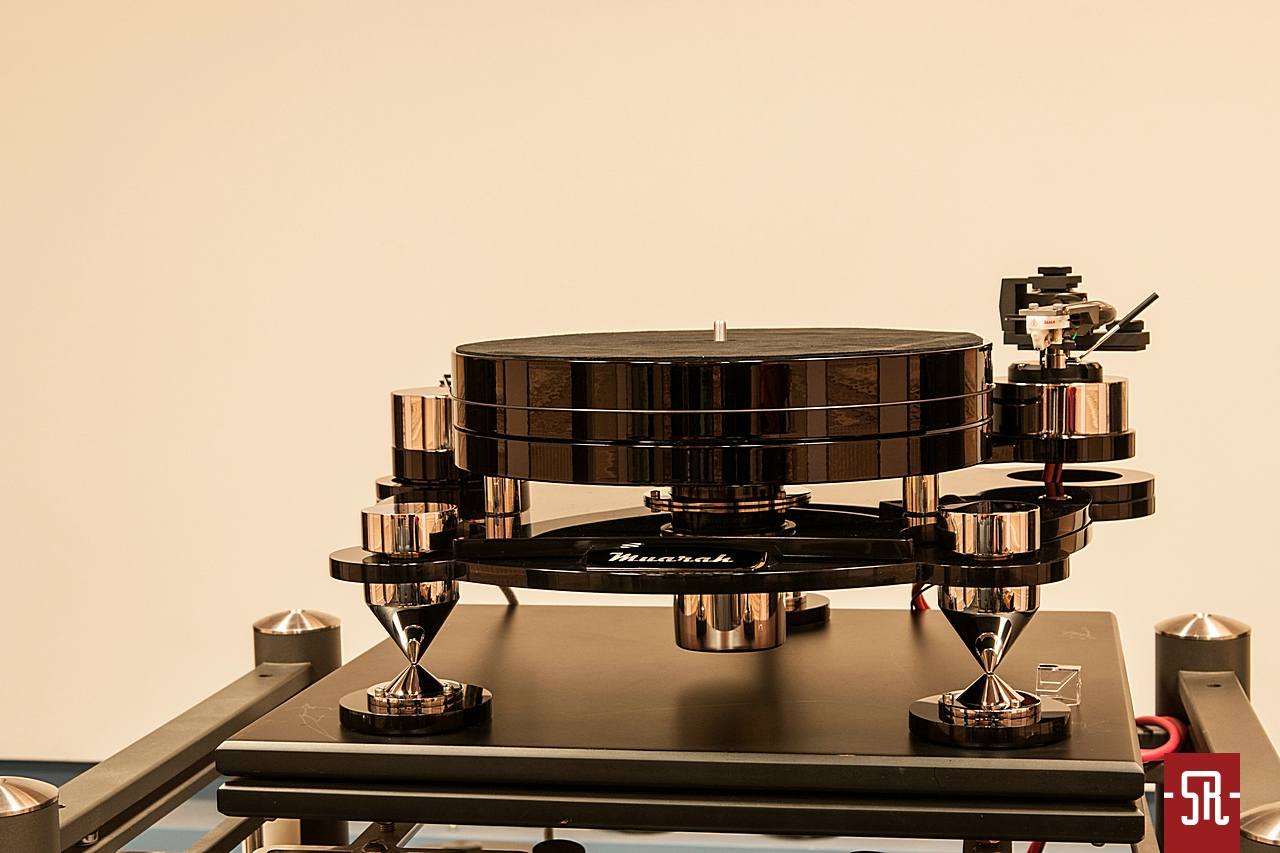


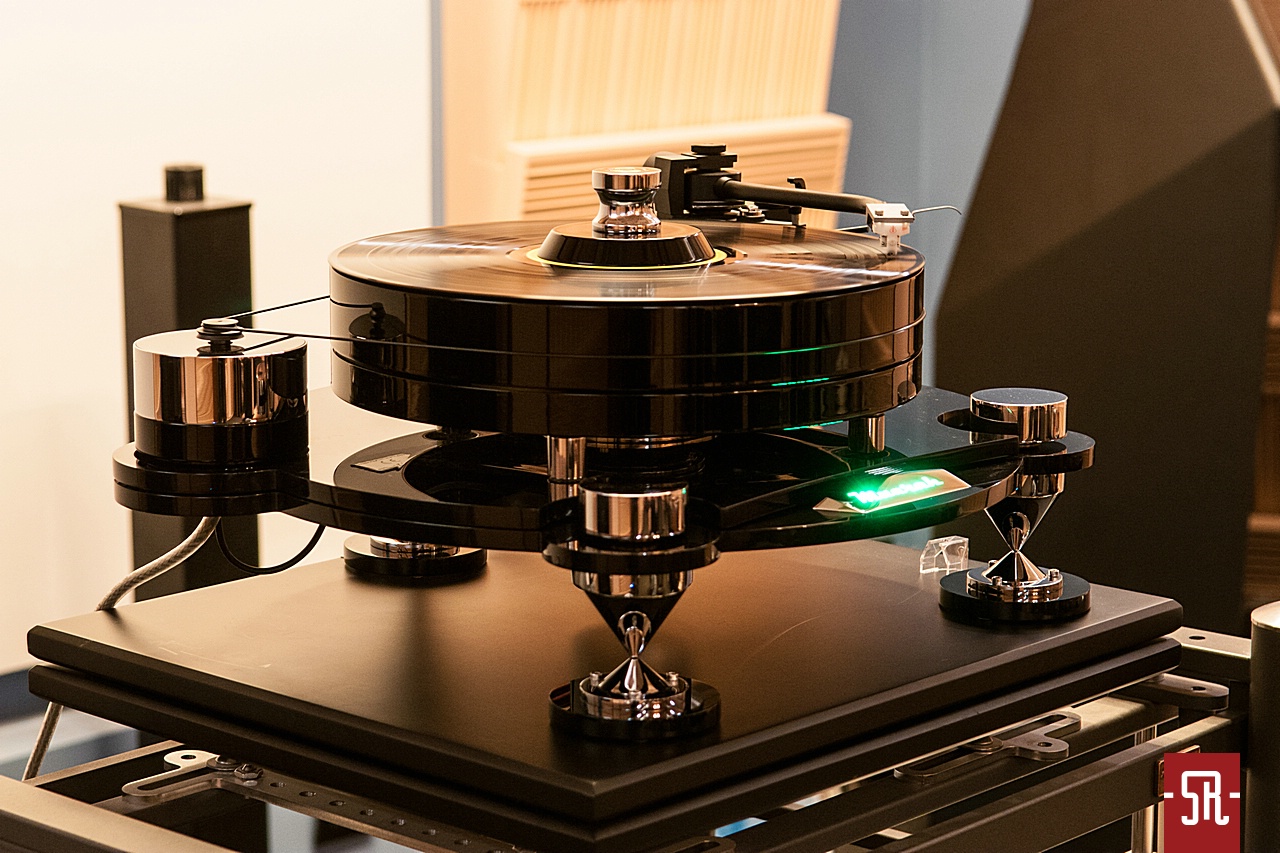


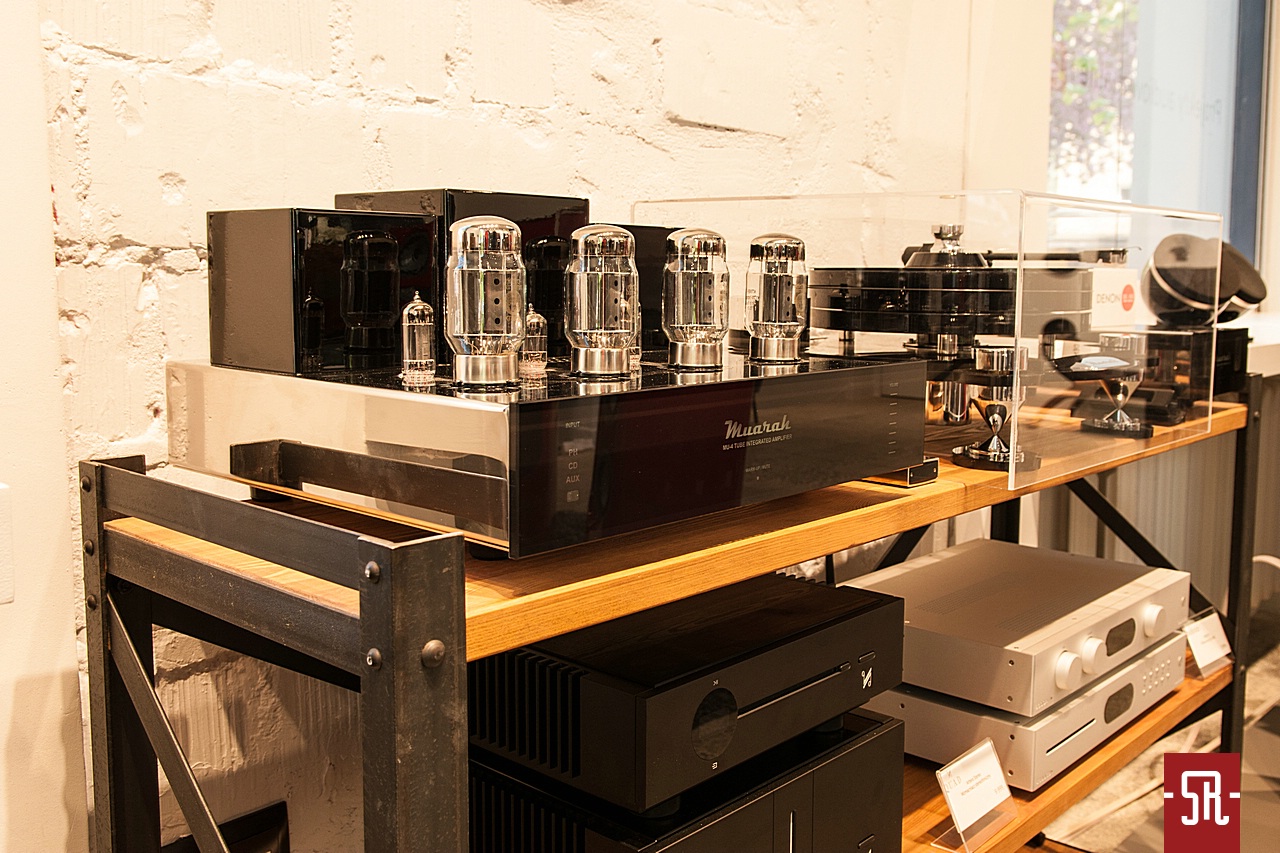
Przejdźmy jednak do konkretów. Skoro ekipie Muarah chciało się dokonywać przysłowiowej ekshumacji, to i system należało odpowiednio skonfigurować. Z pomocą przyszedł warszawski salon Sound Club udostępniając nie tylko lokum, ale i dopasowane brzmieniowo do siebie dwie pary kolumn, oraz odpowiednie okablowanie. Całość rozstawiono zgodnie z prawidłami sztuki w dużej sali odsłuchowej i w jej skład weszły:
• Gramofon Mr. Black, ramię Jelco SA-750, wkładka Lyra Skala
• Lampowy dekoder kwadrofoniczny w systemie SQ – MU-1
• 2 x Wzmacniacz MU-4
• Kolumny CESSARO Wagner (przód) / CESSARO Chopin (tył)
Jeśli zastanawiają się Państwo co z tego wynikło, to już spieszę z wyjaśnieniami, że całkiem sporo i to raczej dobrego, aniżeli złego. Przede wszystkim empiryczne doświadczenia maja to do siebie, że poszerzają nasze horyzonty i bagaż doświadczeń a jeśli dodatkowo możemy ich doświadczać w tak sympatycznym jak dzisiejsze gronie, to nic tylko się cieszyć. Dodatkowo tytułowy odsłuch miał w sobie coś z magicznego wehikułu czasu, bo o ile z nagraniami i wkładkami mono w chwili obcnej nie ma najmniejszego problemu, to już z systemami kwadrofonicznymi jest prawie tak jak z opowieściami wędkarzy – ktoś, gdzieś, kiedyś i „taaaaka ryba”, tylko dowodów nie ma. A tym razem można było nie tylko pooglądać, ale pomacać i co najważniejsze posłuchać. I w tym momencie dochodzimy do sedna, gdyż o ile w teorii (za wikipedią) w stosunku do stereofonii w kwadrofonii, dzięki dodaniu tylnych głośników „uzyskiwano nie tylko przestrzenność i oddanie akustyki miejsca nagrania, ale też poszerzenie sceny, stworzenie głębi i precyzyjniejszą lokalizację źródeł dźwięku”. Tyle teorii, bo zasiadając podczas dzisiejszego odsłuchu w salonowym fotelu miałem zgoła inne odczucia. Po pierwsze to, dobiegało mych uszu było może i w pierwszej chwili intrygujące, lecz owe zaintrygowanie momentalnie przeradzało się w usilną próbę sprowadzenia owej archaicznej dookólności na prawidłowe tory rzeczywistości. Bez wątpienia było to coś kompletnie innego aniżeli współczesna stereofonia a nawet wielkokanałowość, gdyż w chwili obecnej trudno byłoby znaleźć przypadek, by nawet w systemach 5,7 czy nawet 11 kanałowych ktoś wpadł na tak karkołomny pomysł, by słuchacza usadawiać nie przed a w samym środku aparatu wykonawczego. Jednak c ciekawe najbardziej ekstremalnym przykładem przedobrzenia okazała się próba odtworzenia monofonicznie zarejestrowanego fortepianu. To dopiero był wgląd w nagranie – pierwszy raz dane było mi siedzieć wewnątrz instrumentu. No dobrze, żarty na bok. Pomimo ewidentnej nienaturalności były też chwile wielce pozytywnego zaskoczenia, ot choćby otwierający „Caravanserai” Santany utwór „Eternal Caravan of Reincarnation” z orkiestrą cykad i mocno klimatycznym wstępem. I właśnie ograniczając się do tego typu nagrań spokojnie można byłoby uznać wyższość kwadro. Twórczość Mike’e Oldfilda, czy Jeana Michela Jarre’a z pewnością może zyskać w takich okolicznościach drugą młodość. Jednak sięgając po coś bardziej konwencjonalnego w stylu „Nabucco” już tak różowo nie było, gdyż nie dość, że źródła pozorne przeistoczyły się w impresjonistyczne mazaje, to jeszcze część smyczków przeniosła się za ostatnie rzędy wywołując nerwowe oglądanie się za siebie zgromadzonych słuchaczy.
Spokojnie zatem możemy uznać kwadrofonię za słusznie zamknięty rozdział historii i swoistą ciekawostkę a przy okazji zyskać dystans do współczesnych „objawień” i referencji.
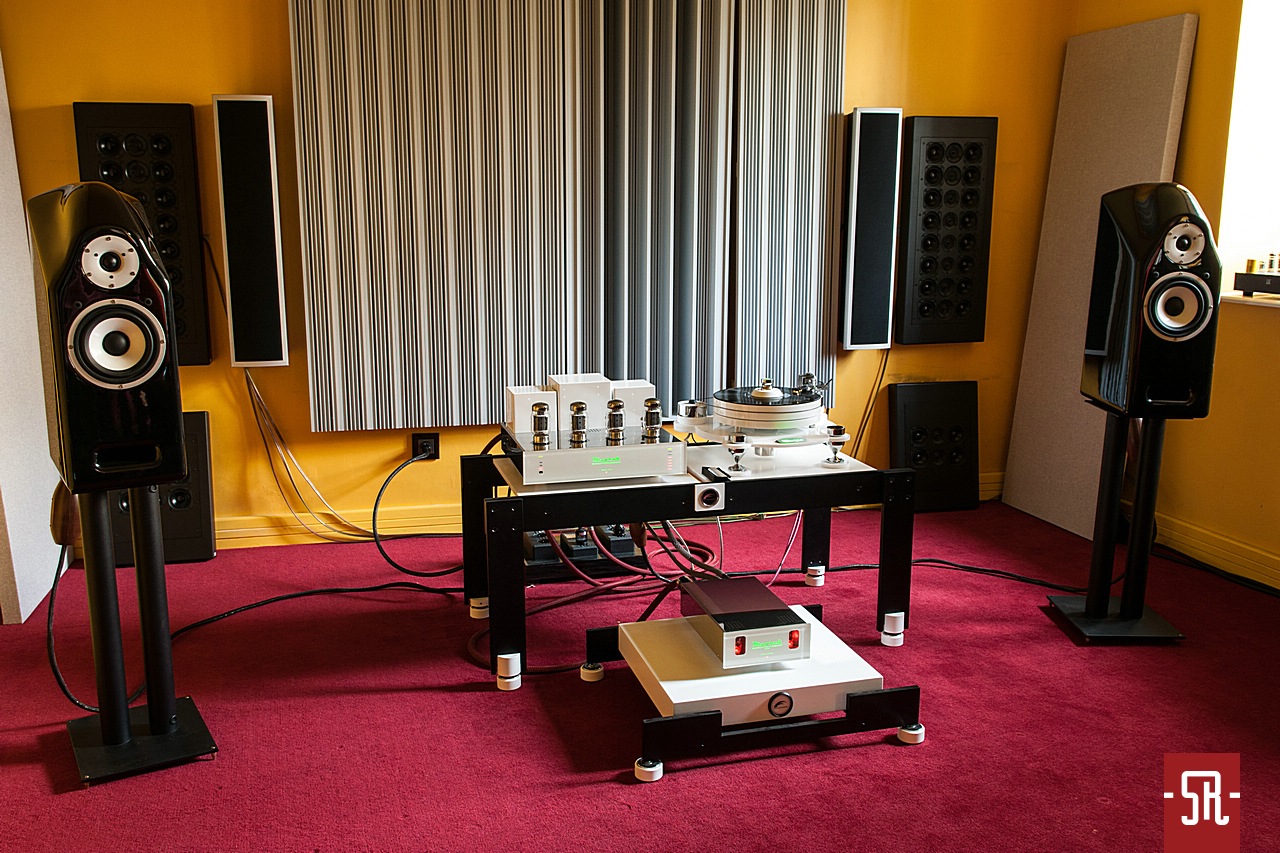


Nie zapomniano również o miłośnikach bardziej konwencjonalnych form i w małej sali odsłuchowej czekało na nich stereofoniczne „małe co nieco” pod postacią następującego systemu:
• Gramofon Mr. White, ramię Jelco SA-750, wkładka Audio Technica AT150MLX
• Lampowy przedwzmacniacz gramofonowy MU-2
• Lampowy wzmacniacz zintegrowany MU-4
• Kolumny Hansen Audio Elxir
Podczas odsłuchów wykorzystywano nagrania:
• Pink Floyd „The Dark Side of The Moon”
• Pink Floyd „Atom Heart Mother”
• Carlos Santana „Caravanserai”
• Deep Purple „Machine Head”
• Miles Davis „Bitches Brew”
• Test Record firmy Project3
• Tony Mottola „I Only Have Eyes For You”
• Bloomfield Kooper Stills „Super Session”
• Mike Oldfield „Boxed”
• J.S. Bach „Chore und Chorale aud dem Weihnachtsoratorium”
• Beethoven „Sinfonie nr.3 Eroica”
• Giuseppe Verdi „Nabucco”
Bardzo dziękując za zaproszenie i gościnę szczerze cieszymy się, że w dzisiejszych, przesiąkniętych konsumpcjonizmem i marketingowym bełkotem czasach są jeszcze ludzie, którym po prostu się chce. Chce się zrobić coś nie dla zysku, ale z chęci i ciekawości przekonania się skąd pochodzimy, jakie przeszłe zdarzenia i zjawiska definiują status quo i jak można je skorelować ze współczesnością. Brawo!
Marcin Olszewski
Opnia 2
W przedostatnią sobotę kwietnia skorzystaliśmy z zaproszenia na prezentację dźwięku kwadrofonicznego z, dla wielu mającego spore problemy nawet z sygnałem stereofonicznym, źródła analogowego. Co więcej, nie była to kojarzona z podobnymi nurtami taśma magnetofonowa, tylko poczciwe płyty winylowe. Niezłe co? Oczywiście podjęcie próby okiełznania tego tematu rodzi stos problemów od posiadania specjalnie tłoczonych płyt, przez stosowny dekoder, po podwojoną sekcję wzmacniającą i czterema takimi samymi kolumnami. Na szczęście nie wszyscy się poddają i dzięki stosunkowo niedawno zaistniałej na naszym rynku firmie Muarah zajmującej się produkcją urządzeń audio i goszczącemu nas tego dnia warszawskiemu salonowi Sound Club mogliśmy zmierzyć się z tą zarzuconą kilkadziesiąt lat temu ideą.


Jak widać na załączonych fotografiach, całość elektroniki włącznie z gramofonem są konstrukcjami wspomnianego rodzimego brandu, jedynie okablowanie i kolumny udostepnił proponujący sprzęt audio z najwyższej półki salon przy ul. Skrzetuskiego. Jak ów lampowym sprzęt by Muarach zachowuje się w kontrolowanych warunkach w niedługim czasie mamy nadzieję sprawdzić u siebie, dlatego też idąc za tą ideą i aby nie strzelać z kapiszonów pominę uzewnętrznianie się na temat jakości generowanego z na potrzeby pokazu skonfigurowanego systemu, tylko skrobnę kilka nasuwających się z tego bardzo pouczającego doświadczenia prywatnych myśli. Oczywiście nie będzie to żadna unijna dyrektywa, tylko pewien punkt widzenia na temat dźwięku czterokanałowego z płyty winylowej bardzo mocno zaangażowanego w świat asfaltu maniaka, który w swych wojażach testowych zaliczył przedwzmacniacz gramofonowy za bagatela 160 tysięcy €. Nie wierzycie? Sam prawie w to nie wierzę, ale tak to prawda (link). Jednak wracając do meritum sądzę, iż zabawa w budowanie sytemu dla tak wiekowego pomysłu w wartościach sonicznych raczej mija się z celem. Nie żeby całkowicie nie była warta świeczki – przecież każdy w życiu ma jakieś zachcianki , jednak pomijając już niezbędne spore środki finansowe, wydarzenie z tego przedpołudnia mimo wszystko rozpatrywałbym w kategoriach tylko ciekawostki dźwiękowej. Niestety sprawa rozbija się o dość wczesne, bo już po sześciu latach od powstania pomysłu zarzucenie rozwoju takiego zapisu dźwięku. Po prostu nie było czasu na dopracowanie niuansów tej znanej teraz pod nazwą również umierającego multikanałowego zapisu SACD idei dźwięku dookólnego. To zaś w prostej linii doprowadziło do usadowienia nas pośrodku orkiestry lub pomiędzy kilkoma muzykami, co w naturze nie występuje, fundując słuchaczowi pozycję gitarzysty przed a wydającego gardłowe dźwięki front mena za nim. Nie powiem, słucha się tego bardzo ciekawie, z tą tylko różnicą, że z prawdą o słuchanym w ten sposób spektaklu muzycznym nie mamy nic wspólnego. Jednak jak wspomniałem przed momentem, tylko brak czasu spowodował, że pracujący nad tym novum inżynierowie nie zdążyli dojść do wniosków oferowanych przez format SACD, czyli zaangażowaniu tylnych kolumn jedynie w efekty echa sali koncertowej, a nie czystych źródeł pozornych. Tutaj może trochę asekuracyjnie, ale spieszę z wyjaśnieniem, że pisząc o tłoczonym na powlekanych złotem płytach cd dźwięku wielokanałowym nie mam na myśli angażowania do tych celów procesorów kina domowego z różnymi rozmiarowo kolumnami, tylko specjalnie nagrywane ścieżki, do odtworzenia których niezbędne jest pięć identycznych wzmacniaczy i kolumn, co generuje spore koszty i w realnym świecie niestety jest rzadkością. Kontynuując wątek subiektywnych doznań z tego spotkania i powoli zbliżając się do końca naszej pogadanki muszę się przyznać, iż przez cały czas obcowania z tak prezentowanymi czterema źródłami dźwięku nawet przez moment nie potrafiłem skupić się na próbie porównania jakości słuchanego materiału muzycznego do jego odpowiednika z nośnika cyfrowego, co bez najmniejszych problemów jestem w stanie czynić przy systemie stereofonicznym. Po prostu nienaturalność prezentacji powodowała, że wyostrzone na inne doznania szare komórki raczej angażowały się w adaptację do zaistniałych, nigdy wcześniej niespotykanych warunków, aniżeli w ocenę jakości tego co trawią. Tak więc puentując opisywane wydarzenie i dziękując za zaproszenie z całą stanowczością stwierdzam, cztery kanały z winylu tak, ale tylko w ramach ciekawostki, a nie udowadniania wyższości jednych świąt nad innymi.
Jacek Pazio

Opinion 1
When two years ago we tested the market debut of Alluxity, the lifestyle, separated amplification Pre One and Power One, we could say this was a very brave experiment. An experiment, that was designed to create a line of products for people, who not only have the money to buy it, but also like modern and unique design. Additional spice was added by the fact, that the company was led by a surprisingly young, for audiophile reality, Alexander Vitus Mogensen – the son of Hans Ole Vitus, the owner of the strictly high-end Vitus Audio. As you are reading this text, then you must realize, that the experiment was successful, what can be supported by the fact, that the catalog of the company is broadened by new products, and since the Munich Show we had information about a new streamer and an integrated amp, but we were not able to get hold of them till now – we just received the Int One integrated amplifier for testing.


From the first glance we can see, that the Danish integrated borrowed the chassis from the Pre One preamplifier. However we should not be surprised, as the innards hidden inside this phenomenally crafted monolith are controlled from a remote control or a 5” color 800x480px touchscreen. Due to this the fronts are devoted from any buttons or knobs, what makes them simple and universal, and only the fantasy of the manufacturer can decide what function the device will perform. The only decorative elements in the chassis are the oval holes on the sides of the enclosure, which perform the function of the heat sink, and the company logo milled in the top plate.
The handling is very intuitive and as simple as playing with Lego blocks. The icon with the active input changes color from light grey to blue. The display can be dimmed or completely switched off by holding the light bulb icon for 5 seconds. One remark – the Int One does not have a power switch – it powers on after you plug in the power cord. This is the reason that I suggest to double check all connections before you connect the plugs of the power cable.
Now we come to the back panel, which presents itself perfectly. Full symmetry and highest quality, underlined with the fact that all connectors were supplied by Furutech. The user gets two pairs of XLR inputs, three RCA pairs and two pairs of RCA outputs. There is also an Ethernet port present, which can be used to control the amplifier with a dedicated app, once you provide it with the IP address of the device.
Completely negligible for the orthodox audiophiles, while being a priority amongst interior architects and stylists, are the color versions of the unit – the amplifier is available in satin white and satin black.
Despite the declared output power being the same as in the separates, the integrated immediately warns, that it will not compete with the older brethren. Of course we still have something that could be called the company sound, but it is presented here in a more compact, or even more civilized, way. Although the Pre One and Power One were a true volcano of energy and acted as a shot of adrenalin on the listeners, the Int One puts more emphasis on the emotional aspect of the sound and musicality. Simplifying things, we could say, that this amplifier is an evolution of the sound aesthetics as presented by the lately tested Einstein Audio The Tune.
I am using the term “evolution” on purpose, as the Danish integrated has much better definition of the lower octaves, what on one hand is the result of much higher output power, but on the other the undeniable, genetic connection with the separates and the products of the senior of the family. Well, if you would like to put the tested amp in the ring with, for example, the Vitus RI-100, then you would clearly see, what differentiates High-End from Hi-Fi. So while the hundred almost does not interfere with the amplified signal, the One is not equally ambitious. Instead it enchants with timbre and saturation, and the slightly rounded edges of the virtual sources make us perceive the whole presentation as calmer and less demanding for the rest of the sound path. However you should not think, that this influence will help the dramatically badly recorded things like “Keeper of the Seven Keys” Helloween or “The End of Life” Unsun to sound at least acceptable, as they will not, but the pain related to listening to them will be smaller. The technical aspects of the recordings are placed in the background, and the front is occupied by emotions and appropriately underlined timbres. Maybe the whole will still sound two-dimensional, but with a tad of good will you can listen to those albums from the beginning to the end, if you like this genre of course. Fortunately the musical market is composed not only from bad recordings and music-like products, although the commercial radio stations try to convince us otherwise, but the amount of well recorded and valuable music is practically unlimited. And with that kind of music the Alluxity shows its true potential.
Classical music sounds on the Danish integrated in a very distinguished way. “Peer Gynt” Grieg (Sir Thomas Beecham / Royal Philharmonic Orchestra) does not only sway the listeners to the melody, known probably even by the most amateur listener, but allows also to experience the power of the orchestra on your innards. This is helped a bit by the slight weight put on the junction between the midrange and bass, which emphasizes the nice perception of the sound and increases the spectacularity of the recording. It is worth mentioning, that such impressions are not reserved for lovers of concert-like volume levels, they are present also at much more acceptable decibel levels. This is quite important, as we do not always fancy, or we do not have the possibility, to share our musical passion with the neighborhood. The Int One can compete, in terms of palpability and level of aesthetics, with tube amplifiers, known for their capability of spreading their musical magic even at low volume levels. Talking about magic – long time passed since I tested a device, which could boost voices in such a suggestive way, especially female voices that is. And it did not matter if this was the opera-rock duo Sharon den Adel and Anneke van Giesbergen in “Somewhere” from the live album “An Acoustic Night At the Theatre” or the caramel soul Queen Latifah on “Trav’lin’ light”, every time the amount of sugar in the sugar cubes was a tad beyond neutrality. Due to this everything seemed a bit nicer than in reality, but such departures from neutrality are not only easily forgiven, but many times expected by the listeners. And with the Alluxity you can be sure to get your daily dose of the anti-depressive Prozac.
Choosing the Alluxity Int One is similar to buying an elegant limousine. If we decide to buy if from a known brand, we can be sure to get everything we pay for and what we can see. Highest quality materials, ergonomics, comfort. And the Danish integrated also offers exactly that. Without any sharp edges on the chassis and a worked out external design are reflected in the sound, which cannot be accused of any tricks for the satisfaction of the crowd, or any edginess. The sound flowing smoothly over almost all hurdles the sound engineers create in their incompetency will save us a lot of unnecessary unpleasantness.
Marcin Olszewski
System used in this test:
– CD/DAC: Ayon CD-1sx
– Digital source selector: Audio Authority 1177
– Network Music Player: Olive O2M; laptop Dell Inspiron 1764 + JRiver Media Center
– Turntable: Transrotor Dark Star Silver Shadow + S.M.E M2 + Phasemation P-3G
– Phonostage: Abyssound ASV-1000; Trilogy 906
– Integrated ampliier: Electrocompaniet ECI5; Musical Fidelity M6 500i
– Speakers: Gauder Akustik Arcona 80 + spike extenders
– IC RCA: Antipodes Audio Katipo; Siltech Classic Anniversary 770i
– IC XLR: LessLoss Anchorwave; Organic Audio; Amare Musica
– Digital IC: Fadel art DigiLitz; Harmonic Technology Cyberlink Copper; Apogee Wyde Eye; Monster Cable Interlink LightSpeed 200
– USB Cable: Wireworld Starlight; Goldenote Firenze Silver
– Speaker Cables: Organic Audio; Signal Projects Hydra
– Power Cables: Furutech FP-3TS762 / FI-28R / FI-E38R; Organic Audio Power; Acoustic Zen Gargantua II; Ardento Power
– Power distribution board: GigaWatt PF-2 + Furutech FP-3TS762 / Fi-50 NCF(R) /FI-50M NCF(R)
– Wall Socket: Furutech FT-SWS(R)
– Antivibration platform: Franc Audio Accessories Wood Block Slim Platform
– Ethernet cables: Neyton CAT7+
– Accessories: Sevenrods Dust-caps; Furutech CF-080 Damping Ring; Albat Revolution Loudspeaker Chips
Opinion 2
The first contact with the brand, which was at the same time its debut, was with the separated amplification called Pre One and Power One. But you could be mistaken, if you think, that the main question that was coming into mind would be about the next product from the Danish company, more affordable for the audiophiles. So what could be more interesting than that? The man behind the products tested then, and the amplifier we are going to test currently, is a representative from a clan of audio gear manufacturers known to the broader public. So the most interesting question was, how the way the youngster presents music will relate to the products proposed by the senior, Ole Vitus. You can read the necessary information in the mentioned review, and today I invite you to read a report from another meeting with a product from the, still young, company Alluxity, the integrated amplifier Int One. You should not be surprised, that this brand is also distributed in Poland by the Katowice based RCM.


The chassis of the integrated does not differ much from the first products that came on the market, it looks like a solid block of aluminum, with holes drilled on the sides that should perform the role of a heat sink. I must confess, that the looks are impressive, combining visual quietness with aesthetic refinement. The front follows the trend of minimalism and modernism, so there is only one window there, that houses a touch screen used to control all the functions of the device. The back plate is full with different kinds of connectors, as the manufacturer wanted to please users having worked out systems. So we have there doubled or tripled XLR and RCA inputs, a tape loop based on RCA, an Ethernet port used to control the amplifier from a computer or app, singular loudspeaker terminals and a power socket. It could seem not overly much, but taking into account the fact, that the amplifier is not very high, and there is a symmetry of all inputs and outputs for the right and left channel, this makes the back panel really crowded.
Starting the paragraph about the sonic capabilities of the Int One, I will say like this: we all know, that trying to broaden the catalog with the assumption of moving down with the price must result in a slight loss of quality compared to the higher positioned products. So the only unknown is how the designers handled the slight loss of refinement, coming from the price reduction of the product. And it is probably not a secret, that for me this was the most important point of the checklist for testing the integrated amplifier from Alluxity. And the effect? Our tested hero was in the middle of the path of timbre without falling into a destructive unification of the lower registers. Yes, the whole carried less information, but it was completely acceptable compared to the separateds, especially taking into account the economics. So to describe the way the musical spectacle is created by the integrated we need to recall its levels of saturation of the bass and midrange, combined with some slight touch of gold on the upper registers. I started the journey on the Danish sea of sound with a very controversial, for my library, disc “Touch” Yello. Despite the slight frosting of my relationship with the Swiss group, I listened to the whole recording, however I was mostly concentrated on one aspect of the sound, an important one, namely how the artificially generated bass is reproduced, as despite the mass it should clearly show the effect of vibration of the floor. When I look back at the many tests I conducted, I can almost immediately recall some spectacular defeats with this disc, but I must confess, that despite the slightly more rounded and solid bass, the Danish product handled this almost perfectly. The sound was slightly softer than with the best, but for sure this one of the very well passed tests, as you could clearly feel the start of each end every impulse coming one after another, while the mentioned “softness” with good control for most listeners is more of an asset than a flaw. After that I put on John Potter with his repertoire of old music. A dose of vocal and instrumental music allowed to look not only at the capability of handling high amounts of phrases, but also how the musical stage is build-up and how the recording room responds to the event happening inside. An obvious aspect of such approach may be the case of the probably even required coloring of the sound, what was immediately shown by the old instruments and the voice of the artist. And when theoretically the whole presentation was very interesting, compared to that what I have in my memory, you could feel a slight loss of the way how the sound spread along the room, and that the rebound from the walls and ceiling was smaller. Here I need to remind you, that I am talking about the difference to the master, and here we are testing a much cheaper product, so we are not allowed to see such conclusions as flaws, but only as a certain aspect of how the device sounds. And this is an aspect, which is needed to be in scope for a wide group of audiophiles. Finishing the analysis of this disc, I can only add, that the gradation of the planes in three dimensions was very realistic, and the sonic beings spread around the stage by the recording engineer were well defined and positioned. After the clash with electronics and old music, time came to use the refined ECM jazz recording of Bobo Stenson in “Goodbye”. Session music with the recording touch of Manfred Eicher does not allow for any shortcomings of the reproduction set; it will show every flaw, or every departure from the truth immediately. This sparring showed a few different aspects, as with some acceptability of the saturation of the sound by the piano, the contrabass showed too high engagement of the body compared to the strings in the reverberation process, and while despite the slight loss of brightness the cymbals were still sparkling, but they had a dark gold color here. But again, we need to remember what we are testing, and if we compare the positioning of both amplifications compared here, such presentation is absolutely adequate, proposing in addition some artefacts helpful in creating a synergetic audio system. What is very important, the way the stage was setup in this repertoire did not differ from what I observed listening to John Potter, so there was a lot of breath behind the formations of players standing behind each other, and this allows for a significant amount of impression of the “being there” effect, when listening to live recordings. I probably do not need to tell anybody, that this a very important aspect of engaging the audiophile into the process of listening to music, and in some cases it can even determine if we have any joy from listening or not. In this case the reproduction of the realism of the sound stage does not pose any problems in terms of localization, what invites to listening even the most demanding listeners.
This confrontation with the Alluxity product, in contrast to the first one, was not loaded with a confrontation within the family, but just a full review of its capabilities compared to my masters. Of course the tested Int One did not create a new quality, but consistently followed the way set by the separated amplifier. The weight and color of the sound were very close to my heart, what I happily used during the few weeks we spent together. For me the mentioned aspects of the sound are a visit card of the product, they will be very helpful for the seasoned listener, and sometimes even the key to get full satisfaction of the owned audio set. However please take into account, that there is absolutely no audio device that would react the same in all cases, so you need to check it on your own, before making any purchase decisions. And I would really count this integrated amplifier to the part of the market offering worth listening to. If you are searching for some saturation, then you must listen to it, as it offers it without crossing over the border of good taste, this is just a signature, and absolutely not a problem, and this is not always so obvious.
Jacek Pazio
Distributor: RCM
Price: 7 500 €
Technical Details:
Outputs: Pair RCA
Inputs: 2 pairs XLR, 3 pairs RCA
Power Rating: 2 x 200 W/8 Ω RMS, ≈ 2 x 400 W/4 Ω RMS, ≈2 x 800 W/2 Ω RMS
Dimensions: 43,5 x 10,5 x 31,5 cm
Weight: 17,5 kg
System used in this test:
– CD/DAC: Reimyo CDT – 777 + Reimyo DAP – 999 EX
– DAC: D/A NORMA AUDIO HS-DA1
– Preamplifier: Reimyo CAT – 777 MK II
– Power amplifier: Reimyo KAP – 777
– Loudspeakers: TRENNER & FRIEDL ISIS
– Speaker Cables: Harmonix HS 101-EXQ (mid-high section); Harmonix HS-101 SLC (bass section)
– IC RCA: Hiriji „Milion”
– Digital IC: Harmonix HS 102
– Power cables: Harmonix X-DC 350M2R Improved Version, X-DC SM Milion Maestro
– Table: SOLID BASE VI
– Accessories: Harmonix Beauty Tone Milion Maestro, Harmonix TU 505EX MK II, Stillpoints „ULTRA SS”, Stillpoints ”ULTRA MINI”; Harmonix AC Enacom Improved for 100-240V; Harmonix Room Tuning Mini Disk RFA-80i; antivibration platform by SOLID TECH
– Power distribution board: POWER BASE HIGH END
Analog stage:
– Turntable:
Drive: SME 30/2
Arm: SME V
Cartridge: MIYAJIMA MADAKE
Phonostage: RCM THERIAA


Najnowsze komentarze